
Chowk Yadgar

Mahabat Khan Mosque, Peshawar
Islamic Heritage, Khyber Pakhtunkhwa, Mosques

Mahabat Khan Mosque

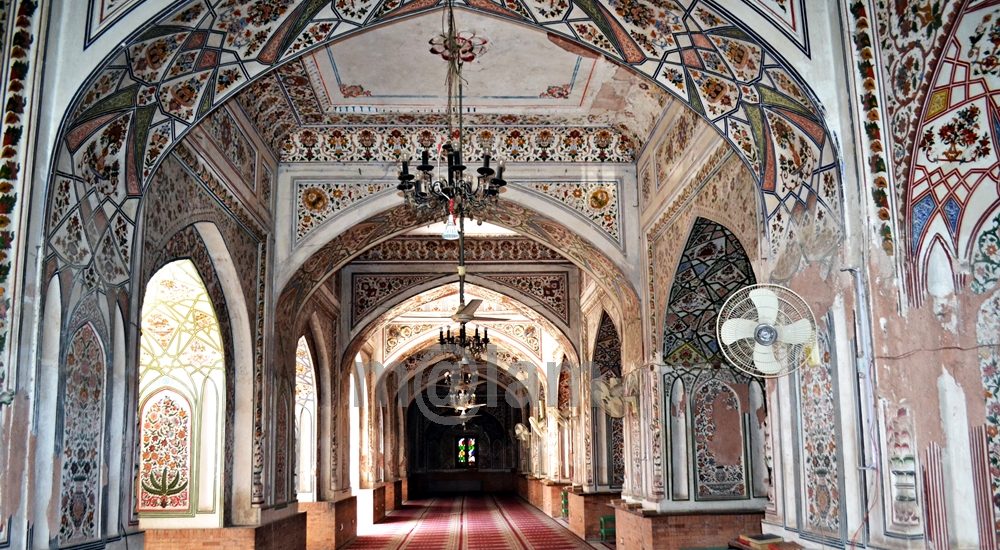
Mahabat Khan Mosque, Peshawar The Mahabat Khan Mosque (Mohabbat Khan Masjid) is located to the west of Chowk Yadgar in Peshawar, Khyber Pakhtoonkhwa, Pakistan. It was constructed in the 17th century during the Mughal era, specifically in 1630. As the largest mosque in Peshawar, it is nestled within the historic boundaries of the city, commonly referred to as the “Ander Shehr” (Inner city). This majestic structure pays homage to Nawab Mahabat Khan, a prominent Mughal governor of Peshawar who served twice under the Mughal Emperors Shah Jehan and Aurangzeb. His lineage traces back to Nawab Dadan Khan, a former governor of Lahore. The mosque’s stunning white marble façade is celebrated as one of Peshawar’s most iconic landmarks. Mahabat Khan Mosque today is a hub for prayers and social gatherings as well as serves as a tourist attraction. Peshawar City Peshawar, nestled in a valley near the eastern terminus of the storied Khyber Pass and adjacent to the Afghanistan border, boasts a rich history that stretches back to at least 539 BCE. This makes it not only Pakistan’s oldest city but also one of the most ancient in all of South Asia. In antiquity, Peshawar served as the capital of the illustrious Kushan Empire, a realm renowned for its prosperity and cultural efflorescence. It was during this period that the city reached the zenith of its splendor, boasting magnificent architectural marvels, bustling markets, and a vibrant multicultural milieu. One such testament to the grandeur of ancient Peshawar is the Kanishka Stupa, a monumental edifice that is believed to have rivaled the tallest structures of its time. Throughout the centuries, Peshawar has played a pivotal role in shaping the cultural, political, and economic landscape of the region. History of Mahabat Khan Mosque The Mahabat Khan Mosque was constructed between 1660 and 1670 during the Mughal period. It is positioned atop the highest point in the old city. Interestingly, during the Sikh era, the minarets of the mosque were utilized for hanging prisoners. It was a grim practice where five individuals were hanged daily from these minarets, serving as makeshift gallows. Additionally, in the aftermath of the Soviet invasion of Afghanistan, the mosque became a gathering place for refugee tribal elders. Their aim was to foster unity among Afghans in resistance against the Soviet forces. Legacy and Heritage of the Mosque Nawab Mahabat Khan’s legacy echoes through the corridors of this majestic mosque. As a distinguished Mughal governor, his influence extended far and wide, shaping the cultural landscape of Peshawar. The mosque stands as a tribute to his illustrious lineage, commemorating his contributions to the city’s splendor. Architecture and Design of the Mosque  Layout The Mahabat Khan Mosque undoubtedly stands out as a hidden treasure in Peshawar. It is nestled among various other heritage landmarks of the city. This architectural masterpiece radiates both beauty and historical importance. Covering an impressive area of 30,155 square feet, the mosque features a magnificent prayer hall rectangular in shape occupying the western side. In the expansive courtyard, a tranquil blue-tiled ablution pool sits at the center, surrounded by a row of rooms along the perimeter walls. Rooftop The hall is adorned with three graceful fluted domes. The roofline of the mosque ascends gradually from the outer edges towards the center, accentuated by a series of four small incremental height increases and embellished with numerous merlons. The top of the mosque’s white marble façade is adorned with cavettos or concave moldings. Additionally, atop the main entrance stand six intricately designed miniature minarets, flanked by two towering minarets. Exterior Five arched entrances lead into the main prayer hall of the mosque. The central arch, tallest among them, displays cusped arches typical of Mughal architecture. Flanking this central arch are two slightly shorter arches designed in the Persian and Central Asian styles, while smaller arches, adorned in a similar fashion, accompany each side. Above the tip of each arch, a row of seven small arched portals is observed. The three central arched portals are adorned with muqarnas, while the outermost arches feature Ghalib kari, a decorative network of ribs made of stucco and plaster. Additionally, the upper curves of the archways are embellished with vegetal motifs, showcasing a variety of colors unlike the predominantly green motifs seen at the Badshahi Mosque. Meanwhile, outside, the exquisite craftsmanship of white marble is on display. Interior The prayer hall’s interior is sheltered by three low, fluted domes, adorned with lavish and colorful paintings. Within the mosque, captivating floral and geometric designs adorn the ceiling, enhanced by graceful red frescoes. Elaborate Islamic calligraphy in a baroque style embellishes the walls of the prayer hall, while a beautiful carpet covers the floor. The calligraphy, executed in the Arabic alphabet, adds to the artistic allure of the space. Traditional chandeliers hang from the ceilings, casting a warm glow throughout. Both the interior and exterior are adorned with panels featuring intricate floral motifs and excerpts from the Quran, further enhancing the mosque’s aesthetic appeal and spiritual ambiance. Cultural Significance Throughout its storied history, the Mahabat Khan Mosque has served as more than just a place of worship. It has been a symbol of resilience and unity, welcoming refugees and fostering a sense of community during tumultuous times. Today, it continues to stand as a beacon of hope and harmony for all who seek solace within its hallowed halls. A Premier Tourist Attraction This mosque stands as undoubtedly one of Peshawar’s most renowned tourist landmarks. It is a must-visit for travelers, particularly foreign visitors exploring Peshawar. Surrounded by other prominent tourist sites, the mosque draws a significant number of visitors. At any given time, approximately 14 thousand individuals can pray within the mosque’s iconic premises and its adjoining courtyard. Access to the Mosque To reach this mosque, head to the Old Bazaar in Peshawar’s historic old city, where locals will happily guide you. From there, take Kachahry Road to Chowk Yadgar, park your vehicle, and proceed west into the Bazaar. The mosque awaits you at the street’s highest
Tourist attractions to visit in Peshawar
City Breaks, Khyber Pakhtunkhwa

Peshawar Tourist Attractions

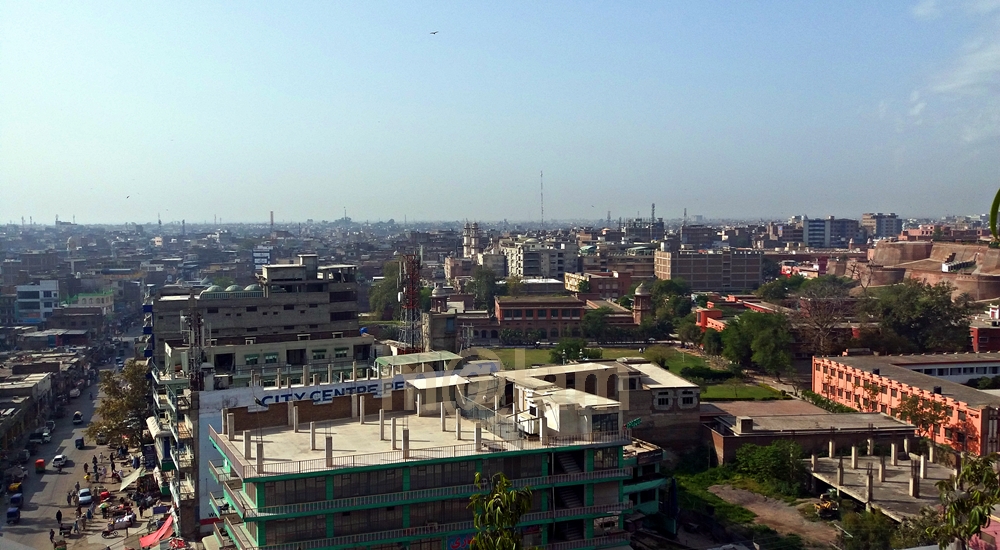
Peshawar Tourist Attractions Peshawar Tourist Attractions are the prominent landmarks governing the city of Peshawar that attract a great volume of domestic and international tourists. Peshawar, a city steeped in the courage of Pashtun heritage, proudly stands as the capital of Khyber Pakhtunkhwa (KPK). It was once known as the North-West Frontier Province of Pakistan. Besides, its strategic location at the crossroads of Central Asia and the Indian subcontinent has bestowed upon it the distinction of being the oldest living city in Pakistan and one of South Asia’s most ancient urban centers. Peshawar has witnessed the rise and fall of civilizations. As a matter of fact, its rich tapestry of history traces back to the Gandhara Civilization, resonating with echoes of the Aryans, Persians, Greeks, Mongols, and Mughals. As the largest city in KPK and the sixth largest in Pakistan, Peshawar emanates cultural vibrancy and dynamism. Peshawar serves as both the administrative nucleus and economic epicenter of the province. The vibrant city maintains the allure of its historic streets, buildings, and bazaars, with only subtle transformations over the past century. Enthusiastic international travelers include Peshawar as a must-visit destination while exploring Pakistan, drawn to its captivating Peshawar Tourist Attractions. History of Peshawar The chronicles of Peshawar unfurl to an ancient era, with historical roots extending back to at least 539 B.C.E. The name “Peshawar,” actually meaning “the frontier city,” was bestowed upon it by the Mughal Emperor Jalal Uddin Muhammad Akbar during an era when it flourished as a prominent trading nexus. It was under the reign of Mughal Emperor Zaheer Uddin Babar that the city was known as Bagram. Throughout history, Peshawar has borne witness to numerous rulers and, consequently, a plethora of names. The city’s lifeblood flows through the intricate web of canals stemming from the Kabul River and its right tributary, the Bara River. Key Tourist Attractions As you traverse to explore Peshawar Tourist Attractions, each step, in fact, reveals a chapter of history etched into the city’s fabric. From the regal Bala Hisar Fort to the bustling Qissa Khwani Bazaar, every corner exudes the charm of a bygone era. The treasures of Peshawar await your discovery, inviting you to immerse yourself in a tapestry of culture, architecture, and tradition that stands as a testament to the city’s enduring legacy. Bala Hisar Fort Bala Hisar, translating to “the raised or great fort,” is a testament to Peshawar’s illustrious past. Suggested by Afghan King Taimor Shah Durrani, the fort stands majestically atop a high mound in the city’s northwest quadrant. From this vantage point, visitors are treated to a breathtaking panorama of the city’s clustered expanse and the encompassing mountains. Erected by the Mughal emperor Babur following his conquest in 1526, the fort served as a residence for the royal family until its eventual destruction. Though ravaged over time, the fort’s legacy was revitalized by the Sikhs, who reconstructed it using mud, later replaced by British bricks. Presently, military guardians oversee the fort, welcoming visitors on weekends. The fort’s museum showcases a captivating array of retrieved weaponry, attire, photographs, and artifacts, providing a window into history that captivates the senses. Peshawar Museum Heralding from the British Colonial epoch of 1905, the Peshawar Museum, known as the “Victoria Memorial Hall,” stands as an architectural fusion. It chiefly reflects British, Hindu, South Asian, Buddhist, and Mughal Islamic influences. Revered across Southeast Asia, the museum boasts an assembly of over 14,000 items, spanning a multitude of civilizations. Sculptures, coins, domestic implements, weaponry, and a diverse range of artistry culled from the Gandharan heartlands—including Shah-Ji-Ki-Dheri in Peshawar, Takht-i-Bahi & Sahri Bahlol in District Mardan, and further excavations from Jamal Garhi and other Gandharan sites—commingle in harmonious resonance, painting an enthralling picture of history. Mahabat Khan Mosque The grandeur of Mahabat Khan Mosque, or Muhabbat Khan Mosque, mirrors the Mughal splendor that once enveloped Peshawar. Commissioned by Nawab Mahabat Khan Bin Ali Mardan Khan, the mosque’s foundations were laid during the reign of Mughal Emperor Shah Jahan in 1630. Nestled in the heart of Peshawar’s “Andar Shehar Bazaar,” the mosque’s presence emanates the Mughal kingdom’s penchant for architectural opulence. The edifice, a true marvel, has stood resiliently through time, undergoing a British-led restoration in 1898. Welcoming tourists, it regales visitors with its architectural mastery, a silent ode to the Mughal dynasty’s legacy. Chowk Yadgaar The reputed Chowk Yadgaar, once known as the Colonel Hastings Memorial built around 1884-92, resonates with echoes of history. Col Hastings actually was the first British Commissioner of Peshawar. The monument basically serves as a central square within Peshawar’s historic heart. The square’s transformation has witnessed the ebb and flow of time, its architectural metamorphosis symbolizing a microcosm of Peshawar’s evolution. Originally fashioned as a horseshoe-shaped structure, the square has been reborn over generations, emerging as a reflection of Peshawar’s resilience. Named in honor of the heroes of the 1965 war between Pakistan and India, Chowk Yadgaar stands as a testament to the indomitable spirit of the city. Chitrali Bazaar At the heart of Peshawar, the Chitrali Bazaar radiates the allure of exquisite craftsmanship. In fact, its legacy traces back to the 1940s, an era of expertly curated woolen creations that once resonated within its bustling lanes. Despite challenges, the bazaar continues to showcase the mastery of Chitrali artisans, echoing tales of a bygone era and endeavoring to reclaim its former glory. Brass Market Once a thriving hub of foreign exchange, the Brass Market has seen its golden days and then abruptly came to an end. Its legacy is interwoven with the cultural fabric of Khyber Pakhtunkhwa. Basically, brassware is a symbol of tradition and heritage. It endures through the dedication of local artisans who craft ornate plates, vases, and bowls, offering a glimpse into a heritage that refuses to be forgotten. Actually, the brass and copperware crafted by old artisans of Peshawar still could not be matched anywhere in the country. Cunningham Clocktower or Ghanta Ghar The Cunningham Clock Tower (also named clock house), affectionately known as Ghanta Ghar,

Scroll to Top