
where wilderness
meets wonder
Explore Pakistan's Untamed Wilderness
Wildlife & Nature Experiences in Pakistan
From the snow-capped peaks of the Karakoram and Himalaya to vast deserts, lush forests, alpine meadows, wetlands, mangrove ecosystems, and the Arabian Sea coastline, Pakistan is one of Asia's most ecologically diverse destinations. Its varied landscapes support an extraordinary range of wildlife, rare plant species, and spectacular natural scenery found nowhere else on Earth.
Home to elusive Snow Leopards, majestic Markhor, Himalayan Brown Bears, Indus River Dolphins, migratory birds, and hundreds of endemic plant species, Pakistan offers unforgettable experiences for nature lovers, wildlife photographers, birdwatchers, and conservation enthusiasts.
Whether you're exploring pristine national parks, cruising through mangrove forests, photographing alpine wildflowers, or observing wildlife in their natural habitats, Pakistan invites you to discover its remarkable natural heritage through responsible and sustainable travel.
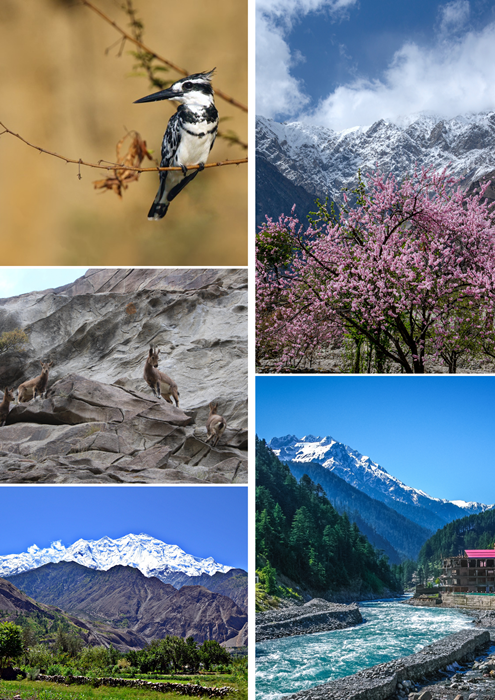
Where Wilderness Breathes Freely
Pakistan is a land of extraordinary biodiversity, where snow-capped mountains, ancient forests, sweeping deserts, fertile wetlands, and an untouched coastline create habitats for some of Asia’s most remarkable wildlife. From spotting the elusive snow leopard in the Karakoram and Himalayan ranges to watching majestic markhor, Himalayan ibex, Indus River dolphins, migratory birds, and rare marine life, every region offers a unique encounter with nature. Explore spectacular national parks, pristine lakes, alpine meadows, mangrove forests, and wildlife sanctuaries that showcase Pakistan’s rich natural heritage. Whether you are a wildlife photographer, birdwatcher, conservation enthusiast, or simply a nature lover, Pakistan promises unforgettable experiences in some of the world’s most spectacular and least-explored landscapes.
Why Explore Pakistan's Wildlife & Nature?
✓ Four major mountain ranges and diverse ecosystems
✓ Rare wildlife including Snow Leopards and Markhor
✓ More than 30 national parks and protected areas
✓ One of Asia's most important migratory bird flyways
✓ Ancient forests, alpine meadows, deserts, wetlands, and mangroves
✓ Exceptional opportunities for wildlife and landscape photography
✓ Responsible eco-tourism and conservation experiences
✓ Nature experiences throughout all four seasons
experience
Wildlife and Nature in Pakistan
Pakistan offers a remarkable wildlife and nature experience, with landscapes ranging from the snow-capped mountains of the Karakoram, Himalaya, and Hindu Kush to lush valleys, forests, deserts, wetlands, and a scenic coastline. Home to iconic wildlife such as the snow leopard, markhor, Himalayan ibex, and Indus River dolphin, the country provides exceptional opportunities for wildlife viewing, birdwatching, photography, hiking, and exploring unspoiled wilderness in some of Asia's most spectacular natural settings.
National Parks & Protected Areas
Pakistan's national parks and protected landscapes preserve some of the country's most spectacular scenery and provide sanctuary for rare wildlife, alpine ecosystems, glaciers, forests, and deserts.
Pakistan's Iconic Wildlife
Pakistan's diverse ecosystems support some of Asia's most remarkable mammals, many of which thrive within protected mountain landscapes and conservation areas.
Birdwatching in Pakistan
Situated along one of the world's major migratory flyways, Pakistan welcomes millions of migratory birds each year while also supporting a rich diversity of resident species.
Alpine Landscapes & Wildflowers
During spring and summer, Pakistan's high-altitude valleys burst into colour as alpine flowers blanket meadows beneath towering snow-covered peaks.
Forests, Valleys & Scenic Landscapes
Ancient forests, fertile valleys, waterfalls, and mountain rivers create peaceful landscapes ideal for relaxation, hiking, and nature appreciation.
Wetlands, Lakes & Mangroves
Wetlands and freshwater lakes provide vital habitats for wildlife while offering tranquil settings for boating, photography, and birdwatching.
Marine Wildlife in Southern Waters
Pakistan's coastline supports remarkable marine biodiversity, including dolphins, sea turtles, whale sharks, coral communities, and migratory seabirds.
Photography of Pakistan's Wild Beauty
With dramatic mountains, wildlife, forests, deserts, rivers, and vibrant seasonal landscapes, Pakistan is a dream destination for photographers.
Eco-Tourism & Conservation
Responsible tourism plays a vital role in protecting Pakistan's extraordinary ecosystems while supporting local communities and conservation initiatives.
Plan Your Nature Journey
Whether you're tracking wildlife across alpine valleys, photographing migratory birds in peaceful wetlands, walking through ancient forests, or discovering the remarkable biodiversity of Pakistan's national parks, every journey reveals a new connection with nature.
From the towering mountains of Gilgit-Baltistan to the mangrove forests of the Arabian Sea and the vast wilderness of Balochistan, Pakistan offers unforgettable experiences for travellers seeking beauty, biodiversity, and authentic encounters with the natural world.
Wildlife & Nature by Ecosystem
- High Mountains & Glaciers
- Alpine Meadows
- Forests
- Rivers & Lakes
- Wetlands
- Mangrove Forests
- Deserts
- Coastal & Marine Ecosystems
Nature Experiences by Interest
- Wildlife Safaris
- Birdwatching
- Nature Photography
- National Parks
- Wildflowers
- Forest Walks
- Eco-Tourism
- Family Nature Trips
- Conservation Experiences
Nature by Region
- Gilgit-Baltistan
- Chitral
- Swat
- Kaghan Valley
- Azad Kashmir
- Potohar Plateau
- Punjab Wetlands
- Sindh Coast & Delta
- Balochistan
Signature Nature Experiences
o Deosai Wildlife Safari
o Snow Leopard Conservation Journey
o Khunjerab National Park Expedition
o Indus Delta Mangrove CruiseTrail
o Churna Island Marine Wildlife Tour
o Autumn in the Forests of Swat
o Birdwatching at Haleji & Keenjhar Lakes
o Wildflower Trails of Fairy Meadows & Rama Meadows
o Ziarat Juniper Forest Discovery
o Hingol National Park Nature Safari
o Margalla Hills Birdwatching Tour
o Chitral Gold National Park Excursion
Frequently
Asked Questions
Pakistan is home to an extraordinary diversity of landscapes, ranging from the snow-capped mountains of the Karakoram, Himalaya, and Hindu Kush to deserts, wetlands, forests, and a 1,000-kilometre coastline. These varied ecosystems support a rich array of wildlife, making the country an emerging destination for nature enthusiasts, birdwatchers, photographers, and eco-travellers.
Pakistan is home to many iconic species, including the elusive Snow Leopard, Himalayan Brown Bear, Markhor, Himalayan Ibex, Blue Sheep, Indus River Dolphin, Mugger Crocodile, Black Bear, Chinkara, Urial, and numerous migratory and resident bird species.
Some of the country's top wildlife destinations include Deosai National Park, Khunjerab National Park, Central Karakoram National Park, Hingol National Park, Lal Suhanra National Park, Margalla Hills National Park, Chitral Gol National Park, Ayubia National Park, and the wetlands of the Indus River.
Although Snow Leopard sightings are rare due to their elusive nature, they inhabit the high mountains of Gilgit-Baltistan and Chitral. The best opportunities to observe or photograph them are through specialised wildlife tours conducted during the winter months with experienced local guides.
Popular national parks include Deosai National Park, Khunjerab National Park, Hingol National Park, Central Karakoram National Park, Chitral Gol National Park, Ayubia National Park, and Lal Suhanra National Park, each offering unique landscapes, wildlife, and outdoor experiences.
Yes. Pakistan lies along the Indus Flyway, one of the world's major migratory bird routes. Hundreds of migratory birds visit Pakistan every year, making it an excellent destination for birdwatching, particularly around wetlands, lakes, river systems, and national parks.
The ideal season depends on the region and the wildlife you wish to observe. Spring and autumn offer pleasant weather and vibrant landscapes, summer is perfect for exploring mountain national parks, while winter provides the best chance to observe Snow Leopards and migratory birds in certain areas.
Yes. Several tour operators and local guides offer wildlife safaris, birdwatching excursions, photography tours, trekking expeditions, and nature-focused holidays throughout Pakistan's protected areas and national parks.
Absolutely. Pakistan offers outstanding opportunities for wildlife and nature photography. Visitors are encouraged to maintain a safe distance from animals, use appropriate telephoto lenses, and avoid disturbing wildlife in their natural habitats.
Pakistan has numerous protected areas, including Deosai National Park, Khunjerab National Park, Hingol National Park, Central Karakoram National Park, Chitral Gol National Park, Lal Suhanra National Park, Ayubia National Park, and several wildlife sanctuaries and game reserves.
Yes. Pakistan's vast natural landscapes, protected areas, community-based tourism initiatives, and increasing focus on sustainable travel make it an attractive destination for eco-tourism. Visitors can enjoy nature responsibly while supporting local communities and conservation efforts.
Nature enthusiasts can enjoy hiking, trekking, camping, wildlife safaris, birdwatching, mountain biking, river rafting, boating, fishing, photography, stargazing, botanical exploration, and scenic road trips across Pakistan's diverse landscapes.
Gilgit-Baltistan, Chitral, Swat, Kaghan Valley, Neelum Valley, Azad Kashmir, the Margalla Hills, Hingol National Park, the Cholistan Desert, and the Makran Coast are among Pakistan's finest destinations for nature tourism.
Yes. Many national parks and nature reserves, including Deosai National Park, Ayubia National Park, and Margalla Hills National Park, offer family-friendly activities such as sightseeing, picnics, easy hiking trails, wildlife observation, and scenic viewpoints.
Visitors can support conservation by following the principles of responsible tourism: avoid littering, minimise the use of single-use plastics, remain on designated trails, respect wildlife habitats, refrain from feeding animals, support local conservation initiatives, and choose environmentally responsible accommodations and tour operators.