
June 2018

Shandur Polo Festival

Shandur Polo Festival

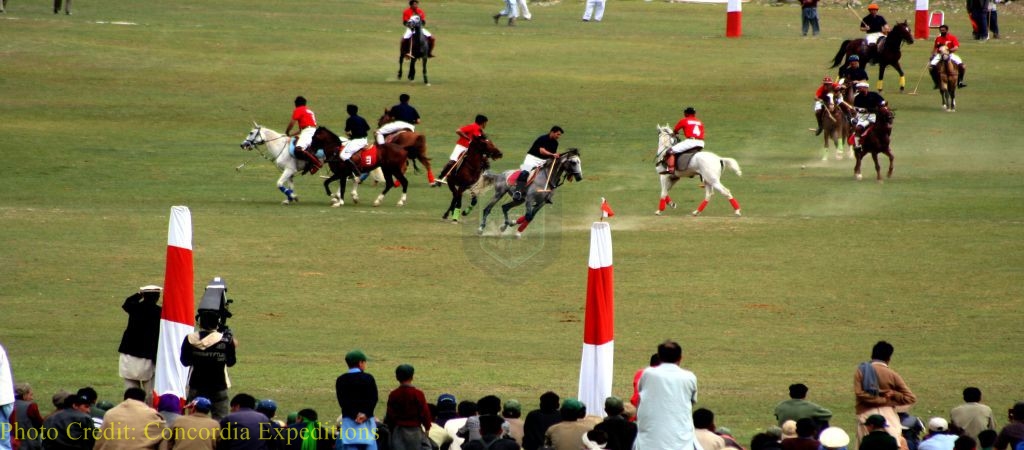
Exploring the Thrilling Shandur Polo Festival: A Unique Experience at 3734m Altitude The exhilarating Shandur Polo Festival unfolds at the awe-inspiring Shandur polo ground, nestled at a breathtaking altitude of 3734 meters. This remarkable event occurs on the border shared by the Chitral district of Khyber Pakhtunkhwa (KPK) and the Ghizer district of Gilgit-Baltistan in Pakistan. The festival takes place annually from the 7th to the 9th of July. This festival captivates thousands of enthusiastic spectators, drawing them into the world of the kings’ game – traditional freestyle Polo. A Unique Polo Experience The version of the Polo showcased during the Shandur Polo Festival is distinctive to this region. It offers an experience unparalleled anywhere else in the world. For three exhilarating days, domestic and international tourists, ardent supporters from Gilgit and Chitral, organizers, vendors, performers, Polo players, and their magnificent horses come together to create a vibrant makeshift village. The verdant Shandur Pass serves as a spectacular battleground during this festival. The World’s Highest Polo Ground The Shandur Polo Ground is renowned as the world’s highest Polo ground. It is encircled by majestic mountain peaks and graced with a serene lake in the backdrop. This breathtaking setting not only enhances the festival’s allure but also provides exciting activities for tourists. The Polo ground, situated in the heart of the pass, measures 200 meters by 56 meters, enclosed by a 60-centimeter-high stone wall. The size of the ground is in contrast to the conventional Polo field’s dimensions of 270 meters by 150 meters. This smaller size adds to the intensity of the game, making it seem crowded for the 12 players who compete at any given time. However, this limitation prevents the horses from extended gallops at such high altitudes. A Glimpse into History Polo’s roots trace back to the 6th century BC when it served as a training game for cavalry units of the king’s guards and elite troops in Persia. Originally, Polo boasted up to 100 players on each side, resembling a mini-battle. In the 6th century AD, it became Persia’s national sport and gradually spread to Arabia, Tibet, and China. Tragically, in 910, a game in China led to the death of a cherished relative of Emperor Apao Chi, prompting the gruesome beheading of all players. In South Asia, Polo arrived in the 13th century, introduced by Muslim conquerors. Over time, it evolved into a more regulated version from its wild beginnings. The contemporary Polo we witness today typically features six players on each side with a distinct lack of rigid rules. The free-style polo is epitomized by the famous saying, “The rule is that there is no rule.” However, the polo festival at Shandur makes one exception, with six players on each side engaging in an intense one-hour match, punctuated by a mere 10-minute break due to the high altitude. This breather comes alive with a traditional dance performance, and the team securing the most goals within the allotted time emerges victorious. Historical Beginnings Shandur’s first Polo match occurred in 1936. It was initiated dramatically by Major Evelyn Hey Cobb, the British political agent of the region. Cobb, a Polo enthusiast, ordered Niat Qabool Hayat Kakakhel, a prominent figure, and assistant to the governor from Ghizer district, to construct a Polo Ground in Shandur. This Polo Ground earned the name “Mas Junali,” derived from two Khuwar languages, meaning “Moony Polo Ground.” Impressed by Kakakhel’s efforts, Cobb sought to reward him However, Kakakhel declined and instead asked for trout to be stocked in local streams. Cobb agreed, importing live trout from England, which were released into the River of Ghizer. This visionary move paved the way for the Directorate of Fisheries and job opportunities in the region. Today, Gilgit-Baltistan is also renowned for Trout fishing. Preparing for Battle Players and horses from both sides arrive at Shandur weeks before the grand showdown to acclimatize to the high altitude. Preliminary matches in both Chitral and Gilgit determine the best horses and players for the final games, with local judges making their selections during test matches on home grounds. A Wild Game Safety measures take a back seat during this wild game. Players rarely wear helmets, donning colorful attire and wielding strapless mallets as they chase the ball vigorously on their horses, often without bandages to protect the steeds from harm. Winning the highly anticipated trophy is a source of immense pride for both teams, making national headlines. Supporters and tourists flock to the venue as soon as the rival teams and their horses make their grand entrance. Access Both Gilgit and Chitral districts are accessible by air and road from the capital city of Islamabad. Shandur is approximately 211 kilometers west of Gilgit via the Gilgit-Chitral road. Conversely, it is about 168 kilometers northeast of Chitral along the Shandur-Gilgit road. The journey from Gilgit treats travelers to breathtaking vistas of valleys, lakes, fruit orchards, traditional houses, terraced fields, flowing rivers, and serene springs. Similarly, the drive from Chitral offers glimpses of the Mastuj and Surlasp valleys’ lush natural beauty, the warm hospitality of the residents, and traditional houses nestled amidst stunning landscapes. Both routes are suitable for 4WD vehicles but are closed during the winter months. Activities The heart-pounding Polo matches at Shandur are complemented by an array of activities. These warm-up activities help visitors to immerse themselves in the natural and cultural beauty of the region. Adventure enthusiasts can explore the surroundings of Shandur, try their hand at stream and lake fishing, or embark on exhilarating hikes. The event also provides a fascinating glimpse into the lifestyle and cultural traditions of the people of Gilgit and Chitral. Nights come alive with musical performances and fireworks, while daytime showcases paragliding and traditional dances from Chitral and Gilgit-Baltistan. The indigenous customs and natural beauty are a visual delight for visitors. Plan Your Visit For all visitors, it is highly recommended to: Arrive at the venue at least a day before the final contest to fully savor the festival.

Shandur Polo Festival Read Post »
Altit Fort Hunza

Altit Fort

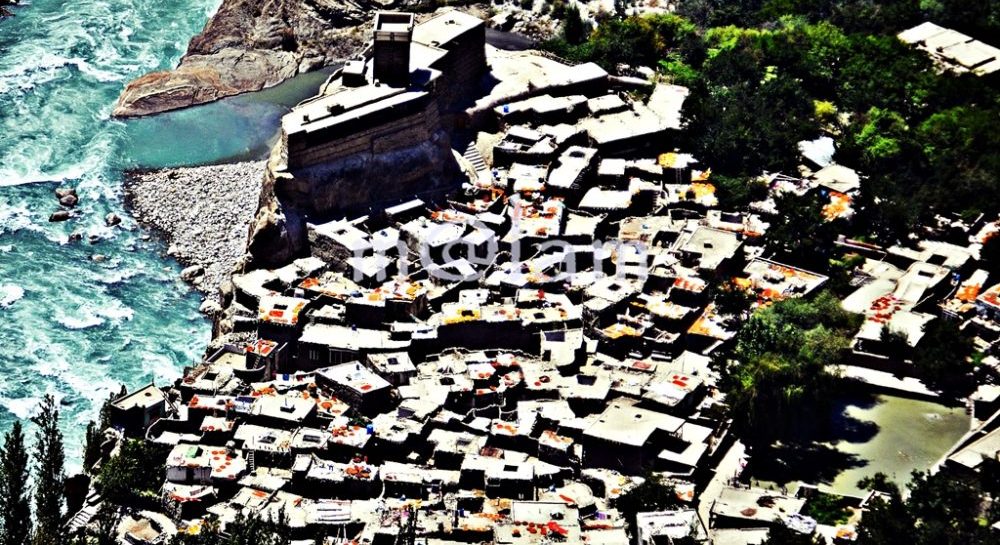
Altit Fort: A Journey Through History and Architecture In the mountain valley of Hunza, Gilgit-Baltistan, Pakistan, stands a true marvel of history and architecture, the awe-inspiring Altit Fort. The fort is perched majestically on a 1000-foot towering cliff rising sharply from the Hunza River. This 900-year-old fort has witnessed centuries of dynastic rule, and cultural transformations. The award-winning Altit Fort now stands as a testament to the rich heritage of the region. Its historic background, architectural marvels, and restoration efforts make Altit Fort a must-visit destination. Historic Background Before becoming a part of Pakistan in 1974, Gilgit-Baltistan was a patchwork of independent princely states, with the kingdom of Hunza being one of them. The local Mirs, hereditary rulers of Hunza, held sway until 1974. However, the socio-political reforms stripped them of their power during the reign of Zulfiqar Ali Bhutto. Altit Fort, which had once served as their palace, found itself in a state of disrepair. Later, the Aga Khan Foundation took over its renovation in 1990. The village of Altit, founded in the 11th century, was the oldest settlement and the capital of Hunza. It was then called Altit Khun and served as the capital of Hunza. Its name evolved from “Hunokushal” to “Burushal” as the region’s culture shifted from the Turkic Huns to Burushaski speakers, who later converted to Islam in the 15th century. The Power Struggle According to historical accounts, the rulers of Hunza first resided in the Altit Fort. The rivalry between two royal brothers, Prince Shah Abbas (Shabos) and Prince Ali Khan (Aliqan), marked a pivotal moment in the fort’s history. Shah Abbas relocated to Baltit Fort, making it the new seat of power, while Prince Ali Khan fortified Altit Fort. With the capital shifted to Baltit, Altit Fort began to lose its significance. Prince Ali Khan made Altit Fort his stronghold and launched offensives against his elder brother. Tragically, this conflict ended with Prince Ali Khan’s death. Balti Craftsmanship When Princess Shah Khatoon from Baltistan was married to Mir Ayaaho II of Hunza in the early fifteenth century, she was accompanied by craftsmen as a dowry. The Balti craftsmen carried out significant amendments to the fort with a Tibetan touch in its design. During their stay in Hunza, they used two Balti words to refer to the two forts “Elte” and “Delte” to say “here” and “there”. Later, the term Elte became Altit, and Delte was modified to Baltit as both valleys are famously known today. The fort was purposefully built by the ruling family of Hunza as a display of power, to defend Hunza from external attacks, and to safeguard the predominant feudal system. Altit Fort has undergone several ups and downs before it was abandoned. It has been dexterously renovated and serves as a tourist attraction. Currently, the fort houses a museum, a culture center, and the offices of a successful Social Enterprise. Architecture Altit Fort is a masterpiece of architectural ingenuity. Built over 800 years ago, its construction occurred in six distinct stages. The initial phase saw the construction of a two-floor building on the lower western edge, followed by a three-floor watchtower, a storage space, a mosque, grain storage on the eastern side, and the conversion of grain storage into guest rooms. Narrow corridors lead to the lower-level rooms, while the upper ones connect to the watchtower. The fort’s main entrance, facing Ultar, leads through a dimly lit corridor on the ground floor. It reveals a rectangular supporting structure with a haunting history. Legend has it that a prince who was suspected of plotting against his kingdom was buried here in a standing position. The first-floor royal kitchen boasts intricate carvings, surrounded by the lobby, a multipurpose traditional royal room, the queen’s room, and rubble stone masonry. The watchtower is strategically positioned to oversee the land. It offers a 360-degree view and was even used for executing prisoners sentenced to death. The mosque, royal throne, and guest rooms are situated to the north of the tower, while the storage space lies to the south. The royal throne, in front of the mosque, provides a panoramic view of Altit Khun. Restoration Altit Fort, once in a state of disrepair, was donated to the Aga Khan Trust for Culture Historic Cities Support Program in 2001 by Raja Amin Khan. Extensive restoration work, carried out by the Aga Khan Trust for Culture Historic Cities Support Program and the Government of Norway, transformed it into a museum. Over the years, various development projects both within and outside the fort have flourished. These include a women’s social enterprise, the restoration of Altit Valley, the Kha Basi Café serving traditional Hunza food, an apricot orchard, and a new art center cum guesthouse. Historical tours are offered daily from 9.30 am to 5.30 pm. Access and location Altit Fort is situated on the edge of Altit Valley, near the confluence of Hunza and Nagar rivers, approximately 3 km from Baltit Fort. The main entrance guides visitors through a royal garden—an apricot orchard surrounded by lush green grassland—leading to the fort entrance. The fort offers breathtaking views of Hunza and Nagar from various locations. The galleries in front of the royal guest rooms provide a stunning vista of Altit village. While those hanging from the royal chambers overlook the Hunza River and the Nagar Valley. Similarly, the watchtower atop the fort provides an unparalleled panoramic view of the Hunza and Nagar valleys, making it a photographer’s dream. Altit Fort also offers a captivating perspective from the Karakoram Highway. Awards In recognition of its cultural heritage conservation efforts, Altit Fort received the prestigious UNESCO Asia-Pacific Award in 2011. These conservation projects focused on rectifying structural defects, stabilizing walls, replacing rooftops, addressing wood decay, and improving lighting. Altit Fort stands as a living testament to the history and culture of Gilgit-Baltistan. Its architectural brilliance, rich history, and stunning location make it a must-visit destination for history enthusiasts and travelers alike. Experience the grandeur of Altit Fort and step back in time to a

Altit Fort Read Post »

Scroll to Top