
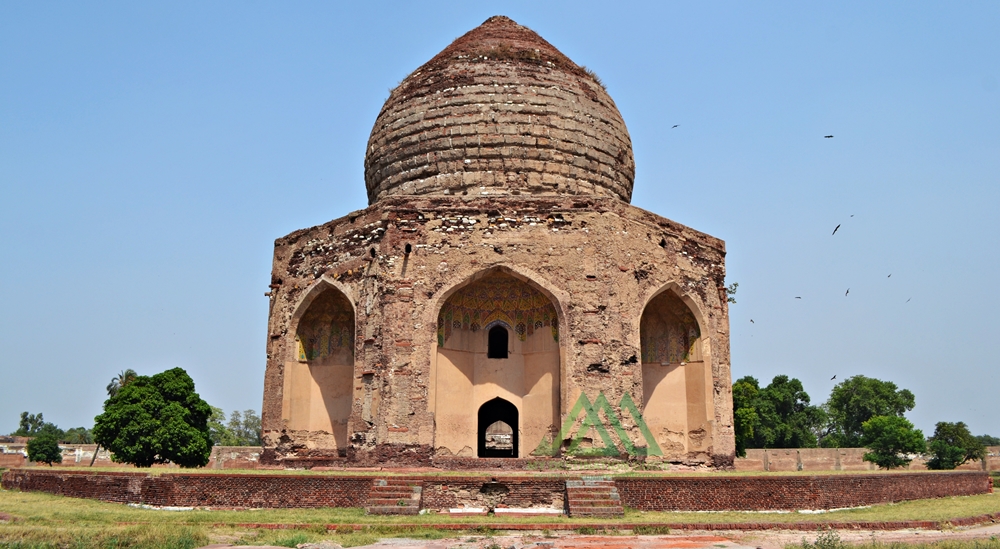
Asif Khan’s tomb

The Mughal Empress Noor Jahan's Tomb in Lahore
Heritage Sites in Pakistan, Punjab, Tombs

Noor Jahan’s Tomb

Noor Jahan’s Tomb: A Glimpse into Mughal History Empress Noor Jahan’s Tomb, a historical gem nestled within the serene Shahdra Bagh in Lahore. It holds tales of love, power, and architectural brilliance. This tale will certainly take you on a journey through time, exploring the life of Empress Noor Jahan (Nur Jahan) and the captivating details of her final resting place. Discovering Empress Noor Jahan Born as Maher-un-Nisa, Empress Noor Jahan earned her name, which means “light of the world.” She was the daughter of Mirza Gayas Baig, a noble from Iran. Noor Jahan became the beloved queen of Mughal Emperor Jahangir from 1569 to 1627. Her reign was undoubtedly marked by immense power and influence, making her the most powerful empress in Mughal history. Notably, she is the only empress whose name graced the coinage of her era. In 1645, Empress Noor Jahan passed away at the age of 72, outliving Jahangir by 18 years. Her final resting place, Empress Noor Jahan’s Tomb, was constructed during her lifetime. The Architectural Marvel Empress Noor Jahan’s Tomb is undoubtedly an architectural marvel, reflecting the grandeur of the Mughal era. It sits atop an elevated podium, designed in the takhtgah (throne) style. The square mausoleum spans 158 square feet, with each side measuring 124 feet and rising to a height of 19.6 feet. While minarets once adorned the corners of the mausoleum, they are regrettably absent today. Exterior Beauty The exterior of the tomb certainly is a testament to Mughal craftsmanship. It is constructed from red sandstone with a flat roof, adorned with white marble grillwork, reminiscent of Jahangir’s tomb. Each side boasts seven vaulted arches, adorned with marble and intricate flower mosaics in semi-precious stone. Moreover, marble covers the inner floor, while the outer platform is crafted from sandstone. Furthermore, the red sandstone showcases inlaid floral motifs, enhanced by white, black, and yellow marble. The central arch on each side stands out, flanked by six vaulted arches, all featuring exquisite paneling and honeycomb-shaped cornices. Inner Sanctum The heart of the tomb is the central vaulted chamber, housing a marble platform with two cenotaphs. One is dedicated to Nur Jahan, while the other honors her daughter, Ladli Begum. Hakim Ajmal Khan of Delhi constructed these cenotaphs in 1912. The original marble sarcophagus is a masterpiece, adorned with intricate craftsmanship and the name of Allah, mirroring the style of Jahangir and Asif Khan’s tombs. An epitaph on Nur Jahan’s tomb reads: “On the grave of this poor stranger, let there be neither lamp nor rose. Let neither butterfly’s wing burn nor nightingale sing.” The original tombs are located below and can be accessed through a narrow entrance just outside the mausoleum. This dimly lit chamber features two small openings to allow sunlight, as Noor Jahan had a fear of darkness. Enchanted Gardens Empress Noor Jahan’s Tomb is surrounded by a Persian-style Chahar Bagh, though the original garden no longer exists. Historically, it boasted a vibrant array of tulips, roses, and jasmine. Today, a five-year renovation project is underway, aiming to restore the garden to its former glory. Empress Noor Jahan’s Tomb stands as a testament to the rich history and architectural splendor of the Mughal era. This article has unveiled the life and legacy of Empress Noor Jahan, as well as the captivating details of her final resting place, inviting you to explore this remarkable piece of history.
Noor Jahan’s Tomb Read Post »

, , , , , , , , , , , , , , , ,
Tomb of Asif Khan
Heritage Sites in Pakistan, Punjab, Tombs

Tomb of Asif Khan

Keyword-Rich Content” Exploring the Magnificent Tomb of Asif Khan in Lahore, Pakistan Unveiling the Rich History and Architecture of Asif Khan’s Tomb In the heart of Lahore, Punjab, Pakistan, lies a magnificent edifice – the Tomb of Asif Khan. This splendid architectural marvel stands as a testament to the opulence of the Mughal era. It is adorned with a high bulbous dome, reminiscent of a bygone era when craftsmanship and design were paramount. Asif Khan: A Man of Influence Asif Khan, known by the title Asif Khan, was none other than the esteemed Mughal statesman Mirza Abdul Hassan Jah, also recognized as Asif Jah. He held a significant place in the Mughal hierarchy, being the brother of Empress Noor Jahan, the father of Arjumand Bano Begum (famously known as Mumtaz Mahal, the beloved of Emperor Shah Jahan), and the brother-in-law of Mughal Emperor Jahangir. His illustrious career saw him rise to the position of Khan e Khana, commander in chief, and eventually, the governor of Lahore. Tragically, Asif Khan met his end in a battle against the forces of the rebel Raja Jagat Singh in 1641. It was Emperor Shah Jahan who commissioned the construction of this remarkable tomb in his honor. The endeavor cost a staggering 300,000 rupees and took four years, from 1641 to 1645, to reach completion. Notably, Asif Khan’s tomb stands in close proximity to Jahangir’s tomb, forming an axis of historical significance. The Garden of Paradise The Tomb of Asif Khan is set within a picturesque garden measuring 300 yards on each side. This garden follows the Persian Chahar Bagh system, characterized by four squares divided by long pools and pathways. Each square is adorned with fountains, water reservoirs, and scenic trails. Originally, water reservoirs at each corner of the tomb supplied the fountains and pathways with water, creating a tranquil and serene ambiance. Access to the garden is granted through gates on its northern and southern walls. The southern gate, the primary entrance to the complex, is a double-storied structure with intricate red stone and white marble ornamentation. Its interiors feature small chambers, while the central portion boasts a tall two-story iwan portal with stunning stucco work. Likewise, the flooring is a work of art, adorned with geometric brickwork. The northern gate, known as the Jawab (response) gate, is equally impressive, featuring a central arched iwan portal flanked by four smaller portals. Though time has weathered its intricate tile work, the gate still retains an air of grandeur. Additionally, a small mosque within the eastern wall served as a residence during the British era. It provides a glimpse into the tomb’s rich history. Architecture The architecture of Asif Khan’s tomb is a testament to the Central Asian style prevalent during the Mughal era. Standing at the center of the expansive garden, the tomb rests on an elevated podium, accessible by a flight of stairs. Its octagonal shape, with each side measuring 38 feet 8 inches, offers access from eight sides, each featuring an arched window offering a glimpse into the tomb’s interior. Similarly, deeply recessed iwans or alcoves grace each side of the tomb. The exterior of the tomb originally boasted red sandstone and intricate marble stone inlay work. Stucco tracery and blue Kashi tiles adorned its walls. The dome, a distinctive feature initiated by Emperor Shah Jahan, was originally covered in white marble. This bulbous double dome rests atop the octagonal base, presenting a harmonious blend of form and function. Inside the tomb, the lavish use of white marble, intricate inlay work, stucco designs, tile mosaics, and Ghalib Kari (fine plasterwork) create a mesmerizing visual experience. The inner dome ceiling, intricately decorated with interlacing patterns, adds to the grandeur. The central cenotaph is crafted from pure marble. It is also adorned with inscriptions from the Holy Qur’an and mirrors the nearby tomb of Emperor Jahangir. It stands upon a red limestone floor, known as Sang-e-Abri, although the original material no longer exists. The Sikh Era and Restoration During the rule of the Sikh Empire, Asif Khan’s tomb, along with other historical monuments, suffered significant damage. Notable Sikh rulers like Gujjar Singh, Lahna Singh, and Subha Singh played a role in the deterioration. They even planted large Pipal trees around the tomb, obstructing its view. Some of the stolen marble, decorative stones, and sandstones found their way into the construction of the Golden Temple in Amritsar and the Hazuri Bagh Baradari in Lahore. The original beauty of the tomb was marred during this period, and despite subsequent repairs by the British, it never fully regained its former glory. Flooding in 1955 and 1973 further damaged the walls, leaving the tomb in a disappointing state. Despite its challenges, the Tomb of Asif Khan holds a place on the tentative list as a UNESCO World Heritage Site. It continues to stand as a testament to the rich history and architectural brilliance of the Mughal era. This architectural masterpiece invites visitors to explore its storied past and captivating beauty.

Tomb of Asif Khan Read Post »

, , , , , , , ,
Scroll to Top