
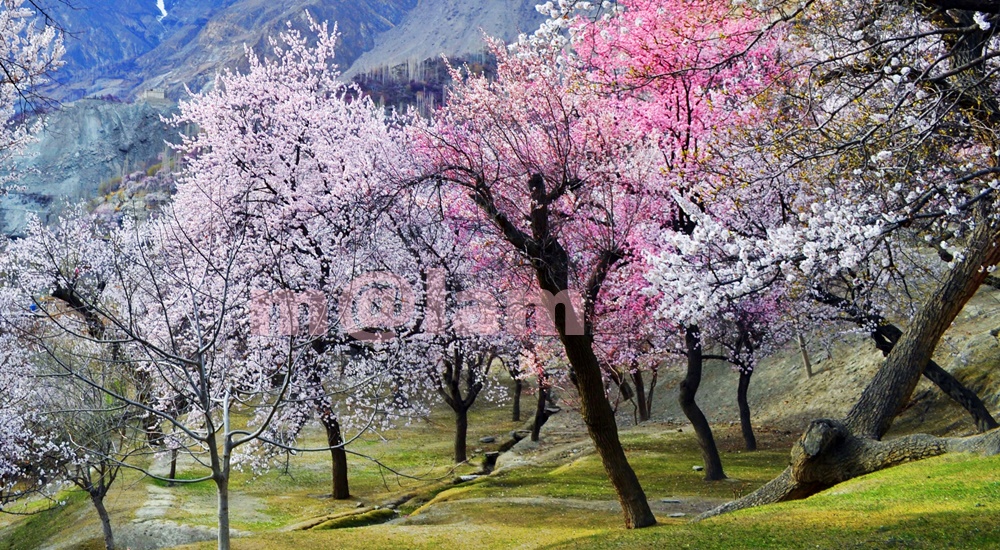
Blossom in Gilgit-Baltistan
Blossom in Gilgit-Baltistan – A Breathtaking Splendor Nestled amidst the towering peaks of the Hindukush, Himalayas, and Karakoram ranges, Gilgit-Baltistan is renowned for its mesmerizing landscapes and rich cultural heritage. Blossom in Gilgit-Baltistan is a breathtaking splendor. Each spring, this region experiences a unique phenomenon where colorful blossoms transform the rugged terrain into a paradise on Earth. Particularly in tiny valleys filled with fruit orchards, the blooming trees paint a unique picture of nature against the mountainous backdrop. The journey along the Karakoram Highway, especially from Gilgit to Hunza, offers tourists a lifetime experience. Particularly because of the orchards filled with flowering trees emitting sweet fragrances. Likewise, the journey to the Phunder Valley from Gilgit, and to the Shigar and Khaplu Valleys from Skardu, presents captivating sceneries. Every turn reveals unexpected vistas of natural contrast. From blue skies to emerald rivers, The scenery captivates the soul of every beholder amidst the stark contrasts of rugged terrain and delicate blossoms. Blossoming Season in Gilgit-Baltistan The blossom season in Gilgit-Baltistan is a captivating spectacle that draws tourists from across the globe. The harmony of diverse contrasts unfolds, offering a glimpse into the sublime beauty that graces this tranquil corner of the world. The timing of these blossoms varies depending on altitude, temperature, and precipitation. Particularly, the Cherry and Apricot Blossom season is renowned for its brevity and beauty. Lasting only about two months, from March to the end of April, the Cherry blossom season enchants all who inhabit Gilgit-Baltistan with its serene and picturesque scenery. Geographical Features: Altitude: Gilgit-Baltistan’s high altitude, ranging from 1,500 to 8,000 meters above sea level, contributes to its diverse flora and fauna. The varying altitudes create microclimates conducive to different types of blossoms, from manmade orchards to wildflowers in the pastures. Climate: The region experiences a temperate climate, with cold winters and mild summers. The transition from winter to spring triggers the blossom season, usually beginning in March and lasting until April in the low-altitude regions. It lasts till June in the high-altitude valleys and pastures. This rejuvenation of nature delights every beholder with its captivating beauty. Flora and Fauna: Gilgit-Baltistan boasts a diverse range of flora, including wild roses, tulips, and various fruit trees. This rich vegetation provides vital habitats for indigenous wildlife such as ibex, snow leopards, and migratory birds. Tourist Attractions during Blossom Season This is the perfect season to explore Gilgit-Baltistan because the environment is mild and hence the weather cannot obstruct adventure activities. However, it isn’t just the weather that brings charm to Gilgit-Baltistan, but it is also the blossoming trees that create a contrast of natural colors to enchant the senses. Those lovely white and pink blossoms seldom refuse to bring joy to the visitors’ faces. Many tourists along with local people visit the enchanting valleys of Gilgit-Baltistan including Hunza & Nagar, Bagrot, Ghizer, Skardu, Shigar, and Khaplu during this time to enjoy this beautiful season with enthusiasm. Below are the details. Bagrot Valley The magnificent Bagrot Valley, situated approximately 35km southeast of Gilgit, and accessible within an hour. It is a recommended half-day tour destination for those staying overnight in Gilgit or traveling from Gilgit to nearby destinations. During the blossom season, Bagrot Valley undergoes a magical transformation, as vibrant colors and enchanting fragrances envelop the landscape. With the arrival of spring, almond, apricot, peach, and apple trees bloom; adorning the valley with a breathtaking display of nature’s beauty. Against the backdrop of majestic mountains, the blossoms create an ethereal charm, captivating the hearts of all who witness this natural spectacle. Hunza Valley Hunza Valley is celebrated for its picturesque landscapes and terraced fields embellished with fruit orchards. Comprising a series of tiny valleys in the lower, central, and upper regions, it offers a diverse and enchanting experience. The Hunza River serves as a natural boundary between the valleys of Hunza Valley and Nagar. Both valleys are guarded by towering mountains. Visitors are treated to the mesmerizing sight of cherry, apricot, and apple blossoms set against the backdrop of snow-capped peaks in Lower and Central Hunza. Meanwhile, the upper Hunza valleys, situated at altitudes exceeding 2500 meters, experience the blossom season later, typically in May and June. Nagar Valley The Nagar Valley lies adjacent to Hunza Valley, separated only by the Hunza River flowing through a gorge flanked by towering mountains. While Hunza Valley provides magnificent views of the mountains in Nagar, the valleys of Nagar offer the best vantage points for admiring the beauty of Hunza’s mountains. Driving along the Karakoram Highway, visitors can delight in the charming orchards of Hunza and Nagar. Additionally, Hoper Valley in Nagar is renowned for its unparalleled grandeur during the blossom season, offering a truly captivating experience for travelers. Phander Valley Phander Valley, situated approximately 170km from Gilgit along the Gilgit-Shandur road, is renowned for its pristine beauty throughout the year. Its turquoise-colored waters flowing through the valleys create a stunning spectacle. This hidden gem offers travelers a tranquil ambiance where they can immerse themselves in the splendor of cherry blossoms and alpine meadows. Visitors can also enjoy various activities such as fishing and camping amidst the serene surroundings of Phander Valley. Skardu Nestled amidst towering mountains and turquoise lakes, Skardu provides a serene retreat for nature enthusiasts seeking solace in the lap of pristine beauty. Skardu is accessible directly from Islamabad by air and by road along the Karakoram Highway to Jaglot and then via Jaglot-Gilgit road to Skardu. During the blossom season, the valleys burst into life with vibrant hues of wildflowers and fruit trees in full bloom. Lower Kachura, Upper Kachura, Chundah Valley, and Soq Valley epitomize the splendor of blossoms, offering a feast for the senses against the backdrop of majestic peaks and crystal-clear waters. Shigar Valley Located approximately 45km from Skardu, the Shigar Valley, can be accessed via the renowned Sarfaranga Desert by crossing the Indus River, offering a gateway to the Baloro Glacier. This glacier, stretching 63km long, leads to a mountain kingdom where four of

