
Chitral

Chitral
Khyber Pakhtunkhwa, Tourists Destinations in Pakistan

Chitral

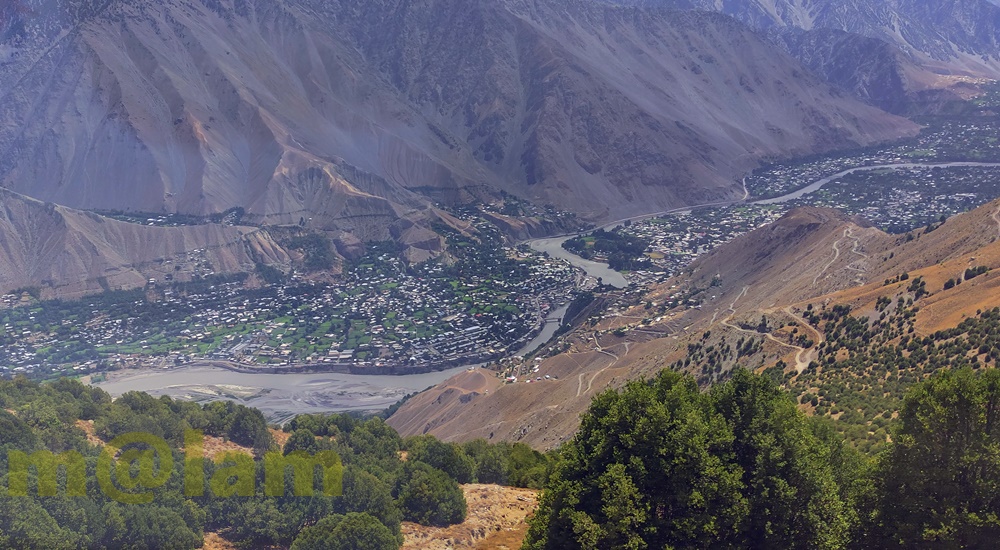
Chitral is one of the spectacular, culturally rich, and prominent tourist destinations in the northern KPK province of Pakistan. The region is home to the mighty Hindukush Mountains and scenic valleys. The entire Chitral is blessed with breathtaking natural beauty. Each of its valleys has its unique attributes that distinguish it from the others.  Its lush green valleys, high-altitude mountains, and scenic glaciers along with the rich culture of the region attract tourists from across the country and the globe every year. Chitral was historically an independent princely state before independence. However, it was the first state to declare accession to Pakistan as a district of Malakand Division in 1970. Geography Chitral town runs along the banks of the Chitral River. The entire Chitral district covers an area of 14,850 km². Out of its total landmass, 4% is forest, 3% cultivated area, and 2% cultivable land while the rest is mountains and barren. Chitral is bordered to the east by Gilgit-Baltistan, southeast with Swat, north and north-east by China and the Wakhan corridor of Afghanistan, west borders Nuristan and Kunar provinces of Afghanistan, and Upper Dir district of Khyber Pakhtunkhwa (KPK) province is situated to the south. Furthermore, Chitral town is the administrative center of the Chital district, which is controlled by the Khyber Pakhtunkhwa government. Districts Chitral itself is a district of KPK province housing a population of 447,362 and is further divided into two districts – lower and upper Chitral by the government of KPK. Chitral is located among the Hindukush Mountains in the northwest of Pakistan. Lower Chitral covers the region from Lowari to Barenis and Gabor on the Garam Chashma side while Upper Chitral starts from Barenis village onwards. History Centrally positioned on the crossroads to Central Asia, Chitral boasts a rich and captivating history. Its strategic location made it a coveted target for invaders, drawing attention before other areas in the region. The documented history of Chitral traces back to the early 8th century AD when Tibetans invaded the Yasin Valley, marking the beginning of a series of invasions. Subsequently, in 900 AD, both the Chinese and Buddhists became part of Chitral’s historical narrative. Later, the Kalash also ruled Chitral for decades. In the 14th century, Chitral became a unified independent under the rule of Shah Nasir Rais while in 1570, the Rais dynasty was replaced by the Katoor dynasty. Likewise, the famous mehtar of Chitral Aman-ul-Mulk ruled from 1857 to 1892. In 1895, the siege of Chitral Fort took place and lasted a month, after which Chitral became an independent state under British rule. Finally, in 1969 it was merged into Pakistan. Today, Chitral hosts ancient Chitrali Tribes as well as nomads who were invited by the mehtars to settle in the state. Chitral is additionally the residence of the ancient pagan tribe, the Kalash, who currently reside exclusively in the three valleys of Bamburat, Rambur, and Birir. Cultural Heritage Chitral’s cultural heritage encompasses a rich tapestry of arts and crafts, traditional clothing, diverse cuisines, local games, music, dance, folksongs, and iconic landmarks. People The Chitrali people call the land of Chitral “Kho” or “Khow” who account for 92% of the population and their language is Khowar. Other tribes include the 3000 Pagan Kalash people living in Bamburet, Rambur, and Birir; the Shubgali tribe living in Gabor, Langoor Butt, and Bamburet and are believed to have come from Nooristan (Afghanistan). The tradition of hospitality is evident across northern Pakistan, but few places match the generous warmth found in Chitral. Clothing Chitral boasts a long and illustrious history that has profoundly shaped its culture. Men in the society typically don Shalwar and Kameez, complemented by the traditional Pakol headwear. Women, on the other hand, wear Khet Partog, traditionally covering their faces with a scarf and adorning their heads with a Dupatta. The Pakol is alternatively referred to as the Chitrali Topi. The region also hosts various festivals featuring Chitrali traditional music, folk tales, and captivating traditional dances performed by both male and female members. Religious affiliation Mainland Chitral and its valleys are home to the Muslim population. However, the majority of the people in Chitral’s Kalash Valley are polytheists who believe in numerous gods. They worship numerous gods and hold a variety of religious festivals. Arts & Craft Chitralis also have a strong taste for music and Chitrali sitar, a string instrument, can often be heard at many places and family gatherings. Chitral’s artisans manufacture a wide range of elegant and delicately crafted jewelry, woodwork and embroidery, woven and knitted textiles. The woolen fabric from Chitral, known locally as “Shu,” and walnut wood furniture are highly sought-after items in handicraft markets across the country. The traditional clothes, including those of the Kalash people, are made from wool and silk and decorated with beads and shells. Traditional caps (Khapol) and gowns (Chugha) are popular while the typical Chitrali shoes (Khon) resemble long-riding boots. Traditional Chitrali buildings are embellished with wood carvings and have been designed keeping in view the climatic and local environmental conditions of the area. Culture Chitral’s culture carries traces of Greek, Iranian, Tatar, and Turkish influences, attributed to its unique location and historical connections with Central Asia and Europe. Chitral’s own culture, which has evolved over millennia and includes more than a dozen ethnic groups communicating as many languages as there are cultures, is strongly tied to those of Central Asia rather than South Asia. Chitral and Kalash people are also known for their incredibly unusual clothing and dances, as well as their love for music (Especially the tribes of Kalash). During festivals, drums are played, and the women dance in a circle while some elderly folks sit on the sidelines and sing old melodies. Languages The predominant language spoken by the locals is Chitrali. Khowar is the most widely spoken language in the region, with 98% of the population speaking it, while Kalash people speak Kalasha. Urdu, the national language, is also spoken and understood by the locals while Pashtu is
Chitral Read Post »

, , , , , ,
Shandur Polo Festival
Gilgit-Baltistan

Shandur Polo Festival

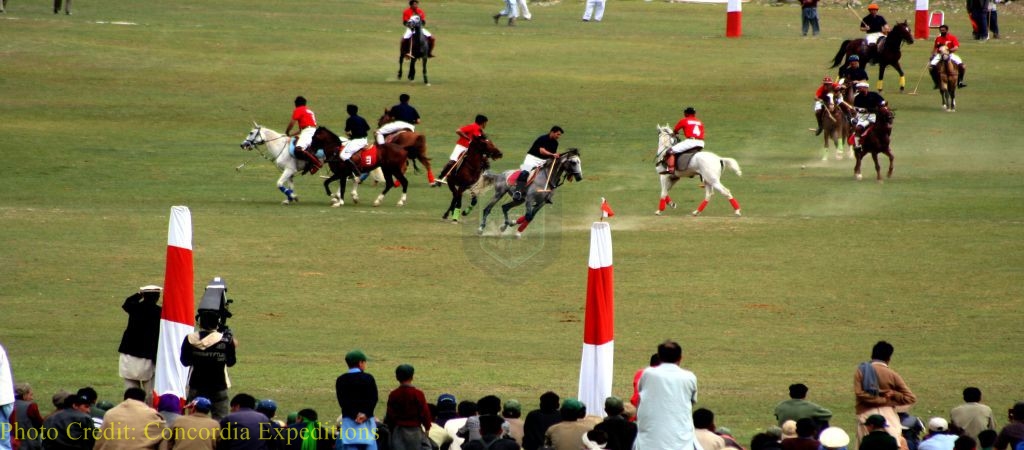
Exploring the Thrilling Shandur Polo Festival: A Unique Experience at 3734m Altitude The exhilarating Shandur Polo Festival unfolds at the awe-inspiring Shandur polo ground, nestled at a breathtaking altitude of 3734 meters. This remarkable event occurs on the border shared by the Chitral district of Khyber Pakhtunkhwa (KPK) and the Ghizer district of Gilgit-Baltistan in Pakistan. The festival takes place annually from the 7th to the 9th of July. This festival captivates thousands of enthusiastic spectators, drawing them into the world of the kings’ game – traditional freestyle Polo. A Unique Polo Experience The version of the Polo showcased during the Shandur Polo Festival is distinctive to this region. It offers an experience unparalleled anywhere else in the world. For three exhilarating days, domestic and international tourists, ardent supporters from Gilgit and Chitral, organizers, vendors, performers, Polo players, and their magnificent horses come together to create a vibrant makeshift village. The verdant Shandur Pass serves as a spectacular battleground during this festival. The World’s Highest Polo Ground The Shandur Polo Ground is renowned as the world’s highest Polo ground. It is encircled by majestic mountain peaks and graced with a serene lake in the backdrop. This breathtaking setting not only enhances the festival’s allure but also provides exciting activities for tourists. The Polo ground, situated in the heart of the pass, measures 200 meters by 56 meters, enclosed by a 60-centimeter-high stone wall. The size of the ground is in contrast to the conventional Polo field’s dimensions of 270 meters by 150 meters. This smaller size adds to the intensity of the game, making it seem crowded for the 12 players who compete at any given time. However, this limitation prevents the horses from extended gallops at such high altitudes. A Glimpse into History Polo’s roots trace back to the 6th century BC when it served as a training game for cavalry units of the king’s guards and elite troops in Persia. Originally, Polo boasted up to 100 players on each side, resembling a mini-battle. In the 6th century AD, it became Persia’s national sport and gradually spread to Arabia, Tibet, and China. Tragically, in 910, a game in China led to the death of a cherished relative of Emperor Apao Chi, prompting the gruesome beheading of all players. In South Asia, Polo arrived in the 13th century, introduced by Muslim conquerors. Over time, it evolved into a more regulated version from its wild beginnings. The contemporary Polo we witness today typically features six players on each side with a distinct lack of rigid rules. The free-style polo is epitomized by the famous saying, “The rule is that there is no rule.” However, the polo festival at Shandur makes one exception, with six players on each side engaging in an intense one-hour match, punctuated by a mere 10-minute break due to the high altitude. This breather comes alive with a traditional dance performance, and the team securing the most goals within the allotted time emerges victorious. Historical Beginnings Shandur’s first Polo match occurred in 1936. It was initiated dramatically by Major Evelyn Hey Cobb, the British political agent of the region. Cobb, a Polo enthusiast, ordered Niat Qabool Hayat Kakakhel, a prominent figure, and assistant to the governor from Ghizer district, to construct a Polo Ground in Shandur. This Polo Ground earned the name “Mas Junali,” derived from two Khuwar languages, meaning “Moony Polo Ground.” Impressed by Kakakhel’s efforts, Cobb sought to reward him However, Kakakhel declined and instead asked for trout to be stocked in local streams. Cobb agreed, importing live trout from England, which were released into the River of Ghizer. This visionary move paved the way for the Directorate of Fisheries and job opportunities in the region. Today, Gilgit-Baltistan is also renowned for Trout fishing. Preparing for Battle Players and horses from both sides arrive at Shandur weeks before the grand showdown to acclimatize to the high altitude. Preliminary matches in both Chitral and Gilgit determine the best horses and players for the final games, with local judges making their selections during test matches on home grounds. A Wild Game Safety measures take a back seat during this wild game. Players rarely wear helmets, donning colorful attire and wielding strapless mallets as they chase the ball vigorously on their horses, often without bandages to protect the steeds from harm. Winning the highly anticipated trophy is a source of immense pride for both teams, making national headlines. Supporters and tourists flock to the venue as soon as the rival teams and their horses make their grand entrance. Access Both Gilgit and Chitral districts are accessible by air and road from the capital city of Islamabad. Shandur is approximately 211 kilometers west of Gilgit via the Gilgit-Chitral road. Conversely, it is about 168 kilometers northeast of Chitral along the Shandur-Gilgit road. The journey from Gilgit treats travelers to breathtaking vistas of valleys, lakes, fruit orchards, traditional houses, terraced fields, flowing rivers, and serene springs. Similarly, the drive from Chitral offers glimpses of the Mastuj and Surlasp valleys’ lush natural beauty, the warm hospitality of the residents, and traditional houses nestled amidst stunning landscapes. Both routes are suitable for 4WD vehicles but are closed during the winter months. Activities The heart-pounding Polo matches at Shandur are complemented by an array of activities. These warm-up activities help visitors to immerse themselves in the natural and cultural beauty of the region. Adventure enthusiasts can explore the surroundings of Shandur, try their hand at stream and lake fishing, or embark on exhilarating hikes. The event also provides a fascinating glimpse into the lifestyle and cultural traditions of the people of Gilgit and Chitral. Nights come alive with musical performances and fireworks, while daytime showcases paragliding and traditional dances from Chitral and Gilgit-Baltistan. The indigenous customs and natural beauty are a visual delight for visitors. Plan Your Visit For all visitors, it is highly recommended to: Arrive at the venue at least a day before the final contest to fully savor the festival.

Shandur Polo Festival Read Post »

, , , , , , , , , , , , , ,
Scroll to Top