
Heritage sites in Pakistan

Chaukandi Tombs
Heritage Sites in Pakistan, Islamic Heritage, Monuments, Sindh, Tombs, World Heritage Sites

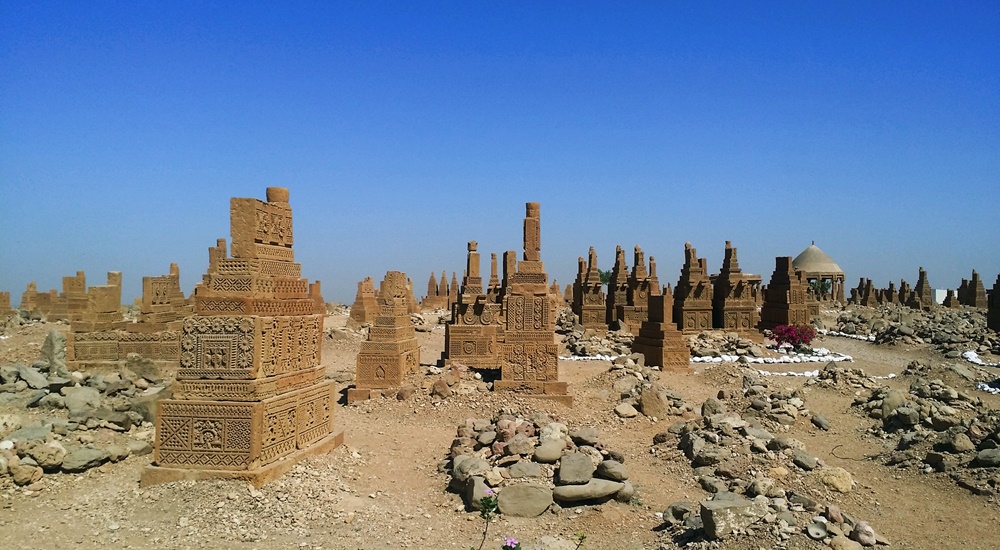
Chaukandi Tombs

Expanding across a two-square-mile area, the Chaukandi Tombs near Karachi form an ancient Islamic burial site. The Chaukandi Tombs are renowned for its detailed sandstone carvings. These tombs bear a stylistic similarity to the elaborate graves located at the Makli Necropolis, one of the six UNESCO World Heritage Sites, near Thatta. Displaying the distinctive funerary architectural style typical of lower Sindh, the Chaukhandi Tombs undoubtedly provide a fascinating insight into the historical and artistic legacy of the region. History of Chaukandi Tombs: The Chaukhandi graveyard is attributed to the Jokhio tribe of Sindh. At the same time, other Sindhi tribes like Burfat, Jakhra, and Shaikh tombs are also found. The graveyard was constructed during the Mughal rule from the 15th to the 18th century, a period dominated by Islam. In addition to the Jokhio tribe, various Baloch tribes with Rajput origins have found their final resting place here. The influence of the Rajput tribe is evident in the design of the tombs. The step-shaped graves basically showcase a blend of cultures. For instance, some graves feature Rajput characteristics like monumental pedestals and slabs, while others exhibit simpler decorations, resembling a child’s drawing of a human face. Likewise, some tombs lack any human figures, reflecting Islamic beliefs and contributing to the diverse historical tapestry preserved in the Chaukhandi necropolis. The majority of the tombs at Chaukhandi especially represent family graveyards. However, only a limited number placed beneath pillar canopies that exhibit a Hindu architectural style. On certain male graves, intricate carvings depict a horseman equipped with arms such as a shield, sword, bow, and arrow. Meanwhile, carvings on women’s graves portray ornamental details like bracelets, necklaces, rings, anklets, and more. Additionally, for male graves, a boss-shaped projection at the northern end is designed to secure the turban of the deceased. These detailed carvings provide insights into the cultural and personal attributes of the individuals interred at Chaukhandi. Design of Chaukandi Tombs: The tombs at Chaukhandi stand out as a distinctive illustration of surface burials. Unusually aligned from south to north, a departure from the norm in both the region and period, these tombs are crafted from substantial sandstone slabs intricately arranged to form refined pyramid shapes. The meticulous carving on these slabs showcases intricate patterns, drawings, and scenes that contribute to the unique artistic and historical significance of the Chaukhandi Tombs. The absence of precise dating inscriptions on the Chaukhandi Tombs makes it challenging to determine their exact historical timelines. A typical casket consists of six vertical slabs, with two placed at the head and foot of the grave and the remaining four covering the sides, accommodating the length of the body. The tomb takes on a pyramid-like shape, featuring six large slabs covered by another tomb comprising six smaller vertical slabs. The architecture of Chaukandi Tombs: These tombs explicitly represent a unique blend of Sindhi and Balochi architectural styles. Crafted from beige-colored sandstone, these tombs come in the form of single graves or clusters, containing up to eight tombs. Despite the challenges posed by the region’s arid climate, these tombs have endured, serving as a resilient testament to the culture and heritage of the area. Chaukhandi Tombs, a form of funerary architecture, are characterized by square-shaped structures. Its five horizontal slabs enclosing the upper part of the tomb. Notably, these structures often exhibit a carved knob resembling a crown or turban at the front. Graves of warriors from the tribe boast intricate designs and motifs, including depictions of horsemen, jewelry, and hunting scenes. In contrast, tombs of women showcase carvings of anklets, bracelets, and jewelry at the front rather than human figures. Men’s graves typically feature carvings of swords, symbolizing their role as protectors of the tribe during times of war. Distinctive Features of Chaukandi Tombs: The Chaukhandi Tombs exhibit several distinctive features: The most prominent visual characteristic of Chaukhandi tombs is their cone-shaped roofs, constructed using bricks or stones and mortar. This design choice was made to distribute the weight of the structure over a larger area, enhancing stability and durability. The walls of Chaukhandi tombs are built in a beehive formation. The tombs feature multiple layers of stones arranged in a stepped pyramid shape. Constructed from local stones and bricks, these walls often bear decorative designs. Inside each tomb, there is typically a dedicated prayer chamber. This space actually serves for mourning and remembrance of the departed. Accompanying every tomb is a raised grave platform, situated above the surrounding landscape. This platform serves as a place for the family of the deceased to conduct rituals related to the burial. Discovery of Chaukandi Tombs: The Chaukhandi Tombs gained historical recognition with the earliest reference found in a letter written by J. Macleod, a Scottish historian, to Sir Henry Bartle Edward Frere, a British administrator, in 1851. However, it was H. D. Baskerville, the Assistant Collector of Thatta in Karachi in 1917, who brought these historical graves into prominence. In 1922, the site was officially included in the Ancient Monuments Preservation Act. Jean Philippe Vogel, a distinguished Dutch epigraphist employed by the Archaeological Survey of India from 1901 to 1914, played a crucial role in shedding light on the tombs. His extensive research revealed that many of these tombs belonged to Muslims. It was evident from the Arab script inscribed on their graves. Vogel’s findings provided valuable historical insights into the religious heritage of India. Post-independence, scholars and historians continued their in-depth investigations into the Chaukhandi Tombs. Rubbings of these tombs were displayed globally, capturing the attention of academics and sparking further research into this significant archaeological site. Recommendations: Chaukhandi Tombs are highly recommended to visit for individuals passionate about archaeology and history. The site holds a wealth of historical narratives. If you’re intrigued, plan your visit to this amazing site. Apart from the rich decoration adorning the tombs, another noteworthy aspect shared with similar necropolises worldwide is the prevalent local belief that the area is haunted. The Chaukhandi Tombs are reputed to be one of the most haunted sites in the

Chaukandi Tombs Read Post »

, , , , , , , , , , , , , , , ,
Makli Necropolis
City Breaks, Heritage Sites in Pakistan, Monuments, Sindh, Tombs, World Heritage Sites

Makli Necropolis

Unveiling the Enigma: Makli Necropolis – A Treasure Trove of History and Artistry Nestled in a diamond-shaped expanse, the grandeur of the Makli Necropolis in Thatta is unparalleled. It boasts of its status as one of the largest graveyards globally covering a sprawling 10 square kilometers. Altogether, the Makli Necropolis houses an astonishing half-million monuments. The graveyard stands as the final resting place for an eclectic mix of individuals, from regal monarchs and erudite scholars to valiant warriors, philosophers, governors, and revered saints. In recognition of its historical significance, Makli Necropolis, therefore, earned its place among the UNESCO World Heritage Sites of Pakistan in 1981. A Journey Through Time: Unraveling the History of Makli Necropolis Delving into the annals of history, Makli Necropolis emerges as the eternal abode for over 125,000 saints. Throughout the ages, this city has undeniably been a beacon of knowledge housing around 400 educational institutions. Here students from the Muslim world and Asia came to hone their skills. Students generally engaged in a diverse array of subjects encompassing religion, politics, and philosophy.  Yet, the enigmatic origins of Makli remain shrouded in mystery. It is widely believed that the cemetery evolved around the shrine of the 14th-century Sufi Hamad Jamali. As for the etymology of “Makli,” two intriguing notions persist. Locals suggest that it signifies “Mecca-like,” while another legend ties it to the pious woman known as “Mai Makli.” Legend has it that her fervent prayers thwarted Sultan Firuz Shah Tughlaq’s conquest of Thatta until her passing. She now rests in Makli near the tomb of Jam Nizamuddin. Thatta enjoyed a glorious stint as the capital of Sindh from the 14th to the 18th centuries. Initially, it was ruled by three successive dynasties – Samma, Argun, and Tarkhan. However, it later came under the dominion of the Mughal emperors of Delhi from 1592 to 1739 before being ceded to Shah Nadir of Iran, marking the beginning of a period marked by decline and neglect. The Architectural Marvels of Makli Necropolis The monuments of Makli Necropolis are a testament to the social and political history of Sindh from the 14th to the 18th centuries. Crafted with exquisite architectural finesse, these tombs and graves epitomize the artistic prowess of their time. The tombs were built by utilizing an array of materials such as sand bricks, stone, and marble. Some of these monuments are opulently adorned with glazed tiles, boasting intricate designs, arched domes, and towers adorned with exquisite Islamic calligraphy and devotional carvings inspired by diverse religious and iconographic traditions. Remarkably, many of these iconic monuments have withstood the test of time, enduring centuries of exposure to the elements. However, preserving this rich heritage for future generations necessitates substantial restoration efforts. Makli Necropolis: A Journey Through Location and Access Situated adjacent to the tip of the Indus River delta, Makli Necropolis lies on the outskirts of Thatta.  It was an ancient bastion of Islamic civilization nestled at the edge of the 6.5-kilometer-long plateau of Makli. This historic site is located approximately 89 kilometers east of Karachi in the Sindh province of southern Pakistan. Makli offers an ideal day trip from the bustling metropolis of Karachi. Navigating the vast expanse of the graveyard is made convenient through its wide streets, ensuring access to all the awe-inspiring monuments. Makli Necropolis undoubtedly stands as a testament to the rich tapestry of history, culture, and artistry. The graveyard has woven itself into the very fabric of this remarkable site. It beckons not only to history enthusiasts but also to travelers, both domestic and international, and devout pilgrims alike, offering a glimpse into an enigmatic past that continues to captivate our imaginations.

Makli Necropolis Read Post »

, , , , , , , , , , , , , ,
Ketas Raj Temples in Punjab, Pakistan
Hindu Heritage, Punjab

Ketas Raj Temples

Unveiling the Mystical History and Temples of Ketas Raj: A Spiritual Journey Ketas Raj is a complex of ancient Hindu Temples nestled at an altitude of 2,000 feet above sea level.  The temples are situated near the Chakwal district in the Potohar region of Pakistan. Ketas Raj, also known as Qilla Ketas, orniginally is a sacred pilgrimage site steeped in history and spirituality. The Mystical History of Ketas Raj: Legends and Myths Ketas Raj holds a history that dates back to the days of the Mahabharata, approximately 300 BC. According to legend, it was created from the tears of the Hindu god Shiva upon the death of his wife, Satti. These divine tears formed two holy ponds, with Ketas pond being one of them. The word “Ketas” itself is derived from Sanskrit, meaning “raining eyes.” Another captivating myth connects the Pandava brothers, who are believed to have spent four years of their 14-year exile here. In fact, the sacred lake within the complex is said to possess magical powers. It is the very place where Yudhisthira, one of the Pandavas, defeated a Yaksha using his wisdom to resurrect his brothers. Yet another variation of the legend involves the demise of Shiva’s horse, Katas, instead of Satti, his partner, adding further intrigue to the site’s mythology. Exploring the Temples of Ketas Raj: Architectural Marvels and Historical Significance Katas Raj encompasses a cluster of seven ancient temples, remnants of a Buddhist Stupa, medieval temples, Havelis, and recently constructed temples, all centered around a revered pond. This pond was once enclosed by a fort, temples, bathhouses, and rest houses. Among the structures, the oldest is a Buddhist Stupa, with its base still standing after more than 2000 years. The Chinese traveler Hieun Tsang visited Ketas in the early 7th century AD. Hieun highlighted the presence of an ancient fort surrounding the complex. The fortification wall remains mostly intact, with Sikh Raja Hari Singh Nalwa having constructed a palace by the pond. Although the palace is now in ruins, it still houses colorful depictions of Hindu deities. At the highest point of Ketas Raj, three temples stand tall. In fact, the Kala Mandar temple, over fifteen centuries old, is a testament to ancient craftsmanship. Likewise, the central temple, the largest of them all, features three stories and a narrow staircase leading to a rooftop with breathtaking views of the Ketas complex and the surrounding salt range. These Hindu Temples of Ketas were constructed during the Hindu Shahi Period and share architectural similarities with temples in Malot and Shiv Danga. Spiritual Significance and Visitors: A Place of Pilgrimage and Reverence Ketas Raj has been a sacred pilgrimage site for people of various faiths. Thousands of Hindus visit every April to partake in ritualistic baths in the holy pool, believing it purifies them of sins and aids in attaining salvation. Guru Nanak Dev Ji, the founder of the Sikh faith, also visited the temple in the early 1800s. The Haveli of Hari Singh Nalwa, a renowned general in Ranjit Singh’s army, lies adjacent to Ram’s temple. Additionally, the famous Muslim scholar Al-Beruni spent time studying Hinduism in this very temple. Most of these temples were constructed over 900 years ago, during the reign of Hindu kings, although some date back to the latter half of the 6th century AD. Accessing Ketas Raj: Location and Visiting Details Ketas Raj is located in the village of Ketas, off Choa Sadan Shah. It is beyond the main bazaar in the Chakwal district of Punjab, Pakistan. It is approximately 160 kilometers from Islamabad and is easily accessible via the road to Choa Sadan Shah from the Kalar Kahar interchange on the Islamabad–Lahore motorway (M2). Visiting Information: Timings and Entry Fees Katas Raj Temples are open for visitors from 09:00 AM to 05:00 PM and entry is free, with no tickets required. Ketas Raj stands as a testament to ancient history, spirituality, and architectural brilliance. It continues to draw visitors of various backgrounds who seek solace, spiritual enlightenment, and a glimpse into a bygone era. Plan your visit to Ketas Raj to experience the magic and mystique of this timeless treasure.

Ketas Raj Temples Read Post »

, , , , , , , , , , , ,
Scroll to Top