
Indus valley civilization

A journey through history of Pakistan
Blogs

A Journey through the history of Pakistan

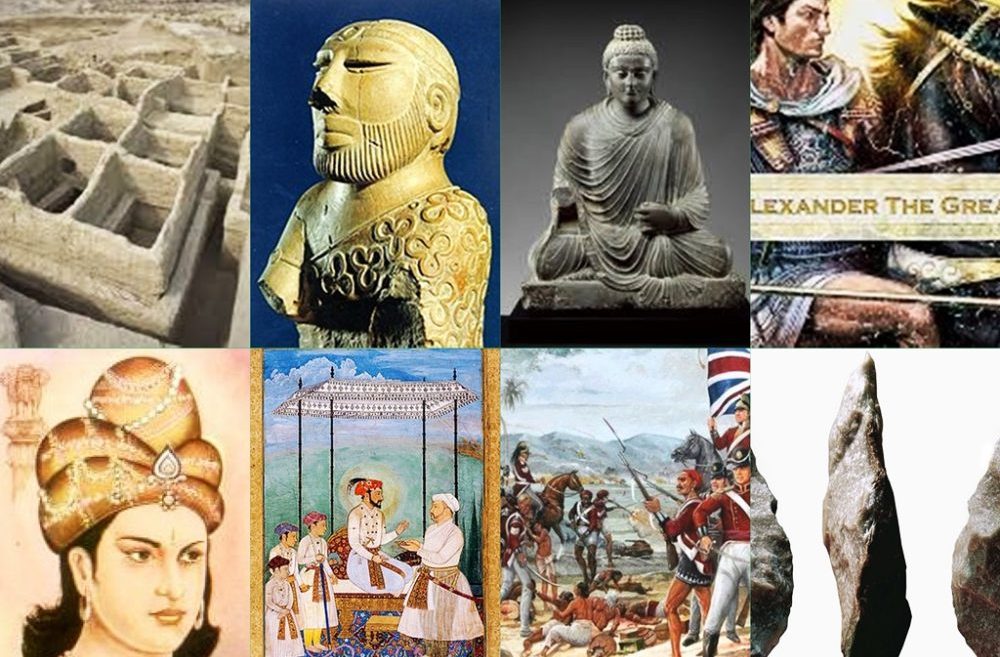
Exploring the Ancient History of Pakistan Unearthing the Rich Past of Pakistan Modern-day Pakistan stands as a testament to the vast and captivating tapestry of history woven into its soil. A Journey through the history of Pakistan is a journey through the ages, tracing the footsteps of ancient civilizations that once thrived on this land. These ancient echoes have shaped Pakistan into a repository of historical treasures that beckon explorers and historians alike. Let’s delve into this rich heritage through the annals of time. Soanian Culture: Tracing the Origins In the depths of Pakistan’s history, we find the Soanian Culture, harking back to the lower Paleolithic era. The relics of this era, including edged pebble tools discovered near the twin cities of Rawalpindi and Islamabad along the Soan River, offer a glimpse into human habitation in this region some 50,000 years ago. The Soanian Culture derives its name from the Soan Valley, where Stone Age relics like tools and pottery endure as a testament to this ancient era. Regrettably, the once pristine Soan River has now deteriorated into a polluted waterway. Mehrgarh: Cradle of Neolithic Civilization Mehrgarh, nestled in the Balochistan province, emerges as one of the most significant Neolithic sites in Pakistan. Dating back 9,000 years, this settlement sprawls across 200 hectares on the Kachhi plain near the Bolan Pass. Unearthed in 1974 by the French archaeologist Jean-François Jarrige, Mehrgarh provides a window into life during the Pre-Harappan phase, from 7000 B.C.E. to 5500 B.C.E. Inhabitants of early Mehrgarh constructed mud brick houses, stored grain in granaries, fashioned tools from local copper ore, and waterproofed their containers with bitumen. This society thrived until around 2600 BCE when arid conditions compelled migration, paving the way for the Indus Valley Civilization. Indus Valley Civilization: A Technological Marvel The Indus Valley Civilization, also known as the Harappan Civilization, graced the Indus River Valley from 3300 to 1800 BCE. Harappa in Punjab and Moenjodaro in Sindh are two of its renowned cities, excavated in 1921 and 1922, respectively. This civilization unfolds in three phases: the Early Harappans (3300-2600 BCE), the Mature Harappans (2600-1900 BCE), and the Late Harappans (1900-1300 BCE). The Indus Valley people displayed remarkable technological prowess. Their precision in toolmaking, standardized moisture-resistant fire-backed bricks, and advanced sewage systems underscore an advanced society that thrived while much of the world lagged behind. Climate change, disrupting the river system, eventually led to their decline around 1800 BCE. Gandhara: Cradle of Buddhism The ancient kingdom of Gandhara encompassed Northwest Pakistan, the Potohar plateau, and parts of Afghanistan. It served as the cradle of Gandhara civilization and Buddhism, which flourished here for over a millennium. The region’s archaeological sites, notably in Taxila and Swat, along with rock carvings along the Karakoram Highway, bear witness to Gandhara’s cultural and religious significance. The kingdom endured from the 6th century BC to 1021 AD when it succumbed to Mahmud of Ghazni’s conquest. Alexander the Great’s Indelible Mark In 326 BC, Alexander the Great, renowned as Sikandar-e-Azam in Urdu, ventured into Punjab through Swat. He formed an alliance with Ombhi, the ruler of Taxila, to challenge King Porus. During his time in Pakistan, Alexander engaged with local scholars and explored the region extensively. His legacy lives on in Pakistan, where relics like ancient coins commemorating his conquests and the Jandial Temple in Taxila continue to tell his story. The Maurya Empire: A Reign of Kings Following Alexander’s departure, Chandragupta Maurya rose to power, founding the Mauryan dynasty. He expanded his realm, stretching from eastern Iran to the Burmese hills, including the subcontinent. His son, Bindusara, continued this expansion, and the empire reached its zenith under Ashoka, one of history’s greatest rulers. Ashoka’s legacy includes constructing grand stupas, such as the Dharmarajika stupa in Taxila and the Butkara stupa in Swat. The Mauryan Empire began to wane after Ashoka’s reign, ultimately vanishing after his assassination. The Mughal Empire: Art and Architecture Flourish Babar, the first Mughal ruler, laid the foundation of the Mughal Empire in the subcontinent in 1526. The reign of the six Great Mughal Emperors from 1526 to 1707 left an indelible mark on architecture. Monuments like the Badshahi Mosque, the Shalimar Gardens, and the Lahore Fort showcases intricate stone carvings, glazed tile decorations, and precious stones set in marble. The Mughals’ architectural legacy extends to the Makli Tombs in Thatta, a testament to their artistic grandeur. The Sikh Empire: Rise and Fall From 1799 to 1849, the Sikh Empire dominated parts of South Asia. Under Maharaja Ranjit Singh’s rule, it expanded its territory from Gilgit and Tibet in the north to Sindh in the south, and from the Khyber Pass in the west to the Sutlej in the east. However, this empire eventually succumbed to British rule in the Second Anglo-Sikh War. This chapter in South Asian history is both captivating and enlightening, revealing a dynamic empire’s evolution and eventual decline. The British Raj: Legacy of Monuments The British East India Company’s rule from 1858 to 1947 left an indelible legacy on the subcontinent. While their presence was marked by the division of the region into Pakistan and India, they also contributed to its administration, infrastructure, and institutions. Remarkable monuments like Aitchison College Lahore, the Clock Tower in Peshawar, and Frere Hall Tower in Karachi bear witness to their architectural influence. A Journey through the History of Pakistan is a vibrant tapestry woven with the threads of ancient cultures, mighty empires, and enduring legacies. Exploring this rich past is not only a journey through time but also a deep dive into the fascinating history of this diverse and culturally rich nation. codecanyon

Key Facts about Pakistan
Blogs

Pakistan

Exploring Pakistan: A Treasure Trove of Diverse Experiences Pakistan stands as an exceptional and blessed nation, graced with some of Asia’s most breathtaking landscapes. Its geography is as varied as its rich cultures, and its people are known for their warm hospitality. In the realm of discovering the roots of modern-day humanity, few places on Earth rival Pakistan. Unraveling the Tapestry of History The land that now comprises Pakistan has been a cradle of ancient civilizations and a melting pot of cultures and dynasties for centuries. From the ancient Neolithic Mehergarh civilization, dating back 9000 years, to the illustrious 5000-year-old bronze age Indus Valley Civilization, the 3000-year-old Buddhist Gandhara Civilization, the opulent Mughal Era of the 16th century, the brief Sikh rule, to over two centuries of British occupation, leading to independence in 1947, Pakistan’s history is a tapestry of unparalleled events, unlike any other sovereign state. A Glimpse of Pakistan’s Geography Officially, the country is known as the Islamic Republic of Pakistan. Most importantly, Pakistan ranks as the 6th most populous nation in South Asia. Altogether, the country houses over 224 million people from diverse cultural and ethnic backgrounds. Encompassing 881,913 square kilometers (340,509 square miles), Pakistan boasts four provinces – Sindh, Baluchistan, Punjab, and Khyber Pakhtunkhwa – and three territories – Islamabad, Kashmir, and Gilgit-Baltistan. The carefully planned capital city, Islamabad, lies at the heart of this diverse nation. Pakistan’s strategic location at the crossroads of Asia divides it into three major geographic regions: the northern highlands, the Indus River plains, and the Balochistan Plateau. Bordered by the Arabian Sea’s 1046-kilometer coastline in the south, India to the east, China to the northeast, Afghanistan to the northwest, and Iran to the southeast, Pakistan’s diverse landscape includes glaciated mountain ranges in the north (Gilgit-Baltistan), fertile alluvial plains, expansive deserts, lush forests, plateaus, jungles, diverse flora and fauna, meandering rivers, and pristine lakes. A Bounty of Tourist Attractions Pakistan is a treasure trove of tourist attractions, each region offering a unique experience. Northern Adventures The northern mountainous regions encompass parts of KPK (Chitral, Swat, and the Kaghan Valley), Azad  Kashmir, and all of Gilgit-Baltistan. Altogether, the region forms the westernmost edge of the magnificent Himalayas. This area is a haven for adventure enthusiasts offering opportunities for trekking and mountaineering. Moreover, climbing, white-water rafting, mountain and desert jeep safaris, and paragliding are other activities adventurers can take up. Gilgit-Baltistan is proud to host the world’s highest mountains and longest glaciers outside the polar regions. The region undoubtedly makes it a magnet for adventurers. This region also marks the convergence of three mighty mountain ranges – the Karakoram, the Hindukush, and the Himalaya – along with the Pamir mountain range. It was once a vital trade route of the ancient Silk Route. Now, it is embodied by the Karakoram Highway, connecting Pakistan and China at Khunjerab Pass. This highway is adorned with over 100,000 petroglyphs and rock carvings, testifying to its rich Buddhist history. The region’s towering mountains, quaint valleys, terraced fields, ancient forts showcasing architectural marvels, and a history spanning centuries beckon travelers. Central Treasures Pakistan’s central regions feature dense forests, vast deserts, and fertile lands steeped in history and culture, boasting unique landmarks. In fact, ancient sites like Moenjo-Daro & Harappa of the Indus Valley Civilization, Taxila & Takht-i-Bahi of the Gandhara Civilization, and architectural gems from the Islamic era, Mughal Empire, Sikh rule, and the British era, found in cities like Lahore, Multan, Bahawalpur, Karachi, and Peshawar, enthrall domestic and international visitors alike. Southern Charms The southern regions, Sindh and Baluchistan, boast archaeological sites, religious landmarks, and architectural heritage. At the same time, its lakes and some of the world’s most stunning golden beaches along the coastal line earned a special place in the world of tourism. The Makran Coastal Highway from Karachi to Gwadar and Jiwani is a world-famous route, dotted with exclusive tourist attractions. Pakistan proudly hosts six UNESCO World Heritage Sites, with several dozen more awaiting recognition. The Rich Tapestry of Pakistani Culture Pakistan’s major cities bear the marks of both history and modernity. Diverse ethnic groups, each with its own cultural background, inhabit different parts of these cities. Moreover, these groups practice various faiths, wear vibrant costumes, speak unique languages, savor rich cuisine, and coexist harmoniously. This diversity, combined with the legendary hospitality of the people, evidently paints a true portrait of Pakistan. Accessing Pakistan Pakistan is accessible by road from China via the Khunjerab border and remains open from April to October end.  Similarly, Pakistan is accessible from Afghanistan via the Khyber Pass in the northwest. Likewise, Pakistan is accessible from Iran via the Taftan border, and from India via the Wahga border. Similarly, Pakistan is well-connected to the world through its international airports in Islamabad, Lahore, Multan, Peshawar, Sialkot, and Karachi. Embracing the Seasons Pakistan’s distinct seasons are complemented by its stunning landscapes. It includes towering mountain ranges, expansive glaciers, crystal-clear lakes, flowing rivers, extensive highways, trekking routes, terraced fields, historical monuments, diverse cuisines, and cultural tapestry, creating an enticing destination that attracts tourists in abundance.

Mohenjo-daro UNESCO World Heritage Site in Sindh
Archaeological sites, Sindh, World Heritage Sites

Mohenjo-Daro

Unlocking the Enigma of Mohenjo-Daro: A Dive into Ancient History Mohenjo-Daro also spelled as Mohenjodaro or Moenjodaro, holds a mystique as intriguing as its name, which translates to “Mound of the Dead.” This archaeological gem is nestled in the Sindh province of Pakistan, offering a window into the enigmatic Indus Valley Civilization (IVC) that thrived around 2600 BC. Mohenjo-Daro is one of the six UNESCO World Heritage Sites in Pakistan inscribed in 1980. The city’s original name remains a mystery. The Dawn of Civilization Our story begins around 5500 B.C. when a nomadic tribe settled in the villages west of the lower Indus River. These early settlers, adapting to their environment, mastered tools, constructed humble dwellings, cultivated crops, and tamed animals. Over centuries, as climate patterns evolved, lush jungles and thriving wildlife emerged. Gradually, this nascent community expanded both in size and influence, engaging in trade with regions as distant as Central Asia and the neighboring western territories. By 2600 BC, Mohenjo-Daro evolved into a civilization rivaling the sophistication of Mesopotamia and Egypt. Unveiling the Indus Valley Civilization The Indus Valley Civilization, also known as the Harappan Civilization, boasted two major cities, Harappa and Mohenjo-Daro, along with over 100 smaller settlements. It marked the dawn of urbanization in the Indian subcontinent. From 2600 B.C. to 1700 B.C., this civilization thrived on the fertile plains along the Indus River, showcasing remarkable literacy with a unique script consisting of 250-500 Dravidian characters. This civilization stands tall among the world’s great ancient cultures, with its initial discovery at Harappa in 1921, followed by Mohenjo-Daro in 1922. Rediscovery and Archaeological Endeavors The journey to resurrect Mohenjo-Daro’s glory began in 1922 when R.D. Banerji, an archaeologist with the Archaeological Survey of India, stumbled upon the site. A series of extensive excavations, overseen by renowned archaeologists, occurred until the 1930s. Later, in 1964-65, brief excavations resumed, only to be halted due to preservation challenges. Mohenjo-Daro’s sprawling ruins, stretching across approximately 750 acres, housed a peak population of around 40,000, making it one of the world’s largest and most advanced cities in its era. The city’s construction, characterized by unbaked bricks atop elevated mounds, exemplifies meticulous town planning principles. Urban Planning and Infrastructure Mohenjo-Daro’s urban layout followed a structured grid, with rectilinear buildings dominating the landscape. Most structures were constructed using standardized fired and mortared bricks, complemented by evidence of sun-dried bricks and wooden superstructures. The city comprised two main sections: the Citadel, standing 12 meters high and featuring two grand assembly halls and public baths, likely reserved for religious ceremonies, and the Lower City, comprising courtyard houses for the middle class. These houses featured brick stairs leading to flat roofs and small bathrooms equipped with drains and sanitation facilities. The Magnificent Great Bath A crowning jewel among Mohenjo-Daro’s structures is the Great Bath, astonishingly well-preserved after millennia. Measuring 180 feet by 108 feet, this structure features outer walls that are 7 to 8 feet thick, and lined with bitumen. This remarkable pool may have played a role in religious purification, with dimensions of 39 feet in length, 23 feet in width, and 8 feet in depth. Masterful Water Management Mohenjo-Daro boasted an intricate water management system, highlighted by a central marketplace well and smaller household wells. A sophisticated covered drainage system efficiently handled wastewater, while high-status residences included spacious homes with attached baths and integrated drainage. Many houses featured inner courtyards, their doors opening onto side-lanes. Achievements and Trade The people of Mohenjo-Daro exhibited advanced knowledge of weights, measures, and arithmetic with decimals. Their pottery showcased intricate geometric designs, and they crafted figurines reflecting their beliefs. Major crops included wheat, rice, mustard, dates, and cotton, while animals such as dogs, cats, camels, sheep, pigs, goats, water buffaloes, elephants, and chickens thrived. The presence of guard towers and defensive fortifications suggests that Mohenjo-Daro may have served as an administrative center. Archaeological evidence points to the city’s repeated destruction and reconstruction, with causes attributed to massive Indus River flooding or encroachment, mirroring a resilient spirit in the face of adversity. Unearthed Treasures Excavations at Mohenjo-Daro unearthed a treasure trove of antiquities. The findings include seated and standing sculptures, clay toys, pottery, stone axes, flake knives, coins, and copper and bronze artifacts. Among these, the iconic “Dancing Girl,” a 4,500-year-old bronze statue discovered in 1926, captures the imagination. Noteworthy discoveries also include the priest-king statue and a gold disc suggesting a third eye or “Bindi.” The Mysterious Decline Around 1700 B.C., a shadow fell over the Indus Valley Civilization, including Mohenjo-Daro. The precise cause of this decline remains shrouded in mystery. Theories range from shifts in the Indus River’s course to devastating floods or a decline in rainfall, leading to agricultural woes and eventual abandonment. Recent core drilling in 2015 revealed that Mohenjo-Daro’s true extent surpasses the excavated area. It is hinting at more secrets yet to be unveiled. Location and Accessibility For modern-day adventurers, the archaeological marvel of Mohenjo-Daro is situated approximately 510 km northeast of Karachi, 110 km southwest of Sukkur, and about 28 km from Larkana. Road access is available from Karachi, Bahawalpur, and Multan, making it a feasible day trip. Alternatively, Mohenjo-Daro boasts its airport, providing convenient access for travelers. Whether flying in from Karachi or taking a flight to Sukkur from major cities like Islamabad and Lahore, followed by a road journey to Moenjo-Daro, this ancient treasure is within reach, inviting you to step back in time. Intrigue and wonder continue to surround Mohenjo-Daro, beckoning explorers and historians alike to unlock the mysteries of this ancient marvel. This archaeological wonder serves as a testament to the ingenuity and resilience of a civilization lost to time. It is waiting to share its secrets with those who dare to delve into its history.

Scroll to Top