
Islamabad sightseeing

Pakistan Monument Wax Museum
Islamabad

Pakistan Monument Museum

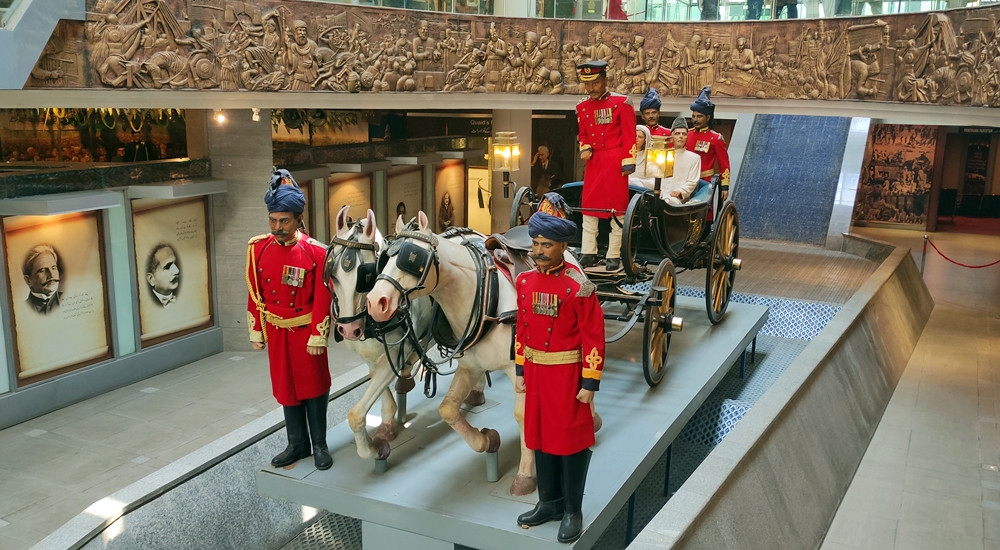
Explore the Riches of Pakistan Monument Museum The Pakistan Monument Museum, a unique wax museum located in Islamabad, Pakistan’s capital, sits next to the iconic Pakistan Monument. Nestled on a scenic hillock west of the Shakar Parian Hills and surrounded by lush forests, this museum stands as a tribute to the heroes who shaped Pakistan’s destiny. Since its establishment in 2010, the museum has preserved the history of the subcontinent in wax, offering an immersive journey into Pakistan’s past. Indeed, the museum is a must-visit landmark for history lovers and those seeking a memorable experience. Undoubtedly, the museum brings the nation’s story to life in a compelling way. The Pakistan Monument Museum spans two floors, each divided into sections arranged in chronological order. Visitors begin their journey from the lower floor, following a U-shaped path that ensures every exhibit is thoroughly experienced. The tour reveals Pakistan’s vibrant cultural and historical landscape, fostering a deeper appreciation for the nation’s heritage. A Journey Through History – Lower Floor On the lower floor, exhibits highlight ancient civilizations, Pakistan’s freedom struggle, and the events leading up to the country’s independence in 1947. Beginning with the origins of civilization in 7000 BC, this floor traces a timeline up to the birth of Pakistan, featuring wax sculptures, portraits, and images that capture significant milestones. Key figures like Liaqat Ali Khan, Pakistan’s first prime minister, appear in scenes depicting pivotal moments, such as the 1947 speech by Quaid-e-Azam Muhammad Ali Jinnah and his meetings with leaders like Mahatma Gandhi. The museum also features a reference library equipped with an Audio-Visual Facility for accessing historic documents, speeches, books, and manuscripts. Visitors can use the meeting room and a Panorama Hall with seating for sixty-two guests for presentations and discussions. A standout exhibit includes the wax portrayal of the 1940 Pakistan Day resolution speech delivered by Quaid-e-Azam in Lahore’s Manto Park, as well as a replica of Jinnah’s chariot at the museum entrance. Recently, a 1920 Hudson Limousine used by Quaid-e-Azam has also been added to the collection. Post-Independence Achievements – Upper Floor The museum’s upper floor focuses on post-independence achievements, highlighting Pakistan’s advancements in education, science, technology, engineering, medicine, and the arts. It showcases a pair of vintage cars, a Rolls Royce and a Mercedes Benz, once used by heads of state and visiting dignitaries. Among these, the 1976 Rolls-Royce Silver Shadow and the 1970 Mercedes Pullman S600 hold unique stories, representing gifts from international leaders to Pakistan. The Mercedes Pullman S600 was used by President Yahya Khan, Prime Minister Zulfikar Ali Bhutto, and prominent leaders such as Yasser Arafat and King Faisal bin Abdul Aziz. The Rolls Royce Silver Shadow, gifted by King Khalid Bin Abdul Aziz, was used by leaders like Benazir Bhutto, Prince Karim Aga Khan, Lady Diana, and boxing legend Muhammad Ali. Plan Your Visit  With a carefully curated layout, historic exhibits, and rare artifacts, the Pakistan Monument Museum offers a complete journey through Pakistan’s history and accomplishments. Whether you’re captivated by ancient history or inspired by modern advancements, this museum is an enriching experience not to be missed. Ticket Prices & Timings: Local Adults: Rs. 150 Students: Rs. 80 Foreigners: Rs. 1500 SAARC/ECO delegates: Rs. 1000 Free for children under 7 years of age Open: Tuesday – Sunday (10:00 am – 06:00 pm) Closed:                  Every Monday Wheel Chair:        Not available Contact: Address: Garden Avenue, Shakarparian, P.O.Box 1184, Islamabad, Pakistan Phone: 0092-51-9249200, 0092-51-9249203, 0092-51-9249209 Fax: 0092-51-9249201 Email: info@lokvirsa.org.pk Thank you for stopping by my blog! If you’re passionate about nature, food, travel, photography, wildlife, and exploring the hidden beauties, you’re in the right place. These are the topics I love to share. Please feel free to follow along for more content that celebrates our amazing planet. Have a wonderful day! 😊

Pakistan Monument Museum Read Post »

Shah Allah Ditta Caves
Archaeological sites, Buddhist Heritage of Pakistan, City Breaks, Hindu Heritage, Islamabad

Shah Allah Ditta Caves

Exploring the Mystical Shah Allah Ditta Caves in Islamabad Nestled in the scenic Margalla Hills of Islamabad lies the enchanting village of Shah Allah Ditta, boasting a history spanning over seven centuries. This village, named after a Mughal-era Darvesh, is home to the mesmerizing Shah Allah Ditta Caves. With their roots tracing back to ancient times, these caves have witnessed the presence of humans and served as a sanctuary for Buddhist monks in the 4th century BC. Today, they stand as a testament to the rich heritage and cultural significance of the region, attracting both local residents and foreign tourists. Features of Shah Allah Ditta Caves Historical Significance The Shah Allah Ditta Caves are not only known for their natural beauty but also for their historical importance. The village itself lies on the historic route between Afghanistan and the Subcontinent. Historically, it was traversed by renowned figures such as Alexander the Great, Sher Shah Suri, and various Mughal rulers. This pathway has witnessed significant events throughout history, including Alexander’s invasion of the subcontinent and the passage of emperors between Afghanistan and the subcontinent. Spiritual Retreat The caves, located on elevated terrain, have long served as a sanctuary for spiritual seekers. Buddhist monks and priests from far and wide were drawn to these caves, seeking tranquility and enlightenment. The serene surroundings, shaded by ancient Banyan trees and blessed with a natural spring, provided the ideal environment for meditation and introspection. Deep inside the gorge, visitors can also discover a Buddhist stupa, a sacred monument representing the region’s religious heritage. Cultural Heritage Shah Allah Ditta not only preserves the remnants of the Gandhara civilization but also carries the legacy of Hindu families who resided in the village until the partition of the subcontinent. The caves were an integral part of their daily worship, symbolizing the coexistence of diverse faiths and cultures. Additionally, the tomb and shrine of Shah Allah Ditta, after whom the village is named, serve as important cultural landmarks in the vicinity. Natural Beauty and Conservation With the passage of time has slightly eroded some parts of the caves. However, they have been meticulously preserved by the Capital Development Authority (CDA). The surrounding area, known as ‘Sadhu ka Bagh,’ captivates visitors with its untouched beauty. A short distance from the caves, remnants of an ancient water well, believed to have been constructed by the Mughal Emperor Akbar, add to the allure. The village itself is embraced by natural streams, enhancing the overall serenity and charm. Downloading Steps Exploring the marvels of Shah Allah Ditta Caves is a simple and accessible endeavor. To experience the magic of this historical site, follow these steps: Plan your visit to Islamabad, the capital city of Pakistan. Head towards the western part of Islamabad, near the D-12 sector. Travel approximately 15 km from the Golra interchange to reach the village of Shah Allah Ditta. Once there, navigate through the village to find the entrance to the caves. Embark on a fascinating journey through time as you explore the wonders of Shah Allah Ditta Caves. Shah Allah Ditta offers a captivating blend of history, spirituality, and natural beauty. As you wander through these ancient caves and immerse yourself in their tranquil ambiance, you can’t help but feel a deep connection to the past. Whether you are a local resident or a foreign tourist, a visit to this remarkable site in Islamabad is highly recommended. Indulge in the vibrant culture, explore the historical significance, and revel in the serenity that envelops Shah Allah Ditta Caves. FAQs (Frequently Asked Questions)What is the historical significance of Shah Allah Ditta Caves? The Shah Allah Ditta Caves hold great historical importance, as they were part of the route used by Alexander the Great during his invasion of the subcontinent. They also witnessed the passage of Sher Shah Suri and various Mughal rulers traveling between Afghanistan and the subcontinent. How can I reach the caves? To reach Shah Allah Ditta Caves, head to the D-12 sector of Islamabad, located in the western part of the city. From the Golra interchange, it’s approximately a 15 km journey to the village of Shah Allah Ditta, where the caves are situated. What can I expect to see inside the caves? Inside the caves, you will discover traces of human existence from ancient times, as well as a Buddhist stupa. The caves provide an ideal setting for spiritual retreat and meditation, surrounded by ancient Banyan trees and a natural spring. Is there anything else to do in Shah Allah Ditta? Apart from exploring the caves, Shah Allah Ditta offers a range of activities and attractions. You can enjoy food outlets, live music, horse riding, archery, paintball, rock climbing, and camping facilities. The village also provides walking trails to the hilltop, offering magnificent views of the surrounding landscape. Are there any accommodations available? Since Shah Allah Ditta is a village, it primarily offers a rural setting. However, nearby Islamabad provides a wide range of accommodations to suit various budgets and preferences. It’s advisable to stay in Islamabad and plan a day trip to Shah Allah Ditta for a fulfilling experience.

Shah Allah Ditta Caves Read Post »

Scroll to Top