
A Journey through the history of Pakistan
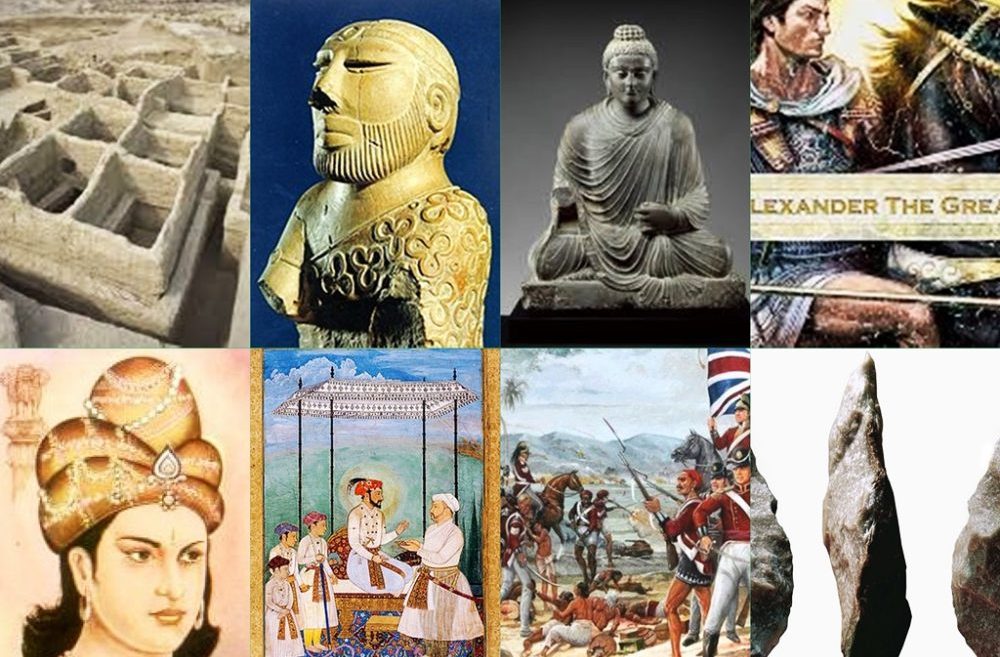
Exploring the Ancient History of Pakistan Unearthing the Rich Past of Pakistan Modern-day Pakistan stands as a testament to the vast and captivating tapestry of history woven into its soil. A Journey through the history of Pakistan is a journey through the ages, tracing the footsteps of ancient civilizations that once thrived on this land. These ancient echoes have shaped Pakistan into a repository of historical treasures that beckon explorers and historians alike. Let’s delve into this rich heritage through the annals of time. Soanian Culture: Tracing the Origins In the depths of Pakistan’s history, we find the Soanian Culture, harking back to the lower Paleolithic era. The relics of this era, including edged pebble tools discovered near the twin cities of Rawalpindi and Islamabad along the Soan River, offer a glimpse into human habitation in this region some 50,000 years ago. The Soanian Culture derives its name from the Soan Valley, where Stone Age relics like tools and pottery endure as a testament to this ancient era. Regrettably, the once pristine Soan River has now deteriorated into a polluted waterway. Mehrgarh: Cradle of Neolithic Civilization Mehrgarh, nestled in the Balochistan province, emerges as one of the most significant Neolithic sites in Pakistan. Dating back 9,000 years, this settlement sprawls across 200 hectares on the Kachhi plain near the Bolan Pass. Unearthed in 1974 by the French archaeologist Jean-François Jarrige, Mehrgarh provides a window into life during the Pre-Harappan phase, from 7000 B.C.E. to 5500 B.C.E. Inhabitants of early Mehrgarh constructed mud brick houses, stored grain in granaries, fashioned tools from local copper ore, and waterproofed their containers with bitumen. This society thrived until around 2600 BCE when arid conditions compelled migration, paving the way for the Indus Valley Civilization. Indus Valley Civilization: A Technological Marvel The Indus Valley Civilization, also known as the Harappan Civilization, graced the Indus River Valley from 3300 to 1800 BCE. Harappa in Punjab and Moenjodaro in Sindh are two of its renowned cities, excavated in 1921 and 1922, respectively. This civilization unfolds in three phases: the Early Harappans (3300-2600 BCE), the Mature Harappans (2600-1900 BCE), and the Late Harappans (1900-1300 BCE). The Indus Valley people displayed remarkable technological prowess. Their precision in toolmaking, standardized moisture-resistant fire-backed bricks, and advanced sewage systems underscore an advanced society that thrived while much of the world lagged behind. Climate change, disrupting the river system, eventually led to their decline around 1800 BCE. Gandhara: Cradle of Buddhism The ancient kingdom of Gandhara encompassed Northwest Pakistan, the Potohar plateau, and parts of Afghanistan. It served as the cradle of Gandhara civilization and Buddhism, which flourished here for over a millennium. The region’s archaeological sites, notably in Taxila and Swat, along with rock carvings along the Karakoram Highway, bear witness to Gandhara’s cultural and religious significance. The kingdom endured from the 6th century BC to 1021 AD when it succumbed to Mahmud of Ghazni’s conquest. Alexander the Great’s Indelible Mark In 326 BC, Alexander the Great, renowned as Sikandar-e-Azam in Urdu, ventured into Punjab through Swat. He formed an alliance with Ombhi, the ruler of Taxila, to challenge King Porus. During his time in Pakistan, Alexander engaged with local scholars and explored the region extensively. His legacy lives on in Pakistan, where relics like ancient coins commemorating his conquests and the Jandial Temple in Taxila continue to tell his story. The Maurya Empire: A Reign of Kings Following Alexander’s departure, Chandragupta Maurya rose to power, founding the Mauryan dynasty. He expanded his realm, stretching from eastern Iran to the Burmese hills, including the subcontinent. His son, Bindusara, continued this expansion, and the empire reached its zenith under Ashoka, one of history’s greatest rulers. Ashoka’s legacy includes constructing grand stupas, such as the Dharmarajika stupa in Taxila and the Butkara stupa in Swat. The Mauryan Empire began to wane after Ashoka’s reign, ultimately vanishing after his assassination. The Mughal Empire: Art and Architecture Flourish Babar, the first Mughal ruler, laid the foundation of the Mughal Empire in the subcontinent in 1526. The reign of the six Great Mughal Emperors from 1526 to 1707 left an indelible mark on architecture. Monuments like the Badshahi Mosque, the Shalimar Gardens, and the Lahore Fort showcases intricate stone carvings, glazed tile decorations, and precious stones set in marble. The Mughals’ architectural legacy extends to the Makli Tombs in Thatta, a testament to their artistic grandeur. The Sikh Empire: Rise and Fall From 1799 to 1849, the Sikh Empire dominated parts of South Asia. Under Maharaja Ranjit Singh’s rule, it expanded its territory from Gilgit and Tibet in the north to Sindh in the south, and from the Khyber Pass in the west to the Sutlej in the east. However, this empire eventually succumbed to British rule in the Second Anglo-Sikh War. This chapter in South Asian history is both captivating and enlightening, revealing a dynamic empire’s evolution and eventual decline. The British Raj: Legacy of Monuments The British East India Company’s rule from 1858 to 1947 left an indelible legacy on the subcontinent. While their presence was marked by the division of the region into Pakistan and India, they also contributed to its administration, infrastructure, and institutions. Remarkable monuments like Aitchison College Lahore, the Clock Tower in Peshawar, and Frere Hall Tower in Karachi bear witness to their architectural influence. A Journey through the History of Pakistan is a vibrant tapestry woven with the threads of ancient cultures, mighty empires, and enduring legacies. Exploring this rich past is not only a journey through time but also a deep dive into the fascinating history of this diverse and culturally rich nation. codecanyon
