Mughal heritage in Pakistan

Blogs, People and profiles, Punjab

The Mughal Empire

Exploring the Legacy of Mughal Emperors: A Glimpse into India’s Imperial Past  The history of India is adorned with tales of dynasties, conquests, and cultural richness. Among the many chapters that illuminate this historical tapestry, The Mughal Empire, a Muslim ruling family that governed most of northern India from early 1526 to 1857, stands out as one of the most illustrious and influential periods. Spanning over three centuries, the reign of the Mughal emperors left an indelible mark on India’s landscape, culture, and society. Despite being Muslims ruling over a majority Hindu population, the Mughals gained renown for their well-organized government, sophisticated culture, and efforts to integrate Hindus and Muslims into a united Indian state. It’s noteworthy that during Mughal rule, Muslims constituted only about 15 percent of the population. The Rise of the Mughal Dynasty The Mughal dynasty stands as one of the longest-reigning dynasties in India, predating the British colonization of the country. From the 16th century to the mid-18th century, the Mughal rulers successfully conquered most of Northern India. It has left an enduring impact on the subcontinent. The dynasty’s rulers, spanning seven generations, were notably talented and played a crucial role in shaping the course of Indian history. Founded by Babur, a descendant of the ruthless Mongol conqueror Genghis Khan on his mother’s side and the Turkic conqueror Timur (Tamerlane) on his father’s side, the empire’s inception occurred with Babur’s victory over Ibrahim Lodhi at the First Battle of Panipat in 1526. This marked the commencement of the Mughal era in India. One distinctive feature of the Mughal dynasty was the concerted effort by its emperors to integrate Hindus and Muslims into a unified Indian state. This commitment to inclusivity added a unique dimension to the Mughal era, contributing to the dynasty’s historical significance in India. Babur (1526–30): The Founder of a Grand Legacy Sultan Babur, renowned for his military prowess and poetic talents, laid the cornerstone of the Mughal Empire. It was following his legendary triumph over the Lodhi Sultan in 1526. In a remarkable feat, Babur, utilizing 20 cannons, defeated an army twice the size of his own. Despite his brief but impactful reign, he left an indelible mark on India by introducing Persian culture and the art of gardening. It forever altered the country’s landscape. Babur’s artistic vision is particularly evident in the beautiful Mughal gardens. These gardens, characterized by meticulously designed layouts and flowing watercourses, serve as a lasting testament to his cultural influence. However, the leadership of Babur was short-lived, as he passed away just two years after establishing the empire. The true sustainer of the Mughal dynasty’s success turned out to be his grandson, who not only expanded Mughal territories but also established a highly efficient governance structure. Babur’s initial triumphs set the stage for the grand legacy that would be further realized and expanded upon by his successors. Humayun: (1530–40 and 1555–56) Babur’s son, Humayun, ascended to the Mughal throne after his father’s reign. However, his rule faced challenges, and in 1540, he lost control of the empire to the Suri Dynasty. Humayun’s brief displacement was a result of his defeat by Sher Shah Suri, a ruler considered more effective due to his military successes and governance. In 1555, Humayun managed to reclaim the Mughal throne, marking the restoration of the dynasty. Unfortunately, his reign was short-lived, as he died the following year due to a fall. Humayun’s youth and lack of experience contributed to his reputation as a less effective ruler compared to Sher Shah Suri. Despite the challenges, Humayun’s restored rule in 1555 proved to be more unified and effective than his initial reign from 1530 to 1540. His efforts laid the groundwork for the future success of the Mughal Empire. Humayun left behind a unified empire for his son, Akbar, who would go on to become one of the most celebrated and influential rulers in Mughal history. Akbar the Great (1556–1605): A Visionary Ruler Akbar the Great, one of the most revered emperors in the Mughal dynasty, assumed the throne at a young age, ushering in what is often hailed as the “Golden Age of the Mughal Empire.” His reign, characterized by political stability, religious tolerance, and administrative reforms, played a pivotal role in shaping the destiny of the Mughal dynasty. The son of Humayun, Akbar successfully consolidated the Mughal Empire through persistent military campaigns, annexing vast territories in northern and central India. As part of his legacy, he constructed the new capital, Fatehpur Sikri, near Delhi. Akbar, while remaining a devout Muslim, demonstrated a unique interest in various religions, fostering religious discussions among Hindus, Parsis, Christians, and Muslims. Akbar’s visionary governance extended to political, administrative, and military structures, establishing a foundation that endowed the empire with stability and longevity. His inclusive approach to harmonizing India’s diverse religious and cultural traditions left an enduring impact on the nation’s social fabric. This period witnessed extensive commercial activity, contributing to significant wealth through trade and textile production. By the early seventeenth century, the Mughals presided over one of the world’s most populous and affluent empires in world history, a testament to the far-reaching influence of Akbar’s enlightened rule. Jahangir (1605–27): The Patron of Arts Jahangir, renowned for his deep appreciation of art and culture, carried forward the rich legacy established by his father, Akbar. During his reign, he continued the administrative system and policy of religious tolerance towards Hinduism that characterized Akbar’s rule. Jahangir’s era witnessed a vibrant flourishing of Mughal miniature paintings, and to further support artistic endeavors, he founded the Nur-ud-Din Jahangir Art Academy. Notably, Jahangir’s love for botany manifested in the compilation of the “Minto Codex,”. It is an extensive record documenting the diverse flora and fauna of India. His reign became a golden period for the arts, with painting particularly thriving under his patronage as he supported numerous artists. Jahangir ascended the throne after the death of Akbar, and his reign marked a continuation of his father’s open-minded approach to governance. However, there

The Mughal Empire Read Post »

, , , , , , , , , , , , , , , , , , , , , ,
Shalimar Gardens
Heritage Sites in Pakistan, Monuments, Punjab

Shalimar Gardens

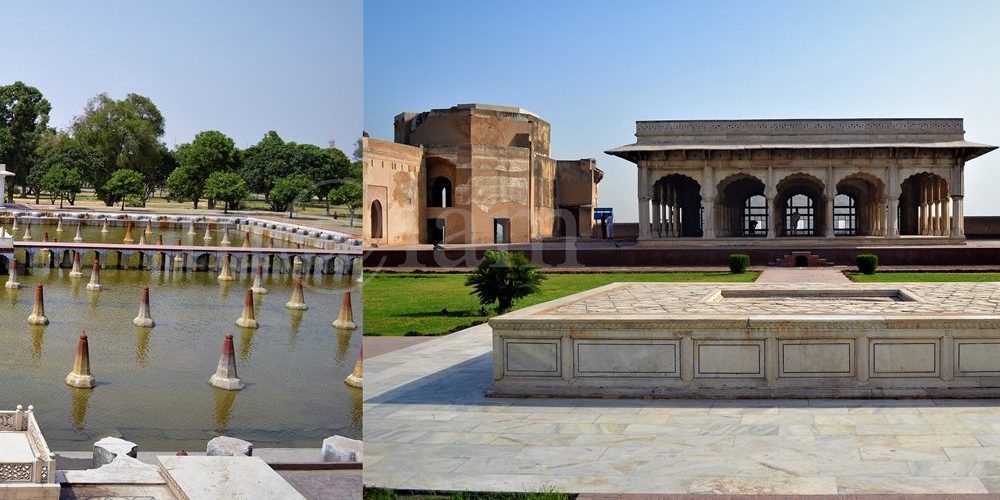
Exploring the Magnificence of Shalimar Gardens in Lahore Unraveling the Marvel of Shalimar Gardens: A UNESCO World Heritage Site The Shalimar Gardens in Lahore stand as an extraordinary testament to Mughal artistry and aesthetics, reaching their zenith during the reign of the Mughal Empire. Commissioned by the visionary Mughal Emperor Shah Jahan, this architectural marvel began its construction on June 12, 1641. It was completed just 18 months later, in 1642. Together with the Lahore Fort, it was designated as a UNESCO World Heritage Site in 1981. Embracing All: From Royalty to the Common Folk While originally intended to serve as an enchanting retreat for royal guests, the Shalimar Gardens welcomed the general public to explore a dedicated section of its lush beauty. The inspiration for these gardens draws from the earlier Shalimar Gardens in Kashmir, built by Emperor Jahangir, the father of Shah Jahan. Remarkably, Shah Jahan himself played an active role in the construction of the Kashmiri gardens. Architectural Grandeur in Nature’s Embrace Covering an expansive 16 hectares, the rectangular garden is enclosed by crenelated walls crafted from red sandstone. It is structured across three terraces, gracefully descending from south to north. Each terrace carries a name infused with meaning: the upper terrace, known as “Farah Baksh,” translates to “Bestower of Pleasure,” the middle terrace, “Faiz Baksh,” means “Bestower of Goodness,” and the lower terrace, “Hayat Baksh,” signifies “Bestower of Life.” 410 Dancing Fountains: A Spectacle of Engineering Mastery The heart of the Shalimar Gardens lies in its 410 fountains, which gracefully rise from the canal, culminating in the marble pools. The hydraulic system that governs these fountains baffles even modern scientists with its ingenious thermal engineering. This engineering brilliance served to cool the air during sweltering summers, offering respite to the garden’s visitors. The upper-level terrace boasts 105 fountains, the middle terrace features 152, and the lower terrace delights with 153. Beyond the Wall: A World Within Within the protective embrace of the garden’s walls, a collection of buildings served diverse purposes. These include: Sawan Bhadun Pavilions Naqar Khana and Its Buildings Khwabgah or Sleeping Chambers Hammam or Royal Bath The Aiwan or Grand Hall Aramgah or Resting Place Khawabgah of Begum Sahib or Dream Place of the Emperor’s Wife Baradaries or Summer Pavilions for Cooling Delight Diwan-e-Khas-o-Aam or Hall of the Special and Ordinary Audience with the Emperor Two Gateways and Minarets Adorning the Corners of the Gardens Nature’s Bounty: A Verdant Oasis The Shalimar Gardens once boasted a lush variety of trees, including Almond, Peach, Apple, Plum, Apricot, Poplar, Cherry, Quince Seedless, Gokcha, Mango, Mulberry, Sapling of Cypress, Shrubs, and Sour and Sweet Oranges. A Historical Odyssey Supervised by the noble Khalilullah Khan in Shah Jahan’s court, the Shalimar Garden project took shape. The garden’s original land belonged to the Arian Mian Family, who were bestowed with the title “Mian” by the Emperor in recognition of their services to the Empire. The Mughal engineers, recognizing the ideal location and soil quality, acquired the land, ultimately leading to the creation of the Shalimar Gardens. The Arian Mian Family retained governance of the garden for 350 years until General Ayub Khan nationalized it, a consequence of their opposition to his imposition of martial law.

Shalimar Gardens Read Post »

, , , , , , , , ,
Lahore Fort and Shalimar Garden
Heritage Sites in Pakistan, Islamic Heritage, Punjab, World Heritage Sites

Lahore Fort and Shalimar Garden

Exploring Lahore’s Magnificent Lahore Fort and Shalimar Garden: A Glimpse into Mughal Grandeur Lahore, the cultural heart of Pakistan, boasts two magnificent Mughal-era treasures: the Lahore Fort and Shalimar Garden. These architectural marvels continue to stand as symbols of pride and prestige in Lahore, having earned their rightful place as UNESCO World Heritage Sites of Pakistan in 1981, owing to their remarkable collection of Mughal monuments that epitomize the artistic and aesthetic zenith of the empire. The fort is located at the northwest corner of the walled city of Lahore while the Shalimar Gardens are situated along the Grand Trunk Road some 5 kilometers northeast of the main Lahore city. The monuments are located at a distance of 7 kilometers from each other. Dating back to 1the 7th century, both masterpieces reflect the true artistic expression of the Mughals at its peak.  The fort is the only monument that represents the complete history of Mughal architecture in Pakistan. The Shalimar garden, built by Emperor Shah Jahan in 1642, still retains the glorious Persian and Islamic tradition is a fine example of Mughal gardens. Lahore Fort: A Historical Marvel The Lahore Fort, also known as Shahi Qila, sprawls across an impressive 20 hectares. This irregularly designed citadel features 21 notable monuments, some dating back to the reign of Emperor Akbar. In the 17th century, during the peak of the Mughal Empire, the fort underwent extensive reconstruction. Its origins can be traced back to 1566 when Emperor Akbar laid the foundations for the modern Lahore Fort. Interestingly, the fort’s architectural design seamlessly blends Islamic and Hindu motifs, a testament to its rich history. As time passed, subsequent Mughal Emperors made alterations to the fort. Following the decline of the Mughal Empire, it served as the residence of Ranjit Singh, the founder of the Sikh Empire. Later, the British made significant modifications to suit their needs. Shalimar Garden: A Natural Paradise The Shalimar Gardens in Lahore represent an exceptional Mughal garden complex, seamlessly merging natural beauty with architectural grandeur. Commissioned by Emperor Shah Jahan in 1641, these gardens were completed in 1642, showcasing the pinnacle of Mughal artistry. Encompassing 16 hectares, the garden’s rectangular layout is enclosed by crenelated walls constructed from red sandstone. It is divided into three terraces, each with its own distinctive name. The upper terrace is named “Farah Baksh” (Bestower of Pleasure), the middle terrace “Faiz Baksh” (Bestower of Goodness), and the lower terrace “Hayat Baksh” (Bestower of Life). One of the most remarkable features of the Shalimar Gardens is its intricate water circulation system, comprising 410 fountains. These fountains, distributed throughout the three terraces, create a mesmerizing spectacle. The garden’s thermal engineering was designed to provide cooling relief to visitors during scorching summers, a feat that continues to baffle scientists today. While initially intended to entertain royal guests, a specific section of the Shalimar Gardens was open to the general public. Located just 5 kilometers northeast of Lahore’s city center, the garden’s land originally belonged to the Arian Mian Family. In recognition of their contributions to the Mughal Empire, Emperor Shah Jahan bestowed upon them the prestigious Mian title. The Lahore Fort and Shalimar Garden stand as enduring testaments to the Mughal Empire’s architectural and artistic brilliance. Their historical significance and timeless beauty continue to captivate visitors, making them indispensable landmarks in Lahore’s rich cultural heritage.

Lahore Fort and Shalimar Garden Read Post »

, , , , , , , , , , , ,
Badshahi Mosque Lahore
Mosques, Punjab

Badshahi Mosque

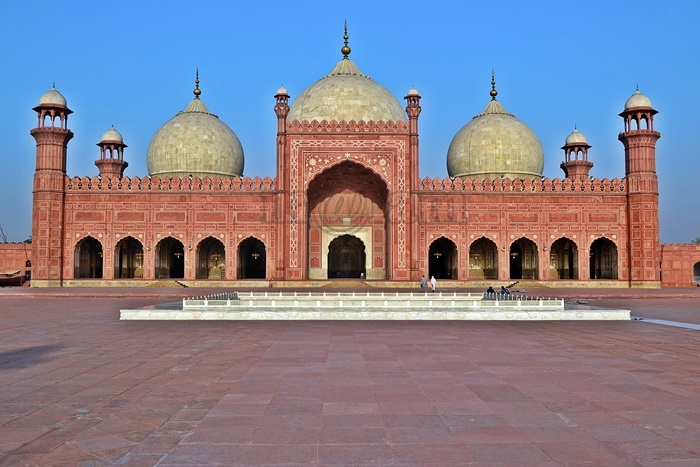
Exploring the Magnificence of the Badshahi Mosque in Lahore Unveiling the Grandeur of Lahore’s Crown Jewel The Badshahi Mosque, Lahore’s crown jewel, held the title of the world’s largest mosque for an impressive 313 years, spanning from 1673 to 1986. This glorious mosque was commissioned during the reign of the sixth Mughal emperor, Aurangzeb. This majestic structure stands as a testament to Mughal-era architecture. Even though it was constructed during the late Mughal period—a time marked by relative decline. This mosque encapsulates the beauty, passion, and grandeur of the Mughal era in Lahore. Beyond its religious significance, the mosque has witnessed several transformations. It served as a garrison for the armies of Ranjit Singh and the British troops after the fall of the Mughal Empire. Today, it ranks as the second-largest mosque in Pakistan and South Asia, and the fifth-largest in the world, with the capacity to accommodate nearly 150,000 worshippers within its hallowed grounds. A Glimpse of Its Location Situated on the outskirts of the Walled City of Lahore, the Badshahi Mosque’s imposing presence faces the Alamgiri Gate of Lahore Fort, another architectural marvel built by Aurangzeb. Only the Hazuri Bagh separates these two magnificent edifices. To the south of the Hazuri Bagh lies the Roshni Gate, one of the thirteen gates that once guarded the Walled City. Interestingly, the Hazuri Bagh doubled as a parade ground where Aurangzeb would review his troops and courtiers. Unveiling the History The iconic Badshahi Mosque owes its existence to the last Mughal Emperor, Aurangzeb, also known as Alamgir, which translates to “conqueror of the world.” This marvel of architecture was constructed in a mere two years, from 1671 to 1673. Although its design bears some resemblance to Delhi’s Jama Mosque, the Badshahi Mosque dwarfs its counterpart in size and grandeur. On a clear day, its impressive silhouette can be admired from a distance of approximately 15 kilometers (about 10 miles). Unlike his artistic predecessors, Aurangzeb prioritized military conquests over art and architecture during his rule. The construction of the Badshahi Mosque was driven by military objectives. Particularly, his campaign against the Indian warrior king of the Maratha clan, Shivaji Bhonsle. The construction project nearly depleted the Mughal treasury and weakened the empire itself. To safeguard the mosque from the Ravi River’s seasonal floods, it was built on an elevated plinth six meters above ground level. The responsibility for overseeing this monumental project fell upon Aurangzeb’s foster brother, Muzaffar Hussain (Fidai Khan Koka), who was also appointed as its governor. Art and Architecture The Badshahi Mosque’s architectural layout is a square, with each side spanning 170 meters. Due to its proximity to the Ravi River, a gate leading to the riverside could not be erected, resulting in an asymmetrical design with no southern gate. The mosque’s construction incorporates a combination of red stone and white marble inlay, setting it apart from the typical architectural style of mosques in Lahore. The design draws inspiration from Indo-Greek, Central Asian, and Indian architectural influences. Above the vaulted entrance, inlaid marble proudly displays the full name of the Badshahi Mosque: “Masjid Abul Zafar Muhy-ud-Din Mohammad Alamgir Badshah Ghazi.” Accessible via a staircase with 22 steps leading from Hazuri Bagh, the main entrance opens into a vast courtyard measuring 528 feet by 528 feet, capable of accommodating up to 100,000 worshippers simultaneously. The courtyard is divided into two levels—the upper and lower, where funeral prayers are also conducted. At its center lies a 50-foot by 50-foot, 3-foot deep central tank. Chamber The chamber directly above the mosque’s entrance gate once housed relics attributed to the Holy Prophet Muhammad (PBUH), His daughter, and His son-in-law. This chamber features Muqarna, an architectural feature in Islamic architecture characterized by ornamented vaulting It was first introduced in the nearby Wazir Khan Mosque. Prayer Hall The main prayer hall measures 275 feet by 83 feet by 50 feet in height. It features a central arched niche and five smaller niches, each one-third the size of the main niche. The mosque is crowned with three marble domes, with the central dome boasting a diameter of 65 feet at the base (70 feet at its bulging point), a height of 49 feet, a pinnacle rising to 24 feet, and a 15-foot high neck. The two side domes measure 51 feet 6 inches in diameter (54 feet 2 inches at their bulging point), with a height of 32 feet, a pinnacle reaching 19 feet, and a 9-foot 6-inch high neck. Interior The interior of the mosque, including its ceiling, is adorned with intricate floral frescoes, stucco tracery, and inlaid marble. On the exterior, meticulous stone carvings and marble inlays embellish the sandstone surface. The mosque’s capacity enables it to host up to 10,000 worshippers at once, with side chambers reserved for religious instruction. The mosque boasts four primary three-story octagonal minarets crafted from red stone and crowned with marble canopies. Each minaret soars to a height of 196 feet from its respective corner. Its outer circumference of 67 feet and its inner circumference of 8 feet 6 inches. Accessible by a staircase comprising 204 steps, these minarets accentuate the mosque’s grandeur. Additionally, the main mosque building features four smaller minarets, one at each corner. Transformations Through Sikh and British Eras The mosque’s grandeur suffered during Ranjit Singh’s rule, as his army seized Lahore in 1799. The main courtyard was repurposed as a stable, while the Hujras (cells) housed his soldiers. Nearby Hazuri Bagh was converted into the official Royal Court. Around 20 years later, a moderate earthquake struck, causing the marble turrets atop each minaret to collapse. These open minarets were then repurposed as gun emplacements during the Sikh Civil War in 1841, led by Ranjit Singh’s son Sher Singh. The adjacent Lahore Fort was under siege by supporters of Sikh Maharani Chand Kaur. The fort endured heavy bombardment, resulting in significant damage to the Dewan Aam (Hall of the Public Audience). Sikhs restricted Muslim access to the mosque for worship, designating only a small

Badshahi Mosque Read Post »

, , , , , , , ,
Scroll to Top