Museums in Islamabad

Pakistan Monument Wax Museum
Islamabad

Pakistan Monument Museum

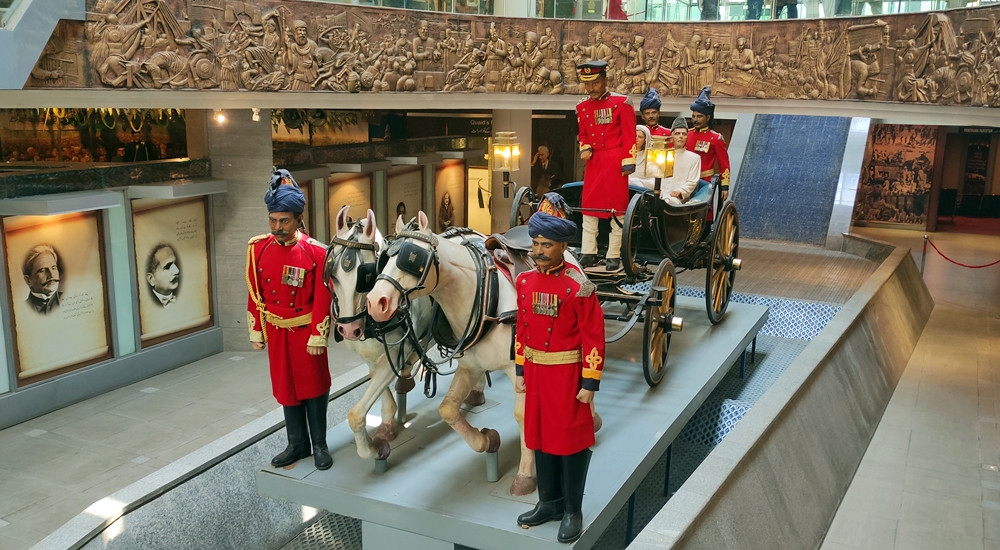
Explore the Riches of Pakistan Monument Museum The Pakistan Monument Museum, a unique wax museum located in Islamabad, Pakistan’s capital, sits next to the iconic Pakistan Monument. Nestled on a scenic hillock west of the Shakar Parian Hills and surrounded by lush forests, this museum stands as a tribute to the heroes who shaped Pakistan’s destiny. Since its establishment in 2010, the museum has preserved the history of the subcontinent in wax, offering an immersive journey into Pakistan’s past. Indeed, the museum is a must-visit landmark for history lovers and those seeking a memorable experience. Undoubtedly, the museum brings the nation’s story to life in a compelling way. The Pakistan Monument Museum spans two floors, each divided into sections arranged in chronological order. Visitors begin their journey from the lower floor, following a U-shaped path that ensures every exhibit is thoroughly experienced. The tour reveals Pakistan’s vibrant cultural and historical landscape, fostering a deeper appreciation for the nation’s heritage. A Journey Through History – Lower Floor On the lower floor, exhibits highlight ancient civilizations, Pakistan’s freedom struggle, and the events leading up to the country’s independence in 1947. Beginning with the origins of civilization in 7000 BC, this floor traces a timeline up to the birth of Pakistan, featuring wax sculptures, portraits, and images that capture significant milestones. Key figures like Liaqat Ali Khan, Pakistan’s first prime minister, appear in scenes depicting pivotal moments, such as the 1947 speech by Quaid-e-Azam Muhammad Ali Jinnah and his meetings with leaders like Mahatma Gandhi. The museum also features a reference library equipped with an Audio-Visual Facility for accessing historic documents, speeches, books, and manuscripts. Visitors can use the meeting room and a Panorama Hall with seating for sixty-two guests for presentations and discussions. A standout exhibit includes the wax portrayal of the 1940 Pakistan Day resolution speech delivered by Quaid-e-Azam in Lahore’s Manto Park, as well as a replica of Jinnah’s chariot at the museum entrance. Recently, a 1920 Hudson Limousine used by Quaid-e-Azam has also been added to the collection. Post-Independence Achievements – Upper Floor The museum’s upper floor focuses on post-independence achievements, highlighting Pakistan’s advancements in education, science, technology, engineering, medicine, and the arts. It showcases a pair of vintage cars, a Rolls Royce and a Mercedes Benz, once used by heads of state and visiting dignitaries. Among these, the 1976 Rolls-Royce Silver Shadow and the 1970 Mercedes Pullman S600 hold unique stories, representing gifts from international leaders to Pakistan. The Mercedes Pullman S600 was used by President Yahya Khan, Prime Minister Zulfikar Ali Bhutto, and prominent leaders such as Yasser Arafat and King Faisal bin Abdul Aziz. The Rolls Royce Silver Shadow, gifted by King Khalid Bin Abdul Aziz, was used by leaders like Benazir Bhutto, Prince Karim Aga Khan, Lady Diana, and boxing legend Muhammad Ali. Plan Your Visit  With a carefully curated layout, historic exhibits, and rare artifacts, the Pakistan Monument Museum offers a complete journey through Pakistan’s history and accomplishments. Whether you’re captivated by ancient history or inspired by modern advancements, this museum is an enriching experience not to be missed. Ticket Prices & Timings: Local Adults: Rs. 150 Students: Rs. 80 Foreigners: Rs. 1500 SAARC/ECO delegates: Rs. 1000 Free for children under 7 years of age Open: Tuesday – Sunday (10:00 am – 06:00 pm) Closed:                  Every Monday Wheel Chair:        Not available Contact: Address: Garden Avenue, Shakarparian, P.O.Box 1184, Islamabad, Pakistan Phone: 0092-51-9249200, 0092-51-9249203, 0092-51-9249209 Fax: 0092-51-9249201 Email: info@lokvirsa.org.pk Thank you for stopping by my blog! If you’re passionate about nature, food, travel, photography, wildlife, and exploring the hidden beauties, you’re in the right place. These are the topics I love to share. Please feel free to follow along for more content that celebrates our amazing planet. Have a wonderful day! 😊

Pakistan Monument Museum Read Post »
, , , , , , ,
Islamabad Tourist Attractions
City Breaks, Islamabad

Islamabad Tourist Attractions

Must-See Islamabad Tourist Attractions Islamabad’s Tourist Attractions include major tourist spots found within the territory of the capital city. Surrounded by the lush greenery of the Margalla Hills, an extension of the majestic Himalayan Mountain ranges; Islamabad offers a scenic backdrop that changes with the seasons, showcasing a spectrum of natural colors. Islamabad, the capital city of Pakistan, stands out among global capitals for its unique proximity to nature. Few other capitals enjoy such a harmonious connection with the natural environment. Renowned for its breathtaking beauty, Islamabad also boasts a rich historical heritage dating back to the Stone Age. Evidence of ancient human settlements, including relics and human skulls found along the banks of the Soan River, attests to its long history. Below are the details of Islamabad Tourist Attractions. HISTORIC AND CULTURAL MONUMENTS  Shah Faisal Mosque Named after King Faisal bin Abdul Aziz of Saudi Arabia, the Shah Faisal Mosque is the largest mosque in South Asia and 6th largest in the world, located in the foothills of Margalla Hills. It was completed in 1986 at a hefty cost of USD 120 million. Bearing a contemporary design, inspired by a desert Beduine tent-shaped structure with four 80m high minarets in corners, the mosque was designed by the Turkish Architect Vedat Delokay. The interior of the Faisal Mosque is simple and elegant, with white marble walls and floors, and large chandeliers hanging from the ceiling. The prayer hall is surrounded by arched colonnades and is free from any decorative distractions, allowing worshipers to focus on prayer and reflection. The mosque can accommodate over 100,000 worshipers at a time and is open to visitors of all faiths and is a symbol of the unity and diversity of Pakistan. There is no entry fee as such but to deposit shoes it costs a minor fee. Pakistan Monument The Pakistan Monument is a popular tourist attraction and a symbol of national pride for Pakistanis. Constructed in 2004, the Pakistan National Monument in Islamabad is a heritage site and symbol of national progress built to commemorate the struggle for independence and the formation of Pakistan. The design of the Pakistan Monument is inspired by the Islamic architecture of the Mughal era. The four petals represent the four provinces (Balochistan, North West Frontier Province, Punjab, and Sindh), while the three sandwiched smaller petals represent the three territories (Gilgit-Baltistan, Azad Kashmir, and the Federal Capital Islamabad). The petals are made of granite and marble and are adorned with intricate Islamic calligraphy and patterns. The aerial views of petals represent a crescent and the central star together represents the Pakistan flag. It is illuminated at night and provides a stunning view of Islamabad and its surrounding areas. Shah Allah Ditta Caves Shah Allah Ditta Caves are situated to the west of Islamabad, about 15 km from Golra interchange, in a centuries-old village called Shah Allah Ditta (also known as Sadhu ka Bagh). The more than seven hundred-year-old village was named after a Mughal period Darvesh. The caves, however, are believed to have been a meditation spot for Buddhist monks in the 4th century BC. There are only two caves on both sides of the spring which contain traces of human existence from ancient times. Hindu families lived in Shah Allah Ditta before the partition and the caves were used for their daily worship. There is a pathway right next to the village that is said to have been used as a route from Kabul to the Taxila by Alexander the Great and Sher Shah Suri while Mughal rulers and emperors often passed through while traveling from Afghanistan to the Hindustan. Saidpur Model Village Saidpur, a 500-year-old village nestled in the Margalla hills’ foothills, boasts a rich historical legacy and draws numerous visitors. Named after Said Khan, son of Sultan Sarang, the Gakhar chief of the Pothohar region in Babur’s Mughal era, it serves as a captivating microcosm of diverse cultures coexisting harmoniously. Within its confines lie a Hindu temple, Sikh Gurdwara, and Sufi tomb, offering a unique tapestry of spiritual traditions. Originally converted into a Hindu place of worship by Mughal commander Raja Man Singh, the village has undergone restoration, transforming into a cultural hotspot and heritage site. Its terraced mud houses, showcasing traditional architecture, handicrafts, and local cuisine, provide insight into Pakistani rural life. Notable landmarks include the 16th-century Rama Mandir, dedicated to Lord Rama, and a 20th-century Gurdwara serving educational purposes. Additionally, a photo gallery depicts the village’s early lifestyle, predating Islamabad’s emergence as the capital. PARKS IN ISLAMABAD Rose & Jasmine Garden The Rose and Jasmine Garden is a picturesque public garden managed by the Capital Development Authority. Situated within the recreational zone of Shakarparian Hills, it lies adjacent to the Islamabad sports complex and Aabpara market, along the Srinagar Highway. Covering an area of 20,360 square meters, the garden boasts a diverse collection of nearly 250 varieties of roses and a dozen types of jasmine. Visitors to the nearby Pakistan Monument and Shakarparian often include a stop at this enchanting garden in their itinerary. The garden offers key amenities such as a parking area, seating areas, a walking and cycling track, and a cafeteria (Dhaba) for the convenience of the public. Japanese Childern Park Japanese Park is a children’s playground situated at the base of Margalla Hills, adjacent to Margalla Road near the F6 sector, close to Islamabad Zoo. Spanning approximately 10 acres, this park is equipped with modern amenities and is a popular destination for children and families alike. Established on 30 December 1985, it stands as a unique gift from Japan to the children of Pakistan. The park features vibrant nurseries with colorful flowers and various play areas for children, including swings, climbing nets, jumping castles, trampolines, zip lines, bouncing cushions, and slides. It offers a plethora of entertaining activities for kids to enjoy. Cherry blossom trees adorn the park, lending it an authentic Japanese ambiance. Additionally, there is a small refreshment area within the park offering snacks and beverages for

Islamabad Tourist Attractions Read Post »

, , , , , , , , , , , ,
Islamabad Capital City
Islamabad

Islamabad Capital City

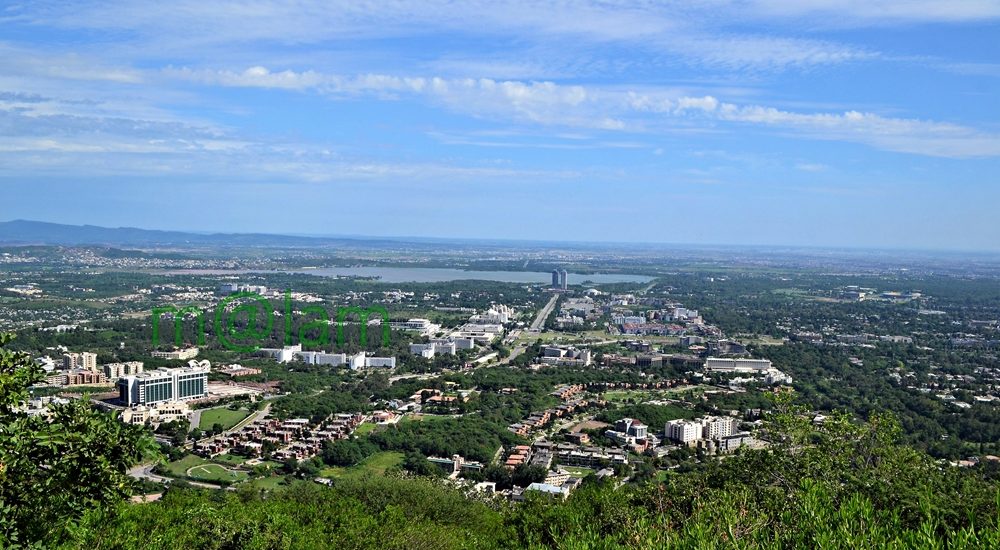
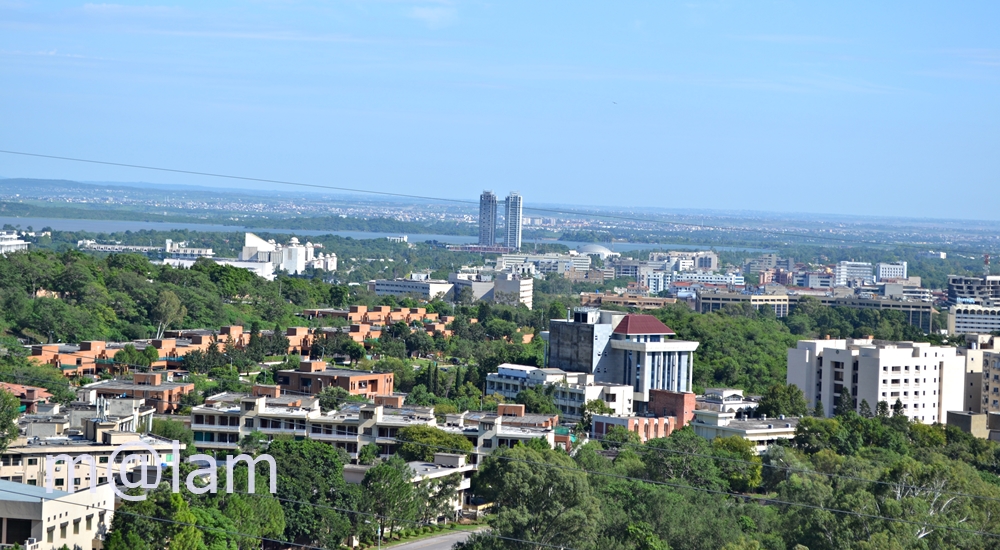
Islamabad – The Capital City of Pakistan Islamabad is the modern capital city of Pakistan. It is nestled in the north of the Potohar Plateau, at the foothill of the Margalla Hills. At an elevation of 507 meters above sea level, this vibrant city is strategically located in the heart of Pakistan. Moreover, the city is equipped with all types of facilities including recreational points, cycling tracks, hiking tracks, shopping malls, restaurants, parks, museums, and exhibition centers. Geographically Peshawar is 185 km (115 mi) to the east, Lahore is 295 km (183 mi) to the north and northeast, Muzaffarabad is 120 km (75 mi) to the south and southwest, and Srinagar, the capital of Indian Kashmir, is 300 km (190 mi) to the west and southwest. Historical Significance of Islamabad Islamabad undoubtedly boasts a rich history. Evidence shows ancient human settlements dating back to the Stone Age. Even some artifacts date as far back as 100,000 to 500,000 years. Moreover, excavations along the banks of the Soan River have revealed relics and human skulls from around 5000 BC. Additionally, the region has historically served as a crossroads between Punjab and Khyber Pakhtunkhwa, with the Margalla Pass acting as a gateway. The emergence of Islamabad as the Capital City After the partition of the subcontinent in 1947, Karachi became the initial capital of Pakistan. However, it was soon realized that Karachi’s location on one end of the country made it vulnerable to attacks from the Arabian Sea. Therefore, the need for a centrally located capital city with a moderate climate and easy accessibility from all parts of the country became evident. In 1958, the commission responsible for selecting the capital city chose the area that would become Islamabad. The selection was made by considering its proximity to the army headquarters in Rawalpindi and the disputed territory of Kashmir in the north. Development and Layout The construction of Islamabad as a forward capital began in 1960. Planned by a Greek firm of architects called Konstantinos Apostolos Doxiadis, the city follows a grid scheme and is triangular, with its apex facing the Margalla Hills. The capital territory is further divided into eight zones. Each zone is particularly designated for specific purposes like administrative, commercial, educational, industrial, and diplomatic activities. Moreover, The residential areas, rural zones, and green spaces provide a harmonious living environment. The city’s layout is well-organized, with lettered sectors from A to I, each further divided into four numbered sub-sectors. Therefore, clear demarcation makes navigation easy and allows for convenient addressing. Climate and Environment Islamabad experiences a unique climate characterized by hot summers with a monsoon season and mild winters. Three artificial reservoirs, including Rawal Lake, Simli Dam, and Khanpur Dam, regulate the city’s micro-climate. For instance, summers, from May to July, are the hottest months, with temperatures averaging around 40 degrees Celsius. Likewise, the monsoon season, spanning July through September, brings heavy rainfall and thunderstorms. Notable was July 1995 recorded the highest monthly rainfall of 743.3 millimeters (29.26 in). Winters, from October to March, vary in temperature depending on the location, with the lowest recorded temperature of -6 degrees Celsius occurring on January 17, 1967. Things to Do in Islamabad Islamabad offers a plethora of exciting activities for visitors and locals alike. Some popular Tourist Attractions in Islamabad to be explored include: Hiking Trails The city offers a network of specially designed hiking trails. Major hiking trails are Trail 1, Trail 2, Trail 3, Trail 4, Trail 5, and Trail 6, besides Saidpur Trail and Bari Imam Trail, catering to outdoor enthusiasts. Museums and Tourist Places History lovers and culture enthusiasts can explore the various museums and tourist attractions within Islamabad. Fishing in Rawal Lake Fishing enthusiasts can enjoy their favorite pastime in the picturesque setting of Rawal Lake. Paragliding on the Margalla Hills Thrill-seekers can experience the exhilaration of paragliding while taking in breathtaking views from the Margalla Hills. Cycling Designated cycling routes across Islamabad provide an excellent opportunity for cyclists to explore the city’s scenic beauty. Day Excursions from Islamabad Visitors can venture to nearby attractions in the nearest destinations in Punjab, KPK, and Kashmir as memorable day excursions from Islamabad. Shopping Delights Islamabad’s well-planned layout includes central shopping malls in each sector. The city offers a wide range of local and international brands at reasonable prices. The popular markets, such as F6 Markaz (Supermarket), F7 Markaz (Jinnah Super Market), F8 Markaz (Ayub Market), G6 Markaz (Melody Park), and G9 Markaz (Karachi Company), each have their distinct charm and shopping options. Culinary Adventures The city of Islamabad boasts a diverse culinary scene, catering to various tastes and preferences. From star hotel restaurants to international chains and local food joints, visitors can savor Chinese, Thai, Italian, and local cuisines, among others. How to Reach Islamabad By Air Islamabad can be reached via the Benazir Bhutto International Airport (IATA: ISB). Flights arriving from numerous international destinations include Dubai, Qatar, Abu Dhabi, London, Thailand, Sri Lanka, and China. By Bus Well-established local transport companies, such as Skyways, Faisal Movers, Niazi Express, and Daewoo Sammi, offer international standard long-haul bus services. Moreover, direct travel is available from major cities in Pakistan, including Karachi, Multan, Bahawalpur, Faisalabad, Lahore, and Peshawar. Additionally, these companies have arrangements made to transport passengers to offices within the twin cities. By Train Rawalpindi is well-connected by train to major cities, making it possible to reach Islamabad by train. Islamabad, with its rich history, well-planned layout, and diverse offerings, obviously stands as a testament to Pakistan’s progress and development. From its fascinating historical sites to its modern amenities and attractions, Islamabad invites visitors to explore its beauty and charm. Whether one seeks adventure, cultural experiences, or simply wants to enjoy a relaxing time in a dynamic city, Islamabad has something to offer for everyone.

Islamabad Capital City Read Post »

, , , , , , , , , , , , , , ,
Scroll to Top