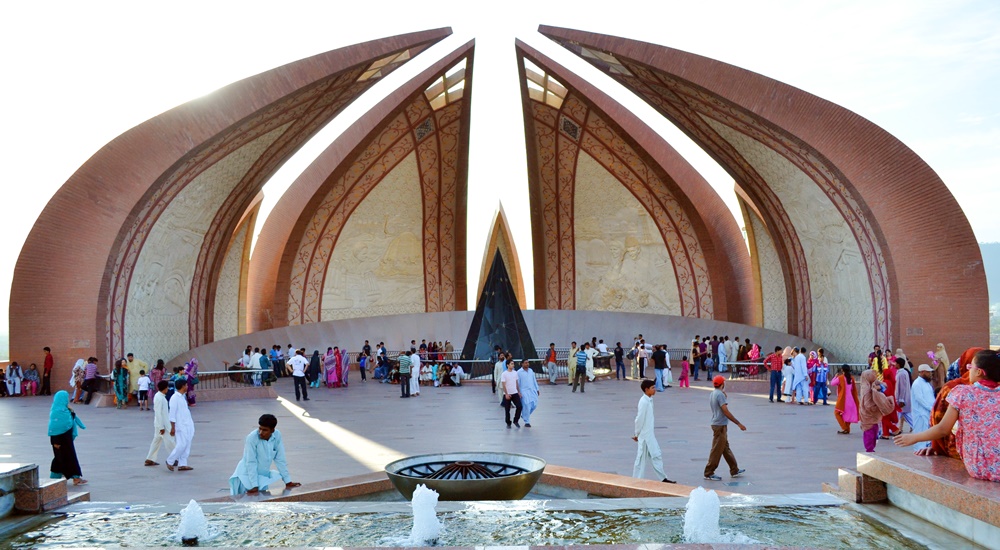
Pakistan Monument – A National Symbol The Pakistan Monument is not only a national icon but also a testament to Pakistan’s rich cultural heritage and unity. Perched atop the Western Shakarparian Hills in Islamabad, this architectural marvel offers breathtaking views of the Islamabad-Rawalpindi metropolitan area. Built to symbolize the unity of the Pakistani people, the monument is an essential stop for tourists and locals alike who wish to explore the story of Pakistan’s history, diversity, and identity. Historical Background The idea for the Pakistan Monument was proposed by former President Pervez Musharraf in 2002, reflecting his vision to create a symbol of national unity in the capital. The Ministry of Culture and the Pakistan Council of Architects and Town Planners collaborated to select the design for this landmark, organizing a national competition. Out of 21 entries, Arif Masoud’s concept was selected for its deep symbolic representation of Pakistan’s resilience and unity. After laying the foundation stone in 2004, the monument was completed in 2006 and officially inaugurated on Pakistan Day, March 23, 2007. Today, it stands as a powerful representation of national pride, resilience, and solidarity. Architectural Significance and Symbolism Spanning 2.8 hectares (6.9 acres), the Pakistan Monument was designed to represent a blooming flower. Its unique petal structure is crafted from granite and marble, blending traditional Mughal architectural elements with modern aesthetics. Four large petals represent Pakistan’s four provinces—Punjab, Sindh, Khyber Pakhtunkhwa, and Balochistan—while three smaller petals depict the territories of Gilgit-Baltistan, Azad Jammu & Kashmir, and the former Federally Administered Tribal Areas (FATA). Together, these petals create a harmonious shape symbolizing Pakistan’s unity amidst diversity. From above, the monument resembles a star surrounded by a crescent, mirroring the crescent and star on Pakistan’s national flag. This clever aerial view further emphasizes the country’s national identity and pride. A five-pointed star occupies the center of the platform, encircled by a water body and a metallic crescent inscribed with the sayings of Pakistan’s founding father, Muhammad Ali Jinnah, and the poetry of Allama Muhammad Iqbal. Detailed Mural Artwork The inner walls of each petal are adorned with intricate artwork, depicting landmarks and historical scenes from across Pakistan. These murals tell the story of Pakistan’s heritage, culture, and struggles for independence. Each petal’s artwork reflects different aspects of Pakistan: First Petal: This features images of the Faisal Mosque in Islamabad, the Shah Jahan Mosque in Thatta, the ancient Makli Necropolis, and the Gwadar port, symbolizing religious harmony and modern development. Second Petal: Depicts portraits of Muhammad Ali Jinnah, Fatima Jinnah, and scenes of a crowd cheering during one of Jinnah’s appearances, highlighting Pakistan’s early leaders and the national struggle for independence. Third Petal: Includes representations of Allama Iqbal, the Mahabat Khan Mosque, Lahore Fort, and elements from the Indus Valley Civilization, reflecting Pakistan’s cultural depth and intellectual heritage. Fourth Petal: Showcases the famous Sheesh Mahal (Palace of Mirrors), the Uch Sharif Tomb, Islamia College Peshawar, the Ziarat Residency, and the Khyber Pass, celebrating the resilience of Pakistan’s diverse regions and their historical significance. The careful craftsmanship of these murals, led by artists Kausar Jahan and Zarar Haider Babri, took approximately 119,000 hours of dedicated effort, creating an impressive tribute to the cultural wealth of Pakistan. Special Features of the Monument Beyond the main petals, the Pakistan Monument includes several distinctive features that enrich its significance: Four Pillars Bearing Quaid’s Motto: The monument grounds are graced by four tall pillars inscribed with Muhammad Ali Jinnah’s guiding motto: “Unity, Faith, Discipline.” These words, in both English and Urdu, serve as a reminder of the values that Pakistan strives to uphold. Terrace and Marble Piazza: Adjacent to the monument, a marble terrace provides visitors with a stunning, panoramic view of Islamabad and the Margalla Hills. The terrace is an ideal spot for visitors to soak in the scenic beauty of Pakistan’s capital and appreciate the monument’s architectural grandeur. Foundation Wall with Handprints: A nearby wall holds the handprints of the architects, engineers, designers, and laborers who contributed to the monument’s creation, serving as a tribute to the dedication and hard work that went into building this national landmark. At the entrance, visitors can find a stone carving of chief architect Arif Masoud. Museum and Gallery: The Pakistan Monument Complex includes a museum at the forefront of the site, which houses post-independence memorabilia and artifacts. This museum offers an immersive experience for visitors, highlighting significant events, leaders, and cultural artifacts that shaped Pakistan’s journey from independence to modern-day achievements. Visitor Experience and Surroundings The Pakistan Monument attracts thousands of visitors daily who come to admire its majestic architecture, delve into its historical and cultural exhibits, and enjoy the lush landscape that surrounds it. Meticulously maintained gardens and evergreen trees frame the monument, enhancing its beauty and providing a serene ambiance that complements the historical significance of the site. The location atop Shakarparian Hills provides a striking view over Islamabad and Rawalpindi, offering visitors a sense of connection to the city below while standing on a landmark that represents the entire nation. The terrace area allows visitors to observe not only the cityscape but also the beautiful green hills of the Margalla range, creating a memorable experience for those seeking a peaceful yet inspiring atmosphere. An Icon of National Pride The Pakistan Monument is more than just a tourist destination; it is a living tribute to the resilience, unity, and dedication of the Pakistani people. Its towering petals and symbolic design encapsulate the struggles, victories, and aspirations of the nation, reminding visitors of Pakistan’s diverse yet unified identity. For visitors, whether local or international, a trip to the Pakistan Monument offers an opportunity to connect with the country’s cultural heritage, appreciate its natural beauty, and feel the pride of a nation. This site has become a must-visit location in Islamabad for tourists, history enthusiasts, students, and families alike. It’s an ideal place to reflect on Pakistan’s past and its journey toward a promising future. Why Visit the Pakistan Monument? The Pakistan Monument is a true