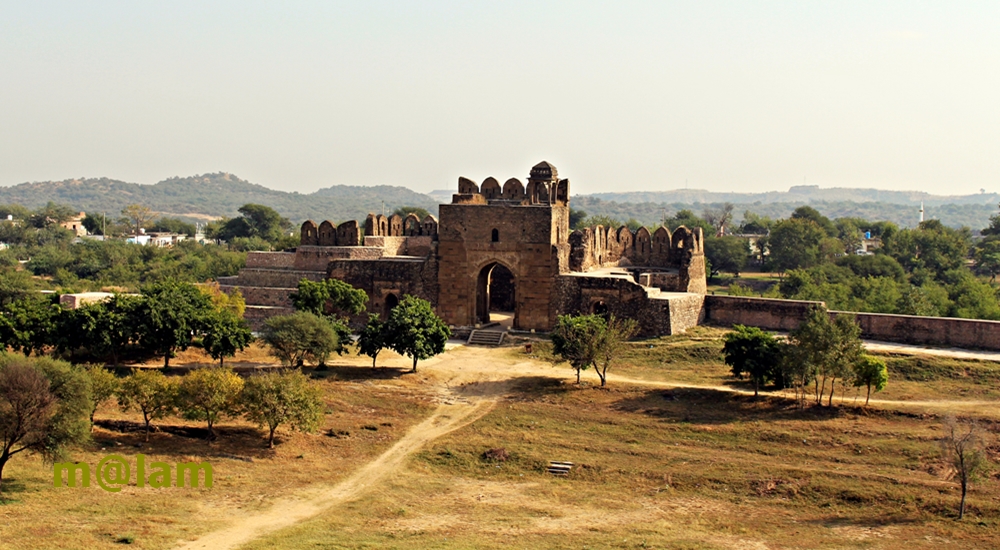
Rohtas Fort

Excursions from Islamabad
City Breaks, Tourists Destinations in Pakistan

Excursions from Islamabad

Situated in the heart of Pakistan, the capital city of Islamabad boasts an ideal location that offers easy accessibility from both within the country and internationally. Moreover, its proximity to various key destinations allows visitors to embark on captivating day excursions to explore the region’s natural and cultural wonders. Below are outlined some of the major excursions from Islamabad. DAY EXCURSION TO RAWALPINDI OLD CITY: Rawalpindi, the sister city of Islamabad, is a dynamic urban center celebrated for its bustling markets, rich historical sites, and lively ambiance. Travelers have the opportunity to discover various attractions such as the antique structures within Raja Bazaar, the lively markets of Saddar, and the historic edifices and thoroughfares predating Pakistan’s formation. Notable landmarks include the Pakistan Army Museum, Ayub National Park, and the iconic St. Paul’s Church Rawalpindi. Rawalpindi’s proximity to the capital city adds to its accessibility and appeal to visitors. DAY EXCURSION TO TAXILA WORLD HERITAGE SITE Taxila is an ancient metropolis situated approximately 45 kilometers north of Islamabad, the country’s capital city. Positioned on the border between Punjab and Khyber Pakhtunkhwa provinces, Taxila derives its name from the Sanskrit term Taksasila, translating to “city of cut stones.” This significant archaeological site was discovered in the late 1800s by the renowned archaeologist Sir Alexander Cunningham. Covering an area of approximately 30 square kilometers, Taxila boasts a rich museum and over 50 sites of historical importance. Notable sites within Taxila include Julian, Sirkap, Mohra Moradu, and Julian. Acknowledging its cultural significance, Taxila was inscribed as a UNESCO World Heritage Site of Pakistan in 1980. You may also be interested in: Excursions from Gilgit DAY EXCURSION TO WAH MUGHAL GARDENS The Mughal Gardens, dating back to the era of Akbar, are situated in the city of Wah, less than an hour’s drive from Islamabad. Akbar commissioned Ahmed Mehmar Lahori for their structural and architectural design. These gardens boast exquisite design and have served as the inspiration for numerous significant architectural endeavors due to their ingenuity. In 2006, a team of researchers discovered evidence of a sophisticated water system underlying the gardens, showcasing their modernity for their time. Travelers along the Grand Trunk Road from Peshawar to Islamabad, or those visiting Taxila and Khanpur Dam, can take a moment to explore these historic gardens. DAY EXCURSION TO GURDWARA PANJA SAHIB Gurdwara Panja Sahib, located in Hasan Abdal approximately 50 kilometers from Islamabad, holds immense significance for the Sikh community as one of their most sacred places of worship. Its importance lies in a rock within its premises believed to bear the handprint of Guru Nanak. Twice a year, Sikhs from across the globe make pilgrimages to this Gurdwara. While the Gurdwara’s architecture is stunning and worth admiring, access to the compound is restricted to the general public. DAY EXCURSION TO ROHTAS FORT – A UNESCO WORLD HERITAGE SITE Rohtas Fort (Qila Rohtas) is one of the six UNESCO World Heritage Sites in Pakistan, designated in 1997. The gigantic Rohtas fort is an exceptional example of early Muslim military architecture surviving today. It was built by Farid Khan – the “Lion King” – well known as Sher Shah Suri in the 16th century. Located some 16km northwest of Jehlum city, the fort was strategically built in a gorge on a small hill 300ft above its surroundings, and it commands the old route from the north to the plans of Punjab across the Potohar Plateau. Rohtas Fort is located some 98 km from Islamabad and takes about 2 hours to reach. The major reason behind the erection of this rampart was to subdue the pro-Mughal Ghakkar tribe and to thwart the possible return of Mughal Emperor Humayun who had fled to Iran after his defeat in the battle of Kanauj at Chaunsa. DAY EXCURSION TO KALARKAHAR & MALOT TEMPLES Kalarkahar is a serene town located in the Chakwal District of Punjab, Pakistan. It is approximately a two-hour drive from Islamabad, making an ideal day excursion from the capital city. Kalarkahar is renowned for its scenic beauty, featuring lush green hills, freshwater lakes, and picturesque landscapes. One of the main attractions in Kalarkahar is the Kalarkahar Lake, a tranquil reservoir surrounded by verdant hills. The Malot Temples, also known as the Malot Fort Temples, are a historical and archaeological site located near the village of Malot in the Salt Range of Punjab, Pakistan. These temples date back to the 10th century and are an important representation of the region’s ancient Hindu heritage.  DAY EXCURSION TO KHEWRA SALT MINES The Khewra Salt Mine, also known as the Mayo Salt Mine, stands as the world’s second-largest salt deposit. Situated in Khewra, an administrative division within the Jehlum District of Punjab Province, Pakistan, it holds the distinction of being the largest salt deposit in the country. This remarkable site serves as a crucial source of salt and stands as one of Pakistan’s premier tourist attractions, boasting an estimated total of 220 million tons of rock salt deposits. Its origins trace back to the era of Alexander the Great, where legend has it that his horses were observed licking the rocks during their encampments. Located approximately 160 kilometers from Rawalpindi/Islamabad, Khewra is easily accessible and can be reached within a three-hour drive. DAY EXCURSION TO KETAS RAJ TEMPLES Ketas Raj is a complex of ancient Hindu Temples nestled at an altitude of 2,000 feet above sea level.  The temples are situated near the Chakwal district in the Potohar region of Pakistan. The Ketas Raj, also known as Qilla Ketas, originally is a sacred pilgrimage site steeped in history and spirituality. The temples hold a history that dates back to the days of the Mahabharata, approximately 300 BC. Katas Raj encompasses a cluster of seven ancient temples, remnants of a Buddhist Stupa, medieval temples, Havelis, and recently constructed temples, all centered around a revered pond. This pond was once enclosed by a fort, temples, bathhouses, and rest houses. DAY EXCURSION TO ATTOCK FORT Attock Fort stands as a significant historical monument situated along the banks of the River Indus at

Excursions from Islamabad Read Post »

, , , , , , , , , , , , , , , , , , , ,
UNESCO World Heritage Sites Of Pakistan
Blogs, Heritage Sites in Pakistan, World Heritage Sites

UNESCO World Heritage Sites of Pakistan

UNESCO World Heritage Sites of Pakistan – A Rich Tapestry of History and Culture Pakistan, strategically nestled at the crossroads of South Asia, boasts a wealth of historical treasures, archaeological wonders, and breathtaking natural landscapes. Its cultural diversity, manmade landmarks, and architectural heritage are nothing short of remarkable. The UNESCO World Heritage Sites in Pakistan represent the pinnacle of human achievement in terms of historic and cultural significance. These six sites are recognized for their outstanding universal importance and are entrusted to the world for preservation. Some of these landmarks have a history dating back 5,000 years. 1. Mohenjo-Daro: Archaeological Ruins The ancient city of Mohenjo-Daro, dating back 5,000 years, is a jewel of the Indus Valley Civilization. Situated on the banks of the River Indus in Larkana District, Sindh, it was unearthed in 1922. Mohenjo-Daro’s meticulously planned layout and early town planning system are evident, making it a remarkable archaeological site. While only one-third of the city has been discovered, ongoing efforts by the Pakistani government and UNESCO aim to conserve this cultural treasure. 2. Buddhist Ruins of Takht-i-Bahi and Sahr-i-Bahlol Takht-i-Bahi, meaning “spring throne” in Persian, and Sahr-i-Bahlol are two distinct sites that together constitute a UNESCO World Heritage Site. Located about 16 km from Mardan city, these Buddhist monastic complexes date back to the 1st century. Perched on hilltops, they have remained remarkably well-preserved due to their strategic locations. The main site, Takht-i-Bahi, features various sections, including the Court of Stupas, a monastic complex, a temple complex, and a tantric monastic complex. 3. Lahore Fort and Shalimar Gardens Lahore Fort and Shalimar Gardens are exquisite examples of Mughal-era craftsmanship from the 17th century. Located in Lahore, these sites showcase the artistic prowess of Emperor Shah Jahan’s reign. The fort, featuring marble palaces and mosques adorned with mosaics, stands in the northwest corner of the walled city. Shalimar Gardens, built in 1642, reflect Persian and Islamic traditions with their meticulously designed layout. 4. Makli Necropolis The Makli Necropolis in Thatta City of Sindh, dating back to the 14th century, houses approximately half a million tombs, making it one of the world’s largest Muslim necropolises. Spread across 10 square kilometers, these monuments and mausoleums showcase the rich heritage of Sindh. From famous rulers to scholars and philosophers, this site preserves a diverse range of historical figures from Hindu, Mughal, and Islamic traditions. 5. Rohtas Fort Rohtas Fort, also known as Qila Rohtas, is an architectural marvel located 16 km northwest of Jhelum City in Punjab. Built in 1541 by Sher Shah Suri, this fort served as a strategic stronghold to thwart Emperor Humayun’s return. The fort’s massive walls, bastions, and intricate gateways are a testament to early Muslim architecture. Though it was never used for its intended purpose, Rohtas Fort stands as a remarkable historical site. 6. Taxila Located approximately 35 km north of Rawalpindi/Islamabad, Taxila is an archaeological treasure trove. This ancient city, situated on a branch of the Silk Road, played a pivotal role in the evolution of Hinduism and Buddhism. Its history spans from the 5th century BC to the 2nd century AD, reflecting influences from Persia, Greece, and Central Asia. Taxila’s numerous sites, including Dharmarajika, Sirkap, Julian, and Mohra Muradu, offer a glimpse into its rich past and have been meticulously preserved for visitors to explore. In 1980, UNESCO declared Taxila a World Heritage Site by adding another layer to Pakistan’s rich tapestry of history and culture. These UNESCO World Heritage Sites not only celebrate Pakistan’s past but also provide a window into the diverse civilizations that have thrived in this region. As guardians of these treasures, it is our collective responsibility to ensure their preservation for generations to come. Tentative Sites in Pakistan In addition to the existing 06 UNESCO World Heritage Sites, Pakistan has a list of 25 tentative heritage and natural sites. Recently, eight of these sites gained approval for inclusion in this prestigious list. These new additions include Derawar Fort in Cholistan, Hingol Cultural Landscape in Balochistan, Nagarparkar Cultural Landscape in Sindh, Central Karakoram National Park and Deosai National Park in Gilgit-Baltistan, Ziarat Juniper Forest and Karez System Cultural Landscape in Balochistan, and the Khewra Salt Mines in Punjab.

UNESCO World Heritage Sites of Pakistan Read Post »

, , , , , ,
Forts, Punjab, World Heritage Sites

Rohtas Fort

Rohtas Fort: History and Architecture at Heights Rohtas Fort, also known as Qila Rohtas, stands as an iconic symbol of military ingenuity and architectural brilliance in Punjab, Pakistan. Nestled in the Tilla Jogian Range on the Pothohar Plateau, this UNESCO World Heritage Site (since 1997) is a masterpiece of early Muslim military architecture in Central and South Asia. Its robust design, sprawling walls, and intricate gateways have earned it a place among the most remarkable historical sites in the region. Location and Setting Strategically positioned 91.5 meters (300 feet) above its surroundings, Rohtas Fort is perched on a hill overlooking the confluence of the Kahān River and the seasonal Parnal Khas stream. The fort rises to an elevation of 819 meters (2,687 feet) above sea level, covering an impressive 70 hectares (170 acres). Just 16 kilometers northwest of Jhelum, it lies near the historic Grand Trunk Road, a vital trade route connecting Afghanistan to the plains of Punjab. A Glimpse into History The Vision of Sher Shah Suri (Sur Period) Following his victory over Mughal Emperor Humayun in 1541, Sher Shah Suri commissioned the construction of Rohtas Fort to consolidate his power and thwart a potential Mughal resurgence. Tasked with suppressing the pro-Mughal Ghakkar tribe, the fort was designed to be both an impregnable fortress and a statement of authority. Despite initial resistance from the local populace, construction progressed under the supervision of Todar Mal, a Punjabi Khatri minister. The fort’s architectural blend of Persian, Afghan, and local influences reflects Sher Shah’s vision for an enduring legacy. Mughal Period After Sher Shah’s death, the fort’s strategic significance dwindled. It was ceded to Humayun in 1555, who used it briefly before his empire shifted focus to more ornate structures like the nearby Attock Fort. While Emperor Akbar and Jahangir rested at Rohtas during their travels, its plain military style was less appealing to the Mughals, who preferred structures adorned with gardens and elaborate designs. Sikh Empire and British Era In 1825, the fort fell under the control of the Sikh Empire, with Gurmukh Singh Lamba capturing it from Nur Khan, a Ghakkar chief. It served as an administrative hub during the Sikh reign until the British annexed the Punjab region in 1849. Architectural Marvels of Rohtas Fort Main Fortifications The fort’s defensive walls stretch over 4 kilometers, enclosing an area capable of housing 30,000 soldiers. Rising between 10 to 18 meters in height and 10 to 13 meters in thickness, the walls feature 68 bastions, 1,900 battlements, and 12 monumental trap gates. Inner Citadel A secondary wall 533 meters long divides the inner citadel from the rest of the fort. Structures like Haveli Man Singh, Shahi Mosque, Baolis (stepped wells), and the Rani Mahal add historical depth to the citadel’s interior. Notable Structures Haveli Man Singh Constructed between 1550 and 1614, this prominent structure reflects Hindu architectural elements and offers commanding views of the surroundings. Rani Mahal The Rani Mahal, near Haveli Man Singh, was once a four-room structure, now reduced to a single room with visible foundations. Shahi Mosque Located near the Kabuli Gate, this modest yet ornate mosque is one of the most decorated buildings within the fort. Baolis (Stepped Wells) The fort features three Baolis—Main Baoli, Shahi Baoli, and Sar Gate Baoli—essential for water storage during sieges. The Gates of Rohtas FortRohtas Fort is renowned for its 12 intricately designed gates, each with unique historical and architectural significance: Sohail Gate: Named after Saint Sohail Bukhari, this gate showcases exemplary masonry from Sher Shah’s time. Shah Chandwali Gate: Honoring Saint Shah Chandwali, this gate connects the citadel to the main fort. Kabuli Gate: Facing west towards Kabul, this double gate opens to a width of 3.15 meters. Shishi Gate: Distinguished by its glazed tile embellishments, representing an early example of this technique. Langar Khani Gate: A double gate leading to a Langar Khana (Mess hall or Canteen). Talaqi Gate: Named after “Talaq” (divorce), as legend has it Prince Sabir Suri’s entry through this gate was ill-fated. Mori or Kashmiri Gate: Opening northward, it’s aptly named for its orientation towards Kashmir. Khwas Khani Gate: An ode to Khwas Khan, one of Sher Shah Suri’s most prominent generals. Gatali Gate: Facing the village of Gatali, it served as a vital crossing point for the River Jhelum to the Kashmir Valley. Tulla Mori Gate: Located on the eastern side, it’s more of an entrance than a gate, featuring a bastion. Pipalwala Gate: Resembling the Tulla Mori Gate, it’s a small entrance. Sar Gate: Known as “Sar (water),” this gate includes a small entrance with a bastion and a Baoli adjacent to it. Modern-Day Preservation Despite centuries of exposure, much of Rohtas Fort remains well-preserved. Restoration efforts have focused on key areas like the Chandwali Gate, which was recently rebuilt. However, natural erosion and neglect have caused some damage, such as the partial collapse of the Talaqi and Gatali Gates. Visitor Information Easily accessible at 16km northwest of Jhelum, and 8 km south of Grand Trunk Road makes it a convenient stop for travelers exploring the region. Rohtas Fort is a must-visit for history enthusiasts and architecture lovers. Plan Your Visit Rohtas Fort’s rich history and breathtaking vistas make it a destination that blends culture, history, and natural beauty. Whether you’re tracing the footsteps of emperors or marveling at ancient craftsmanship, the fort offers an unforgettable experience. Nearby Attractions Maqbara Khair un Nisa Tilla Jogian Forts in Pakistan Baltit Fort Altit Fort Red Fort Muzaffarabad Lahore Fort Kot Diji Fort Derawar Fort

Rohtas Fort Read Post »

, , , , , , , , , , , , , , ,
Scroll to Top