Shandur pass

Chitral Tourist Attractions
Blogs, City Breaks, Khyber Pakhtunkhwa, Tourists Destinations in Pakistan

Chitral Tourist Attractions

Chitral, a region in the Khyber Pakhtunkhwa province of Pakistan known for its natural beauty and cultural richness, offers several tourist attractions. Here are some notable places to visit in Chitral: Chitral Town Chitral Town is a bustling hub filled with vibrant markets and bazaars that provide a unique insight into the local way of life. These lively centers exhibit a diverse array of handicrafts, textiles, spices, and souvenirs, offering visitors the opportunity to fully immerse themselves in the vibrant colors and rich flavors of Chitral. Exploring the streets of the magnificent Chitral Town divulges a harmonious blend of traditional and contemporary architecture. The buildings feature intricate designs and elaborate frontages that beautifully showcase the region’s rich cultural heritage. This visual spectacle is sure to captivate architecture enthusiasts, providing a delightful journey through the town’s unique and fascinating aesthetic. Shahi Masjid The Shahi Masjid stands as a magnificent piece of architecture, constructed by Shujaul Mulk, the Mehtar of Chitral, in 1924 A.D. Shujaul Mulk, the ruler of Chitral from 1895 to 1936, left a lasting legacy in the form of this grand mosque. The building itself is a remarkable example of architectural dexterity, constructed with pure white marble and adorned with intricately engraved art. Situated on the bank of the Chitral River, adjacent to the Chitral Fort, the Shahi Masjid is not only a place of worship but also a testament to the rich customs and culture of the Chitral aristocracy. The architectural details of the mosque reflect the traditions of the region, creating a visual representation of Chitral’s cultural heritage. The Shahi Masjid stands as a significant landmark, inviting visitors to appreciate its historical and artistic significance. Chitral Fort The Chitral Fort, also known as Shahi Qila, is a historic fortification located in Chitral town, Khyber Pakhtunkhwa, Pakistan. Positioned on the banks of the Chitral River, it holds a strategic location not far from the Shahi Masjid. The fort is believed to have been initially constructed in 1774 during the reign of Mohtaram Shah Katur II and later restored in 1911 by His Highness Sir Shuja ul-Mulk. Originally serving as the barracks for the guards of the Mehtar of Chitral, the fort became the personal property of the last ruler of Chitral after the merger of Chitral State in 1969. Presently, it is occupied by the ceremonial Mehtar, Fateh-ul-Mulk Ali Nasir. Notably, the fort has undergone renovations, particularly to the old Darbar Hall and staterooms, following damages incurred during the earthquake of 2015. The Chitral Fort stands as a testament to the region’s historical significance and architectural heritage, offering visitors a glimpse into its rich past. Chitral Museum The Chitral Museum stands as a custodian of the unique culture and art of the region, preserving the heritage of ancestors for future generations. Established on July 8, 2010, the primary purpose of the museum is to safeguard Chitral’s cultural legacy for tourists and locals alike. The museum is divided into two distinct sections: the Ethnological Gallery and the Archaeological & Kalash Gallery. In the Ethnological Gallery, visitors encounter artifacts such as jewelry, instruments, and furniture from the 12th century, providing a glimpse into the lifestyle of Chitral’s ancestors. On the other hand, the Archaeological & Kalash Gallery focuses on items related to the Kalash, showcasing the cultural heritage with connections to Greek influences. Particularly noteworthy are the artifacts associated with their gods and goddesses, offering insights into the spiritual and religious practices of the Kalash people. The Chitral Museum serves as a valuable resource for those interested in exploring and understanding the rich cultural history of the region. Governor’s Cottage The Governor Cottage stands as a beautiful and graceful example of Chitrali architecture, showcasing the region’s glorious and distinctive construction style. Situated on elevated grassland, surrounded by mountains, the cottage provides a picturesque setting. On a clear day, visitors can admire the majestic Trich Mir Mountain from this location. Previously reserved, the place is now open to the general public. Inside, one can find a collection of well-preserved historical objects that offer insights into the rich history of the region. The Governor Cottage provides a unique opportunity for visitors to experience and appreciate the royal living style of the Mehtar of Chitral. It serves as a testament to the cultural and historical heritage of the area, allowing individuals to connect with the past and the architectural traditions of Chitral. Chitral Gol National Park Chitral Gol National Park, situated 5,000 meters above sea level in the Lower Chitral District, is a two-hour drive from Chitral town and spans 7,750 meters. This park is renowned for its abundant wildlife and panoramic views of valleys, glaciers, and streams. Formerly considered the private property of the Mehtar of Chitral until 1983, the park’s status has been disputed and is subject to ongoing litigation between the Mehtar’s heirs and the Government of Pakistan. The park encompasses three valleys with glaciers and springs feeding into an 18-kilometer stream flowing east into the River Chitral. Rich in cedar trees, the park provides a habitat for diverse wildlife, including the endangered Kashmir Markhor. Other notable mammals include the Siberian ibex, Snow leopard, Ladakh Urial, Himalayan black bear, Himalayan Wolf, Red fox, Eurasian otter, and Yellow-throated marten. Barmoghlasht Barmoghlasht, a renowned summer retreat in Chitral, is nestled amidst towering mountains and lush greenery, located 14.5 kilometers from Chitral town. Highlighting the area is the former Mehtar’s Summer Fort, strategically perched at an elevation exceeding 2800 meters, providing a captivating view of the city. Notably, it is the ancestral building of the Chitral royal family, adding historical significance to its charm, set amid vibrant green pastures. Accessible by a 40-minute drive from Chitral City, Barmoghlasht is especially enchanting in May and June when spring brings forth lush greenery and vibrant blooms. The resort offers an array of activities, making it an ideal destination for paragliding, hiking, and bird watching in the summer, while also providing opportunities for skiing during the winter months. Tourists are drawn to Barmoghlasht throughout the

Chitral Tourist Attractions Read Post »

, , , , , , , , , , , , , , , , , ,
Shandur Polo Festival
Gilgit-Baltistan

Shandur Polo Festival

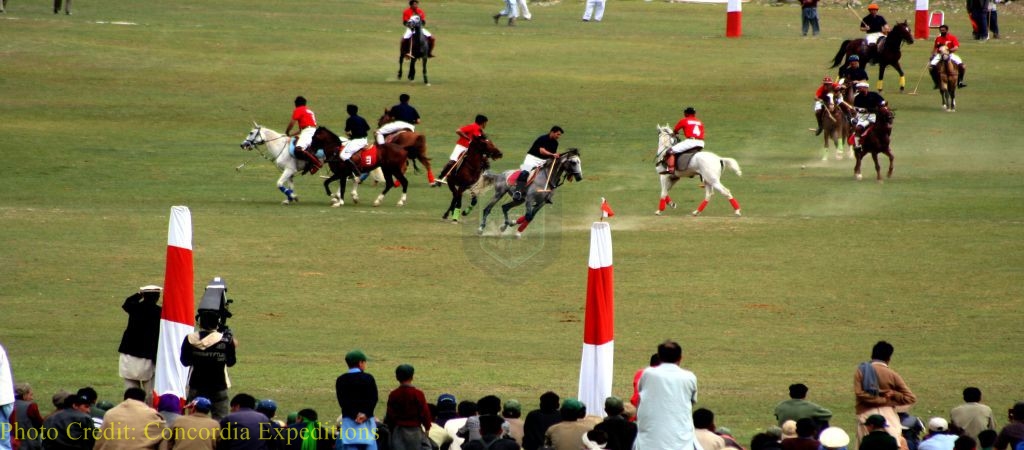
Exploring the Thrilling Shandur Polo Festival: A Unique Experience at 3734m Altitude The exhilarating Shandur Polo Festival unfolds at the awe-inspiring Shandur polo ground, nestled at a breathtaking altitude of 3734 meters. This remarkable event occurs on the border shared by the Chitral district of Khyber Pakhtunkhwa (KPK) and the Ghizer district of Gilgit-Baltistan in Pakistan. The festival takes place annually from the 7th to the 9th of July. This festival captivates thousands of enthusiastic spectators, drawing them into the world of the kings’ game – traditional freestyle Polo. A Unique Polo Experience The version of the Polo showcased during the Shandur Polo Festival is distinctive to this region. It offers an experience unparalleled anywhere else in the world. For three exhilarating days, domestic and international tourists, ardent supporters from Gilgit and Chitral, organizers, vendors, performers, Polo players, and their magnificent horses come together to create a vibrant makeshift village. The verdant Shandur Pass serves as a spectacular battleground during this festival. The World’s Highest Polo Ground The Shandur Polo Ground is renowned as the world’s highest Polo ground. It is encircled by majestic mountain peaks and graced with a serene lake in the backdrop. This breathtaking setting not only enhances the festival’s allure but also provides exciting activities for tourists. The Polo ground, situated in the heart of the pass, measures 200 meters by 56 meters, enclosed by a 60-centimeter-high stone wall. The size of the ground is in contrast to the conventional Polo field’s dimensions of 270 meters by 150 meters. This smaller size adds to the intensity of the game, making it seem crowded for the 12 players who compete at any given time. However, this limitation prevents the horses from extended gallops at such high altitudes. A Glimpse into History Polo’s roots trace back to the 6th century BC when it served as a training game for cavalry units of the king’s guards and elite troops in Persia. Originally, Polo boasted up to 100 players on each side, resembling a mini-battle. In the 6th century AD, it became Persia’s national sport and gradually spread to Arabia, Tibet, and China. Tragically, in 910, a game in China led to the death of a cherished relative of Emperor Apao Chi, prompting the gruesome beheading of all players. In South Asia, Polo arrived in the 13th century, introduced by Muslim conquerors. Over time, it evolved into a more regulated version from its wild beginnings. The contemporary Polo we witness today typically features six players on each side with a distinct lack of rigid rules. The free-style polo is epitomized by the famous saying, “The rule is that there is no rule.” However, the polo festival at Shandur makes one exception, with six players on each side engaging in an intense one-hour match, punctuated by a mere 10-minute break due to the high altitude. This breather comes alive with a traditional dance performance, and the team securing the most goals within the allotted time emerges victorious. Historical Beginnings Shandur’s first Polo match occurred in 1936. It was initiated dramatically by Major Evelyn Hey Cobb, the British political agent of the region. Cobb, a Polo enthusiast, ordered Niat Qabool Hayat Kakakhel, a prominent figure, and assistant to the governor from Ghizer district, to construct a Polo Ground in Shandur. This Polo Ground earned the name “Mas Junali,” derived from two Khuwar languages, meaning “Moony Polo Ground.” Impressed by Kakakhel’s efforts, Cobb sought to reward him However, Kakakhel declined and instead asked for trout to be stocked in local streams. Cobb agreed, importing live trout from England, which were released into the River of Ghizer. This visionary move paved the way for the Directorate of Fisheries and job opportunities in the region. Today, Gilgit-Baltistan is also renowned for Trout fishing. Preparing for Battle Players and horses from both sides arrive at Shandur weeks before the grand showdown to acclimatize to the high altitude. Preliminary matches in both Chitral and Gilgit determine the best horses and players for the final games, with local judges making their selections during test matches on home grounds. A Wild Game Safety measures take a back seat during this wild game. Players rarely wear helmets, donning colorful attire and wielding strapless mallets as they chase the ball vigorously on their horses, often without bandages to protect the steeds from harm. Winning the highly anticipated trophy is a source of immense pride for both teams, making national headlines. Supporters and tourists flock to the venue as soon as the rival teams and their horses make their grand entrance. Access Both Gilgit and Chitral districts are accessible by air and road from the capital city of Islamabad. Shandur is approximately 211 kilometers west of Gilgit via the Gilgit-Chitral road. Conversely, it is about 168 kilometers northeast of Chitral along the Shandur-Gilgit road. The journey from Gilgit treats travelers to breathtaking vistas of valleys, lakes, fruit orchards, traditional houses, terraced fields, flowing rivers, and serene springs. Similarly, the drive from Chitral offers glimpses of the Mastuj and Surlasp valleys’ lush natural beauty, the warm hospitality of the residents, and traditional houses nestled amidst stunning landscapes. Both routes are suitable for 4WD vehicles but are closed during the winter months. Activities The heart-pounding Polo matches at Shandur are complemented by an array of activities. These warm-up activities help visitors to immerse themselves in the natural and cultural beauty of the region. Adventure enthusiasts can explore the surroundings of Shandur, try their hand at stream and lake fishing, or embark on exhilarating hikes. The event also provides a fascinating glimpse into the lifestyle and cultural traditions of the people of Gilgit and Chitral. Nights come alive with musical performances and fireworks, while daytime showcases paragliding and traditional dances from Chitral and Gilgit-Baltistan. The indigenous customs and natural beauty are a visual delight for visitors. Plan Your Visit For all visitors, it is highly recommended to: Arrive at the venue at least a day before the final contest to fully savor the festival.

Shandur Polo Festival Read Post »

, , , , , , , , , , , , , ,
Phander Valley
Gilgit-Baltistan

Phander Valley

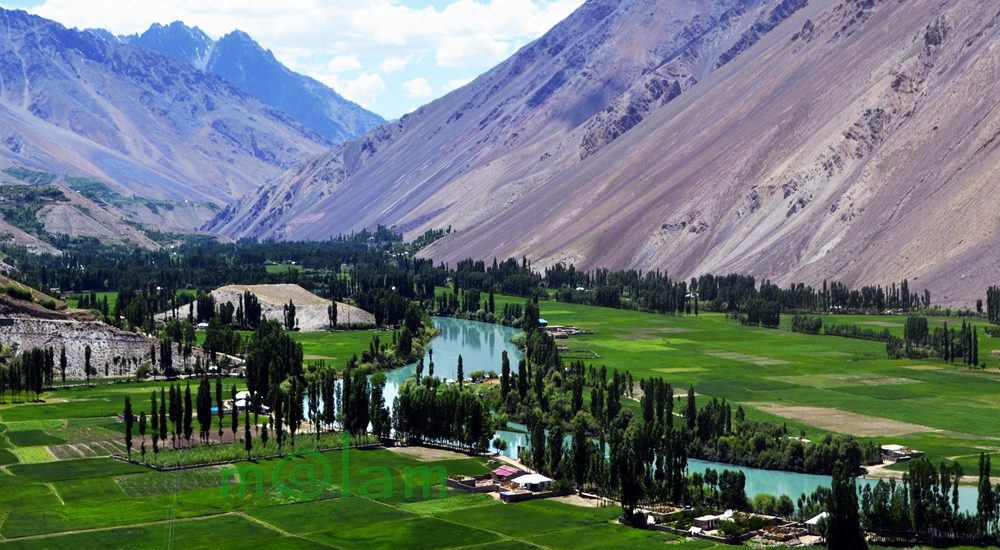
Unveiling the Enchanting Beauty of Phander Valley: A Nature Lover’s Paradise Nestled in the heart of the Ghizer District of Gilgit-Baltistan in Pakistan lies the breathtaking Phander Valley. This hidden gem is renowned for its unrivaled grandeur and sheer natural beauty. What truly sets this valley apart is, in fact, its remarkable display of diverse colors, changing with the seasons. Moreover, the tranquil deep blue rivulet gracefully meandering through the valley’s center adds to the enchantment, creating a scene straight out of a dream. Exploring Phander’s Geography Phander finds its home in the Gupis Valley of Ghizer district, within the mesmerizing Gilgit-Baltistan region. Ghizer district shares its borders with Gilgit District to the east, Hunza-Nagar to the northeast, Diamer to the south, and Chitral district of Khyber Pakhtunkhwa to the west. A Journey Through Nature’s Masterpiece As you embark on a journey through the Ghizer District towards the Shandur Pass, you’ll be greeted by a series of tiny valleys nestled along the Gilgit River. The landscape here is undoubtedly a testament to nature’s creativity, stretching from Gilgit to Lunger near Shandur. Each stretch leading up to Lunger boasts traditional houses surrounded by lush gardens, bountiful fruit orchards, and meticulously terraced fields. Attractions Along the Way The road to Phander Valley is adorned with numerous attractions that promise an enjoyable journey without the slightest hint of fatigue. As your eyes feast on the vibrant green fields, enchanting fruit orchards and gardens, pristine lakes like Khalti Lake and Phander Lake, and the sky-blue river flowing gracefully between valleys connected by suspension bridges, you’ll find yourself immersed in a unique and awe-inspiring experience. Likewise, the clear glacial waters and natural springs that dot the landscape further add to the visual delight. A Mosaic of Cultures Beyond its diverse landscape, Ghizer District boasts a rich tapestry of cultures that make it even more enticing. The residents here speak a multitude of languages, including Shina, Khuwar, Burushaski, and Wakhi, depending on the region. These diverse cultures coexist harmoniously, and the warm and welcoming locals lead simple lives, sustaining themselves primarily through agriculture. The Pinnacle of Scenic Beauty While the entire district is a visual treat, the Phander Valley stands out as a heavenly masterpiece. This bowl-shaped valley is formed by a natural barricade at its eastern end, where the PTDC Motel overlooks the breathtaking Phander Lake. Additionally, a government rest house perched on a ridge offers panoramic views of both the valley and the lake. A Nature Lover’s Paradise Phander Valley boasts a natural setting that is truly one-of-a-kind. Lush plains cover the valley’s base, separated by the calm, deep blue waters gently flowing downstream. These waters further teem with trout, a regional delicacy that every tourist should savor. Easy Access to Paradise Phander is conveniently located approximately 173 kilometers west of Gilgit town, making it easily accessible. The journey typically takes around five hours, depending on the pace. The Gilgit-Chitral road is undergoing reconstruction currently. Upon completion, the journey will be reduced to about 3 hours. For those traveling via Chitral, Phander can also be reached via the scenic Shandur Pass. Phander Valley is a testament to the splendor of nature, offering a harmonious blend of diverse landscapes, rich cultures, and serene beauty. Whether you’re an adventure seeker or a nature enthusiast, this enchanting valley promises an unforgettable experience that will leave you in awe of the natural world’s wonders.

Phander Valley Read Post »

, , , , , , , , , , , , ,
Scroll to Top