
Skardu

Marsur Rock
City Breaks, Gilgit-Baltistan, Others, Tourists Destinations in Pakistan

Marsur Rock

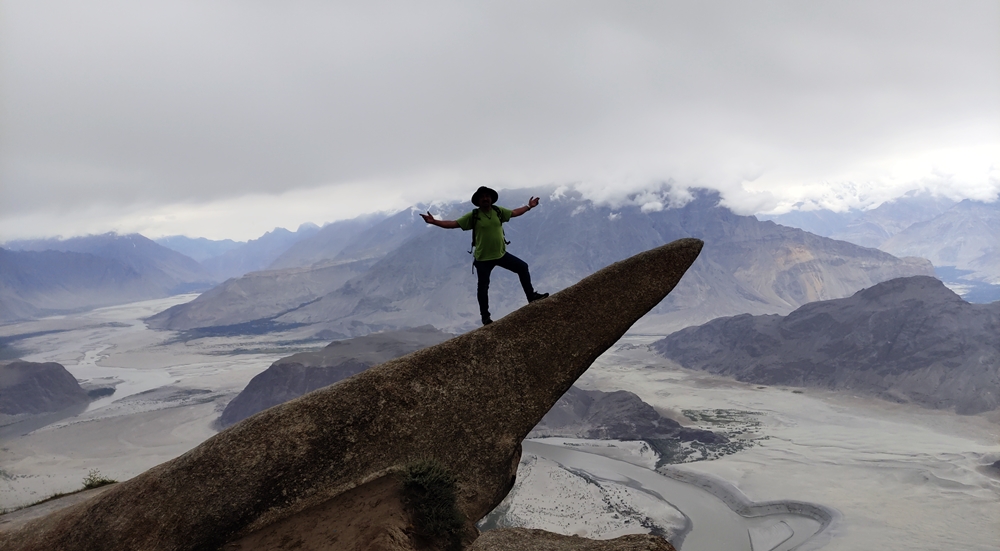
Marsur Rock: The Trolltunga of Baltistan If you’re craving awe-inspiring sceneries of Skardu town and its picturesque surroundings, the hike to the Marsur Rock is what you are exactly looking for. All you need is energy and determination to climb a steep moraine that takes at least 3 hours to hit the rock. It is an amazing hike providing fascinating views of the entire Skardu and surrounding attractions including the Hussainabad Valley and Broq in the immediate backdrop, Sarfaranga Desert, Kharpocho Fort, Nansoq Valley, the meandering Indus River, the convergence of Indus and Shigar rivers, and the Shigar Valley in the background. Marsur Rock is accessible by an adventurous drive from Skardu to the Hussainabad Broq located on a fair altitude followed by an uphill hike providing magnificent views. An Emerging Tourist Attraction Situated on the verge of mountains of Hussainabad, Shigar, Baltistan, Marsur Rock (also known as Hussainabad Rock) stands as a remarkable geological wonder in this region. The famous rock is celebrated for its distinctive geological features. At an elevation of 3,757 meters, Marsur Rock is a towering rock spire perched majestically on a mountain ridge high above the Hussainabad Valley. It bears a striking resemblance to Norway’s famous Trolltunga. What sets it apart is that out of its 38-foot total length, a whopping 25 feet extends dramatically into thin air, offering daring adventurers the opportunity to savor a mesmerizing bird-eye-view of the valleys below and capture daring photographs. Remarkably, Marsur Rock remained hidden from the world until 2018 until it was noticed by locals. A captivating picture of this rock shared on social media suddenly thrust this hidden gem into the tourist limelight. What makes this rock so exceptional is its multi-faceted appeal. It is, without a doubt, the finest bird’s-eye viewpoint in Skardu, offering unrivaled scenery in the entire town. The trail is adventurous, can be conquered by individuals of all ages yet requires vigor and resolve. It’s a perfect day activity whether you’re in Skardu or exploring the enchanting Shigar Valley. How to Reach Marsur Rock Accessing Marsur Rock involves an exhilarating jeep ride to Hussainabad Village and then Broq followed by an invigorating hike. Drive from any part of Baltistan to the southeastern part of Hussainabad Valley. Hussainabad itself is conveniently situated on the Kargil-Skardu Road, merely 24 kilometers from Skardu town, with a journey time of approximately 35 minutes. Take the side road that commences near Karakoram International University Campus in Hussainabad, branching off from the main Kargil-Skardu Road. The jeep track meanders through the valley, passing by the enchanting Hussainabad Waterfall, and ascends along a zigzagging uphill path leading to the summer pasture. From this point onward, a scenic hike leads to the captivating Marsur Rock. Depending on your pace, the hike typically takes around 3 hours. Remarkably, you don’t require a guide to navigate to this remarkable spot. Important Tips for Your Visit Here are some key considerations for planning your journey to Marsur Rock: Mobile signals are not available in the vicinity of Marsur Rock, so plan accordingly. You are traversing a culturally sensitive area, so wear appropriate clothing that respects local customs. Preserve the pristine beauty of the area by avoiding littering and demonstrating responsible travel behavior. Be sure to carry essential supplies, including water, some food, an umbrella or raincoat, a cap or hat, and a camera to capture the breathtaking scenery. Exercise caution, especially when taking photographs, particularly during inclement weather conditions. Explore Nearby Attractions While Marsur Rock itself is a shining gem, there is a treasure trove of attractions waiting to be explored in the immediate vicinity and throughout the remote valleys of Baltistan. Don’t miss the opportunity to immerse yourself in the natural wonders of Hussainabad Valley, Baltistan, Pakistan. Some other captivating attractions in the vicinity include: Skardu District Attractions Nansoq Organic Village Kharpocho Fort Katpana Desert & Lake Satpara Lake Lower Kachura Lake Upper Kachura Lake Deosai Plains Chunda Valley Soq Valley Basho Valley Shigar District Attractions Shigar Fort Palace Amburiq Mosque Hashupi Garden Shigar Riverside Sarfaranga Desert Blind Lake Khaplu District Attractions Khaplu Valley Khaplu Fort Palace Chaqchan Mosque Blind Lake Keris Thallay Valley Machulu Village Hushey Valley Kharmang District Attractions Manthoka Waterfall Khamosh Waterfall
Marsur Rock Read Post »

, , , , , , , , , ,
Blind Lake in the Shigar Valley, Skardu, Gilgit-Baltistan, Pakistan.
City Breaks, Gilgit-Baltistan, Lakes

Blind Lake

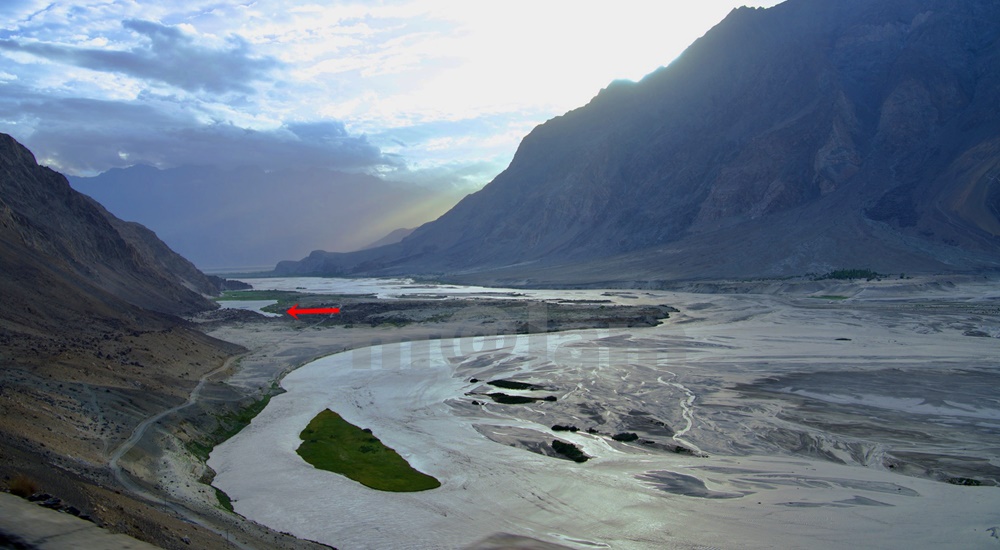
Blind Lake: A Picturesque Oasis in Shigar Valley Locally known as Xarba Tso in the Balti Language, Blind Lake is an enchanting freshwater lake nestled near the Shigar Valley in the heart of the Gilgit-Baltistan region of Pakistan. Unlike most lakes, Blind Lake doesn’t rely on any external water supply or discharge source. Its serene waters remain still and unmoving, earning it the intriguing name “Blind Lake.” A Visual Feast of Nature This mesmerizing lake offers panoramic views of its surroundings, with a particular focus on the riverside and the majestic mountains that serve as its backdrop. The trail leading to Blind Lake is a unique journey through lush greenery, arid deserts, and rugged rocky hills. Discovering Blind Lake’s Location To reach Blind Lake, take a scenic drive from Skardu town towards Shigar Valley, passing through picturesque mountainous terrain and the Sarfaranga Desert. The lake is approximately 28 kilometers from Skardu town and can be reached in around 45 minutes. While the journey to the lake from the main Shigar road is an adventure in itself, it’s undoubtedly worth the effort. A Hidden Gem in Nature’s Embrace Blind Lake is a hidden gem nestled amidst the awe-inspiring mountains surrounding the renowned Sarfaranga Desert. Bounded by the Indus River on one side and the Shigar River on the other, it’s now easily accessible via a newly constructed bridge on the Indus River. However, for those seeking to savor the journey truly, the drive through the Sarfaranga Desert is an experience filled with charm. Accessing the Blind Lake By Road: Travelers can embark on a remarkable journey from Islamabad to Skardu, covering approximately 770 kilometers via the legendary Karakoram Highway (N35). This unforgettable 15-18 hour drive offers breathtaking views, ranging from lush green hills to barren peaks and snow-covered mountains. By Air: Alternatively, you can take a direct flight to Skardu from Islamabad, Karachi, or Lahore. During peak tourist seasons, PIA operates flights from Karachi and Lahore once or twice a week, alongside daily flights from Islamabad. The aerial views during this journey are simply mesmerizing, with a network of mighty mountains beneath and a breathtaking glide through snow-capped peaks before landing at Skardu airport. Pro Tip: For a unique experience, you can also fly to Gilgit from Islamabad or Lahore and continue your journey to Skardu by road, enjoying a scenic one-hour flight and a 3-4 hour drive through the Jaglot-Skardu road (S1). The Final Leg to Blind Lake Upon reaching Skardu, your destination, Blind Lake, is a mere 45 kilometers away. Accessible only by 4-wheel vehicles, you can get to the lake in about an hour and a half. The journey includes 35 minutes of driving on paved roads, followed by 35 minutes on bumpy terrain, and finally, a 30-minute walk that rewards you with the first glimpse of Blind Lake. Enchanting Lake Surroundings While the hike to the lake may pose some challenges, the surrounding beauty more than compensates for any exhaustion. The lush green trees adorning the lake enhance its natural splendor. The tranquil atmosphere, coupled with the captivating stillness and breathtaking scenery, leaves a lasting impression on every beholder. Embrace the Wonders of Blind Lake Sightseeing: Immerse yourself in the beauty of Blind Lake. Its clear blue waters, lush greenery, and mesmerizing circular waves created by the wind will rejuvenate your senses.  Camping: Camping near the lake is a remarkable experience. The ideal spot is next to the lake, where you can witness a spectacular sunset followed by a night sky filled with stars. Be sure to check the weather forecast, as conditions can change rapidly. Pack lightly but include warm clothing for your camping adventure. Swimming: The crystal-clear waters of Blind Lake beckon swimmers. Whether you prefer shallow or warmer areas, the lake offers an excellent opportunity to explore its beauty while swimming. Boating: Enjoy daytime activities by leisurely boating on the calm, cool waters of the lake. It’s an exciting way to explore the lake up close. Fishing: Fishing enthusiasts will delight in the opportunities presented by Blind Lake. The Pakistani government has established a small fish farm here, providing ample chances for trout fishing. Seasons at Blind Lake While Blind Lake’s beauty is captivating year-round, spring stands out as the ideal time to visit. During this season, the area bursts with colorful flowers and butterflies, creating a visual masterpiece. Winter: Expect temperatures ranging from 8 degrees Celsius to 3 degrees Celsius, with snowfall from January to March. The frozen lake’s beauty during winter is awe-inspiring, although January is the coldest, with nighttime temperatures plummeting to -25 degrees Celsius. Summer: Summer temperatures at the Lake range from 24 degrees Celsius to 29 degrees Celsius. The clear waters reflect various colors during this season, making it a magnet for visitors. The best time to visit is from June to September but be prepared for occasional rain if traveling during summer. Accommodation Opportunities While there are a few huts and snack shops in the vicinity, there are no hotels or guesthouses directly near Blind Lake. Many visitors opt for camping near the lake or explore alternative accommodations in Shigar Valley or Shigar Town. Serena Shigar Palace, Concordia Hotel in Skardu, and Kallisto in Skardu are the well-recommended accommodation facilities. However, there is a range of options for accommodation and eateries in Skardu and Shigar. Nearby Tourist Attractions Often referred to as the “Queen of the Alps,” Skardu offers a captivating blend of snow-capped mountains, pristine rivers, lush forests, and historic monuments. While Blind Lake is a sight to behold, there are other attractions to explore. Don’t miss the opportunity to visit this scenic oasis in Shigar Valley, Pakistan. Other key attractions in the surroundings include: Shigar Fort Palace Amburiq Mosque Hashupi Garden Sarfaranga Desert Nansoq Organic Village Masrur Rock (Trolltunga of Pakistan) Kharpocho Fort Katpana Desert and Lake Satpara Lake Lower Kachura Lake Upper Kachura Lake Deosai National Park Chunda Valley Soq Valley Basho Valley

Blind Lake Read Post »

, , , , , , , , , , , ,
Key Facts about Pakistan
Blogs

Pakistan

Exploring Pakistan: A Treasure Trove of Diverse Experiences Pakistan stands as an exceptional and blessed nation, graced with some of Asia’s most breathtaking landscapes. Its geography is as varied as its rich cultures, and its people are known for their warm hospitality. In the realm of discovering the roots of modern-day humanity, few places on Earth rival Pakistan. Unraveling the Tapestry of History The land that now comprises Pakistan has been a cradle of ancient civilizations and a melting pot of cultures and dynasties for centuries. From the ancient Neolithic Mehergarh civilization, dating back 9000 years, to the illustrious 5000-year-old bronze age Indus Valley Civilization, the 3000-year-old Buddhist Gandhara Civilization, the opulent Mughal Era of the 16th century, the brief Sikh rule, to over two centuries of British occupation, leading to independence in 1947, Pakistan’s history is a tapestry of unparalleled events, unlike any other sovereign state. A Glimpse of Pakistan’s Geography Officially, the country is known as the Islamic Republic of Pakistan. Most importantly, Pakistan ranks as the 6th most populous nation in South Asia. Altogether, the country houses over 224 million people from diverse cultural and ethnic backgrounds. Encompassing 881,913 square kilometers (340,509 square miles), Pakistan boasts four provinces – Sindh, Baluchistan, Punjab, and Khyber Pakhtunkhwa – and three territories – Islamabad, Kashmir, and Gilgit-Baltistan. The carefully planned capital city, Islamabad, lies at the heart of this diverse nation. Pakistan’s strategic location at the crossroads of Asia divides it into three major geographic regions: the northern highlands, the Indus River plains, and the Balochistan Plateau. Bordered by the Arabian Sea’s 1046-kilometer coastline in the south, India to the east, China to the northeast, Afghanistan to the northwest, and Iran to the southeast, Pakistan’s diverse landscape includes glaciated mountain ranges in the north (Gilgit-Baltistan), fertile alluvial plains, expansive deserts, lush forests, plateaus, jungles, diverse flora and fauna, meandering rivers, and pristine lakes. A Bounty of Tourist Attractions Pakistan is a treasure trove of tourist attractions, each region offering a unique experience. Northern Adventures The northern mountainous regions encompass parts of KPK (Chitral, Swat, and the Kaghan Valley), Azad  Kashmir, and all of Gilgit-Baltistan. Altogether, the region forms the westernmost edge of the magnificent Himalayas. This area is a haven for adventure enthusiasts offering opportunities for trekking and mountaineering. Moreover, climbing, white-water rafting, mountain and desert jeep safaris, and paragliding are other activities adventurers can take up. Gilgit-Baltistan is proud to host the world’s highest mountains and longest glaciers outside the polar regions. The region undoubtedly makes it a magnet for adventurers. This region also marks the convergence of three mighty mountain ranges – the Karakoram, the Hindukush, and the Himalaya – along with the Pamir mountain range. It was once a vital trade route of the ancient Silk Route. Now, it is embodied by the Karakoram Highway, connecting Pakistan and China at Khunjerab Pass. This highway is adorned with over 100,000 petroglyphs and rock carvings, testifying to its rich Buddhist history. The region’s towering mountains, quaint valleys, terraced fields, ancient forts showcasing architectural marvels, and a history spanning centuries beckon travelers. Central Treasures Pakistan’s central regions feature dense forests, vast deserts, and fertile lands steeped in history and culture, boasting unique landmarks. In fact, ancient sites like Moenjo-Daro & Harappa of the Indus Valley Civilization, Taxila & Takht-i-Bahi of the Gandhara Civilization, and architectural gems from the Islamic era, Mughal Empire, Sikh rule, and the British era, found in cities like Lahore, Multan, Bahawalpur, Karachi, and Peshawar, enthrall domestic and international visitors alike. Southern Charms The southern regions, Sindh and Baluchistan, boast archaeological sites, religious landmarks, and architectural heritage. At the same time, its lakes and some of the world’s most stunning golden beaches along the coastal line earned a special place in the world of tourism. The Makran Coastal Highway from Karachi to Gwadar and Jiwani is a world-famous route, dotted with exclusive tourist attractions. Pakistan proudly hosts six UNESCO World Heritage Sites, with several dozen more awaiting recognition. The Rich Tapestry of Pakistani Culture Pakistan’s major cities bear the marks of both history and modernity. Diverse ethnic groups, each with its own cultural background, inhabit different parts of these cities. Moreover, these groups practice various faiths, wear vibrant costumes, speak unique languages, savor rich cuisine, and coexist harmoniously. This diversity, combined with the legendary hospitality of the people, evidently paints a true portrait of Pakistan. Accessing Pakistan Pakistan is accessible by road from China via the Khunjerab border and remains open from April to October end.  Similarly, Pakistan is accessible from Afghanistan via the Khyber Pass in the northwest. Likewise, Pakistan is accessible from Iran via the Taftan border, and from India via the Wahga border. Similarly, Pakistan is well-connected to the world through its international airports in Islamabad, Lahore, Multan, Peshawar, Sialkot, and Karachi. Embracing the Seasons Pakistan’s distinct seasons are complemented by its stunning landscapes. It includes towering mountain ranges, expansive glaciers, crystal-clear lakes, flowing rivers, extensive highways, trekking routes, terraced fields, historical monuments, diverse cuisines, and cultural tapestry, creating an enticing destination that attracts tourists in abundance.

Pakistan Read Post »

, , , , , , , , , , , , ,
Deosai National Park
Gilgit-Baltistan

Deosai National Park

Exploring the Majestic Deosai National Park: Nature’s Paradise in Pakistan Deosai National Park, a hidden gem in Pakistan, claims the title of the world’s second-largest alpine plateau, spanning across an expansive 3626 sq. km. Nestled amidst four prominent mountain ranges—the Karakoram, Ladakh range (Trans-Himalaya), Zanskar range (Trans-Himalaya), and Himalaya—this breathtaking region sits at a lofty elevation of 13,600 feet above sea level. It’s a mesmerizing junction between the Skardu and Astore districts in the Gilgit-Baltistan territory. Deosai National Park is not only a natural wonder but also a thriving habitat for diverse wildlife, making it a coveted destination for both local and international travelers. Unveiling Deosai: The Land of Giants The name “Deosai” derives from two words, “Deo” and “Sai,” translating to “Land of Giants.” For ages, myths circulated about this region being haunted by giants, giving rise to its intriguing moniker. However, the locals in Baltistan affectionately refer to it as “Ghbiarsa,” meaning “Summer’s Place” because it is accessible only during the summer months. Enchanting Attractions Deosai National Park is a sanctuary of natural beauty and biodiversity, with some areas designated as restricted zones, particularly for the protection of the endangered Brown Bear. Tourists can explore specific zones, making Deosai a prime attraction that draws hordes of visitors annually. Some of the must-see attractions include: 1. Sheosar Lake: The Jewel of Deosai Sheosar Lake graces the plateau like a beauty mark, surrounded by snow-capped hills and lush green patches adorned with wildflowers. 2. Kala Pani: Camping by the Blackwater Kala Pani, or the Black Water, is a favored campsite by a stream of the same name. Despite its dark appearance from a distance, the water is crystal clear and frigid, making it an ideal spot for camping amid small green hills. 3. Bara Pani: A Mountain Stream Haven Bara Pani, the larger water stream originating from Deosai’s icy mountains, lies between Kala Pani and Ali Malik Mar Pass. It offers an idyllic campsite amid the vast expanse of the park and snow-clad peaks. 4. Ali Malik Mar Pass (Deosai Top): An Adventure Awaits Located about 30 km uphill from Skardu, Ali Malik Mar Pass promises an adventurous half-day excursion with panoramic views. It marks the end of Deosai Plains when approaching from the Astore side. 5. Shatoung Nala: The Gateway to Deosai Shatoung Nala is an uphill gorge leading to Deosai from Skardu, enveloped by snow-covered mountains. The freshwater stream flowing through it is the primary source of water for Sadpara Lake in Skardu. Deosai offers various trails to explore, but a top recommendation is walking along the jeep track encircling Sheosar Lake to savor the vast expanse of this natural wonder. For fishing enthusiasts, obtaining a valid license allows for a unique angling experience, while clear, starry nights offer a chance to witness the Milky Way galaxy in profound silence. Planning Your Deosai Adventure If you plan to spend a night in Deosai, it’s essential to carry your tents and food, as heavy rains can pose challenges. Careful planning and arrangements are a must, ensuring a comfortable and enjoyable stay amid nature’s splendor. Flora and Fauna in Abundance Established in December 1993, Deosai National Park serves as a sanctuary for rare wildlife, particularly the Himalayan brown bear, once freely roaming these mountains. Presently, the park houses approximately 20-28 brown bears, and their population is steadily increasing due to stringent conservation efforts. This national park boasts a rich diversity of wildlife, including Himalayan Ibex, Snow Leopard, Tibetan Red Fox, wolves, Ladakh Urial, and the Golden Marmot, among 18 different mammal species. Bird enthusiasts will also be delighted by the park’s 209 bird species, both resident and migratory, including the Honred Lard, Citrine Wagtail, Mountain Finch, Eastern Swift, and Craig Martin. Deosai Plateau, situated between sub-alpine and glacial regions, harbors shrubs and forbs, devoid of trees. It’s renowned for its variety of medicinal and aromatic plants, with 342 plant species from 142 genera and 36 families. Notable species include Artemisia, Aconitum, Jurinea, Rheum, Mentha, Swertia, Valeriana, Verbascum, Viola, Potentilla, Ephedra, Thymus, Saussurea, and Bunium. A Climate of Extremes Deosai remains shrouded in snow for most of the year, becoming accessible for only four to six months, typically from June to November. Its environment is characterized by extreme cold, low atmospheric pressure, and minimal oxygen and carbon dioxide levels. Travelers should be wary of arid conditions and intense solar ultraviolet radiation. The plateau experiences higher rainfall than the surrounding valleys due to its proximity to the monsoon-affected outer Himalayas. While July and August generally offer pleasant weather, snowfall is not uncommon during these months. Annual precipitation ranges from 350 to 550 mm, primarily as snow. Daily temperatures fluctuate between -20°C in winter and 12°C in July and August. Accessing Deosai’s Beauty Deosai National Park can be accessed from both the Skardu district in the north and the Astor Valley in the west. The journey takes around 9 to 10 hours from Gilgit to Skardu via Astore and Deosai or vice versa. Overnight stays in Astor or within the National Park are advisable for travelers exploring Deosai. Given the high altitude and road conditions, a 4WD vehicle is recommended for a safe and comfortable journey. In conclusion, Deosai National Park is a pristine sanctuary that beckons adventurers and nature lovers alike. With its remarkable biodiversity, stunning landscapes, and unique flora and fauna, it’s a destination that promises an unforgettable experience amidst the wonders of nature.

Deosai National Park Read Post »

, , , , , , , , , , , , , , ,
Sheosar Lake in Deosai National Park
Gilgit-Baltistan, Lakes

Sheosar Lake

Sheosar Lake: The Hidden Gem of Deosai National Park Discover Sheosar Lake: A Himalayan Wonder Nestled within the picturesque landscape of Deosai National Park in Gilgit-Baltistan, Pakistan, Sheosar Lake stands as a testament to the awe-inspiring beauty of nature. Perched at a breathtaking elevation of 13,589 feet, it’s often referred to as the heart of Deosai and ranks among the world’s highest-altitude lakes. Throughout the year, the surroundings of Sheosar Lake transform, painting a mesmerizing canvas of nature’s vivid hues. Certainly, this pristine oasis is not only a visual treat but also a haven for rare flora and fauna. Unveiling the Local Legend The name “Sheosar” is derived from the local Shina language, where “Sheo” means blind and “Sar” means water. Hence, it’s commonly known as the “Blind Lake.” Spanning approximately 2.3 kilometers in length, 1.8 kilometers in width, and with an average depth of 40 meters (131 feet), this lake is teeming with fish, making it a vital food source for the brown bear during the winter months. A Tourist’s Paradise Sheosar Lake has become a must-visit destination, nestled on the border between the Karakoram and Himalaya mountain ranges. The lake is surrounded by gently sloping mountains that offer excellent hiking opportunities. On clear days, visitors can even catch a glimpse of Nanga Parbat, Pakistan’s second-highest peak, towering at a staggering 8,126 meters above sea level. Furthermore, the panoramic views encompass distant snow-clad mountains and expansive plains. Camping in Tranquility For adventurous souls seeking an overnight experience, designated camping sites are available on the north side of the lake. Ample parking space is provided for those wishing to pitch their own tents. However, it’s important to note that the lake’s water is not suitable for drinking. Fortunately, there’s a nearby spring that serves as a source of clean, refreshing water. Nature’s Spectacle: Sunrise and Sunset Deosai is renowned for its stunning sunrises and sunsets. On clear days, the weather remains pleasantly cool, with captivating views of the surrounding mountain peaks embracing the meadows. The lake itself becomes a natural masterpiece during the summer months, with its tranquil blue waters contrasting beautifully with the lush green grassy shores and snow-dusted mountain slopes. Photographers are in for a treat, as they can capture the essence of paradise in every frame. Seasons in Transition The climate in Deosai is as unpredictable as it is enchanting. While July and August are generally pleasant, with lush green meadows, even these months can witness unexpected snowfall. Surprisingly, Sheosar Lake undergoes a remarkable transformation in different seasons. During the summer, it showcases crystal-clear blue waters surrounded by a sea of green grass and blooming flowers. As autumn arrives, however, the grass turns a rustic brown, while winter blankets the entire region in a thick layer of snow. Embarking on the Journey Reaching Sheosar Lake in Deosai National Park is possible via two main routes: one through Astore Valley and the other through Skardu. The Astore route is relatively more accessible, with most of the road leading to the lake being paved. However, it’s advisable to use a 4WD vehicle for a trouble-free journey. The journey from Astore to the lake is a captivating experience in itself. The road winds through stunning valleys, past crystal-clear waters, lush green meadows adorned with alpine flowers, babbling streams that nourish the grasslands, glaciers, and magnificent green peaks capped with snow, offering a constant breeze of refreshing coolness. The warmth and hospitality of the local people add an extra layer of charm to this incredible journey. For those opting for the Skardu route, be prepared for a longer and more rugged journey. However, the path through the wilderness, adorned with alpine flowers and glimpses of snow-capped mountains, is a visual feast. Key stops along the way include Bara Pani and Kala Pani, both offering their own share of natural beauty before you finally arrive at Sheosar Lake. Sheosar Lake in Deosai National Park is a hidden gem waiting to be discovered by nature enthusiasts and adventure seekers. Its ever-changing beauty, from the vibrant summers to the serene winters, makes it a destination worth exploring. Whether you’re captivated by its legends, drawn to its wildlife, or simply seeking tranquility in the wilderness, Sheosar Lake promises an unforgettable experience in the heart of the Himalayas.

Sheosar Lake Read Post »

, , , , , , , , , , , , , , , , ,
Scroll to Top