Tombs

Chaukandi Tombs
Heritage Sites in Pakistan, Islamic Heritage, Monuments, Sindh, Tombs, World Heritage Sites

Chaukandi Tombs

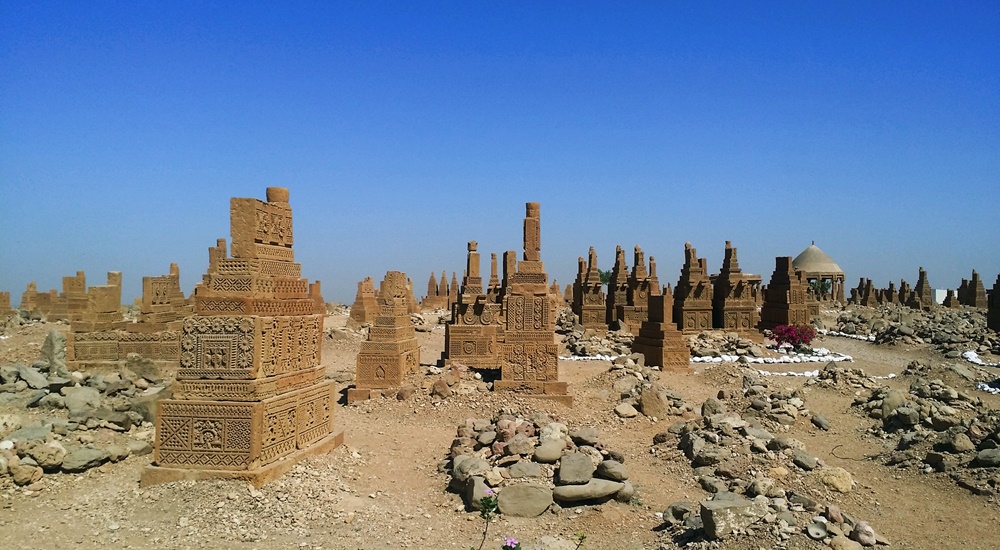
Expanding across a two-square-mile area, the Chaukandi Tombs near Karachi form an ancient Islamic burial site. The Chaukandi Tombs are renowned for its detailed sandstone carvings. These tombs bear a stylistic similarity to the elaborate graves located at the Makli Necropolis, one of the six UNESCO World Heritage Sites, near Thatta. Displaying the distinctive funerary architectural style typical of lower Sindh, the Chaukhandi Tombs undoubtedly provide a fascinating insight into the historical and artistic legacy of the region. History of Chaukandi Tombs: The Chaukhandi graveyard is attributed to the Jokhio tribe of Sindh. At the same time, other Sindhi tribes like Burfat, Jakhra, and Shaikh tombs are also found. The graveyard was constructed during the Mughal rule from the 15th to the 18th century, a period dominated by Islam. In addition to the Jokhio tribe, various Baloch tribes with Rajput origins have found their final resting place here. The influence of the Rajput tribe is evident in the design of the tombs. The step-shaped graves basically showcase a blend of cultures. For instance, some graves feature Rajput characteristics like monumental pedestals and slabs, while others exhibit simpler decorations, resembling a child’s drawing of a human face. Likewise, some tombs lack any human figures, reflecting Islamic beliefs and contributing to the diverse historical tapestry preserved in the Chaukhandi necropolis. The majority of the tombs at Chaukhandi especially represent family graveyards. However, only a limited number placed beneath pillar canopies that exhibit a Hindu architectural style. On certain male graves, intricate carvings depict a horseman equipped with arms such as a shield, sword, bow, and arrow. Meanwhile, carvings on women’s graves portray ornamental details like bracelets, necklaces, rings, anklets, and more. Additionally, for male graves, a boss-shaped projection at the northern end is designed to secure the turban of the deceased. These detailed carvings provide insights into the cultural and personal attributes of the individuals interred at Chaukhandi. Design of Chaukandi Tombs: The tombs at Chaukhandi stand out as a distinctive illustration of surface burials. Unusually aligned from south to north, a departure from the norm in both the region and period, these tombs are crafted from substantial sandstone slabs intricately arranged to form refined pyramid shapes. The meticulous carving on these slabs showcases intricate patterns, drawings, and scenes that contribute to the unique artistic and historical significance of the Chaukhandi Tombs. The absence of precise dating inscriptions on the Chaukhandi Tombs makes it challenging to determine their exact historical timelines. A typical casket consists of six vertical slabs, with two placed at the head and foot of the grave and the remaining four covering the sides, accommodating the length of the body. The tomb takes on a pyramid-like shape, featuring six large slabs covered by another tomb comprising six smaller vertical slabs. The architecture of Chaukandi Tombs: These tombs explicitly represent a unique blend of Sindhi and Balochi architectural styles. Crafted from beige-colored sandstone, these tombs come in the form of single graves or clusters, containing up to eight tombs. Despite the challenges posed by the region’s arid climate, these tombs have endured, serving as a resilient testament to the culture and heritage of the area. Chaukhandi Tombs, a form of funerary architecture, are characterized by square-shaped structures. Its five horizontal slabs enclosing the upper part of the tomb. Notably, these structures often exhibit a carved knob resembling a crown or turban at the front. Graves of warriors from the tribe boast intricate designs and motifs, including depictions of horsemen, jewelry, and hunting scenes. In contrast, tombs of women showcase carvings of anklets, bracelets, and jewelry at the front rather than human figures. Men’s graves typically feature carvings of swords, symbolizing their role as protectors of the tribe during times of war. Distinctive Features of Chaukandi Tombs: The Chaukhandi Tombs exhibit several distinctive features: The most prominent visual characteristic of Chaukhandi tombs is their cone-shaped roofs, constructed using bricks or stones and mortar. This design choice was made to distribute the weight of the structure over a larger area, enhancing stability and durability. The walls of Chaukhandi tombs are built in a beehive formation. The tombs feature multiple layers of stones arranged in a stepped pyramid shape. Constructed from local stones and bricks, these walls often bear decorative designs. Inside each tomb, there is typically a dedicated prayer chamber. This space actually serves for mourning and remembrance of the departed. Accompanying every tomb is a raised grave platform, situated above the surrounding landscape. This platform serves as a place for the family of the deceased to conduct rituals related to the burial. Discovery of Chaukandi Tombs: The Chaukhandi Tombs gained historical recognition with the earliest reference found in a letter written by J. Macleod, a Scottish historian, to Sir Henry Bartle Edward Frere, a British administrator, in 1851. However, it was H. D. Baskerville, the Assistant Collector of Thatta in Karachi in 1917, who brought these historical graves into prominence. In 1922, the site was officially included in the Ancient Monuments Preservation Act. Jean Philippe Vogel, a distinguished Dutch epigraphist employed by the Archaeological Survey of India from 1901 to 1914, played a crucial role in shedding light on the tombs. His extensive research revealed that many of these tombs belonged to Muslims. It was evident from the Arab script inscribed on their graves. Vogel’s findings provided valuable historical insights into the religious heritage of India. Post-independence, scholars and historians continued their in-depth investigations into the Chaukhandi Tombs. Rubbings of these tombs were displayed globally, capturing the attention of academics and sparking further research into this significant archaeological site. Recommendations: Chaukhandi Tombs are highly recommended to visit for individuals passionate about archaeology and history. The site holds a wealth of historical narratives. If you’re intrigued, plan your visit to this amazing site. Apart from the rich decoration adorning the tombs, another noteworthy aspect shared with similar necropolises worldwide is the prevalent local belief that the area is haunted. The Chaukhandi Tombs are reputed to be one of the most haunted sites in the
British-Cemetery-Gilgit
City Breaks, Gilgit-Baltistan, Tombs

British Cemetery Gilgit

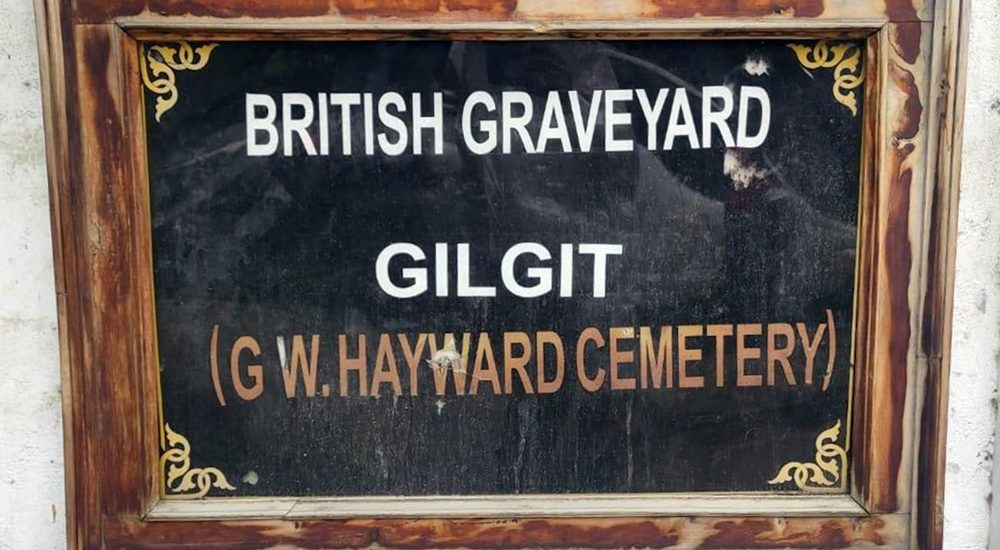
British Cemetery in Gilgit: A Testament to Colonial Legacy Nestled in the breathtaking landscapes of Gilgit, the capital of Gilgit-Baltistan, the British Cemetery, also known as G.W. Hayward Cemetery, stands as a poignant reminder of the region’s colonial past. This serene burial ground not only reflects the legacy of the British Raj’s presence in the Gilgit Agency during the 19th and 20th centuries but also offers visitors a glimpse into the historical and cultural tapestry of the era. Commemorating George W. Hayward The British Cemetery was initially named “Hayward’s Garden” in honor of George W. Hayward, a distinguished British explorer. On July 18, 1870, Hayward became the cemetery’s first internee after being tragically assassinated near Darkot Pass in Ghizer. The Royal Geographical Society of London established his burial site, marked with an inscription commemorating his gallantry and achievements. Hayward’s legacy as an intrepid traveler exploring the Pamir grasslands is immortalized here. Architectural Highlights Encircled by a robust stone wall and featuring ornate wrought iron gates, the British Cemetery Gilgit showcases the architectural finesse of the Victorian era. The grave markers, crafted predominantly from stone, are adorned with delicate engravings and intricate designs, making them artistic marvels in their own right. A Historical Landmark Along the Silk Road Situated along the historic Silk Road, Gilgit was a pivotal hub for trade and administration during the British colonial era. The cemetery was established as a final resting place for British officials, soldiers, travelers, and locals who collaborated with the British in various capacities. Each grave tells a story of courage, exploration, and the intertwined destinies of British and local communities. Notable Figures Buried in the Cemetery The cemetery is home to at least 18 graves of notable individuals who played significant roles during the British era, including: Captain G.W. Hayward: The cemetery’s first occupant, renowned for his exploration of Central Asia. Major William Brown: A prominent figure in the development of the Gilgit Agency. Arthur Francis Bruce: The political agent of Gilgit from 1906 to 1908. Henry Gordon Bell: Political agent of Gilgit, interred on July 25, 1912. Harold S. Eldred: Of the Sikh Pioneers Kashmir Infantry, who tragically drowned in the Indus River in 1929. Additionally, the cemetery contains the graves of travelers and mountaineers, including: Members of the 1959 Batura Muztagh Expedition: Dr. Keith Warburton, Harry G. Stephenson, Richard S. Knight, Martin Guennel, and Albert Hirschbichler. Major Jimmy Mills: Who perished during the Pakistan-British Army Karakoram Expedition. Preserving History and Promoting Tourism The British Cemetery in Gilgit is a treasure trove for history enthusiasts and researchers eager to explore the colonial legacy of the region. Its unique architectural style, coupled with the significant individuals interred within its grounds, makes it a compelling destination for cultural tourism. Efforts to conserve and restore the cemetery have been spearheaded by local authorities and heritage organizations. Restoration work focuses on maintaining the structural integrity of grave markers, repairing damaged monuments, and ensuring the cemetery remains a tranquil space for reflection. Visitor Information Open to the public, the British Cemetery offers visitors a chance to delve into the past while paying their respects to those laid to rest. While guided tours are not officially available, local experts often provide valuable historical insights upon request. Visitors are welcome to take photographs but are reminded to respect the solemnity of the site. A Journey Through Time Visiting the British Cemetery in Gilgit is more than a historical excursion; it is an opportunity to honor the individuals who shaped the region’s history and appreciate the cultural exchange between the British and local communities. As restoration efforts continue, this historic site stands as a cherished monument, attracting travelers and history aficionados from around the globe. Nearby Attractions: Konodas Suspension Bridge Biddulph House & Library Karga Buddha Hanzel Stupa Agortham Boulder Uprising Memorial Gilgit Konodas Rock Carvings Danyore Suspension Bridge Danyore Rock Inscription Chinese Graveyard Danyore The Victory Monument of Taj Mughal

The Mughal Empress Noor Jahan's Tomb in Lahore
Heritage Sites in Pakistan, Punjab, Tombs

Noor Jahan’s Tomb

Noor Jahan’s Tomb: A Glimpse into Mughal History Empress Noor Jahan’s Tomb, a historical gem nestled within the serene Shahdra Bagh in Lahore. It holds tales of love, power, and architectural brilliance. This tale will certainly take you on a journey through time, exploring the life of Empress Noor Jahan (Nur Jahan) and the captivating details of her final resting place. Discovering Empress Noor Jahan Born as Maher-un-Nisa, Empress Noor Jahan earned her name, which means “light of the world.” She was the daughter of Mirza Gayas Baig, a noble from Iran. Noor Jahan became the beloved queen of Mughal Emperor Jahangir from 1569 to 1627. Her reign was undoubtedly marked by immense power and influence, making her the most powerful empress in Mughal history. Notably, she is the only empress whose name graced the coinage of her era. In 1645, Empress Noor Jahan passed away at the age of 72, outliving Jahangir by 18 years. Her final resting place, Empress Noor Jahan’s Tomb, was constructed during her lifetime. The Architectural Marvel Empress Noor Jahan’s Tomb is undoubtedly an architectural marvel, reflecting the grandeur of the Mughal era. It sits atop an elevated podium, designed in the takhtgah (throne) style. The square mausoleum spans 158 square feet, with each side measuring 124 feet and rising to a height of 19.6 feet. While minarets once adorned the corners of the mausoleum, they are regrettably absent today. Exterior Beauty The exterior of the tomb certainly is a testament to Mughal craftsmanship. It is constructed from red sandstone with a flat roof, adorned with white marble grillwork, reminiscent of Jahangir’s tomb. Each side boasts seven vaulted arches, adorned with marble and intricate flower mosaics in semi-precious stone. Moreover, marble covers the inner floor, while the outer platform is crafted from sandstone. Furthermore, the red sandstone showcases inlaid floral motifs, enhanced by white, black, and yellow marble. The central arch on each side stands out, flanked by six vaulted arches, all featuring exquisite paneling and honeycomb-shaped cornices. Inner Sanctum The heart of the tomb is the central vaulted chamber, housing a marble platform with two cenotaphs. One is dedicated to Nur Jahan, while the other honors her daughter, Ladli Begum. Hakim Ajmal Khan of Delhi constructed these cenotaphs in 1912. The original marble sarcophagus is a masterpiece, adorned with intricate craftsmanship and the name of Allah, mirroring the style of Jahangir and Asif Khan’s tombs. An epitaph on Nur Jahan’s tomb reads: “On the grave of this poor stranger, let there be neither lamp nor rose. Let neither butterfly’s wing burn nor nightingale sing.” The original tombs are located below and can be accessed through a narrow entrance just outside the mausoleum. This dimly lit chamber features two small openings to allow sunlight, as Noor Jahan had a fear of darkness. Enchanted Gardens Empress Noor Jahan’s Tomb is surrounded by a Persian-style Chahar Bagh, though the original garden no longer exists. Historically, it boasted a vibrant array of tulips, roses, and jasmine. Today, a five-year renovation project is underway, aiming to restore the garden to its former glory. Empress Noor Jahan’s Tomb stands as a testament to the rich history and architectural splendor of the Mughal era. This article has unveiled the life and legacy of Empress Noor Jahan, as well as the captivating details of her final resting place, inviting you to explore this remarkable piece of history.

Tomb of Asif Khan
Heritage Sites in Pakistan, Punjab, Tombs

Tomb of Asif Khan

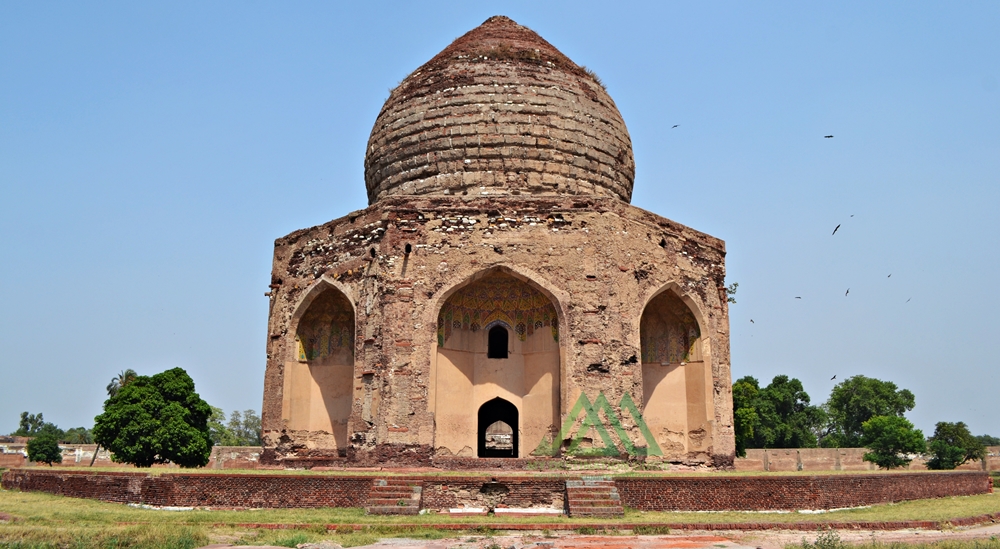
Keyword-Rich Content” Exploring the Magnificent Tomb of Asif Khan in Lahore, Pakistan Unveiling the Rich History and Architecture of Asif Khan’s Tomb In the heart of Lahore, Punjab, Pakistan, lies a magnificent edifice – the Tomb of Asif Khan. This splendid architectural marvel stands as a testament to the opulence of the Mughal era. It is adorned with a high bulbous dome, reminiscent of a bygone era when craftsmanship and design were paramount. Asif Khan: A Man of Influence Asif Khan, known by the title Asif Khan, was none other than the esteemed Mughal statesman Mirza Abdul Hassan Jah, also recognized as Asif Jah. He held a significant place in the Mughal hierarchy, being the brother of Empress Noor Jahan, the father of Arjumand Bano Begum (famously known as Mumtaz Mahal, the beloved of Emperor Shah Jahan), and the brother-in-law of Mughal Emperor Jahangir. His illustrious career saw him rise to the position of Khan e Khana, commander in chief, and eventually, the governor of Lahore. Tragically, Asif Khan met his end in a battle against the forces of the rebel Raja Jagat Singh in 1641. It was Emperor Shah Jahan who commissioned the construction of this remarkable tomb in his honor. The endeavor cost a staggering 300,000 rupees and took four years, from 1641 to 1645, to reach completion. Notably, Asif Khan’s tomb stands in close proximity to Jahangir’s tomb, forming an axis of historical significance. The Garden of Paradise The Tomb of Asif Khan is set within a picturesque garden measuring 300 yards on each side. This garden follows the Persian Chahar Bagh system, characterized by four squares divided by long pools and pathways. Each square is adorned with fountains, water reservoirs, and scenic trails. Originally, water reservoirs at each corner of the tomb supplied the fountains and pathways with water, creating a tranquil and serene ambiance. Access to the garden is granted through gates on its northern and southern walls. The southern gate, the primary entrance to the complex, is a double-storied structure with intricate red stone and white marble ornamentation. Its interiors feature small chambers, while the central portion boasts a tall two-story iwan portal with stunning stucco work. Likewise, the flooring is a work of art, adorned with geometric brickwork. The northern gate, known as the Jawab (response) gate, is equally impressive, featuring a central arched iwan portal flanked by four smaller portals. Though time has weathered its intricate tile work, the gate still retains an air of grandeur. Additionally, a small mosque within the eastern wall served as a residence during the British era. It provides a glimpse into the tomb’s rich history. Architecture The architecture of Asif Khan’s tomb is a testament to the Central Asian style prevalent during the Mughal era. Standing at the center of the expansive garden, the tomb rests on an elevated podium, accessible by a flight of stairs. Its octagonal shape, with each side measuring 38 feet 8 inches, offers access from eight sides, each featuring an arched window offering a glimpse into the tomb’s interior. Similarly, deeply recessed iwans or alcoves grace each side of the tomb. The exterior of the tomb originally boasted red sandstone and intricate marble stone inlay work. Stucco tracery and blue Kashi tiles adorned its walls. The dome, a distinctive feature initiated by Emperor Shah Jahan, was originally covered in white marble. This bulbous double dome rests atop the octagonal base, presenting a harmonious blend of form and function. Inside the tomb, the lavish use of white marble, intricate inlay work, stucco designs, tile mosaics, and Ghalib Kari (fine plasterwork) create a mesmerizing visual experience. The inner dome ceiling, intricately decorated with interlacing patterns, adds to the grandeur. The central cenotaph is crafted from pure marble. It is also adorned with inscriptions from the Holy Qur’an and mirrors the nearby tomb of Emperor Jahangir. It stands upon a red limestone floor, known as Sang-e-Abri, although the original material no longer exists. The Sikh Era and Restoration During the rule of the Sikh Empire, Asif Khan’s tomb, along with other historical monuments, suffered significant damage. Notable Sikh rulers like Gujjar Singh, Lahna Singh, and Subha Singh played a role in the deterioration. They even planted large Pipal trees around the tomb, obstructing its view. Some of the stolen marble, decorative stones, and sandstones found their way into the construction of the Golden Temple in Amritsar and the Hazuri Bagh Baradari in Lahore. The original beauty of the tomb was marred during this period, and despite subsequent repairs by the British, it never fully regained its former glory. Flooding in 1955 and 1973 further damaged the walls, leaving the tomb in a disappointing state. Despite its challenges, the Tomb of Asif Khan holds a place on the tentative list as a UNESCO World Heritage Site. It continues to stand as a testament to the rich history and architectural brilliance of the Mughal era. This architectural masterpiece invites visitors to explore its storied past and captivating beauty.

Front of the Mughal Emperor Jahangir's Tomb in Lahore
Heritage Sites in Pakistan, Punjab, Tombs

Jahangir’s Tomb

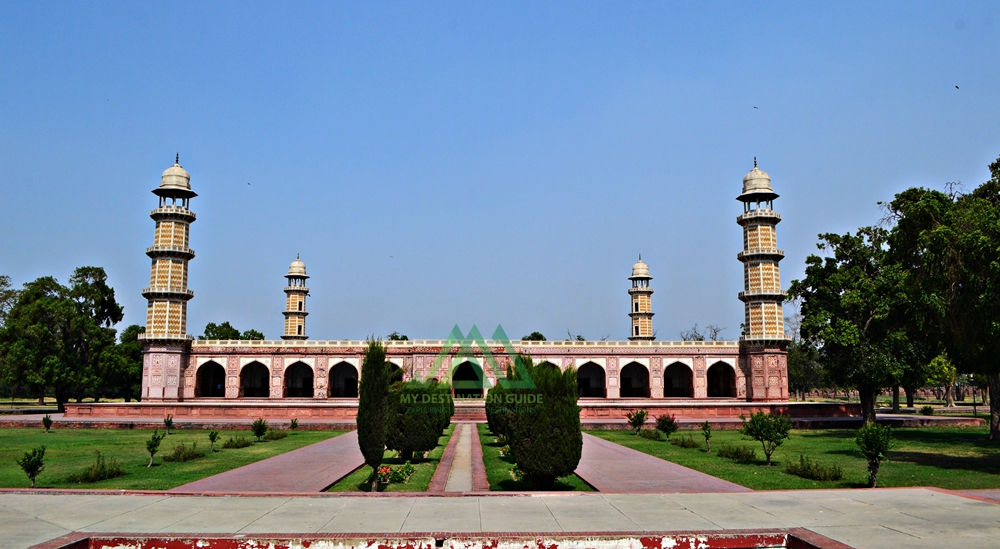
Exploring the Splendor of Jahangir’s Tomb in Lahore, Pakistan Jahangir’s Tomb, a magnificent architectural masterpiece located in Lahore, Pakistan. Situated in Shahdara, on the banks of the Ravi River, it stands as a testament to Mughal grandeur. This tomb is not only a historical marvel but also a symbol of artistic brilliance. Uncovering History The origins of Jahangir’s Tomb can be traced back to the love of Emperor Jahangir and his wife Noor (Nur) Jahan for the lush garden where it now stands. The garden, in fact, known as Dilkusha Garden, was initially established by Nawab Mehdi Qasim, a special curator of Emperor Akbar. It eventually became the Queen of India’s sanctuary, adorned with beautiful trees and fountains. This garden played a crucial role in the lives of Jahangir and Noor Jahan. It served as their point of departure and arrival during their journeys to and from Kashmir. Emperor Nuruddin Salim Jahangir was the fourth Mughal ruler in the subcontinent. He continued his father Akbar’s tradition of making Lahore the center of official affairs. Upon Jahangir’s death in 1627, his body was transported to Dilkusha Garden in Lahore for burial, where the construction of his grand mausoleum would commence. The Marvelous Construction Emperor Shah Jahan is often credited as the head designer of Jahangir’s Tomb. However, many historians believe that his wife Noor Jahan had a significant influence on the project. The Persian influence on the design and her inspiration from her father’s tomb in Agra, the Tomb of Itmad-Ud-Daulah, is apparent in the structure. Noor Jahan not only played a role in the architecture but also in designing the gardens. Later, it became her permanent residence after Jahangir’s passing. Evidence suggests that she personally financed much of the construction. The tomb took a decade to complete, from 1627 to 1637, at a cost of one million rupees of that era. Renovation and Restoration During the Sikh rule, Jahangir’s Tomb faced a period of desecration and damage. It was used for various purposes, including as an army headquarters and a residence. Priceless art within the inner chambers was destroyed and pillaged. Even after the fall of the Mughal empire during the British occupation, the tomb suffered further indignities. It was used for coal dumping during the construction of a railway line during British raj. However, the British later undertook efforts to restore the tomb complex and Akbari Sarai to its former glory. The image of Jahangir’s Tomb even graced the 1,000 Pakistani Rupee note until 2005, a testament to its historical and cultural significance. A Glimpse of the Layout Jahangir’s mausoleum is set within a large quadrangle enclosed by a thick wall, with grand entrances to the west and east. The eastern entrance gate was destroyed due to the river, leaving the western gate as the primary entrance. This gate features a small mosque and is accessible through Akbari Sarai, an enclosure reachable from two gates facing each other to the north and south. The gate’s pietra-dura work, white marble inlaid in red sandstone, remains a masterpiece of artistry. Entering through the gate reveals a garden layout known as the Persian Chahar Bagh scheme, divided into four squares with walkways and water channels, mirroring the paradise gardens of Islamic tradition. A Closer Look at the Architecture Jahangir’s mausoleum, unlike the traditional domed Mughal tombs, features a flat roof, breaking with convention. Standing on a 5-foot high podium, the 22-foot-tall single-story mausoleum boasts a square plan with the main grave surrounded by forty rooms, each uniquely designed. These rooms once served as places for Islamic scholars to recite the Quran, honoring the king’s soul. The corridor surrounding the mausoleum is adorned with elegant mosaics, floral frescoes, and verses from the Quran. Carved marble jali screens allow light to filter in various patterns, facing toward Mecca. The rooftop features intricate marble work on the ceiling. The artwork is reminiscent of a Persian carpet, reflecting the Timurid architectural style from Central Asia. The Towering Minarets Four octagonal minarets rise from the corners, topped with white marble cupolas measuring 100 feet in height. These minarets are adorned with zigzag inlays of white marble and yellow stone. Each minaret, with its five floors, offers a scenic view of the city. The exterior of the mausoleum is clad with red sandstone, featuring rich panel decoration inlaid with marble motifs. The Cenotaph Jahangir’s cenotaph, situated in an octagonal chamber at the center of the mausoleum, is a sight to behold. The floor is adorned with floral designs using various stones, while the walls are adorned with mosaic patterns. The cenotaph itself is a takhtgah, or “throne,” decorated with white marble and precious and semi-precious stones. It features 99 traditional attributes of Allah with pietra dura inlays and Quranic verses on the flat top. The Original Building Some accounts suggest that the tomb structure was originally a three-story building with a Baradari (pavilion with 12 doors) on top, housing Jahangir’s grave amulet. However, during the Sikh rule, several Mughal-era buildings, including parts of Jahangir’s tomb, were dismantled. The Baradari was relocated to Hazuri Bagh, between the Badshahi Mosque and Lahore Fort. While the tomb’s roof was replaced with lime plaster, its historical significance endures. Jahangir’s Tomb in Lahore, Pakistan, is a timeless testament to Mughal artistry and historical significance. Its architectural splendor, lush gardens, and rich history make it a must-visit for anyone interested in the glory of the Mughal Empire. Additionally, the neighboring structures, such as Asif Khan’s tomb and Akbari Sarai, provide deeper insights into the grandeur of a bygone era.

Makli Necropolis
City Breaks, Heritage Sites in Pakistan, Monuments, Sindh, Tombs, World Heritage Sites

Makli Necropolis

Unveiling the Enigma: Makli Necropolis – A Treasure Trove of History and Artistry Nestled in a diamond-shaped expanse, the grandeur of the Makli Necropolis in Thatta is unparalleled. It boasts of its status as one of the largest graveyards globally covering a sprawling 10 square kilometers. Altogether, the Makli Necropolis houses an astonishing half-million monuments. The graveyard stands as the final resting place for an eclectic mix of individuals, from regal monarchs and erudite scholars to valiant warriors, philosophers, governors, and revered saints. In recognition of its historical significance, Makli Necropolis, therefore, earned its place among the UNESCO World Heritage Sites of Pakistan in 1981. A Journey Through Time: Unraveling the History of Makli Necropolis Delving into the annals of history, Makli Necropolis emerges as the eternal abode for over 125,000 saints. Throughout the ages, this city has undeniably been a beacon of knowledge housing around 400 educational institutions. Here students from the Muslim world and Asia came to hone their skills. Students generally engaged in a diverse array of subjects encompassing religion, politics, and philosophy.  Yet, the enigmatic origins of Makli remain shrouded in mystery. It is widely believed that the cemetery evolved around the shrine of the 14th-century Sufi Hamad Jamali. As for the etymology of “Makli,” two intriguing notions persist. Locals suggest that it signifies “Mecca-like,” while another legend ties it to the pious woman known as “Mai Makli.” Legend has it that her fervent prayers thwarted Sultan Firuz Shah Tughlaq’s conquest of Thatta until her passing. She now rests in Makli near the tomb of Jam Nizamuddin. Thatta enjoyed a glorious stint as the capital of Sindh from the 14th to the 18th centuries. Initially, it was ruled by three successive dynasties – Samma, Argun, and Tarkhan. However, it later came under the dominion of the Mughal emperors of Delhi from 1592 to 1739 before being ceded to Shah Nadir of Iran, marking the beginning of a period marked by decline and neglect. The Architectural Marvels of Makli Necropolis The monuments of Makli Necropolis are a testament to the social and political history of Sindh from the 14th to the 18th centuries. Crafted with exquisite architectural finesse, these tombs and graves epitomize the artistic prowess of their time. The tombs were built by utilizing an array of materials such as sand bricks, stone, and marble. Some of these monuments are opulently adorned with glazed tiles, boasting intricate designs, arched domes, and towers adorned with exquisite Islamic calligraphy and devotional carvings inspired by diverse religious and iconographic traditions. Remarkably, many of these iconic monuments have withstood the test of time, enduring centuries of exposure to the elements. However, preserving this rich heritage for future generations necessitates substantial restoration efforts. Makli Necropolis: A Journey Through Location and Access Situated adjacent to the tip of the Indus River delta, Makli Necropolis lies on the outskirts of Thatta.  It was an ancient bastion of Islamic civilization nestled at the edge of the 6.5-kilometer-long plateau of Makli. This historic site is located approximately 89 kilometers east of Karachi in the Sindh province of southern Pakistan. Makli offers an ideal day trip from the bustling metropolis of Karachi. Navigating the vast expanse of the graveyard is made convenient through its wide streets, ensuring access to all the awe-inspiring monuments. Makli Necropolis undoubtedly stands as a testament to the rich tapestry of history, culture, and artistry. The graveyard has woven itself into the very fabric of this remarkable site. It beckons not only to history enthusiasts but also to travelers, both domestic and international, and devout pilgrims alike, offering a glimpse into an enigmatic past that continues to captivate our imaginations.

chinese graveyard in danyore
Gilgit-Baltistan, Tombs

Chinese Graveyard

Chinese Graveyard: A Memorial of Mighty Engineers and Workers The Chinese Graveyard is locally known as China Yadgar or The Memorial Park. It stands as a poignant tribute to the mighty Chinese engineers and workers. The graveyard symbolizes the ultimate sacrifice during the construction of the Karakoram Highway (KKH) in the 1960s and 1970s. It is located in Danyore, approximately 10 km from the capital city of Gilgit-Baltistan in Pakistan. The cemetery serves as the final resting place for those who played a significant role in building the 1300 km (Pakistan: 887 km & China: 413 km) long Karakoram Highway. Historic Background of Karakoram Highway The Karakoram Highway was a remarkable joint venture between Pakistani and Chinese workers and engineers. It claimed the lives of 810 Pakistanis and about 200 Chinese during its construction. It was commenced in 1959 and concluded in 1977. The highway was officially opened to the public in 1979. As the KKH was being built on the Pakistani section, the Chinese workers who lost their lives were laid to rest in what is now known as the Chinese graveyard. Establishment and Renovation The Chinese graveyard was established in the early 70s. It served as a solemn reminder of the sacrifices made during the construction of the KKH. Recognizing its significance, the Chinese government decided to renovate the cemetery, and in 2013. Its renovation was carried out through a Chinese-funded project that successfully restored its condition. The Consular of the Chinese Embassy, Mr. Zhang Lianyou, and the then Gilgit-Baltistan (G-B) Assembly Speaker, Mr. Wazir Baig, laid the foundation stone for the new cemetery on April 05, 2013. The project was completed in October of the same year. Access and Location Access to the memorial park is open and free. A  designated custodian is appointed by the Chinese government to oversee its maintenance. Upon entering the main gate, visitors are greeted with a pictographic display on both sides of the pathway. These pictures depict the arduous construction work carried out by Chinese workers and engineers on the KKH under harsh conditions. Additionally, the display showcases the medical aid provided by Chinese doctors to the local community during the highway’s construction. A series of pictures with accompanying information highlights the reconstruction of the KKH. Moreover, the pictures feature the formation of tunnels, the erection of major bridges (such as the one in Shishkat over Attabad Lake and in Danyore over Gilgit River), and the provision of emergency transportation services across Attabad Lake amidst challenging environmental conditions. The display also offers historical information about the KKH in Urdu, Chinese, and English languages, presented on an adjoining concrete structure. Design and Layout The Chinese graveyard features a thoughtful design with four equally sized quarters bordered by a footpath. Each quarter comprises three rows of graves, totaling 27 tombs per quarter, amounting to 108 tombs in all four quarters. Each grave is marked by a tombstone bearing epitaph inscriptions in Chinese characters. Notably, 16 tombs in one of the quarters remain empty, representing the workers who lost their lives under debris during massive landslides or other incidents during the highway’s construction. Maintained with utmost care, the Chinese graveyard has become not only a place of remembrance but also a significant tourist attraction. It stands as a powerful symbol of the invaluable lives lost in pursuit of the Karakoram Highway. Moreover, the cemetery serves as a testament to the enduring friendship between Pakistan and China. The friendship continues to grow stronger over time. The Chinese Graveyard, or China Yadgar, stands as a solemn memorial to the indomitable spirit of the engineers and workers who contributed to the construction of the Karakoram Highway. It serves as a reminder of the sacrifices made and a testament to the unbreakable bond between Pakistan and China. As visitors pay their respects within the serene premises of the graveyard, they can’t help but appreciate the enduring friendship that has withstood the test of time.

Scroll to Top