tourist attractions in lahore

Tomb of Asif Khan
Heritage Sites in Pakistan, Punjab, Tombs

Tomb of Asif Khan

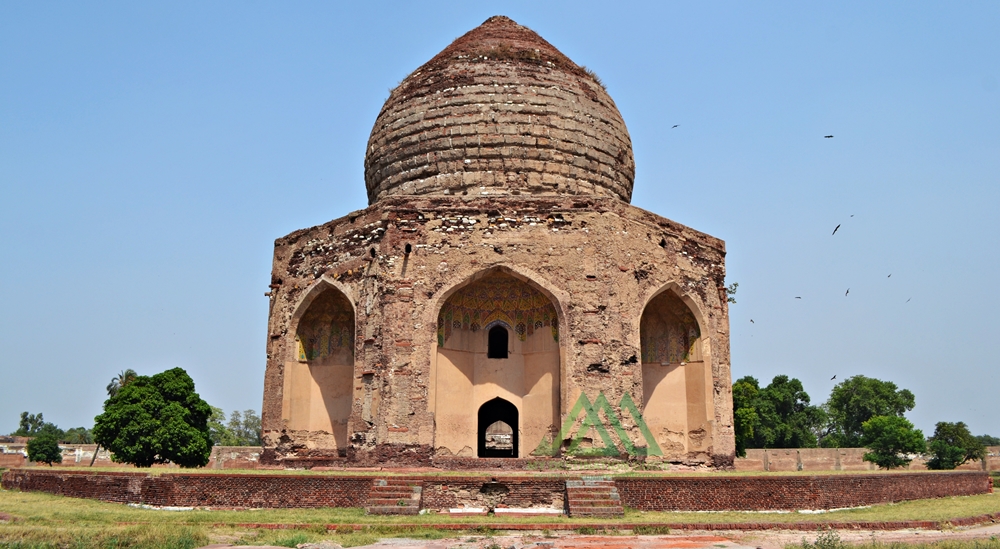
Keyword-Rich Content” Exploring the Magnificent Tomb of Asif Khan in Lahore, Pakistan Unveiling the Rich History and Architecture of Asif Khan’s Tomb In the heart of Lahore, Punjab, Pakistan, lies a magnificent edifice – the Tomb of Asif Khan. This splendid architectural marvel stands as a testament to the opulence of the Mughal era. It is adorned with a high bulbous dome, reminiscent of a bygone era when craftsmanship and design were paramount. Asif Khan: A Man of Influence Asif Khan, known by the title Asif Khan, was none other than the esteemed Mughal statesman Mirza Abdul Hassan Jah, also recognized as Asif Jah. He held a significant place in the Mughal hierarchy, being the brother of Empress Noor Jahan, the father of Arjumand Bano Begum (famously known as Mumtaz Mahal, the beloved of Emperor Shah Jahan), and the brother-in-law of Mughal Emperor Jahangir. His illustrious career saw him rise to the position of Khan e Khana, commander in chief, and eventually, the governor of Lahore. Tragically, Asif Khan met his end in a battle against the forces of the rebel Raja Jagat Singh in 1641. It was Emperor Shah Jahan who commissioned the construction of this remarkable tomb in his honor. The endeavor cost a staggering 300,000 rupees and took four years, from 1641 to 1645, to reach completion. Notably, Asif Khan’s tomb stands in close proximity to Jahangir’s tomb, forming an axis of historical significance. The Garden of Paradise The Tomb of Asif Khan is set within a picturesque garden measuring 300 yards on each side. This garden follows the Persian Chahar Bagh system, characterized by four squares divided by long pools and pathways. Each square is adorned with fountains, water reservoirs, and scenic trails. Originally, water reservoirs at each corner of the tomb supplied the fountains and pathways with water, creating a tranquil and serene ambiance. Access to the garden is granted through gates on its northern and southern walls. The southern gate, the primary entrance to the complex, is a double-storied structure with intricate red stone and white marble ornamentation. Its interiors feature small chambers, while the central portion boasts a tall two-story iwan portal with stunning stucco work. Likewise, the flooring is a work of art, adorned with geometric brickwork. The northern gate, known as the Jawab (response) gate, is equally impressive, featuring a central arched iwan portal flanked by four smaller portals. Though time has weathered its intricate tile work, the gate still retains an air of grandeur. Additionally, a small mosque within the eastern wall served as a residence during the British era. It provides a glimpse into the tomb’s rich history. Architecture The architecture of Asif Khan’s tomb is a testament to the Central Asian style prevalent during the Mughal era. Standing at the center of the expansive garden, the tomb rests on an elevated podium, accessible by a flight of stairs. Its octagonal shape, with each side measuring 38 feet 8 inches, offers access from eight sides, each featuring an arched window offering a glimpse into the tomb’s interior. Similarly, deeply recessed iwans or alcoves grace each side of the tomb. The exterior of the tomb originally boasted red sandstone and intricate marble stone inlay work. Stucco tracery and blue Kashi tiles adorned its walls. The dome, a distinctive feature initiated by Emperor Shah Jahan, was originally covered in white marble. This bulbous double dome rests atop the octagonal base, presenting a harmonious blend of form and function. Inside the tomb, the lavish use of white marble, intricate inlay work, stucco designs, tile mosaics, and Ghalib Kari (fine plasterwork) create a mesmerizing visual experience. The inner dome ceiling, intricately decorated with interlacing patterns, adds to the grandeur. The central cenotaph is crafted from pure marble. It is also adorned with inscriptions from the Holy Qur’an and mirrors the nearby tomb of Emperor Jahangir. It stands upon a red limestone floor, known as Sang-e-Abri, although the original material no longer exists. The Sikh Era and Restoration During the rule of the Sikh Empire, Asif Khan’s tomb, along with other historical monuments, suffered significant damage. Notable Sikh rulers like Gujjar Singh, Lahna Singh, and Subha Singh played a role in the deterioration. They even planted large Pipal trees around the tomb, obstructing its view. Some of the stolen marble, decorative stones, and sandstones found their way into the construction of the Golden Temple in Amritsar and the Hazuri Bagh Baradari in Lahore. The original beauty of the tomb was marred during this period, and despite subsequent repairs by the British, it never fully regained its former glory. Flooding in 1955 and 1973 further damaged the walls, leaving the tomb in a disappointing state. Despite its challenges, the Tomb of Asif Khan holds a place on the tentative list as a UNESCO World Heritage Site. It continues to stand as a testament to the rich history and architectural brilliance of the Mughal era. This architectural masterpiece invites visitors to explore its storied past and captivating beauty.

Shalimar Gardens
Heritage Sites in Pakistan, Monuments, Punjab

Shalimar Gardens

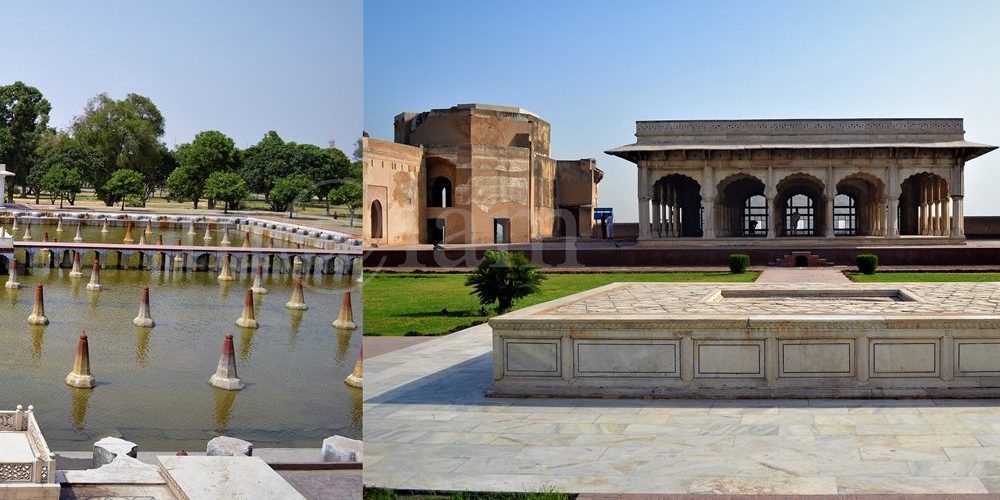
Exploring the Magnificence of Shalimar Gardens in Lahore Unraveling the Marvel of Shalimar Gardens: A UNESCO World Heritage Site The Shalimar Gardens in Lahore stand as an extraordinary testament to Mughal artistry and aesthetics, reaching their zenith during the reign of the Mughal Empire. Commissioned by the visionary Mughal Emperor Shah Jahan, this architectural marvel began its construction on June 12, 1641. It was completed just 18 months later, in 1642. Together with the Lahore Fort, it was designated as a UNESCO World Heritage Site in 1981. Embracing All: From Royalty to the Common Folk While originally intended to serve as an enchanting retreat for royal guests, the Shalimar Gardens welcomed the general public to explore a dedicated section of its lush beauty. The inspiration for these gardens draws from the earlier Shalimar Gardens in Kashmir, built by Emperor Jahangir, the father of Shah Jahan. Remarkably, Shah Jahan himself played an active role in the construction of the Kashmiri gardens. Architectural Grandeur in Nature’s Embrace Covering an expansive 16 hectares, the rectangular garden is enclosed by crenelated walls crafted from red sandstone. It is structured across three terraces, gracefully descending from south to north. Each terrace carries a name infused with meaning: the upper terrace, known as “Farah Baksh,” translates to “Bestower of Pleasure,” the middle terrace, “Faiz Baksh,” means “Bestower of Goodness,” and the lower terrace, “Hayat Baksh,” signifies “Bestower of Life.” 410 Dancing Fountains: A Spectacle of Engineering Mastery The heart of the Shalimar Gardens lies in its 410 fountains, which gracefully rise from the canal, culminating in the marble pools. The hydraulic system that governs these fountains baffles even modern scientists with its ingenious thermal engineering. This engineering brilliance served to cool the air during sweltering summers, offering respite to the garden’s visitors. The upper-level terrace boasts 105 fountains, the middle terrace features 152, and the lower terrace delights with 153. Beyond the Wall: A World Within Within the protective embrace of the garden’s walls, a collection of buildings served diverse purposes. These include: Sawan Bhadun Pavilions Naqar Khana and Its Buildings Khwabgah or Sleeping Chambers Hammam or Royal Bath The Aiwan or Grand Hall Aramgah or Resting Place Khawabgah of Begum Sahib or Dream Place of the Emperor’s Wife Baradaries or Summer Pavilions for Cooling Delight Diwan-e-Khas-o-Aam or Hall of the Special and Ordinary Audience with the Emperor Two Gateways and Minarets Adorning the Corners of the Gardens Nature’s Bounty: A Verdant Oasis The Shalimar Gardens once boasted a lush variety of trees, including Almond, Peach, Apple, Plum, Apricot, Poplar, Cherry, Quince Seedless, Gokcha, Mango, Mulberry, Sapling of Cypress, Shrubs, and Sour and Sweet Oranges. A Historical Odyssey Supervised by the noble Khalilullah Khan in Shah Jahan’s court, the Shalimar Garden project took shape. The garden’s original land belonged to the Arian Mian Family, who were bestowed with the title “Mian” by the Emperor in recognition of their services to the Empire. The Mughal engineers, recognizing the ideal location and soil quality, acquired the land, ultimately leading to the creation of the Shalimar Gardens. The Arian Mian Family retained governance of the garden for 350 years until General Ayub Khan nationalized it, a consequence of their opposition to his imposition of martial law.

Lahore Fort
Forts, Heritage Sites in Pakistan, Punjab

Lahore Fort

Exploring the Majestic Lahore Fort: A Historical Masterpiece Lahore Fort, locally known as Shahi Qila, is a magnificent architectural marvel situated in the northwestern corner of Lahore’s historic city. This royal fort is not only a testament to its rich history but also stands as an architectural gem. The fort covers an expansive area of nearly 20 hectares, with dimensions measuring approximately 427 meters from east to west and 335 meters from north to south. It’s important to note that these measurements exclude the outer fortification wall added during Maharaja Ranjit Singh’s Sikh rule (1799 – 1839 A.D). A Storied Past The site of the modern Lahore Fort has witnessed centuries of history. Its origins date back to the 11th century when a mud-brick fort was first recorded during Mahmud of Ghazni’s rule. Over the centuries, the fort underwent numerous cycles of destruction, demolition, and reconstruction by various conquerors and rulers before falling under the domain of the Mughal emperors. In 1241, Mongols demolished the fort, and Sultan Balban of the Delhi Sultanate initiated its reconstruction in 1267. However, in 1398, Timur’s invading forces razed it to the ground once more, only for it to be resurrected by Mubarak Shah Sayyid in 1421. During the 1430s, the fort came under the occupation of Shaikh Ali of Kabul before ultimately falling under the control of the Pashtun Sultans of the Lodi dynasty. In 1524, the Mughal Emperor Babur captured Lahore, marking the start of its Mughal legacy. The occupation persisted until the decline of the Mughal dynasty. Subsequently, the Sikhs and later the British took control of the fort. Mughal Magnificence The foundations of the Lahore Fort as we know it today were laid in 1566 during the reign of Emperor Akbar (1556–1605), who made Lahore his capital. Akbar introduced architectural modifications to the fort, incorporating Hindu motifs into its design. Successive Mughal emperors, including Shah Jahan, left their mark on the fort. Shah Jahan, for instance, adorned it with luxurious marble featuring intricate Persian floral designs. In the 17th century, the fort underwent a comprehensive reconstruction, coinciding with the zenith of the Mughal Empire’s prestige and prosperity. Distinct Sections and Prominent Monuments The Lahore Fort is situated in close proximity to the Badshahi Mosque, separated only by the Hazuri Bagh. The fort comprises two primary sections: the northern half, which served as the private and residential area, and the southern half, designated for royal audiences and administrative functions. Within the fort, several notable monuments stand as testaments to its historical significance: 1-Akbari Gate (Masti Gate) Built by Emperor Akbar in 1566, this gate later became known as Masti Gate. Actually, the Empress of Akbar built a mosque outside this gate in 1614 A.D that still exists in good condition. The word” Masjid” (Mosque) in the local version was corruptly pronounced Maseet and transformed as Masti; thus the name Masti Gate was affixed. The fort during Akbar’s times had two gates including Masti Gate. The other gate was later replaced by Alamgiri Gate in 1673 A.D. 2-Alamgiri Gate The iconic Alamgiri Gate, located on its western side, opens in the Hazuri Bagh and faces the renowned Badshahi Mosque, was the masterpiece built by the last of the Mughal ruler Aurangzeb (ruled: 1658 – 1707 A.D) in 1673-74 a private entrance to the royal quarters enabling the elephants carrying members of the royal household enter at one time. It has two semi-circular bastions decorated with lotus petal designs at the base. 3-Diwan-i-Aam (Hall of Public Audience) Diwan-i-Aam is a forty-pillar complex built under the supervision of Asif Khan (brother of Nur Jahan – the empress of Shah Jahan’s father, Jahangir). It was built during the reign of Shah Jahan in 1631 to receive official visitors, make a daily public appearance to address the issues, and review parades. It was demolished when Ranjit Singh’s son Sher Singh bombarded Lahore Fort. The fort was destroyed with light guns during a fight against Chand Kaur, the widow of Kharak Singh (the elder son of Ranjit Singh). After the occupation of the fort in 1849 A.D. The British rebuilt Diwan-i-Aam. 4-Jahangir Quadrangles The northeast corner of the fort is made up of Jahangir’s Quadrangles. The construction of the Quadrangles started during the tenure of Akbar in 1617-18. However, it was completed by Jahangir in 1620 at a cost of seven lacs (Seven Hundred Thousand) rupees. The design of the Quadrangles reflects Akbar’s influence as it employs column brackets carved in the form of animals. Moreover, the quadrangle’s layout differs from the mainstream Mughal quadrangles and its features reflect Hindu temple architecture referring the Akbar’s policy of tolerance. Usually, the Mughal quadrangles used the layout of a Persian paradise garden, and instead, it is formed by concentric rectangles with a fountain in its center. 5-Diwan-i-Khas (Hall of Private Audience) Diwan-i-Khas is a hall commissioned by Shah Jahan where state guests were received and discussed matters related to the state. It is an arched pavilion built in semi-chaste marble and its parapet was decorated with pietra dura work (by inlaying semi-precious stones into white marble). 6-Khwabgah-e-Jahangir (Jahangir’s sleeping chamber) The north end of the quadrangle is dominated by the Barri Khwabgah, or ‘large bedroom’. It was Jahangir’s sleeping chamber attributed to Jahangir’s period and is located in the residential section. The current building is the reconstruction version from the British era. It is now used as a museum housing Mughal antiquities. 7-Khwabgah-e- Shah Jahan It was the sleeping chamber and the first building built by Shah Jahan under the supervision of Wazir Khan in 1634 during his first visit to the city. The Khwabgah comprises five sleeping chambers aligned in a single row. The carved marble screens inside the chambers are decorated with inlaid white marble and frescoes. The incised work known as Ghalib Kari in Urdu and the stucco tracery on the arches of this monument are the main features of this building.  Its original decorations have gone astray presently except for a trace of the

Hidden Treasures of Lahore
City Breaks, Punjab

Hidden Treasures of Lahore

Lahore is the second largest city and the cultural hub of Pakistan. The city has a charming longstanding history and is entirely rich in tourist attractions, mostly of historic and cultural significance. However, sadly, only a few conventional landmarks out of a cluster are known to the general public and tourists. The “Hidden Treasures of Lahore” have not yet been unearthed properly.  The wealth of attraction that is still hiding behind deserves to be known to the public and tourists which certainly will add to the historic significance of Lahore.  Wazir Khan Baradari The Wazir Khan Baradari (12-door pavilion) is sited between the Punjab Public Library (PPL), the National College of Arts (NCA), and the Lahore Museum and is accessible from the PPL road. It was named after Hakim Ilumddin titled ‘Wazir Khan’, a benefactor of numerous impressive buildings across Lahore including the splendid Wazir Khan’s Mosque and Wazir Khan’s Hammam ( also known as Shahi Hammam), in the Walled City. The Baradari is surrounded by a fine garden with a large number of palm trees. The two-story pavilion has been incorporated into the grounds of the Punjab Public Library in 1860 and serves as a reading room. During the 19th and early 20th centuries, Wazir Khan Baradari was used as a museum and as the Settlement and Telegraph Office under British rule. Maryam Zamani or Begum Shahi Mosque or Barood Khana Wali Masjid Maryam Zamani was one of the queens of Emperor Akbar, mother of Jahangir, and sister of Bhagwan Das. She built a mosque near Masti Gate of the Walled City in 1614 AD and is believed Lahore’s earliest surviving example of the Mughal era mosque that influenced the construction of the larger Wazir Khan Mosque. Thus it was named after the queen Maryam Zamani who was actually born Rajkumari Hira Kunwari, a Rajput princess, the daughter of Raja Bihari Mal of Jaipur (the then Amber). The mosque has a beautifully adorned prayer hall with a remarkable central dome adorned by muqarnas and painted frescos. The Mosque is close to the Akbari gate entrance and was once used as a gunpowder factory by Ranjit Singh thereby called Barood Khana Wali Masjid. However, it was restored in 1850 under the British.  Ali Mardan Khan’s Tomb Ali Mardan Khan was originally a noble at the court of Shah Tahmasp, a Safavid king. After surrendering Iranian Qandahar to Emperor Shah Jahan in 1638, he joined the Mughal court and rose to great heights rapidly and became Governor of Kashmir, Lahore, and Kabul. He was also granted the title of Amir al-Umara (Lord of Lords) in 1639 and became a commander of 7,000 troops as well was appointed viceroy of Punjab from Kabul to Delhi. Besides being a commanding figure, Ali Mardan Khan was also a renowned engineer who coined the idea of the construction of a canal from the river Ravi for the supply of water to the Shalimar Gardens, as well as for the irrigation and cultivation of surrounding areas. His tomb is a massive brick construction work standing on an octagonal podium. The structure of the tomb is also octagonal with a bulbous dome and kiosks on angular points. The tomb once stood in the center of a luxuriant garden and the extent of which could be seen by its double-story gateway. The imposing tomb is accessible by a 300 m-long walkway through the narrow streets of the Railway Carriage Workshop. Saru Wala Maqbara or Cypress Tomb The tomb of Sharf-un-Nisa Begam is popularly known as ‘Saru Wala’ Maqbara. Saru is the Urdu term used for Cypress and because of images of cypress trees used on its walls, it is thus called Cypress tomb. Sharf-un-Nisa Begam was a sister of Nawab Zakariya Khan, governor of Lahore province during the reign of Emperor Mohammad Shah Rangeela. Before her death, the Begum would read the holy Quran on daily basis on the first floor of the Chamber and then would deposit the holy book and the jeweled sword, descending by means of a portable wooden stair. After her death, she was buried in the same chamber along with a copy of the holy Quran and her jeweled sword. The unusual tower-like tomb is 16 feet above the ground and was made inaccessible by blocking up all openings in 1745. It is located near the north of Dai Anga’s tomb in the Begumpura neighborhood of Lahore. The structure of the tomb is unique in itself for its unusual shape and decoration of the cypress motif as a jewel of Mughal architecture. Dai Anga’s Tomb Dai Anga, the wet nurse of Mughal Emperor Shah Jahan and his daughter (Princess Sultan Begum), was the name given to Zeb-un-Nisa (1671 AD). She was the wife of a Mughal noble Murad Khan, magistrate of Biknar under Jahangir. Her splendid mausoleum lies near the Gulabi Bagh gateway in Begampura, outside the Walled City. The rectangular-shaped mausoleum with eight rooms encircling the perimeter of a central chamber lies on a raised plinth. A dome with frescoes is directly above the central empty chamber as the actual tomb of Dai Anga lies below in the basement just next to her daughter, Sultana Begum. The interior of the tomb is richly decorated with carved inscriptions from the holy Quran while the exterior with rich Kashi Kari or Qashani tilework but lost much of its charm.  Dai Anga Mosque The real name of Dai Anga was Zaib-u-Nisa, the wife of Mughal noble Murad Khan. She was the wet nurse of Shah Jahan and his daughter and remained a powerful figure in the Mughal dynasty. Several charming monuments associated with her name are still surviving in Lahore. Dai Anga Mosque was constructed in 1635 AD and is located near Lahore Railway station. Small in size yet rich in decor, the Dai Anga Mosque is embellished with multicolored mosaic on floral themes and remained in excellent condition since Dai Anga donated a substantial endowment to ensure its maintenance even after her death.

Lahore Fort and Shalimar Garden
Heritage Sites in Pakistan, Islamic Heritage, Punjab, World Heritage Sites

Lahore Fort and Shalimar Garden

Exploring Lahore’s Magnificent Lahore Fort and Shalimar Garden: A Glimpse into Mughal Grandeur Lahore, the cultural heart of Pakistan, boasts two magnificent Mughal-era treasures: the Lahore Fort and Shalimar Garden. These architectural marvels continue to stand as symbols of pride and prestige in Lahore, having earned their rightful place as UNESCO World Heritage Sites of Pakistan in 1981, owing to their remarkable collection of Mughal monuments that epitomize the artistic and aesthetic zenith of the empire. The fort is located at the northwest corner of the walled city of Lahore while the Shalimar Gardens are situated along the Grand Trunk Road some 5 kilometers northeast of the main Lahore city. The monuments are located at a distance of 7 kilometers from each other. Dating back to 1the 7th century, both masterpieces reflect the true artistic expression of the Mughals at its peak.  The fort is the only monument that represents the complete history of Mughal architecture in Pakistan. The Shalimar garden, built by Emperor Shah Jahan in 1642, still retains the glorious Persian and Islamic tradition is a fine example of Mughal gardens. Lahore Fort: A Historical Marvel The Lahore Fort, also known as Shahi Qila, sprawls across an impressive 20 hectares. This irregularly designed citadel features 21 notable monuments, some dating back to the reign of Emperor Akbar. In the 17th century, during the peak of the Mughal Empire, the fort underwent extensive reconstruction. Its origins can be traced back to 1566 when Emperor Akbar laid the foundations for the modern Lahore Fort. Interestingly, the fort’s architectural design seamlessly blends Islamic and Hindu motifs, a testament to its rich history. As time passed, subsequent Mughal Emperors made alterations to the fort. Following the decline of the Mughal Empire, it served as the residence of Ranjit Singh, the founder of the Sikh Empire. Later, the British made significant modifications to suit their needs. Shalimar Garden: A Natural Paradise The Shalimar Gardens in Lahore represent an exceptional Mughal garden complex, seamlessly merging natural beauty with architectural grandeur. Commissioned by Emperor Shah Jahan in 1641, these gardens were completed in 1642, showcasing the pinnacle of Mughal artistry. Encompassing 16 hectares, the garden’s rectangular layout is enclosed by crenelated walls constructed from red sandstone. It is divided into three terraces, each with its own distinctive name. The upper terrace is named “Farah Baksh” (Bestower of Pleasure), the middle terrace “Faiz Baksh” (Bestower of Goodness), and the lower terrace “Hayat Baksh” (Bestower of Life). One of the most remarkable features of the Shalimar Gardens is its intricate water circulation system, comprising 410 fountains. These fountains, distributed throughout the three terraces, create a mesmerizing spectacle. The garden’s thermal engineering was designed to provide cooling relief to visitors during scorching summers, a feat that continues to baffle scientists today. While initially intended to entertain royal guests, a specific section of the Shalimar Gardens was open to the general public. Located just 5 kilometers northeast of Lahore’s city center, the garden’s land originally belonged to the Arian Mian Family. In recognition of their contributions to the Mughal Empire, Emperor Shah Jahan bestowed upon them the prestigious Mian title. The Lahore Fort and Shalimar Garden stand as enduring testaments to the Mughal Empire’s architectural and artistic brilliance. Their historical significance and timeless beauty continue to captivate visitors, making them indispensable landmarks in Lahore’s rich cultural heritage.

Scroll to Top