
Tourist Attractions in Skardu

Skardu Tourist Attractions
City Breaks, Gilgit-Baltistan, Tourists Destinations in Pakistan

Skardu Tourist Attractions

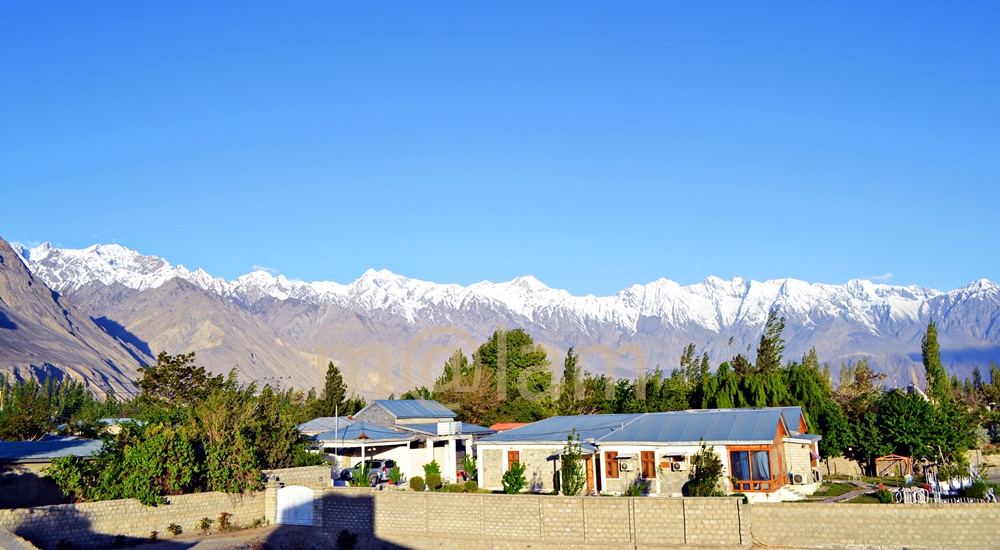
Skardu – A destination beyond imagination Serving as one of the four districts of the Baltistan Division of Gilgit-Baltistan’s three divisions, Skardu is the capital city of Skardu District. Skardu is the primary gateway to the eight-thousanders of Pakistan including K2, Broad Peak, and Gasherbrum Peaks, and is also the threshold to several famous glaciers including the well-known Baltoro Glacier. Nestled at 2500m (8,202 feet) above sea level, along the bank of the Indus River, Skardu presents a harmonious blend of modern amenities and traditional appeal. The valley spans approximately 10 km in width and 40 km in length. Skardu is situated at the convergence of the Shigar River and Indus River. Renowned for its stunning landscapes, towering mountains, and distinctive cultural legacy, the region captivates visitors with its enchanting charm. Encompassed by the Karakoram Range, Skardu affords breathtaking vistas, tranquil lakes, and opportunities for trekking and mountaineering. It boasts extensive tourist attractions catering to nature enthusiasts, adventure seekers, and those intrigued by local customs. Below are some of Skardu Tourist Attractions: Kharpocho Fort  Known as Skardu Fort, the Kharpocho Fort is a significant historical landmark situated atop a rocky hill, towering 40 meters above the main town. Offering sweeping views of the surrounding landscapes, reaching the fort entails a rewarding 30-minute hike. Overlooking the confluence of the Indus and Shigar Rivers, the fort boasts a secret tunnel providing an escape route during emergencies, linking it to the city. Referred to as the “king of forts” in the local Balti language, it served as a military stronghold during various conflicts. Constructed in the late 16th century by King Ali Sher Khan Anchan, the fort features a traditional architectural style, encompassing numerous cozy rooms within its expansive boundary walls. Its intricate woodwork, majestic stonework, and skilled craftsmanship make it a captivating site to explore. Despite suffering damage during the 1948 war in Gilgit-Baltistan, the grandeur of the fort continues to allure thousands of tourists year-round. Nansoq Organic Village Nestled just beyond the famed Kharpocho Fort, The Nansoq Valley represents the inaugural organic village accessible by foot. Commencing from the nearby neighborhood adjacent to Kharpocho Fort, the trek to this picturesque village spans approximately 3 kilometers. It offers a scenic route along the Indus River with breathtaking valley views. The journey typically takes an hour via a gradually ascending path, punctuated by several wooden bridges. Approximately 75 residents, distributed among 17 or 18 families, inhabit Nansoq, embracing the traditional Balti lifestyle characterized by labor-intensive practices and a reliance on organic food. They reside in vintage-style dwellings and predominantly engage in agriculture and farming, utilizing ancient utensils. The village serves as a prime example of cultural preservation and the pursuit of a modest lifestyle. Notably, Nansoq has welcomed distinguished visitors such as Prince Charles, Prince of Wales, and the Duchess of Cornwall, underscoring its significance as a unique cultural enclave. Italian K2 Museum    The K2 Museum is a distinctive pyramid-style tent museum situated in the garden of the PTDC Motel in Skardu. It is just a 5-10 minute stroll from the city center. Sponsored by the Italian government and established in 2004, the museum commemorates the first successful summit of the treacherous K2 Mountain by an Italian expedition in 1954, led by Arditio Dezio. Dedicated to the Pakistani people and mountaineers worldwide, the museum houses a vast collection of historical data, maps, documentaries, and geographical and cultural insights about K2 Mountain and earlier expeditions to remote Baltistan, led by De Filippi. Additionally, it showcases local customs and traditional attire. The PTDC Motel itself serves as a testament to the rich climbing and hiking history in the mighty mountains of Skardu. With its wealth of exhibits and immersive experiences, the K2 Museum stands out as a remarkable tourist attraction for visitors. Manthal Buddha Rock The Manthal Buddha Rock, a sizable granite formation adorned with Buddha carvings dating back to the 8th century, resides 3 kilometers from Sadpara Road in Manthal Village, Skardu. This iconic rock boasts a prominent central carving of Buddha, flanked by two standing Metreyias (future Buddhas) and encircled by twenty small Bodhisattvas (disciples). Before Buddhism’s advent in the 4th century, Baltistan was steeped in Shamanism. Monks from northern India arrived and erected monasteries during the reign of the Palolashahi kingdom. Despite the Tibetan conquest in the 8th century, Buddhism thrived, marking the Upper Indus Valley’s “Golden Era of Buddhism” from the 8th to the 10th centuries. However, the arrival of Ali Hamadani and his followers from Iran in the 14th century transformed the region’s landscape. Buddhism waned, and places of worship fell into disrepair as Islam gained traction. By the 15th century, the region had transitioned into a predominantly Muslim state. Satpara Lake Located near Skardu, Satpara Lake is a serene and picturesque destination enveloped by towering mountains. It offers an ideal setting for boating and soaking in the natural splendor. Positioned at an impressive altitude of 2,721 meters (8,927 feet) above sea level, Satpara Lake stands out prominently amidst the rugged terrain of Skardu Valley. Fed by the Satpara stream, originating from the melting ice of Deosai Plains, the lake boasts a picturesque island that provides a tranquil retreat. With its turquoise waters set against the backdrop of lofty peaks, Satpara Lake attracts tourists from around the globe. Accessible via a 20-minute jeep ride from Skardu, it remains a popular destination for nature lovers seeking solace and scenic beauty. Katpana Desert The Katpana Desert, also known as the Cold Desert or Biama Nakpo, is a high-altitude desert near Skardu town in Gilgit-Baltistan, Pakistan. Positioned at 2,226 meters (7,303 ft) above sea level, it ranks among the world’s highest deserts. Located between Skardu airport and the town, it features vast dunes that occasionally receive a dusting of snow in winter. The desert extends from the Indus River south of Skardu to New Ranga Village in the north, with the section near Skardu town being the most famous and visited. The best time to visit is between June and September

Skardu Tourist Attractions Read Post »
, , , , , , , , , , , , , , , , , , , , , ,
Marsur Rock
City Breaks, Gilgit-Baltistan, Others, Tourists Destinations in Pakistan

Marsur Rock

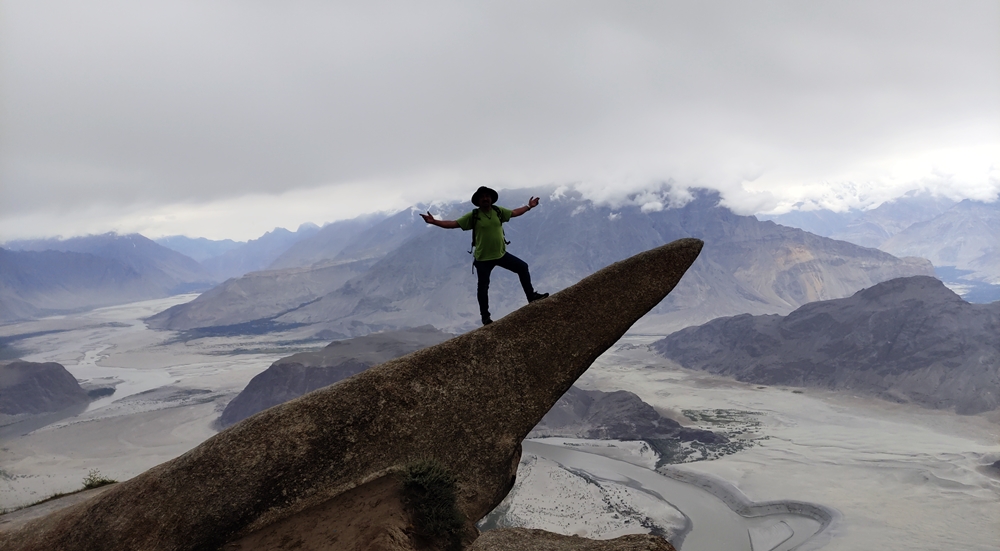
Marsur Rock: The Trolltunga of Baltistan If you’re craving awe-inspiring sceneries of Skardu town and its picturesque surroundings, the hike to the Marsur Rock is what you are exactly looking for. All you need is energy and determination to climb a steep moraine that takes at least 3 hours to hit the rock. It is an amazing hike providing fascinating views of the entire Skardu and surrounding attractions including the Hussainabad Valley and Broq in the immediate backdrop, Sarfaranga Desert, Kharpocho Fort, Nansoq Valley, the meandering Indus River, the convergence of Indus and Shigar rivers, and the Shigar Valley in the background. Marsur Rock is accessible by an adventurous drive from Skardu to the Hussainabad Broq located on a fair altitude followed by an uphill hike providing magnificent views. An Emerging Tourist Attraction Situated on the verge of mountains of Hussainabad, Shigar, Baltistan, Marsur Rock (also known as Hussainabad Rock) stands as a remarkable geological wonder in this region. The famous rock is celebrated for its distinctive geological features. At an elevation of 3,757 meters, Marsur Rock is a towering rock spire perched majestically on a mountain ridge high above the Hussainabad Valley. It bears a striking resemblance to Norway’s famous Trolltunga. What sets it apart is that out of its 38-foot total length, a whopping 25 feet extends dramatically into thin air, offering daring adventurers the opportunity to savor a mesmerizing bird-eye-view of the valleys below and capture daring photographs. Remarkably, Marsur Rock remained hidden from the world until 2018 until it was noticed by locals. A captivating picture of this rock shared on social media suddenly thrust this hidden gem into the tourist limelight. What makes this rock so exceptional is its multi-faceted appeal. It is, without a doubt, the finest bird’s-eye viewpoint in Skardu, offering unrivaled scenery in the entire town. The trail is adventurous, can be conquered by individuals of all ages yet requires vigor and resolve. It’s a perfect day activity whether you’re in Skardu or exploring the enchanting Shigar Valley. How to Reach Marsur Rock Accessing Marsur Rock involves an exhilarating jeep ride to Hussainabad Village and then Broq followed by an invigorating hike. Drive from any part of Baltistan to the southeastern part of Hussainabad Valley. Hussainabad itself is conveniently situated on the Kargil-Skardu Road, merely 24 kilometers from Skardu town, with a journey time of approximately 35 minutes. Take the side road that commences near Karakoram International University Campus in Hussainabad, branching off from the main Kargil-Skardu Road. The jeep track meanders through the valley, passing by the enchanting Hussainabad Waterfall, and ascends along a zigzagging uphill path leading to the summer pasture. From this point onward, a scenic hike leads to the captivating Marsur Rock. Depending on your pace, the hike typically takes around 3 hours. Remarkably, you don’t require a guide to navigate to this remarkable spot. Important Tips for Your Visit Here are some key considerations for planning your journey to Marsur Rock: Mobile signals are not available in the vicinity of Marsur Rock, so plan accordingly. You are traversing a culturally sensitive area, so wear appropriate clothing that respects local customs. Preserve the pristine beauty of the area by avoiding littering and demonstrating responsible travel behavior. Be sure to carry essential supplies, including water, some food, an umbrella or raincoat, a cap or hat, and a camera to capture the breathtaking scenery. Exercise caution, especially when taking photographs, particularly during inclement weather conditions. Explore Nearby Attractions While Marsur Rock itself is a shining gem, there is a treasure trove of attractions waiting to be explored in the immediate vicinity and throughout the remote valleys of Baltistan. Don’t miss the opportunity to immerse yourself in the natural wonders of Hussainabad Valley, Baltistan, Pakistan. Some other captivating attractions in the vicinity include: Skardu District Attractions Nansoq Organic Village Kharpocho Fort Katpana Desert & Lake Satpara Lake Lower Kachura Lake Upper Kachura Lake Deosai Plains Chunda Valley Soq Valley Basho Valley Shigar District Attractions Shigar Fort Palace Amburiq Mosque Hashupi Garden Shigar Riverside Sarfaranga Desert Blind Lake Khaplu District Attractions Khaplu Valley Khaplu Fort Palace Chaqchan Mosque Blind Lake Keris Thallay Valley Machulu Village Hushey Valley Kharmang District Attractions Manthoka Waterfall Khamosh Waterfall

Marsur Rock Read Post »

, , , , , , , , , ,
Sheosar Lake in Deosai National Park
Gilgit-Baltistan, Lakes

Sheosar Lake

Sheosar Lake: The Hidden Gem of Deosai National Park Discover Sheosar Lake: A Himalayan Wonder Nestled within the picturesque landscape of Deosai National Park in Gilgit-Baltistan, Pakistan, Sheosar Lake stands as a testament to the awe-inspiring beauty of nature. Perched at a breathtaking elevation of 13,589 feet, it’s often referred to as the heart of Deosai and ranks among the world’s highest-altitude lakes. Throughout the year, the surroundings of Sheosar Lake transform, painting a mesmerizing canvas of nature’s vivid hues. Certainly, this pristine oasis is not only a visual treat but also a haven for rare flora and fauna. Unveiling the Local Legend The name “Sheosar” is derived from the local Shina language, where “Sheo” means blind and “Sar” means water. Hence, it’s commonly known as the “Blind Lake.” Spanning approximately 2.3 kilometers in length, 1.8 kilometers in width, and with an average depth of 40 meters (131 feet), this lake is teeming with fish, making it a vital food source for the brown bear during the winter months. A Tourist’s Paradise Sheosar Lake has become a must-visit destination, nestled on the border between the Karakoram and Himalaya mountain ranges. The lake is surrounded by gently sloping mountains that offer excellent hiking opportunities. On clear days, visitors can even catch a glimpse of Nanga Parbat, Pakistan’s second-highest peak, towering at a staggering 8,126 meters above sea level. Furthermore, the panoramic views encompass distant snow-clad mountains and expansive plains. Camping in Tranquility For adventurous souls seeking an overnight experience, designated camping sites are available on the north side of the lake. Ample parking space is provided for those wishing to pitch their own tents. However, it’s important to note that the lake’s water is not suitable for drinking. Fortunately, there’s a nearby spring that serves as a source of clean, refreshing water. Nature’s Spectacle: Sunrise and Sunset Deosai is renowned for its stunning sunrises and sunsets. On clear days, the weather remains pleasantly cool, with captivating views of the surrounding mountain peaks embracing the meadows. The lake itself becomes a natural masterpiece during the summer months, with its tranquil blue waters contrasting beautifully with the lush green grassy shores and snow-dusted mountain slopes. Photographers are in for a treat, as they can capture the essence of paradise in every frame. Seasons in Transition The climate in Deosai is as unpredictable as it is enchanting. While July and August are generally pleasant, with lush green meadows, even these months can witness unexpected snowfall. Surprisingly, Sheosar Lake undergoes a remarkable transformation in different seasons. During the summer, it showcases crystal-clear blue waters surrounded by a sea of green grass and blooming flowers. As autumn arrives, however, the grass turns a rustic brown, while winter blankets the entire region in a thick layer of snow. Embarking on the Journey Reaching Sheosar Lake in Deosai National Park is possible via two main routes: one through Astore Valley and the other through Skardu. The Astore route is relatively more accessible, with most of the road leading to the lake being paved. However, it’s advisable to use a 4WD vehicle for a trouble-free journey. The journey from Astore to the lake is a captivating experience in itself. The road winds through stunning valleys, past crystal-clear waters, lush green meadows adorned with alpine flowers, babbling streams that nourish the grasslands, glaciers, and magnificent green peaks capped with snow, offering a constant breeze of refreshing coolness. The warmth and hospitality of the local people add an extra layer of charm to this incredible journey. For those opting for the Skardu route, be prepared for a longer and more rugged journey. However, the path through the wilderness, adorned with alpine flowers and glimpses of snow-capped mountains, is a visual feast. Key stops along the way include Bara Pani and Kala Pani, both offering their own share of natural beauty before you finally arrive at Sheosar Lake. Sheosar Lake in Deosai National Park is a hidden gem waiting to be discovered by nature enthusiasts and adventure seekers. Its ever-changing beauty, from the vibrant summers to the serene winters, makes it a destination worth exploring. Whether you’re captivated by its legends, drawn to its wildlife, or simply seeking tranquility in the wilderness, Sheosar Lake promises an unforgettable experience in the heart of the Himalayas.

Sheosar Lake Read Post »

, , , , , , , , , , , , , , , , ,
Scroll to Top