
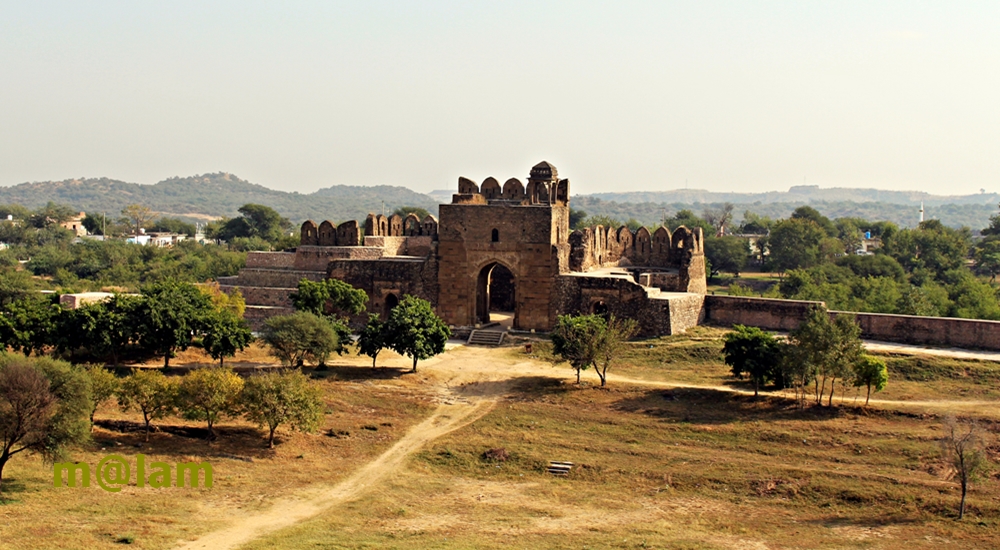
Rohtas Fort
Rohtas Fort: History and Architecture at Heights Rohtas Fort, also known as Qila Rohtas, stands as an iconic symbol of military ingenuity and architectural brilliance in Punjab, Pakistan. Nestled in the Tilla Jogian Range on the Pothohar Plateau, this UNESCO World Heritage Site (since 1997) is a masterpiece of early Muslim military architecture in Central and South Asia. Its robust design, sprawling walls, and intricate gateways have earned it a place among the most remarkable historical sites in the region. Location and Setting Strategically positioned 91.5 meters (300 feet) above its surroundings, Rohtas Fort is perched on a hill overlooking the confluence of the Kahān River and the seasonal Parnal Khas stream. The fort rises to an elevation of 819 meters (2,687 feet) above sea level, covering an impressive 70 hectares (170 acres). Just 16 kilometers northwest of Jhelum, it lies near the historic Grand Trunk Road, a vital trade route connecting Afghanistan to the plains of Punjab. A Glimpse into History The Vision of Sher Shah Suri (Sur Period) Following his victory over Mughal Emperor Humayun in 1541, Sher Shah Suri commissioned the construction of Rohtas Fort to consolidate his power and thwart a potential Mughal resurgence. Tasked with suppressing the pro-Mughal Ghakkar tribe, the fort was designed to be both an impregnable fortress and a statement of authority. Despite initial resistance from the local populace, construction progressed under the supervision of Todar Mal, a Punjabi Khatri minister. The fort’s architectural blend of Persian, Afghan, and local influences reflects Sher Shah’s vision for an enduring legacy. Mughal Period After Sher Shah’s death, the fort’s strategic significance dwindled. It was ceded to Humayun in 1555, who used it briefly before his empire shifted focus to more ornate structures like the nearby Attock Fort. While Emperor Akbar and Jahangir rested at Rohtas during their travels, its plain military style was less appealing to the Mughals, who preferred structures adorned with gardens and elaborate designs. Sikh Empire and British Era In 1825, the fort fell under the control of the Sikh Empire, with Gurmukh Singh Lamba capturing it from Nur Khan, a Ghakkar chief. It served as an administrative hub during the Sikh reign until the British annexed the Punjab region in 1849. Architectural Marvels of Rohtas Fort Main Fortifications The fort’s defensive walls stretch over 4 kilometers, enclosing an area capable of housing 30,000 soldiers. Rising between 10 to 18 meters in height and 10 to 13 meters in thickness, the walls feature 68 bastions, 1,900 battlements, and 12 monumental trap gates. Inner Citadel A secondary wall 533 meters long divides the inner citadel from the rest of the fort. Structures like Haveli Man Singh, Shahi Mosque, Baolis (stepped wells), and the Rani Mahal add historical depth to the citadel’s interior. Notable Structures Haveli Man Singh Constructed between 1550 and 1614, this prominent structure reflects Hindu architectural elements and offers commanding views of the surroundings. Rani Mahal The Rani Mahal, near Haveli Man Singh, was once a four-room structure, now reduced to a single room with visible foundations. Shahi Mosque Located near the Kabuli Gate, this modest yet ornate mosque is one of the most decorated buildings within the fort. Baolis (Stepped Wells) The fort features three Baolis—Main Baoli, Shahi Baoli, and Sar Gate Baoli—essential for water storage during sieges. The Gates of Rohtas FortRohtas Fort is renowned for its 12 intricately designed gates, each with unique historical and architectural significance: Sohail Gate: Named after Saint Sohail Bukhari, this gate showcases exemplary masonry from Sher Shah’s time. Shah Chandwali Gate: Honoring Saint Shah Chandwali, this gate connects the citadel to the main fort. Kabuli Gate: Facing west towards Kabul, this double gate opens to a width of 3.15 meters. Shishi Gate: Distinguished by its glazed tile embellishments, representing an early example of this technique. Langar Khani Gate: A double gate leading to a Langar Khana (Mess hall or Canteen). Talaqi Gate: Named after “Talaq” (divorce), as legend has it Prince Sabir Suri’s entry through this gate was ill-fated. Mori or Kashmiri Gate: Opening northward, it’s aptly named for its orientation towards Kashmir. Khwas Khani Gate: An ode to Khwas Khan, one of Sher Shah Suri’s most prominent generals. Gatali Gate: Facing the village of Gatali, it served as a vital crossing point for the River Jhelum to the Kashmir Valley. Tulla Mori Gate: Located on the eastern side, it’s more of an entrance than a gate, featuring a bastion. Pipalwala Gate: Resembling the Tulla Mori Gate, it’s a small entrance. Sar Gate: Known as “Sar (water),” this gate includes a small entrance with a bastion and a Baoli adjacent to it. Modern-Day Preservation Despite centuries of exposure, much of Rohtas Fort remains well-preserved. Restoration efforts have focused on key areas like the Chandwali Gate, which was recently rebuilt. However, natural erosion and neglect have caused some damage, such as the partial collapse of the Talaqi and Gatali Gates. Visitor Information Easily accessible at 16km northwest of Jhelum, and 8 km south of Grand Trunk Road makes it a convenient stop for travelers exploring the region. Rohtas Fort is a must-visit for history enthusiasts and architecture lovers. Plan Your Visit Rohtas Fort’s rich history and breathtaking vistas make it a destination that blends culture, history, and natural beauty. Whether you’re tracing the footsteps of emperors or marveling at ancient craftsmanship, the fort offers an unforgettable experience. Nearby Attractions Maqbara Khair un Nisa Tilla Jogian Forts in Pakistan Baltit Fort Altit Fort Red Fort Muzaffarabad Lahore Fort Kot Diji Fort Derawar Fort
