Punjab

Tourist attractions in Bahawalpur
City Breaks, Punjab

Bahawalpur Tourist Attractions

Bahawalpur, the capital city of the Bahawalpur district situated in the southern part of the Punjab province in Pakistan, holds historical significance as it was once a princely state under the rule of the Abbassi Nawabs from 1748 to 1954. During their 200-year reign, the Nawabs contributed to the city’s grandeur by constructing some remarkable landmarks, leaving behind an architectural legacy that still defines the city. As the 11th largest city in Pakistan and the 6th largest in Punjab province, Bahawalpur boasts well-preserved landmarks that serve as a testament to its rich history. The city is particularly attractive for visitors between October and February. While Bahawalpur has its own airport, travelers can also opt to fly into Multan and then drive to Bahawalpur. The city is accessible by air from major cities like Islamabad, Lahore, and Karachi, and by road from Karachi and Lahore as well. Key highlights of Bahawalpur include: Princely History: Bahawalpur served as a princely state under the Abbassi Nawabs for over two centuries, shaping the city’s cultural and historical identity. Architectural Marvels: The Abbassi Nawabs left behind mesmerizing landmarks that stand as a testament to their rule. These architectural gems contribute to the city’s unique charm and are well-preserved to this day. Ideal Visiting Season: The best time to visit Bahawalpur is between October and February, offering favorable weather conditions for exploration and sightseeing. Access: Bahawalpur has its own airport, but travelers can also choose to fly to Multan and then drive to Bahawalpur. The city is well-connected by air and road, with flights from major cities and accessible road routes from Karachi and Lahore. Overall, Bahawalpur is a city that invites visitors to explore its historical treasures, experience its cultural richness, and appreciate the architectural legacy left by the Abbassi Nawabs. Darawar Fort A must-visit attraction, Darawar Fort stands as a colossal citadel situated on the outskirts of the Cholistan Desert in Bahawalpur. Offering an exciting excursion from the city center, the fort is located approximately 95 km away, with a travel time of about 2 hours. The square-shaped fort’s immense size dominates the semi-desert landscape, easily visible from miles away. The fortified structure boasts 5-foot thick and 30-meter round bastioned walls, extending 1500 m in circumference, making it a robust and magnificent stronghold. While its exterior is particularly impressive, the interior may not match the grandeur witnessed from the outside. Abbassi Mosque or the White Marble Mosque The Abbasi Mosque, also known as the White Marble Mosque, is an elegant structure located in front of the Derawar Fort in Bahawalpur. Constructed in 1849 for the personal holy man of Nawab Bahawal Khan, Pir Ghulam Farid, this mosque is a striking representation of architectural beauty. Resembling the Moti Masjid at the Red Fort in Delhi, India, the Abbasi Mosque is entirely crafted from white marble, creating a pearl-like presence in the Cholistan Desert. The mosque features a spacious hall and courtyard, capable of accommodating up to 1000 worshippers simultaneously. Its tall minarets are visible from afar in the Cholistan desert, and despite the passage of time, the local residents have diligently maintained the mosque’s pristine condition. Abbasi Royal Graveyard The Abbasi Royal Graveyard, located in close proximity to the Abbasi Masjid in Derawar, serves as the final resting place for the Abbasi family. This sacred burial ground is under the ownership and control of the surviving family members of the Nawabs. The graveyard encompasses a covered area featuring a large rectangular room that serves as the resting place for 12 Nawabs who once governed the state of Bahawalpur. Additionally, the room contains the graves of Nawabs holding honorary titles after the amalgamation of Bahawalpur with Pakistan. Beyond the main rectangular room, other tombs belong to the immediate family of the Nawabs. These tombs showcase exceptional architectural craftsmanship and intricate artwork, including calligraphy, engravings, patchwork, and patterns. Visitors must obtain prior coordination and permission to explore this historic graveyard. Cholistan desert The Cholistan Desert, also referred to as Rohi, is a vast desert situated in Bahawalpur, Pakistan, covering an expansive area of approximately 26,000 square kilometers. Renowned for its distinctive ecosystem, this desert is a habitat for a diverse array of plants and animals. Beyond its ecological richness, the Cholistan Desert is steeped in historical significance, featuring numerous forts and tombs that trace their roots back to the ancient Indus Valley Civilization. The desert has become a favored destination for adventure tourism, offering activities such as desert safaris and camel treks, allowing visitors to immerse themselves in the unique landscapes and cultural heritage of the Cholistan region. Lal Sohanra National Park Established in 1972, Lal Sohanra National Park is a prominent conservation area among Pakistan’s 14 major national parks and protected regions, located approximately 50 km east of Bahawalpur. Recognized as a UNESCO-declared biosphere reserve, it stands as one of the largest national parks in South Asia. The park spans 127,480 acres, with 20,974 acres dedicated to green land (irrigated plantations), 101,726 acres to dry land (desert), and 4,780 acres to wetland (ponds and lakes). This sanctuary is home to a variety of wildlife, including the rare Chinkara Gazelle and abundant wild boar, while winter brings a multitude of ducks to the lakes. The park is intersected by the dry bed of the Hakra River, featuring the significant wetland of Patisar Lake. Accommodation options include a modest facility provided by the Pakistan Tourism Development Corporation (PTDC), and camping is also available in selected campsites within the park. Sadiq Garh Palace The grandeur and magnificence of Sadiq Garh Palace surpass even the enchanting palaces in Bahawalpur. Set amidst lush green lawns adorned with beautiful plants and flowers, and enclosed by a massive fortification, this sky-high structure features a central dome surrounded by bastions at each corner, showcasing the exquisite architectural taste of the Nawab’s family. The palace radiates an even more graceful aura at night, illuminated by a kaleidoscope of colored lights. The interior is adorned with top-quality furniture and embellishments. Established in 1882 by Nawab

Hidden Treasures of Lahore
City Breaks, Punjab

Hidden Treasures of Lahore

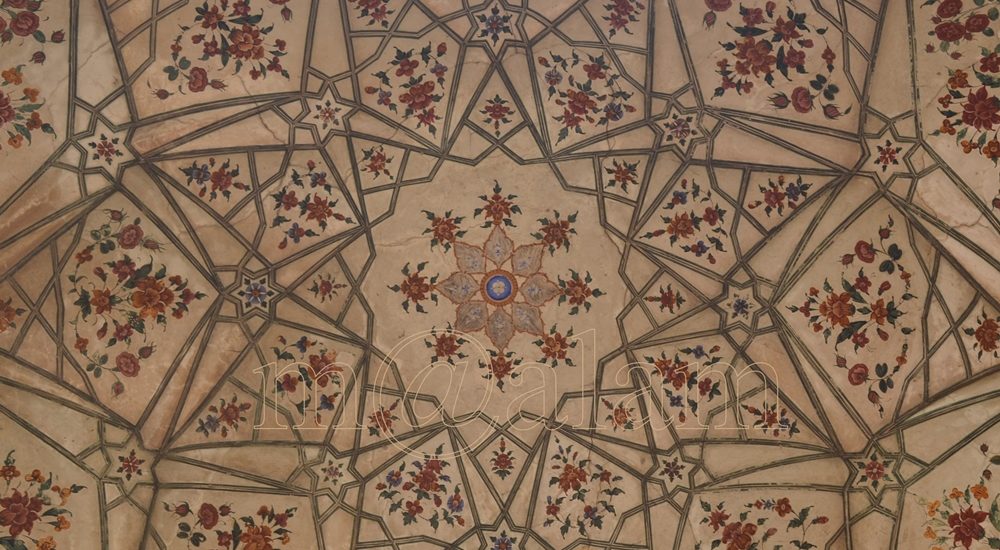
Lahore is the second largest city and the cultural hub of Pakistan. The city has a charming longstanding history and is entirely rich in tourist attractions, mostly of historic and cultural significance. However, sadly, only a few conventional landmarks out of a cluster are known to the general public and tourists. The “Hidden Treasures of Lahore” have not yet been unearthed properly.  The wealth of attraction that is still hiding behind deserves to be known to the public and tourists which certainly will add to the historic significance of Lahore.  Wazir Khan Baradari The Wazir Khan Baradari (12-door pavilion) is sited between the Punjab Public Library (PPL), the National College of Arts (NCA), and the Lahore Museum and is accessible from the PPL road. It was named after Hakim Ilumddin titled ‘Wazir Khan’, a benefactor of numerous impressive buildings across Lahore including the splendid Wazir Khan’s Mosque and Wazir Khan’s Hammam ( also known as Shahi Hammam), in the Walled City. The Baradari is surrounded by a fine garden with a large number of palm trees. The two-story pavilion has been incorporated into the grounds of the Punjab Public Library in 1860 and serves as a reading room. During the 19th and early 20th centuries, Wazir Khan Baradari was used as a museum and as the Settlement and Telegraph Office under British rule. Maryam Zamani or Begum Shahi Mosque or Barood Khana Wali Masjid Maryam Zamani was one of the queens of Emperor Akbar, mother of Jahangir, and sister of Bhagwan Das. She built a mosque near Masti Gate of the Walled City in 1614 AD and is believed Lahore’s earliest surviving example of the Mughal era mosque that influenced the construction of the larger Wazir Khan Mosque. Thus it was named after the queen Maryam Zamani who was actually born Rajkumari Hira Kunwari, a Rajput princess, the daughter of Raja Bihari Mal of Jaipur (the then Amber). The mosque has a beautifully adorned prayer hall with a remarkable central dome adorned by muqarnas and painted frescos. The Mosque is close to the Akbari gate entrance and was once used as a gunpowder factory by Ranjit Singh thereby called Barood Khana Wali Masjid. However, it was restored in 1850 under the British.  Ali Mardan Khan’s Tomb Ali Mardan Khan was originally a noble at the court of Shah Tahmasp, a Safavid king. After surrendering Iranian Qandahar to Emperor Shah Jahan in 1638, he joined the Mughal court and rose to great heights rapidly and became Governor of Kashmir, Lahore, and Kabul. He was also granted the title of Amir al-Umara (Lord of Lords) in 1639 and became a commander of 7,000 troops as well was appointed viceroy of Punjab from Kabul to Delhi. Besides being a commanding figure, Ali Mardan Khan was also a renowned engineer who coined the idea of the construction of a canal from the river Ravi for the supply of water to the Shalimar Gardens, as well as for the irrigation and cultivation of surrounding areas. His tomb is a massive brick construction work standing on an octagonal podium. The structure of the tomb is also octagonal with a bulbous dome and kiosks on angular points. The tomb once stood in the center of a luxuriant garden and the extent of which could be seen by its double-story gateway. The imposing tomb is accessible by a 300 m-long walkway through the narrow streets of the Railway Carriage Workshop. Saru Wala Maqbara or Cypress Tomb The tomb of Sharf-un-Nisa Begam is popularly known as ‘Saru Wala’ Maqbara. Saru is the Urdu term used for Cypress and because of images of cypress trees used on its walls, it is thus called Cypress tomb. Sharf-un-Nisa Begam was a sister of Nawab Zakariya Khan, governor of Lahore province during the reign of Emperor Mohammad Shah Rangeela. Before her death, the Begum would read the holy Quran on daily basis on the first floor of the Chamber and then would deposit the holy book and the jeweled sword, descending by means of a portable wooden stair. After her death, she was buried in the same chamber along with a copy of the holy Quran and her jeweled sword. The unusual tower-like tomb is 16 feet above the ground and was made inaccessible by blocking up all openings in 1745. It is located near the north of Dai Anga’s tomb in the Begumpura neighborhood of Lahore. The structure of the tomb is unique in itself for its unusual shape and decoration of the cypress motif as a jewel of Mughal architecture. Dai Anga’s Tomb Dai Anga, the wet nurse of Mughal Emperor Shah Jahan and his daughter (Princess Sultan Begum), was the name given to Zeb-un-Nisa (1671 AD). She was the wife of a Mughal noble Murad Khan, magistrate of Biknar under Jahangir. Her splendid mausoleum lies near the Gulabi Bagh gateway in Begampura, outside the Walled City. The rectangular-shaped mausoleum with eight rooms encircling the perimeter of a central chamber lies on a raised plinth. A dome with frescoes is directly above the central empty chamber as the actual tomb of Dai Anga lies below in the basement just next to her daughter, Sultana Begum. The interior of the tomb is richly decorated with carved inscriptions from the holy Quran while the exterior with rich Kashi Kari or Qashani tilework but lost much of its charm.  Dai Anga Mosque The real name of Dai Anga was Zaib-u-Nisa, the wife of Mughal noble Murad Khan. She was the wet nurse of Shah Jahan and his daughter and remained a powerful figure in the Mughal dynasty. Several charming monuments associated with her name are still surviving in Lahore. Dai Anga Mosque was constructed in 1635 AD and is located near Lahore Railway station. Small in size yet rich in decor, the Dai Anga Mosque is embellished with multicolored mosaic on floral themes and remained in excellent condition since Dai Anga donated a substantial endowment to ensure its maintenance even after her death.

Tourist Attractions in Lahore
City Breaks, Punjab

Lahore Tourist Attractions

Lahore is the second largest city and cultural hub of Pakistan, also known as Pakistan’s cultural capital. It is the provincial capital of Punjab, enormously blessed with architectural and cultural heritage. Tourist attractions in Lahore are spread in abundance and the city also has the honor of holding the largest number of important educational institutions. Founded in the legendary times, Lahore – also known as the city of gardens – has an array of diverse attractions for visitors. The lively city has been a center of architectural excellence for over a thousand years. The Mughal architecture, the Sikh legacy, the colonial Gothic buildings lined up along the Mall road existing since the British Raj, and the palatial mansions and trendy shopping malls in the suburbs make Lahore a city of choice. Shalimar Garden Lahore has several eye-catching gardens and it was therefore called the city of gardens. The Shalimar Garden, a unique collage of nature and architecture, was accomplished in 1641-42 AD under the supervision of Khalilluah Khan, a noble of Shah Jahan’s court. The construction of the garden was influenced by regions like Central Asia, Persia, Kashmir, Punjab, and Dehli Sultanate and reflects the affinity of Shah Jahan for nature and architecture. The Shalimar Garden was incorporated as one of the UNESCO World Heritage Sites of Pakistan in 1981. The 16 hectares (658 meters north to south and 258 meters east to west) rectangle garden by crenelated walls of red sandstone is arranged in three terraces descending from south to north with each terrace given a special name. The garden is located close to Baghbanpura on the GT road 5km northeast of the city centre. The site of the garden belonged to the Arian Mian Family and Shah Jahan rewarded them with the Mian title for their services and contribution to the Mughal Empire. Minar-e-Pakistan The 60-meter-high Minar-e-Pakistan is a national monument built to commemorate the day when the Pakistan resolution was passed on March 23, 1940. The memorial tower is located next to the Badshahi Mosque in Iqbal Park originally known as Minto Park. Minar-e-Pakistan was designed by a Turkish architect, Murat Khan, and the construction work was completed in 8 years from 1960-68. This is the historic site where Nehru and the Indian National Congress declared the independence of the subcontinent from Britain in 1929. Generous funding of Rs. 500,000 was generated by the then governor of West Pakistan, Akhtar Hussain, for the construction. It was opened to the public on October 31, 1968. Chau Burji Chau Burji is a local term for the monument with four minarets. The monument has a historical significance and is located on the Multan road in Lahore. Historically the tower has been an entry point to a Mughal garden associated with Zeb un Nisa, the daughter of Mughal emperor Aurangzeb Alamgir. The garden does not exist anymore but the monument is standing by the Metro Bus Track. It was built in the year 1646 CE with a typical Mughal-style construction. With the passage of time, apathy of authorities, and due to weather conditions the monument lost most of the inscriptions on it yet Ayat-ul-Kursi (Quranic verses) on the upper-most part of the structure and the two couplets written in Persian above the arch could still be legible. Comprehensive conservation of this monument was carried out in 2018 before its fall. Daata Darbar Daata Darbar is the largest Sufi shrine in South Asia. It was built to house the remains of a Muslim mystic and a revered saint Abdul Hassan Al Hujwiri also popularly known as Data Ganj Bakhsh, he is said to have lived on the site in the 11th century. The shrine was built by the Ghaznavi king Sultan Zakiruddin Ibrahim later in the 11th yet subsequent expansions were made since then and Hajvary Mosque was part of it. The shrine is located near the Bhati Gate in Lahore’s Walled City and is visited by more than 30,000 visitors on a daily basis. People of all faiths are welcome to visit the shrine. Lahore Railway Station Lahore Railway Station was the first purpose-built British imperial building, a representative of typical grand British architecture in the subcontinent during the British Raj. It was built in 1857 following the Indian Mutiny and was intentionally designed to function both as a station and as a fort for the safety and accommodation of employees. Its construction was entirely of brick masonry. The architect, William Brunton who called it the “best in the world”, was confident that the building could survive even full-scale howitzer fire. Lahore High Court Known as a place where legal history is made, the Lahore High Court has much to see for tourists. The architectural marvel that the building holds is beyond imagination. Its elegant look owing to the unique architectural design places it among the top-rated tourist attractions of Lahore. General Post Office The General Post Office (GPO) Lahore is a public building located at the end (T turn) of Mall Road near Anarkali. It was designed by eminent architect Sir Ganga Ram and was built around 1887 to celebrate the Golden Jubilee of Queen Victoria. Although not as attractive as other colonial buildings to plan a special visit yet for photographers, particularly those who are into architecture, it is a must-see facility. Its structure is a unique European-style building with the Mughal touch. It has three towers on the front with a central taller one having a domed top and four huge clocks on all four sides. It was renovated in 1970 and declared a heritage site. GPO Lahore handles about 20,000 pieces of mail per day. University of Punjab Informally called “Punjab University”, the University of Punjab is the oldest and largest public research university located in the downtown area of Lahore. The University of Punjab was established on 14 October 1882. It is the fourth major university established by the British Government in the subcontinent. Like other facilities erected during the British Raj, the Punjab University

Walled city of Lahore
City Breaks, Punjab

Walled City of Lahore

The one square kilometer densely populated walled city in the heart of Lahore houses a variety of architectural treasures and was once accessible by 13 gates. The Walled City of Lahore is also known as the Old City of Lahore and was established around 1000 CE. Most of the monuments housed in the city belong to the Mughal era, notably the lavishly decorated Wazir Khan Mosque, the massive Badshahi Mosque, and the Shahi Hammam. Gates of Walled City of Lahore The Walled City of Lahore was covered by a 9-meter high brick wall and accessible by 13 gates, made of wood and iron, with their unique names. These gates were constructed during the reign of Emperor Akbar (1584-98). The Raushnai Gate, or the Gate of Lights, is located between the royal mosque and the citadels. The Kashmiri Gate is called so because of its direction towards Kashmir. The Masti Gate, actually the Masjidi Gate refers to a mosque The Khizri or the Shranwala Gate was named after Khizr Elias, the patron saint. The Yakki Gate, originally the Zaki Gate, was a name derived from the name of a martyred saint while defending the city The Delhi Gate is called so because of its opening to the highway to Delhi. The Akbari Gate was named after the Mughal Emperor Muhammad Jala-ud-din Akbar who rebuilt the town and fort. The Mochi Gate was actually called Moti Gate to refer to Pearl named after Moti Ram, an officer of Akbar who resided here at that time. The Shah Almi Gate was named after the son and successor of Aurangzeb, Mohomed Mo’azzam Shah Alam Bahadur Shah who died on the 28th of February 1712 in Lahore. The Lahori Gate, also known as Lohari Gate, has been named after the city of Lahore. The Mori Gate was the smallest of all and was used as an outlet for the refused and sweepings of the city. The Bhatti Gate was named after the Bhatis, an ancient Rajput tribe that lived in these quarters. The Taxali Gate, named after the Taxal or Royal Mint During the reign of Ranjit Singh (1799 to 1849), the damaged walls were rebuilt in 1812. All of these marvelous gates continued to exist until the 19th century. Some damaged gates were rebuilt using simple structures, except for Delhi Gate and Lahori Gate. Currently, only 6 of these gates exist including Roshnae, Delhi, Shairanwala, Bhati, Kashmiri, and Lahori. Below is the detail of the hidden architectural treasure inside the Walled City Of Lahore Badshahi Mosque Badshahi Mosque Lahore The crown jewel of Lahore, the Badshahi Mosque, was a symbol of power in the Mughal Empire. It has been the largest mosque in the world for 313 years (1673 to 1986). The grand mosque was used more as a military base by the armies of Ranjit Singh and the British troops than as a religious structure. It is now the second largest in Pakistan and South Asia and 5th largest in the world with a capacity for more than 150,000 worshippers on its grounds.  Lahore Fort Lahore FortThe Lahore Fort or Shahi Qila is a citadel spreading over an area greater than 20 hectares located at the northern end of Lahore’s Walled City. It has 21 notable monuments, some of which date as far back as the era of Emperor Akbar. The Fort was almost entirely rebuilt in the 17th century when the Mughal Empire enjoyed the height of its reign. According to records, it was said to be a mud-brick fort in the 11th century but the foundation of the modern Lahore Fort was laid in 1566 during the reign of Emperor Akbar. The fort featured both Islamic and Hindu motifs in its architectural design. However subsequent amendments were carried out with the passage of time by the subsequent Mughal Emperors.  However, the facility was turned into the residence of Ranjit Singh, founder of the Sikh Empire, after the fall of the Mughal Empire and later passed on to the British who made some major changes in its design as per their own need. The fort was inscribed as a UNESCO World Heritage Site in 1981 for its “outstanding repertoire” of Mughal monuments dating from the era when the empire was at its artistic and aesthetic zenith.  Fort Road Food Street The Fort Road Food Street is a prominent yet mystifying street clustered with a great variety of food outlets where food enthusiasts of all colors and creeds gather for a taste of their choice, mostly made inside multi-story heritage buildings and served either along the street or on rooftops. These rooftops are surrounded by significant landmarks that provide magnificent views of the buildings clustered surrounding the old city. Food Street is also the best place to enjoy the dramatic sunset.  It is also a prominent tourist attraction located between Fort Road and Roshni Gate of the Walled City of Lahore. Historically the street was once taboo being a part of the renowned red light area of Lahore.  Wazir Khan Mosque Wazir Khan MosqueThe Mughal architecture in the subcontinent has been archetypal and has had no matching landmarks to date.  The Wazir Khan Mosque in Lahore is such a unique and vivid illustration of Mughal architecture. It is also a testimony of their affinity to finesse, frescos and dexterity. It has been described as “a mole on the cheek of Lahore”. Golden Mosque The Golden Mosque, locally known as the “Sunehri Masjid” or the Talai Mosque is a late Mughal architecture-era mosque in the Kashmiri Bazar of the famous Walled City (Old City) of Lahore. The mosque was built in 1753 by Nawab Syed Bhikari Khan, son of Raushan-ud-Daula Turrabaz Khan, deputy governor of Lahore during the reign of Muhammad Shah. It was the time when the Mughal Empire was in decline. The mosque was built on an 11-foot high plinth in a congested street accessible by 16 stairs opening to a small courtyard measuring 65 x 43 feet that further leads to the

Lahore Fort and Shalimar Garden
Heritage Sites in Pakistan, Islamic Heritage, Punjab, World Heritage Sites

Lahore Fort and Shalimar Garden

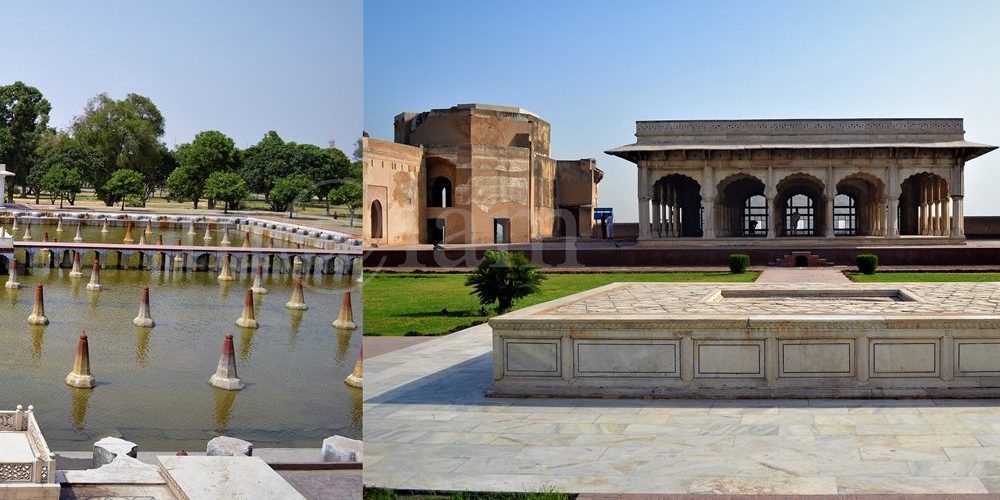
Exploring Lahore’s Magnificent Lahore Fort and Shalimar Garden: A Glimpse into Mughal Grandeur Lahore, the cultural heart of Pakistan, boasts two magnificent Mughal-era treasures: the Lahore Fort and Shalimar Garden. These architectural marvels continue to stand as symbols of pride and prestige in Lahore, having earned their rightful place as UNESCO World Heritage Sites of Pakistan in 1981, owing to their remarkable collection of Mughal monuments that epitomize the artistic and aesthetic zenith of the empire. The fort is located at the northwest corner of the walled city of Lahore while the Shalimar Gardens are situated along the Grand Trunk Road some 5 kilometers northeast of the main Lahore city. The monuments are located at a distance of 7 kilometers from each other. Dating back to 1the 7th century, both masterpieces reflect the true artistic expression of the Mughals at its peak.  The fort is the only monument that represents the complete history of Mughal architecture in Pakistan. The Shalimar garden, built by Emperor Shah Jahan in 1642, still retains the glorious Persian and Islamic tradition is a fine example of Mughal gardens. Lahore Fort: A Historical Marvel The Lahore Fort, also known as Shahi Qila, sprawls across an impressive 20 hectares. This irregularly designed citadel features 21 notable monuments, some dating back to the reign of Emperor Akbar. In the 17th century, during the peak of the Mughal Empire, the fort underwent extensive reconstruction. Its origins can be traced back to 1566 when Emperor Akbar laid the foundations for the modern Lahore Fort. Interestingly, the fort’s architectural design seamlessly blends Islamic and Hindu motifs, a testament to its rich history. As time passed, subsequent Mughal Emperors made alterations to the fort. Following the decline of the Mughal Empire, it served as the residence of Ranjit Singh, the founder of the Sikh Empire. Later, the British made significant modifications to suit their needs. Shalimar Garden: A Natural Paradise The Shalimar Gardens in Lahore represent an exceptional Mughal garden complex, seamlessly merging natural beauty with architectural grandeur. Commissioned by Emperor Shah Jahan in 1641, these gardens were completed in 1642, showcasing the pinnacle of Mughal artistry. Encompassing 16 hectares, the garden’s rectangular layout is enclosed by crenelated walls constructed from red sandstone. It is divided into three terraces, each with its own distinctive name. The upper terrace is named “Farah Baksh” (Bestower of Pleasure), the middle terrace “Faiz Baksh” (Bestower of Goodness), and the lower terrace “Hayat Baksh” (Bestower of Life). One of the most remarkable features of the Shalimar Gardens is its intricate water circulation system, comprising 410 fountains. These fountains, distributed throughout the three terraces, create a mesmerizing spectacle. The garden’s thermal engineering was designed to provide cooling relief to visitors during scorching summers, a feat that continues to baffle scientists today. While initially intended to entertain royal guests, a specific section of the Shalimar Gardens was open to the general public. Located just 5 kilometers northeast of Lahore’s city center, the garden’s land originally belonged to the Arian Mian Family. In recognition of their contributions to the Mughal Empire, Emperor Shah Jahan bestowed upon them the prestigious Mian title. The Lahore Fort and Shalimar Garden stand as enduring testaments to the Mughal Empire’s architectural and artistic brilliance. Their historical significance and timeless beauty continue to captivate visitors, making them indispensable landmarks in Lahore’s rich cultural heritage.

Wazir Khan Mosque
Mosques, Punjab

Wazir Khan Mosque

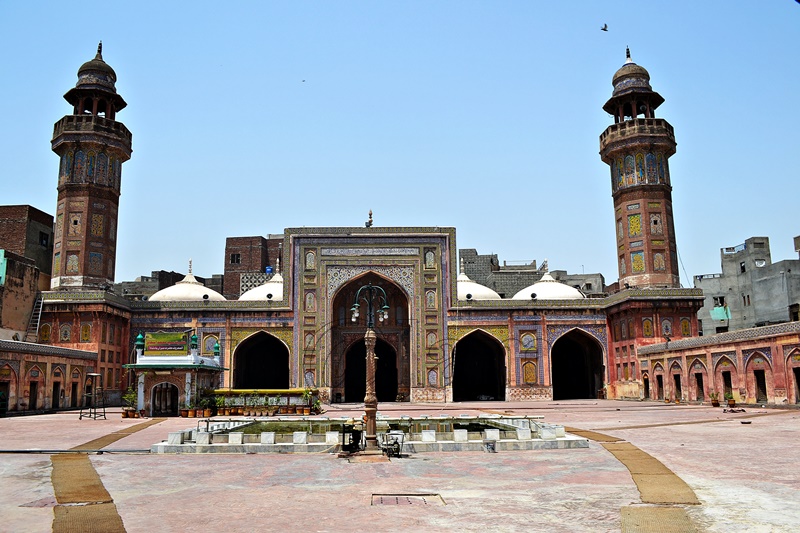
Unlocking the Beauty of the 17th-Century Wazir Khan Mosque in Lahore The Wazir Khan Mosque bearing Mughal-era Architecture is located in the heart of Lahore. The glorious mosque was built during the illustrious reign of Mughal Emperor Shah Jahan. The mosque stands as an unrivaled masterpiece captivating visitors from all corners of the world. This architectural marvel not only showcases the quintessential essence of Mughal design but also serves as a testament to their unwavering commitment to precision, frescoes, and artistic finesse. Often, this glorious mosque is referred to as “a mole on the cheek of Lahore”. A Glimpse into History Before delving into the grandeur of the mosque itself, it’s essential to understand the man behind its name. Wazir Khan was originally known as Hakim Sheikh Ilm-ud-din Ansari who hailed from humble origins in Chiniot, Punjab. He embarked on a path of education, specializing in medicine, and eventually found his way to the Mughal court. In 1620, Prince Khurram, who would later become Shah Jahan, recognized Hakim Ansari’s exceptional skills. He appointed Ansari as his personal physician and acknowledged his competence and dedication. The prince honored him with the title “Wazir Khan,” signifying his role as a minister in the Mughal court. The Mazar of Miran Badshah The mosque’s history intertwines with the construction of a tomb for a revered Sufi saint, Syed Muhammed Ishaq, also known as Miran Badshah. This tomb, or Mazar, served as the spiritual center around which the Wazir Khan Mosque would later emerge. Construction of the mosque began in 1634 and continued until 1641, encapsulating the tomb of Miran Badshah within its sacred precincts. Today, the tomb remains nestled in the mosque’s courtyard, a silent witness to centuries of devotion and architectural splendor. Discovering its Location The Wazir Khan Mosque is situated within the ancient walled city of Lahore. The glorious mosque occupies a prime position along the road connecting the Lahore Fort to the Delhi Gate. It occupies an impressive area of 279 feet by 159 feet resting on an elevated plinth. An intriguing aspect of its design is the inclusion of 22 shops, forming a bustling bazaar along the sides of a brick-paved pathway leading to the mosque—a testament to the integration of commerce and culture. The Architectural Marvel The Wazir Khan Mosque boasts a single prayer aisle and five bays, evoking architectural similarities with the Mosque of Mariyam Zamani Begum in the same city. Likewise, its high-arched galleries gracefully encircle a central brick-paved courtyard. The 130-foot-long prayer chamber is framed by simple cusped arches supported by sturdy piers. The mosque features three majestic domes, with the central dome soaring higher than the rest, emphasizing the exquisitely detailed mihrab. Its ingeniously designed double domes help amplify the voice of the imam. The voice therefore extends to the farthest corners of the courtyard. Adding to its charm, the mosque is surrounded by 32 guestrooms, known as Hijars. The mosque’s walls are constructed with meticulously cut and dressed bricks. Each wall is adorned with frescoes in a mesmerizing array of colors, including cobalt, cerulean blue, green, orange, yellow, and purple. These walls are meticulously divided into compartments to accommodate glazed patterns. Moreover, its walls are inscribed with calligraphy in Arabic and Persian. The mosque’s grills are crafted from terracotta, enhancing its visual appeal. The floors of the mosque are adorned with vibrant tiles featuring intricate geometric designs, showcasing the artisans’ craftsmanship. Unique to the Wazir Khan Mosque are its four minarets. Each tower with a remarkable height of 107 feet is adorned with mosaic tiles. These distinctive designs reflect a regional style rarely seen in Mughal capital mosques. The mosque’s domes, constructed in the Lodi style, further add to its architectural uniqueness. A Timeless Attraction Even today, the Wazir Khan Mosque continues to mesmerize not only the local populace but also draw visitors from across Pakistan and around the world. It stands as a testament to the enduring allure of Mughal architecture. Wazir Khan Mosque serves as a prominent landmark in Lahore’s rich cultural heritage.  The Wazir Khan Mosque is an absolute must-visit destination for those seeking a glimpse into the opulence and artistry of the Mughal era. The Wazir Khan Mosque in Lahore is not merely a historical site but a living testament to the grandeur, elegance, and artistic finesse of the Mughal dynasty. With its rich history, breathtaking architecture, and cultural significance, it remains a jewel in the crown of Lahore’s architectural heritage, beckoning travelers and history enthusiasts to explore its timeless beauty.

Khewra Salt Mines
Punjab

Khewra Salt Mine

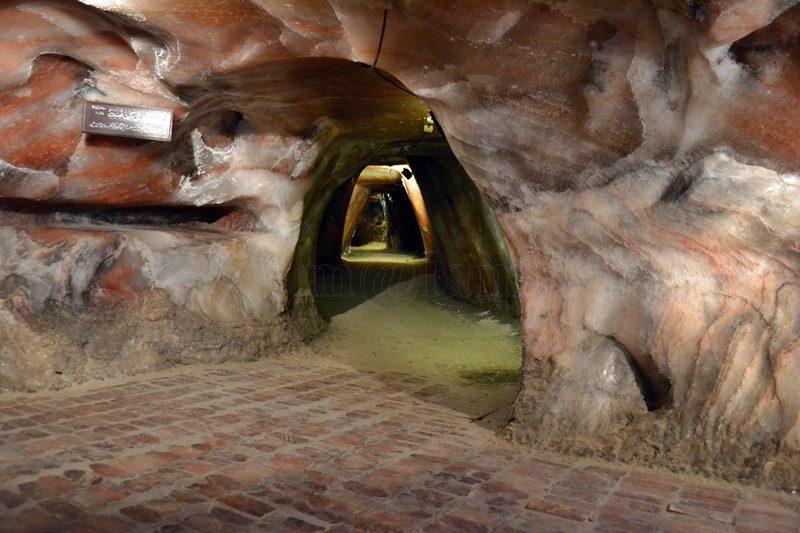
Unveiling the Splendor of Khewra Salt Mine: Pakistan’s Natural Wonder Discovering the World’s Second Largest Salt Deposit The Khewra Salt Mine, also known as the Mayo Salt Mine, stands as a testament to nature’s awe-inspiring wonders. Nestled within the Salt Range Khewra, an administrative subdivision of Jehlum District in Punjab Province, Pakistan, this majestic mine holds the distinction of being the world’s second-largest salt deposit and Pakistan’s largest. Within its subterranean chambers lies the treasure trove of Pink Himalayan Salt, beckoning visitors from around the globe to witness its marvel. Let’s delve into the remarkable history and captivating attractions of this geological marvel. A Geological Heritage The Khewra Salt Mine traces its origins back an astonishing 800 million years, a time when a shallow sea’s evaporation and geological movements set the stage for its formation. It remained concealed from the world until 320 BC, when the legendary Alexander the Great ventured into this region with his army. Legend has it that Alexander’s horses were drawn to the salt-rich rocks on the surface, and even ailing steeds found solace in licking the salt stones. This discovery piqued the interest of the Greeks, eventually leading to mining activities by the local Janjua tribes in the 13th century. The Mughal Flourish The Mughal era witnessed the mine’s transition from tribal control. Salt from Khewra became a prized commodity, reaching markets as distant as Central Asia. However, with the decline of the Mughal Empire, the mine changed hands again, this time to the Sikhs, earning its moniker ‘Khewra Salt Mine.’ The British Influence In 1849, the British Empire ousted the Sikhs and annexed Punjab, taking charge of the Khewra Salt Mine. In 1872, British Mining Engineer Dr. H. Warth introduced advanced excavation techniques, including the ‘room and pillar’ method, still in use today. This method involves extracting only 50% of the salt from the working stratum while leaving the rest as supportive pillars. A Geological Wonder Located 945 feet (288 meters) above sea level, the Khewra Salt Mines stretch over 300 kilometers within the Salt Range, from Beganwala near River Jhelum to Kalabagh near River Indus. Nineteen stories comprise this remarkable mine, with eleven below ground. The labyrinthine tunnels extend approximately 40 kilometers, maintaining a constant temperature of 18–20 °C year-round. Covering an expansive 110 square kilometers, the underground expanse never fails to astound. A Tourist’s Paradise The Khewra Salt Mine isn’t just a geological marvel; it’s also a major tourist attraction, drawing in approximately 250,000 visitors annually. Exploring the mine is a breeze, thanks to a small electric trolley train that guides visitors on a two-hour journey through its depths. Inside, you’ll encounter crystalline pools of salty water, intricate buildings, and replicas of iconic landmarks, all crafted by local artisans. Notably, the Salt Mine houses the world’s only Salt-Mosque, the Badshahi Masjid, constructed from salt bricks that cast a mesmerizing kaleidoscope of colors when illuminated. The mine continuously evolves, ensuring there’s always something new to captivate visitors. Salt Therapy for Health Beyond its geological wonders, the Khewra Salt Mine offers therapeutic benefits. The Khewra Asthma Clinic, established in 2007, pioneers salt therapy for asthma and respiratory ailments. By inhaling antibacterial salt particles in a sterile environment, patients experience relief in clearing air passages, especially asthma sufferers. With a ten-day treatment regimen, patients can witness remarkable improvements in their respiratory health. Health Benefits of Himalayan Pink Salt Himalayan pink salt, sourced from this mine, offers an array of health benefits, including: Detoxifying the body and regulating water levels Clearing sinus and respiratory issues Promoting healthy sleep patterns Maintaining pH levels Regulating blood sugar and reducing blood pressure Anti-aging properties Enhancing food nutrient absorption Aiding vascular health Supporting kidney and gallbladder health Boosting digestion and metabolism Balancing adrenal gland function Ensuring cellular hydroelectric energy balance Strengthening bones Easing stress Treating emotional disorders Preventing various ailments Commercial Applications Khewra salt isn’t limited to its therapeutic and aesthetic qualities. It serves as Pakistan’s renowned rock salt, used in cooking, as bath salt, and as a raw material for various industries. The mine also produces exquisite decorative items such as lamps, vases, ashtrays, and statues, exported worldwide. This tradition dates back to the Mughal era when craftsmen fashioned tableware and decorations from this precious resource. Access and Timings Khewra is conveniently located, approximately 160 kilometers from Rawalpindi/Islamabad (2-3 hours) and 260 kilometers from Lahore (3-4 hours). The Khewra Salt Mines welcomes tourists daily, from 9 am to 6 pm, including Sundays and gazette holidays. Fees Entrance fees vary for visitors: Pakistani visitors: Adults: Rs. 220 per person Children (2-12 years): Rs. 110 per child Students: Rs. 110 per student Foreign visitors: Adults: $20 per person Children (2-12 years): $10 per child Students: $10 per student For further inquiries, contact the Project Manager at Khewra Salt Mines, Khewra, District Jhelum, at +92-544-231137. The Khewra Salt Mine is a testament to nature’s grandeur, offering not only geological marvels but also therapeutic benefits and commercial value. As you embark on your journey to this extraordinary site, prepare to be mesmerized by the age-old wonder that is the Khewra Salt Mine.

Hiran Minar
Monuments, Punjab

Hiran Minar

Unveiling the Splendor of Hiran Minar: A Testament to Jahangir’s Love for Wildlife In the heart of Sheikhupura – a city brimming with history, stands the magnificent Hiran Minar. It’s a towering masterpiece that soars 30 meters into the sky. Its origins trace back to the year 1606 when it was commissioned to honor the memory of Mansraj, a cherished pet deer of the illustrious 4th Mughal emperor, Jahangir, also known as Prince Saleem. During Jahangir’s reign from 1605 to 1627, Sheikhupura held the prestigious status of a royal hunting ground. In fact, the Mughal rulers had an ardent passion for the art of hunting. Remarkably, Hiran Minar still stands today in splendid condition, continuing to captivate the hearts of tourists from around the world. The Birthplace of Hiran Minar Formerly known as Jahangirabad, Sheikhupura derived its name from “Sheikhu,” the affectionate nickname of Emperor Jahangir himself. Positioned approximately 40 kilometers northwest of the provincial capital, Lahore, Pakistan, modern-day Sheikhupura boasts a rich historical legacy. Hiran Minar, nestled about 9 kilometers west of Sheikhupura, graces the cityscape with its majestic presence. Unraveling the Hiran Minar Complex Hiran Minar encompasses not only the monumental tower but also an eastward-facing octagonal two-story structure crowned with an open pavilion. The very structure is known as Daulat Khana or Bara-Dari (of twelve doors). This structure sits at the very heart of a rectangular water tank. Notably, both Daulat Khana and the tank were additions made in 1607 and 1620, respectively. It’s worth mentioning that the term “Baradari” might be somewhat misleading, as it typically refers to a structure with twelve openings. Whereas, Daulat Khana is an octagonal building that features only one entrance on each side. Daulat Khana served as a cherished royal retreat for the emperor, accessible via a bridge extending westward from the tower. The ground floor of Daulat Khana grants entry from the four main directions, leading to smaller square rooms, which in turn, provide access to the king’s chamber. This central chamber, surrounded by eight subordinate rooms, forms the heart of Daulat Khana. Among these eight rooms, four are square and of smaller dimensions, while the remaining four are octagonal, boasting a more spacious layout. Every room offers pathways to the central king’s chamber as well as connections with one another. The Enigmatic Water Tank The water tank encircling Daulat Khana features charming pavilions adorned with pyramidal roofs and entrances on all four sides. Notably, each side of the tank is equipped with shallow brick ramps. The ramps provide easy access to the resident wildlife of the hunting park, allowing them to quench their thirst. The water level within the tank was meticulously maintained through a network of channels and catchment basins. A Monument Born from Love The tale that led Emperor Jahangir to order the construction of the tower and a grave for his beloved deer is both poignant and remarkable. Tragically, the emperor accidentally put to death Mansraj while attempting to hunt another deer in the very area where Hiran Minar now stands. Overwhelmed by grief, Jahangir made the heartfelt decision to inter Mansraj at the very spot where he had met his untimely end. In memory of his cherished pet, the emperor commanded the construction of Hiran Minar. Subsequently, the once-royal hunting ground was transformed into a protected sanctuary, and the practice of hunting was strictly prohibited. This extraordinary tale stands as a rare testament to the profound bond between man and wildlife. It’s a symbol of reverence for animals in an era when such sentiments were virtually unknown elsewhere in the world. Hiran Minar not only graces the landscape of Sheikhupura but also stands as a testament to Jahangir’s enduring love for his favorite deer, Mansraj, and his commitment to preserving the natural world. Intriguing, historically significant, and a true marvel of architecture, Hiran Minar remains an enchanting destination for travelers seeking a glimpse into the past and a profound connection to the natural world.

Taxila - A UNESCO World Heritage Site in Pakistan
Archaeological sites, Buddhist Heritage of Pakistan, Punjab, World Heritage Sites

Taxila Buddhist Ruins

Taxila: A Glimpse into Pakistan’s Rich Heritage Taxila’s Past: A Journey through History Taxila, a serene town nestled in the Punjab district of Pakistan, lies to the north of the vibrant twin cities of Rawalpindi and Islamabad, the capital city. The name “Taxila” finds its roots in the Sanskrit term “Taksasila,” which translates to “city of cut stones.” This illustrious town is a treasure trove of historical significance, its archaeological importance was first recognized in the late 1800s by the esteemed archaeologist Sir Alexander Cunningham. In recognition of its historical value, Taxila was designated as a UNESCO World Heritage Site of Pakistan in 1980. Pre-History: Taxila’s Ancient Beginnings The prehistoric legacy of Taxila harks back to the era of microlithic hunters before 3500 BC. Evidence, including the discovery of three notable caves, particularly the one at Khanpur, traces history to the Stone Age. Moreover, the excavation conducted by the renowned late professor Hasana Dani at Saraikala unveiled the existence of agricultural communities that thrived around 3000 BC. The site yielded a plethora of artifacts, including axes, chisels, spatulas, and an array of handmade pottery. Taxila sprawls across an expansive 30 square kilometers, housing over 50 archaeological sites. The majority of these sites, dating from 600 BC to 500 AD, cluster around the Taxila Museum. Among these, three distinct cities—Bhir Mound, Julian, and Mohra Moradu—stand in remarkably preserved states, adorned with intricate stone and stucco images of Buddha. Other notable structural remains encompass Sirsukh, Dharmarajika, Mohra Moradu, Jandial, and Pippala temples, the Giri fortress, and the Dharmarajika, Bhallar, and Kunala stupas (burial mounds). The masonry techniques employed provide insights into their respective periods of origin, chronicling the significant stages in the life of the great sage. The Political Scenario of Taxila Throughout its history, Taxila has been a cradle of peace and knowledge. The city once thrived as a bastion of Buddhism and a renowned center of learning. Its prosperity was inextricably linked to its strategic location at the crossroads of three major trade routes: the Royal Highway from Eastern India, Western Asia, and Central Asia. Taxila’s historical narrative is one of diverse rulers and empires. It began with the Achaemenid Empire in the 6th century BC, followed by the conquest of Alexander the Great in 326 BC. However, Alexander’s reign was brief, and the mantle passed to the Mauryan dynasty in 321 BC. Under the rule of the great Ashoka, Taxila reached its zenith, becoming a prestigious center of learning. Nevertheless, following Ashoka’s demise in 232 BC, the dynasty crumbled. The Indo-Greeks briefly ruled Taxila until 190 BC, succeeded by the Scythians, who held sway from the 2nd century to the middle of the 1st century BC. It was during the Indo-Greek era that Taxila experienced its most creative period, particularly in the realm of Gandhara art. The longest period of rule was enjoyed by the Kushans, who arrived in 50 AD and ruled until the 5th century when the White Huns devastated the region. Taxila University is believed to have existed even before Ashoka’s time, in the 7th century BC. Philosophers congregated here to establish their own schools of thought and provide instruction in various fields, including military science, medicine, political science, philosophy, religion, language, literature, and grammar. Taxila: The Cradle of Gandhara Culture Taxila, alongside Swat and Charsadda (formerly Pushkalavati), emerged as pivotal centers for culture, trade, and learning. They witnessed the construction of numerous monasteries and stupas, alongside Greek and Kushan towns such as Sirkap and Sirsukh. The Gandhara civilization not only exerted spiritual influence but also nurtured the renowned Gandhara culture, art, and learning. These centers gave rise to a unique form of sculpture, globally recognized as Gandhara Art. Taxila Museum: A Glimpse into the Past The ivy-clad Gothic-style Taxila Museum houses a wealth of archaeological treasures. It ranks among Pakistan’s best-maintained museums, drawing both local and foreign tourists. Its exhibits include an extensive collection of coins, jewelry, surgical instruments, vessels, grinders, rare inscriptions, plaster and terra-cotta figures, and stone and stucco sculptures. These artifacts are meticulously arranged in chronological order and comprehensively labeled. Taxila’s Archaeological Wonders Taxila’s archaeological landscape boasts a diverse array of stupas, mounds, and ancient cities, each with its unique history and significance. Here’s a brief overview: Bhir Mound: From the Achaemenid to Bactrian-Greek Periods Bhir Mound, Taxila’s earliest city, dates from the 6th century BC during the Achaemenid period to the 2nd century BC Bactrian-Greek period. It was situated on a small plateau along an ancient trade route. The city’s earliest evidence includes cramped houses made of early rubble and irregular streets. However, the Mauryan era brought consistent masonry, followed by lime-coating plaster during the Indo-Greek period, signifying a period of maturity. Notably, King Ambhi received Alexander the Great and his armies at Bhir Mound. The city’s glorious history eventually culminated with the construction of Sirkap by the Bactrian Greeks, marking a well-planned city. Sirkap: The Greek Legacy Sirkap, established by Bactrian Greek king Demetrius around 180 BC, became Taxila’s primary city with a significant Greek influence in its layout. The city was said to be encircled by a 6-meter thick rubble wall extending for 5 kilometers. Sirkap was first identified and excavated in 1912, with more comprehensive excavation carried out in 1944 and 1945 by Mortimer Wheeler and his team. The city of Sirkap lies on the opposite side of the Tamara Stream. Its layout reveals meticulous planning, with affluent houses lining the main street and more modest dwellings further afield. Notably, Sirkap featured an advanced drainage system for managing runoff water and soaking wells for sewage. The main street also encompasses the Royal Residence, Sun Temple, Apsidal Temple, Double-Headed Eagle Stupa, and the Jain Temple. Remarkable findings include gold and silver jewelry discovered in a house near the Stupa, as well as Indian punch-marked bent bar coins. Sirkap thrived under various rulers, including Greeks, Scythians, Parthians, and finally the Kushans. Sirkap remained a thriving city until 10 BC when King Kanishka of the Kushans founded Sirsukh. Intriguingly, excavations

Badshahi Mosque Lahore
Mosques, Punjab

Badshahi Mosque

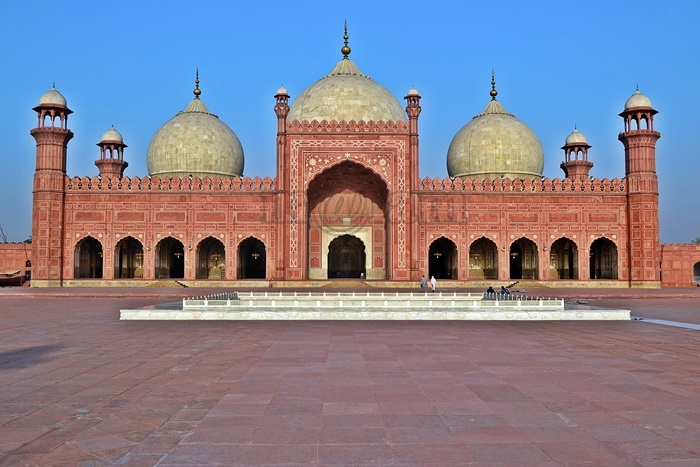
Exploring the Magnificence of the Badshahi Mosque in Lahore Unveiling the Grandeur of Lahore’s Crown Jewel The Badshahi Mosque, Lahore’s crown jewel, held the title of the world’s largest mosque for an impressive 313 years, spanning from 1673 to 1986. This glorious mosque was commissioned during the reign of the sixth Mughal emperor, Aurangzeb. This majestic structure stands as a testament to Mughal-era architecture. Even though it was constructed during the late Mughal period—a time marked by relative decline. This mosque encapsulates the beauty, passion, and grandeur of the Mughal era in Lahore. Beyond its religious significance, the mosque has witnessed several transformations. It served as a garrison for the armies of Ranjit Singh and the British troops after the fall of the Mughal Empire. Today, it ranks as the second-largest mosque in Pakistan and South Asia, and the fifth-largest in the world, with the capacity to accommodate nearly 150,000 worshippers within its hallowed grounds. A Glimpse of Its Location Situated on the outskirts of the Walled City of Lahore, the Badshahi Mosque’s imposing presence faces the Alamgiri Gate of Lahore Fort, another architectural marvel built by Aurangzeb. Only the Hazuri Bagh separates these two magnificent edifices. To the south of the Hazuri Bagh lies the Roshni Gate, one of the thirteen gates that once guarded the Walled City. Interestingly, the Hazuri Bagh doubled as a parade ground where Aurangzeb would review his troops and courtiers. Unveiling the History The iconic Badshahi Mosque owes its existence to the last Mughal Emperor, Aurangzeb, also known as Alamgir, which translates to “conqueror of the world.” This marvel of architecture was constructed in a mere two years, from 1671 to 1673. Although its design bears some resemblance to Delhi’s Jama Mosque, the Badshahi Mosque dwarfs its counterpart in size and grandeur. On a clear day, its impressive silhouette can be admired from a distance of approximately 15 kilometers (about 10 miles). Unlike his artistic predecessors, Aurangzeb prioritized military conquests over art and architecture during his rule. The construction of the Badshahi Mosque was driven by military objectives. Particularly, his campaign against the Indian warrior king of the Maratha clan, Shivaji Bhonsle. The construction project nearly depleted the Mughal treasury and weakened the empire itself. To safeguard the mosque from the Ravi River’s seasonal floods, it was built on an elevated plinth six meters above ground level. The responsibility for overseeing this monumental project fell upon Aurangzeb’s foster brother, Muzaffar Hussain (Fidai Khan Koka), who was also appointed as its governor. Art and Architecture The Badshahi Mosque’s architectural layout is a square, with each side spanning 170 meters. Due to its proximity to the Ravi River, a gate leading to the riverside could not be erected, resulting in an asymmetrical design with no southern gate. The mosque’s construction incorporates a combination of red stone and white marble inlay, setting it apart from the typical architectural style of mosques in Lahore. The design draws inspiration from Indo-Greek, Central Asian, and Indian architectural influences. Above the vaulted entrance, inlaid marble proudly displays the full name of the Badshahi Mosque: “Masjid Abul Zafar Muhy-ud-Din Mohammad Alamgir Badshah Ghazi.” Accessible via a staircase with 22 steps leading from Hazuri Bagh, the main entrance opens into a vast courtyard measuring 528 feet by 528 feet, capable of accommodating up to 100,000 worshippers simultaneously. The courtyard is divided into two levels—the upper and lower, where funeral prayers are also conducted. At its center lies a 50-foot by 50-foot, 3-foot deep central tank. Chamber The chamber directly above the mosque’s entrance gate once housed relics attributed to the Holy Prophet Muhammad (PBUH), His daughter, and His son-in-law. This chamber features Muqarna, an architectural feature in Islamic architecture characterized by ornamented vaulting It was first introduced in the nearby Wazir Khan Mosque. Prayer Hall The main prayer hall measures 275 feet by 83 feet by 50 feet in height. It features a central arched niche and five smaller niches, each one-third the size of the main niche. The mosque is crowned with three marble domes, with the central dome boasting a diameter of 65 feet at the base (70 feet at its bulging point), a height of 49 feet, a pinnacle rising to 24 feet, and a 15-foot high neck. The two side domes measure 51 feet 6 inches in diameter (54 feet 2 inches at their bulging point), with a height of 32 feet, a pinnacle reaching 19 feet, and a 9-foot 6-inch high neck. Interior The interior of the mosque, including its ceiling, is adorned with intricate floral frescoes, stucco tracery, and inlaid marble. On the exterior, meticulous stone carvings and marble inlays embellish the sandstone surface. The mosque’s capacity enables it to host up to 10,000 worshippers at once, with side chambers reserved for religious instruction. The mosque boasts four primary three-story octagonal minarets crafted from red stone and crowned with marble canopies. Each minaret soars to a height of 196 feet from its respective corner. Its outer circumference of 67 feet and its inner circumference of 8 feet 6 inches. Accessible by a staircase comprising 204 steps, these minarets accentuate the mosque’s grandeur. Additionally, the main mosque building features four smaller minarets, one at each corner. Transformations Through Sikh and British Eras The mosque’s grandeur suffered during Ranjit Singh’s rule, as his army seized Lahore in 1799. The main courtyard was repurposed as a stable, while the Hujras (cells) housed his soldiers. Nearby Hazuri Bagh was converted into the official Royal Court. Around 20 years later, a moderate earthquake struck, causing the marble turrets atop each minaret to collapse. These open minarets were then repurposed as gun emplacements during the Sikh Civil War in 1841, led by Ranjit Singh’s son Sher Singh. The adjacent Lahore Fort was under siege by supporters of Sikh Maharani Chand Kaur. The fort endured heavy bombardment, resulting in significant damage to the Dewan Aam (Hall of the Public Audience). Sikhs restricted Muslim access to the mosque for worship, designating only a small

Scroll to Top