
Jahangir’s Tomb

Akbari Sarai from front
Monuments, Punjab

Akbari Sarai

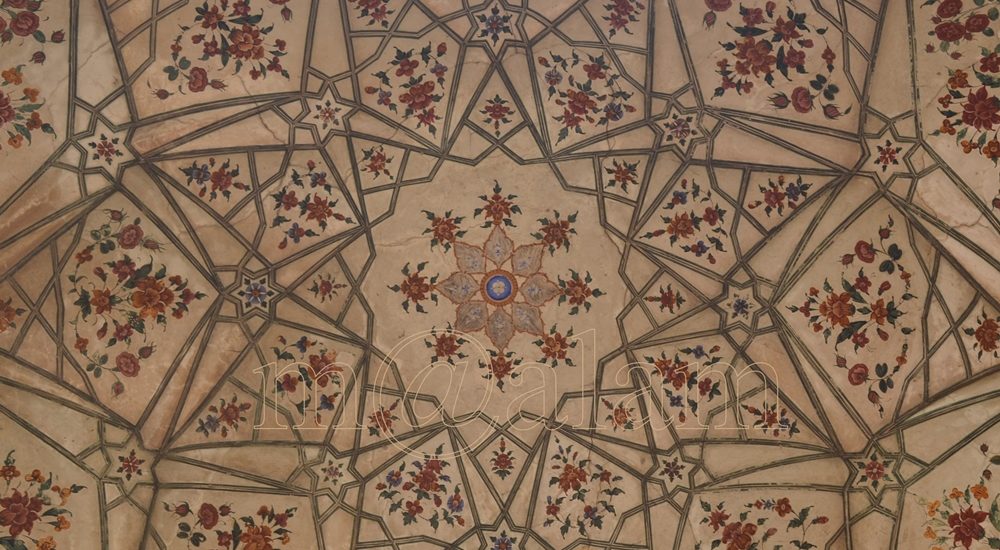
Akbari Sarai: A Marvel of Mughal Architecture in Lahore, Pakistan The enigmatic Akbari Sarai, a treasure trove of Mughal heritage, lies in the heart of Lahore, Punjab, Pakistan. It is nestled gracefully between the magnificent Jahangir’s Tomb and the resplendent Asif Khan’s Tomb. This sprawling oblong-shaped courtyard dates back to 1637. The Sarai boasts a rich history as a haven for travelers and a sanctuary for the guardians of Jahangir’s Tomb. At the same time, it served as a vital postal station known as Dak Chowki. Unveiling the Historical Veil Emperor Shah Jahan’s esteemed court historian, Abdul Hamid Lahori, documented the original designation of this grand edifice as the “Jilu Khana-e-Rauza” (attached court of the tomb) in his magnum opus, “The Padshahnama.” The terminology”Akbari Sarai” emerged during the reign of Islam Shah Suri in the mid-1550s, intriguingly not during the illustrious reign of the Mughal Emperor Akbar. Architectural Marvels Unveiled Spread over a vast expanse of 12 acres, the Akbari Sarai spans an impressive 797 feet by 610 feet. It boasts a perimeter adorned with 180 cells, each featuring a front veranda and a shared passageway. The Sarai’s architectural opulence shines through the presence of four Burjes, each housing intricate chambers. These chambers present an elliptical hall at their forefront, complemented by a veranda and an octagonal chamber at the rear. Access to this architectural wonder is granted through two imposing entrances located to the north and south. These entrances bear the hallmark of Mughal craftsmanship, adorned with captivating frescoes and the exquisite Ghalib Kari. The latter refers to a network of stucco and plaster ribs gracefully applied to the curved surfaces of each archway. Notably, the architectural attributes of the Sarai, including its decorative elements, structural style, and the size of the bricks used in its construction, exhibit the quintessential Mughal aesthetics. Interestingly, the eastern entrance gateway to Jahangir’s tomb is distinguished by its large double-storied iwan. It is further linked with four smaller arched niches, hinting at a concurrent construction period. A Glimpse into the Past Towards the western periphery of the Sarai, amidst the line of cells, rests a mosque dating back to the Suri era. This mosque is characterized by three resplendent domes. Although time has eroded much of its artistic grandeur, the sandstone-facing facade adorned with inlay work still exudes an aura of grace. The cells that grace the complex, along with its ornate gateways, owe their existence to the Shah Jahan period during the mid-1600s. Administrative Marvels The Akbari Sarai, in its heyday, served as an esteemed state guesthouse, overseen by a Shahna (official caretaker) and a team of dedicated assistants. Moreover, the establishment even boasted a resident physician and a skilled baker. Travelers and guests were treated to a range of amenities, including complimentary fodder for their animals, access to both hot and cold water, and comfortable bedsteads. However, as history continued to unfold, the Sarai witnessed various transformations. During the Sikh era, for instance, Maharajah Ranjit Singh repurposed the complex. He converted it into a cantonment for one of his foreign generals, Musa Farangi. Subsequently, during the British colonial period, it took on a new role as a rail depot. Albeit, It suffered significant damage with the construction of a nearby rail line. A Shared UNESCO Dream The Akbari Sarai, along with its illustrious neighbors, Jahangir’s Tomb and the Tomb of Asif Khan, were jointly recognized in 1993 when they were included in the tentative list of UNESCO World Heritage Sites. This recognition underscores their significance as custodians of Mughal history and architectural prowess, captivating the world with their timeless charm. The Akbari Sarai stands as a testament to the glorious Mughal era. It was a period where artistry, architecture, and hospitality converged to create a masterpiece. It continues to enthrall and inspire visitors from around the globe.
Akbari Sarai Read Post »

, , , , , , , , , , , , , , , , , ,
Tourist Attractions in Lahore
City Breaks, Punjab

Lahore Tourist Attractions

Lahore is the second largest city and cultural hub of Pakistan, also known as Pakistan’s cultural capital. It is the provincial capital of Punjab, enormously blessed with architectural and cultural heritage. Tourist attractions in Lahore are spread in abundance and the city also has the honor of holding the largest number of important educational institutions. Founded in the legendary times, Lahore – also known as the city of gardens – has an array of diverse attractions for visitors. The lively city has been a center of architectural excellence for over a thousand years. The Mughal architecture, the Sikh legacy, the colonial Gothic buildings lined up along the Mall road existing since the British Raj, and the palatial mansions and trendy shopping malls in the suburbs make Lahore a city of choice. Shalimar Garden Lahore has several eye-catching gardens and it was therefore called the city of gardens. The Shalimar Garden, a unique collage of nature and architecture, was accomplished in 1641-42 AD under the supervision of Khalilluah Khan, a noble of Shah Jahan’s court. The construction of the garden was influenced by regions like Central Asia, Persia, Kashmir, Punjab, and Dehli Sultanate and reflects the affinity of Shah Jahan for nature and architecture. The Shalimar Garden was incorporated as one of the UNESCO World Heritage Sites of Pakistan in 1981. The 16 hectares (658 meters north to south and 258 meters east to west) rectangle garden by crenelated walls of red sandstone is arranged in three terraces descending from south to north with each terrace given a special name. The garden is located close to Baghbanpura on the GT road 5km northeast of the city centre. The site of the garden belonged to the Arian Mian Family and Shah Jahan rewarded them with the Mian title for their services and contribution to the Mughal Empire. Minar-e-Pakistan The 60-meter-high Minar-e-Pakistan is a national monument built to commemorate the day when the Pakistan resolution was passed on March 23, 1940. The memorial tower is located next to the Badshahi Mosque in Iqbal Park originally known as Minto Park. Minar-e-Pakistan was designed by a Turkish architect, Murat Khan, and the construction work was completed in 8 years from 1960-68. This is the historic site where Nehru and the Indian National Congress declared the independence of the subcontinent from Britain in 1929. Generous funding of Rs. 500,000 was generated by the then governor of West Pakistan, Akhtar Hussain, for the construction. It was opened to the public on October 31, 1968. Chau Burji Chau Burji is a local term for the monument with four minarets. The monument has a historical significance and is located on the Multan road in Lahore. Historically the tower has been an entry point to a Mughal garden associated with Zeb un Nisa, the daughter of Mughal emperor Aurangzeb Alamgir. The garden does not exist anymore but the monument is standing by the Metro Bus Track. It was built in the year 1646 CE with a typical Mughal-style construction. With the passage of time, apathy of authorities, and due to weather conditions the monument lost most of the inscriptions on it yet Ayat-ul-Kursi (Quranic verses) on the upper-most part of the structure and the two couplets written in Persian above the arch could still be legible. Comprehensive conservation of this monument was carried out in 2018 before its fall. Daata Darbar Daata Darbar is the largest Sufi shrine in South Asia. It was built to house the remains of a Muslim mystic and a revered saint Abdul Hassan Al Hujwiri also popularly known as Data Ganj Bakhsh, he is said to have lived on the site in the 11th century. The shrine was built by the Ghaznavi king Sultan Zakiruddin Ibrahim later in the 11th yet subsequent expansions were made since then and Hajvary Mosque was part of it. The shrine is located near the Bhati Gate in Lahore’s Walled City and is visited by more than 30,000 visitors on a daily basis. People of all faiths are welcome to visit the shrine. Lahore Railway Station Lahore Railway Station was the first purpose-built British imperial building, a representative of typical grand British architecture in the subcontinent during the British Raj. It was built in 1857 following the Indian Mutiny and was intentionally designed to function both as a station and as a fort for the safety and accommodation of employees. Its construction was entirely of brick masonry. The architect, William Brunton who called it the “best in the world”, was confident that the building could survive even full-scale howitzer fire. Lahore High Court Known as a place where legal history is made, the Lahore High Court has much to see for tourists. The architectural marvel that the building holds is beyond imagination. Its elegant look owing to the unique architectural design places it among the top-rated tourist attractions of Lahore. General Post Office The General Post Office (GPO) Lahore is a public building located at the end (T turn) of Mall Road near Anarkali. It was designed by eminent architect Sir Ganga Ram and was built around 1887 to celebrate the Golden Jubilee of Queen Victoria. Although not as attractive as other colonial buildings to plan a special visit yet for photographers, particularly those who are into architecture, it is a must-see facility. Its structure is a unique European-style building with the Mughal touch. It has three towers on the front with a central taller one having a domed top and four huge clocks on all four sides. It was renovated in 1970 and declared a heritage site. GPO Lahore handles about 20,000 pieces of mail per day. University of Punjab Informally called “Punjab University”, the University of Punjab is the oldest and largest public research university located in the downtown area of Lahore. The University of Punjab was established on 14 October 1882. It is the fourth major university established by the British Government in the subcontinent. Like other facilities erected during the British Raj, the Punjab University

Lahore Tourist Attractions Read Post »

, , , , , , , , , , , , , ,
Scroll to Top