
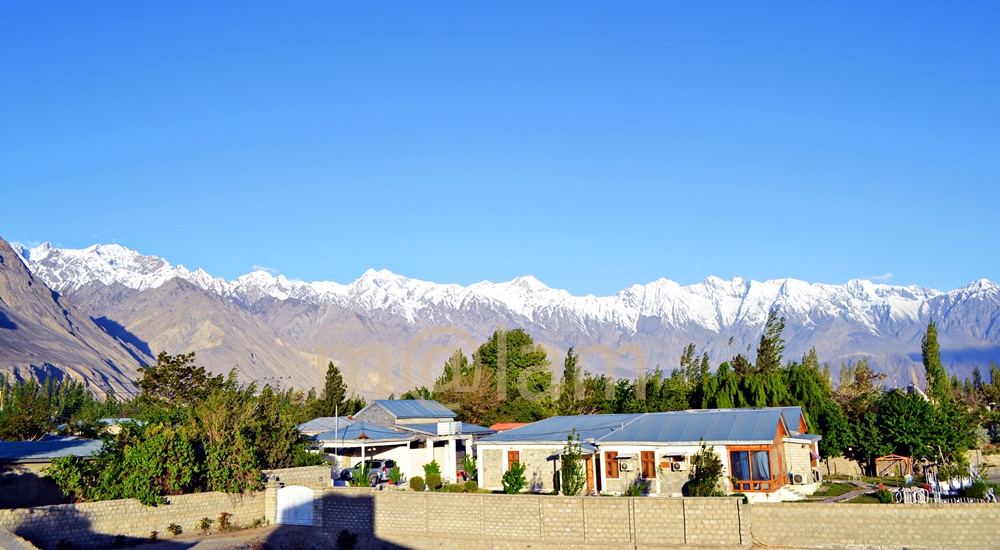
Skardu Tourist Attractions
Skardu – A destination beyond imagination Serving as one of the four districts of the Baltistan Division of Gilgit-Baltistan’s three divisions, Skardu is the capital city of Skardu District. Skardu is the primary gateway to the eight-thousanders of Pakistan including K2, Broad Peak, and Gasherbrum Peaks, and is also the threshold to several famous glaciers including the well-known Baltoro Glacier. Nestled at 2500m (8,202 feet) above sea level, along the bank of the Indus River, Skardu presents a harmonious blend of modern amenities and traditional appeal. The valley spans approximately 10 km in width and 40 km in length. Skardu is situated at the convergence of the Shigar River and Indus River. Renowned for its stunning landscapes, towering mountains, and distinctive cultural legacy, the region captivates visitors with its enchanting charm. Encompassed by the Karakoram Range, Skardu affords breathtaking vistas, tranquil lakes, and opportunities for trekking and mountaineering. It boasts extensive tourist attractions catering to nature enthusiasts, adventure seekers, and those intrigued by local customs. Below are some of Skardu Tourist Attractions: Kharpocho Fort Known as Skardu Fort, the Kharpocho Fort is a significant historical landmark situated atop a rocky hill, towering 40 meters above the main town. Offering sweeping views of the surrounding landscapes, reaching the fort entails a rewarding 30-minute hike. Overlooking the confluence of the Indus and Shigar Rivers, the fort boasts a secret tunnel providing an escape route during emergencies, linking it to the city. Referred to as the “king of forts” in the local Balti language, it served as a military stronghold during various conflicts. Constructed in the late 16th century by King Ali Sher Khan Anchan, the fort features a traditional architectural style, encompassing numerous cozy rooms within its expansive boundary walls. Its intricate woodwork, majestic stonework, and skilled craftsmanship make it a captivating site to explore. Despite suffering damage during the 1948 war in Gilgit-Baltistan, the grandeur of the fort continues to allure thousands of tourists year-round. Nansoq Organic Village Nestled just beyond the famed Kharpocho Fort, The Nansoq Valley represents the inaugural organic village accessible by foot. Commencing from the nearby neighborhood adjacent to Kharpocho Fort, the trek to this picturesque village spans approximately 3 kilometers. It offers a scenic route along the Indus River with breathtaking valley views. The journey typically takes an hour via a gradually ascending path, punctuated by several wooden bridges. Approximately 75 residents, distributed among 17 or 18 families, inhabit Nansoq, embracing the traditional Balti lifestyle characterized by labor-intensive practices and a reliance on organic food. They reside in vintage-style dwellings and predominantly engage in agriculture and farming, utilizing ancient utensils. The village serves as a prime example of cultural preservation and the pursuit of a modest lifestyle. Notably, Nansoq has welcomed distinguished visitors such as Prince Charles, Prince of Wales, and the Duchess of Cornwall, underscoring its significance as a unique cultural enclave. Italian K2 Museum The K2 Museum is a distinctive pyramid-style tent museum situated in the garden of the PTDC Motel in Skardu. It is just a 5-10 minute stroll from the city center. Sponsored by the Italian government and established in 2004, the museum commemorates the first successful summit of the treacherous K2 Mountain by an Italian expedition in 1954, led by Arditio Dezio. Dedicated to the Pakistani people and mountaineers worldwide, the museum houses a vast collection of historical data, maps, documentaries, and geographical and cultural insights about K2 Mountain and earlier expeditions to remote Baltistan, led by De Filippi. Additionally, it showcases local customs and traditional attire. The PTDC Motel itself serves as a testament to the rich climbing and hiking history in the mighty mountains of Skardu. With its wealth of exhibits and immersive experiences, the K2 Museum stands out as a remarkable tourist attraction for visitors. Manthal Buddha Rock The Manthal Buddha Rock, a sizable granite formation adorned with Buddha carvings dating back to the 8th century, resides 3 kilometers from Sadpara Road in Manthal Village, Skardu. This iconic rock boasts a prominent central carving of Buddha, flanked by two standing Metreyias (future Buddhas) and encircled by twenty small Bodhisattvas (disciples). Before Buddhism’s advent in the 4th century, Baltistan was steeped in Shamanism. Monks from northern India arrived and erected monasteries during the reign of the Palolashahi kingdom. Despite the Tibetan conquest in the 8th century, Buddhism thrived, marking the Upper Indus Valley’s “Golden Era of Buddhism” from the 8th to the 10th centuries. However, the arrival of Ali Hamadani and his followers from Iran in the 14th century transformed the region’s landscape. Buddhism waned, and places of worship fell into disrepair as Islam gained traction. By the 15th century, the region had transitioned into a predominantly Muslim state. Satpara Lake Located near Skardu, Satpara Lake is a serene and picturesque destination enveloped by towering mountains. It offers an ideal setting for boating and soaking in the natural splendor. Positioned at an impressive altitude of 2,721 meters (8,927 feet) above sea level, Satpara Lake stands out prominently amidst the rugged terrain of Skardu Valley. Fed by the Satpara stream, originating from the melting ice of Deosai Plains, the lake boasts a picturesque island that provides a tranquil retreat. With its turquoise waters set against the backdrop of lofty peaks, Satpara Lake attracts tourists from around the globe. Accessible via a 20-minute jeep ride from Skardu, it remains a popular destination for nature lovers seeking solace and scenic beauty. Katpana Desert The Katpana Desert, also known as the Cold Desert or Biama Nakpo, is a high-altitude desert near Skardu town in Gilgit-Baltistan, Pakistan. Positioned at 2,226 meters (7,303 ft) above sea level, it ranks among the world’s highest deserts. Located between Skardu airport and the town, it features vast dunes that occasionally receive a dusting of snow in winter. The desert extends from the Indus River south of Skardu to New Ranga Village in the north, with the section near Skardu town being the most famous and visited. The best time to visit is between June and September
