
Mughal Gardens

Shalimar Gardens
Heritage Sites in Pakistan, Monuments, Punjab

Shalimar Gardens

Exploring the Magnificence of Shalimar Gardens in Lahore Unraveling the Marvel of Shalimar Gardens: A UNESCO World Heritage Site The Shalimar Gardens in Lahore stand as an extraordinary testament to Mughal artistry and aesthetics, reaching their zenith during the reign of the Mughal Empire. Commissioned by the visionary Mughal Emperor Shah Jahan, this architectural marvel began its construction on June 12, 1641. It was completed just 18 months later, in 1642. Together with the Lahore Fort, it was designated as a UNESCO World Heritage Site in 1981. Embracing All: From Royalty to the Common Folk While originally intended to serve as an enchanting retreat for royal guests, the Shalimar Gardens welcomed the general public to explore a dedicated section of its lush beauty. The inspiration for these gardens draws from the earlier Shalimar Gardens in Kashmir, built by Emperor Jahangir, the father of Shah Jahan. Remarkably, Shah Jahan himself played an active role in the construction of the Kashmiri gardens. Architectural Grandeur in Nature’s Embrace Covering an expansive 16 hectares, the rectangular garden is enclosed by crenelated walls crafted from red sandstone. It is structured across three terraces, gracefully descending from south to north. Each terrace carries a name infused with meaning: the upper terrace, known as “Farah Baksh,” translates to “Bestower of Pleasure,” the middle terrace, “Faiz Baksh,” means “Bestower of Goodness,” and the lower terrace, “Hayat Baksh,” signifies “Bestower of Life.” 410 Dancing Fountains: A Spectacle of Engineering Mastery The heart of the Shalimar Gardens lies in its 410 fountains, which gracefully rise from the canal, culminating in the marble pools. The hydraulic system that governs these fountains baffles even modern scientists with its ingenious thermal engineering. This engineering brilliance served to cool the air during sweltering summers, offering respite to the garden’s visitors. The upper-level terrace boasts 105 fountains, the middle terrace features 152, and the lower terrace delights with 153. Beyond the Wall: A World Within Within the protective embrace of the garden’s walls, a collection of buildings served diverse purposes. These include: Sawan Bhadun Pavilions Naqar Khana and Its Buildings Khwabgah or Sleeping Chambers Hammam or Royal Bath The Aiwan or Grand Hall Aramgah or Resting Place Khawabgah of Begum Sahib or Dream Place of the Emperor’s Wife Baradaries or Summer Pavilions for Cooling Delight Diwan-e-Khas-o-Aam or Hall of the Special and Ordinary Audience with the Emperor Two Gateways and Minarets Adorning the Corners of the Gardens Nature’s Bounty: A Verdant Oasis The Shalimar Gardens once boasted a lush variety of trees, including Almond, Peach, Apple, Plum, Apricot, Poplar, Cherry, Quince Seedless, Gokcha, Mango, Mulberry, Sapling of Cypress, Shrubs, and Sour and Sweet Oranges. A Historical Odyssey Supervised by the noble Khalilullah Khan in Shah Jahan’s court, the Shalimar Garden project took shape. The garden’s original land belonged to the Arian Mian Family, who were bestowed with the title “Mian” by the Emperor in recognition of their services to the Empire. The Mughal engineers, recognizing the ideal location and soil quality, acquired the land, ultimately leading to the creation of the Shalimar Gardens. The Arian Mian Family retained governance of the garden for 350 years until General Ayub Khan nationalized it, a consequence of their opposition to his imposition of martial law.
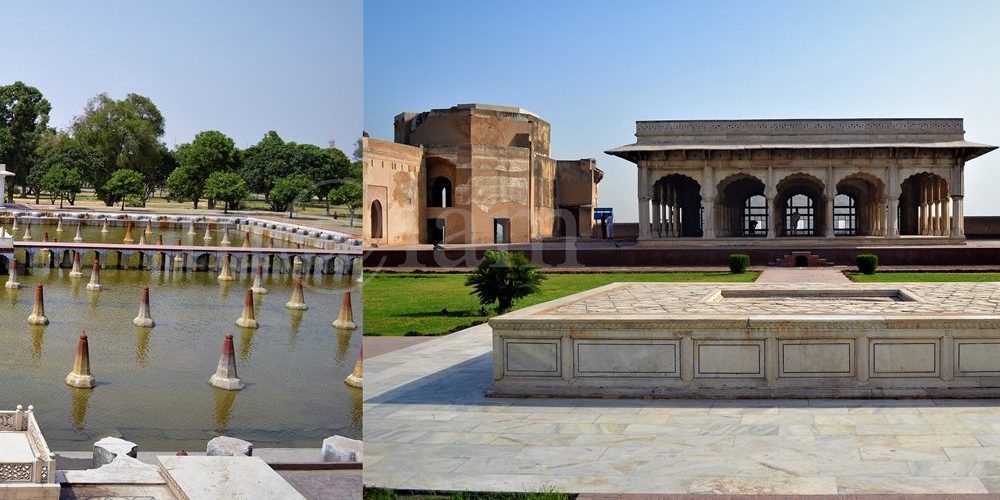
Lahore Fort and Shalimar Garden
Heritage Sites in Pakistan, Islamic Heritage, Punjab, World Heritage Sites

Lahore Fort and Shalimar Garden

Exploring Lahore’s Magnificent Lahore Fort and Shalimar Garden: A Glimpse into Mughal Grandeur Lahore, the cultural heart of Pakistan, boasts two magnificent Mughal-era treasures: the Lahore Fort and Shalimar Garden. These architectural marvels continue to stand as symbols of pride and prestige in Lahore, having earned their rightful place as UNESCO World Heritage Sites of Pakistan in 1981, owing to their remarkable collection of Mughal monuments that epitomize the artistic and aesthetic zenith of the empire. The fort is located at the northwest corner of the walled city of Lahore while the Shalimar Gardens are situated along the Grand Trunk Road some 5 kilometers northeast of the main Lahore city. The monuments are located at a distance of 7 kilometers from each other. Dating back to 1the 7th century, both masterpieces reflect the true artistic expression of the Mughals at its peak.  The fort is the only monument that represents the complete history of Mughal architecture in Pakistan. The Shalimar garden, built by Emperor Shah Jahan in 1642, still retains the glorious Persian and Islamic tradition is a fine example of Mughal gardens. Lahore Fort: A Historical Marvel The Lahore Fort, also known as Shahi Qila, sprawls across an impressive 20 hectares. This irregularly designed citadel features 21 notable monuments, some dating back to the reign of Emperor Akbar. In the 17th century, during the peak of the Mughal Empire, the fort underwent extensive reconstruction. Its origins can be traced back to 1566 when Emperor Akbar laid the foundations for the modern Lahore Fort. Interestingly, the fort’s architectural design seamlessly blends Islamic and Hindu motifs, a testament to its rich history. As time passed, subsequent Mughal Emperors made alterations to the fort. Following the decline of the Mughal Empire, it served as the residence of Ranjit Singh, the founder of the Sikh Empire. Later, the British made significant modifications to suit their needs. Shalimar Garden: A Natural Paradise The Shalimar Gardens in Lahore represent an exceptional Mughal garden complex, seamlessly merging natural beauty with architectural grandeur. Commissioned by Emperor Shah Jahan in 1641, these gardens were completed in 1642, showcasing the pinnacle of Mughal artistry. Encompassing 16 hectares, the garden’s rectangular layout is enclosed by crenelated walls constructed from red sandstone. It is divided into three terraces, each with its own distinctive name. The upper terrace is named “Farah Baksh” (Bestower of Pleasure), the middle terrace “Faiz Baksh” (Bestower of Goodness), and the lower terrace “Hayat Baksh” (Bestower of Life). One of the most remarkable features of the Shalimar Gardens is its intricate water circulation system, comprising 410 fountains. These fountains, distributed throughout the three terraces, create a mesmerizing spectacle. The garden’s thermal engineering was designed to provide cooling relief to visitors during scorching summers, a feat that continues to baffle scientists today. While initially intended to entertain royal guests, a specific section of the Shalimar Gardens was open to the general public. Located just 5 kilometers northeast of Lahore’s city center, the garden’s land originally belonged to the Arian Mian Family. In recognition of their contributions to the Mughal Empire, Emperor Shah Jahan bestowed upon them the prestigious Mian title. The Lahore Fort and Shalimar Garden stand as enduring testaments to the Mughal Empire’s architectural and artistic brilliance. Their historical significance and timeless beauty continue to captivate visitors, making them indispensable landmarks in Lahore’s rich cultural heritage.

Scroll to Top