Punjab

Alexander Monument Pakistan
City Breaks, Monuments, Punjab

Alexander Monument

The Alexander Monument: A Historical Marvel in Pakistan The Alexander Monument is a facility located in Jalalpur Sharif covering an area of 60 square meters. It is believed that Alexander the Great camped for two months before the Battle of Hydaspes. The architecture reflects a blend of Greek influences, with 16 arches adorning the roof. Inside, a circular plaque displays a map marking Alexander’s journey from Pella, Greece, to Persia, and finally, to the site of the monument. The foundation stone for the Alexander monument was laid on 24 May 1997 by the Greek ambassador H.E. Mr. E. N. Karayannis, in collaboration with the government of Pakistan. Dr. Abdul Qadeer Khan, the famous Pakistani nuclear scientist, inaugurated this magnificent structure. The Battle of Hydaspes and Alexander’s Conquest Alexander the Great, a renowned conqueror, left an indelible mark as he swept through several empires, from Greece to the heart of Asia, reaching the land that is now known as Pakistan. One of his most memorable invasions was the famous Battle of Hydaspes in 326 BC, where he tactfully defeated Raja Porus of Pauravas on the banks of the Hydaspes River, now known as the Jehlum River. This pivotal encounter led to the annexation of the Indian ruler’s empire. The Battle of Hydaspes: Location and Armies The Battle of Hydaspes took place at Mong, opposite Jalalpur Sharif, on the right bank of the Hydaspes River. To confront Alexander, Porus gathered an army comprising 2000 cavalry, 200 elephants, and 30,000 soldiers. Alexander, on the other hand, crossed the river about 30km upstream from the battle site and launched a strategic attack. Alexander’s Loss and the Monument of Bucephalus During the war, Alexander mourned the loss of his beloved horse, Bucephalus. He buried the remains of his loyal steed near the modern-day town of Jalalpur Sharif. This region was later named Jalalpur Sharif, and a monument in honor of Alexander the Great was erected there. The town of Bucephala, named after Alexander’s horse, lies close to Jalalpur Sharif, and the ruins of an ancient city can still be found in the hills to the east of the town, with coins dating back to the period of Graeco-Bactrian kings. Discovering Jalalpur Sharif Originally known as Girjakh, Jalalpur Sharif was a thriving trade center in the region. Its name changed when Emperor Jalaluddin Muhammad Akbar, the third Mughal emperor, visited the town. To honor him, the ruler of the town, Malik Darwesh Khan Janjua, renamed it Jalalpur Sharif. The title “Sharif” is associated with the famous shrine of Pir Syed Ghulam Haider Ali Shah, one of the most renowned Chishti Spiritual Leaders of the Sub Continent. Unlocking the Past: Research and Significance The monument also serves as a research center, inviting both local and foreign scholars to delve into the mutual influence of Greek culture on Pakistan and vice versa. One of the primary research tasks is to identify the exact locations of two ancient cities: Nicaea, believed to be present-day Mong, and Bucephala, where Alexander built a monument in memory of his cherished horse. However, despite its historical significance, the Alexander Monument is in need of maintenance to regain its status as a prominent tourist attraction. Reaching Jalalpur Sharif: A Journey Through History For those seeking to visit the Alexander Monument in Jalalpur Sharif, the location is easily accessible. If you’re traveling from Islamabad, the 167km journey takes approximately 3 hours. The directions are as follows: Take Islamabad Expressway to Grand Trunk Rd/Islamabad – Lahore Rd/NH 5/AH2 in Rawat (30km). Follow Grand Trunk Rd/NH 5/AH2 to Islamabad – Lahore Rd/Pind Dadan Khan – Jhelum Rd/Tufail Rd in Jhelum Cantt, Jhelum (90km). Follow Pind Dadan Khan – Jhelum Rd to Bhoon Mkt Rd in Jalalpur Sharif (47km). Alternatively, you can take the 216km Lahore-Islamabad Motorway/AH1/M-2, which also takes approximately 4 hours from Islamabad. The directions are as follows: Get on Lahore-Islamabad Motorway/AH1/M-2 in Punjab from Srinagar Hwy (20km). Follow Lahore-Islamabad Motorway/AH1/M-2 to Choa Saidan Shah Road in Kallar Kahar. Exit from Lahore-Islamabad Motorway/AH1/M-2 (109km). Continue on Choa Saidan Shah Road. Take Chakwal Choa Saidan Shah Pindadan Khan Rd/Khewra Rd and Pind Dadan Khan – Jhelum Rd to Bhoon Mkt Rd in Jalalpur Sharif (87km). Plan Your Visit: Opening Hours and Fees The Alexander Monument in Jalalpur Sharif is open for visitors on weekdays (Monday to Saturday) from 10:00 am to 03:00 pm and on Sundays and holidays from 10:00 am to 05:00 pm.

Murree Hills
Others

Murree

Exploring Murree: Pakistan’s Premier Hill Station Unlocking the Wonders of Murree, the Enchanting “Queen of Hills” Nestled in the heart of the Peer Panjal Range, Murree, often referred to as the “Queen of Hills,” graces the outskirts of Rawalpindi and Pakistan’s capital, Islamabad. Just 30 kilometers northeast of Islamabad, this hill station, perched at altitudes ranging from 6000 to 7000 feet, captivates visitors year-round. Let’s delve into the rich history and alluring attractions of this picturesque destination. A Glimpse into Murree’s Past Discovering Murree’s Origins In 1847, Major James Abbott, an Indian Army officer, first recognized Murree’s potential as a hill station. Two years later, the decision was made to establish a hill station in this region, providing convenient access from Rawalpindi’s vital military cantonment. It officially took shape in 1851 under the guidance of Sir Henry Lawrence, the President of the Punjab Administrative Board at the time. Originally conceived as a sanatorium for British troops stationed along the Afghan frontier, Murree transformed into a thriving town by 1853. Over time, it acquired a unique blend of British heritage, evident in its churches, educational institutions, and historic landmarks. Notably, several individuals born in Murree during the colonial era, including Lieutenant Colonel Sir Francis Edward Younghusband, Reginald Dyer, and Joanna Kelley, rose to prominence on the global stage. The British Love Affair with Murree The allure of Murree for the British lay in its climate, reminiscent of England, and its escape from the blistering summer heat of Punjab’s plains. Consequently, it became a favored summer retreat for British citizens during the British Raj. However, until 1947, non-Europeans were barred from accessing commercial establishments like Lawrance College and Mall Road. Journeying to Murree In the early 1900s, the journey to Murree from Lahore, the capital of Punjab, involved a train ride to Rawalpindi, followed by a five-hour horsecart ride to Murree. Despite the arduous trip, the hill station buzzed with European visitors and British troops encamped in the hills. The picturesque Victorian Gothic architecture of the houses and villas lent Murree a distinctly European ambiance. By 1901, the permanent population reached 1844, with the summer influx swelling the numbers to potentially 10,000. Post-Independence Transformation Murree continued to enchant as a colonial town until 1947. Today, it stands as a bustling summer resort in the Galyat region of northern Punjab, drawing throngs of tourists every season. The local population, as of 2022, hovers around 233,000, with Pahari as the predominant language. Most local businesses are owned by non-locals. Additionally, Murree serves as a gateway for tourists heading to Muzaffarabad and Abbottabad. It has firmly retained its status as a sought-after hill station since Pakistan’s independence in 1947, attracting visitors from all corners of the country and beyond. Embracing Murree’s Charms Immersing in Nature’s Splendor The Himalayan hills surrounding Murree, adorned with dense evergreen forests and an abundance of flora and fauna, provide an idyllic summer escape. Even in winter, when snow blankets the landscape, Murree’s valleys and mountains captivate visitors from across Pakistan and the world. Here are some must-visit attractions and activities: 1. Patriata Chairlift: Located approximately 20 kilometers from Murree, this chairlift offers panoramic views. 2. Ayubia Chairlift: Another chairlift adventure awaits in Ayubia. 3. Hiking in Nathiagali and Changagali: Explore nature’s beauty on these scenic trails. 4. Stroll from Mall Road to Pindi Point: Followed by a chairlift ride down to Bansra Gali for a memorable experience. 5. Mall Road to Kashmir Point: Revel in the breathtaking views of the Kashmir mountains. 6. Shopping and Dining on Mall Road: Discover local treasures and savor delectable cuisine. 7. Bird and Monkey Watching: Get closer to nature’s wonders. 8. Explore Uppertopa and Lowertopa: Uncover hidden gems. 9. Visit Goragali and Bhurban: Expand your horizons. Unveiling Murree’s Climate Situated in the outer Himalayas, Murree boasts a high-altitude location. The Köppen climate classification categorizes it as having a monsoon-influenced subtropical highland climate. Winters here are cold and snowy, while summers are cool and rainy, often accompanied by fog. Precipitation is a constant companion, with an annual average of 1,904 millimeters and approximately 1,590 millimeters of snowfall, typically from January to March. Navigating to Murree You can access Murree from Islamabad via the old Murree Road or the new Islamabad-Murree Expressway. While there are no railway stations or airports in Murree due to its mountainous terrain, the Islamabad International Airport and Golra Railway Station in Islamabad serve as the closest transportation hubs. Murree, with its rich history, natural beauty, and diverse attractions, remains a jewel in Pakistan’s crown. Whether you’re seeking adventure, relaxation, or simply a break from the ordinary, this “Queen of Hills” offers an unforgettable experience year-round.

Punjab Province
Punjab

Punjab Province

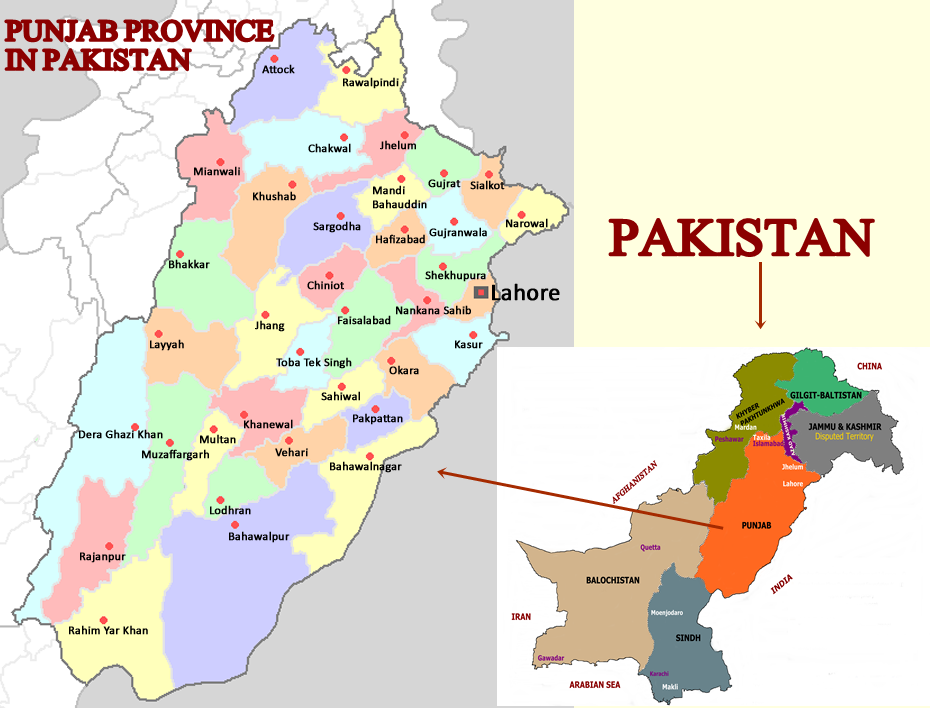
Exploring Punjab: The Land of Five Rivers Punjab is a name derived from the Persian words Punj (meaning five) and Ab (meaning water). It quite literally translates to “(The land of) Five Rivers.” These five rivers are the Jhelum, Chenab, Ravi, Sutlej, and Beas. It’s important to note that the Beas River is now situated in Indian Punjab, while the Indus River is considered the fifth river of Punjab in Pakistan.  The Punjab Province stands as the most fertile, populous, and prosperous province, housing approximately 56% of the nation’s population. Geographical Diversity Geographically, the Punjab province is a land of striking contrasts. It primarily consists of the alluvial plains of the Indus River and its four major tributaries: the Jhelum, Chenab, Ravi, and Sutlej rivers. Moreover, this diverse province spans an area of 205,344 square kilometers, ranging from the lush plains of the Indus River to the arid deserts of Cholistan, from the foothills of the Himalayas to the Potwar plateau and the Salt Range. Punjab is bordered by Kashmir to the northeast, the Indian state of Punjab and Rajasthan to the east, Sindh to the south, Baluchistan to the southwest, Khyber Pakhtunkhwa to the west, and Islamabad (the capital) to the north. Major Cities With 36 districts in the province, Lahore takes the crown as the provincial capital and the largest city. Lahore undoubtedly has a rich historical significance and was the capital of the broader Punjab region before the creation of Pakistan. Other significant cities in Punjab province include Bahawalpur, Multan, Gujranwala, Sargodha, Sialkot, Gujrat, Sheikhupura, Sahiwal, Faisalabad, Lahore, Jhelum, Attock, and Rawalpindi. A Journey Through History The history of Punjab is a tapestry woven with threads of diverse cultures and civilizations. Evidence suggests that humans settled along the banks of the Soan River more than 100,000 years ago. However, it was the ancient Harappan civilization, dating back 5,000 years, that laid the foundation for subsequent cultures in South Asia and Afghanistan. Over the centuries, Punjab saw waves of invaders from Greece, Central Asia, Iran, and Afghanistan, drawn to its strategic location. Throughout its storied past, Punjab has been a part of various empires and dynasties, including the Indus Valley Civilization, Aryans, Kushans, Scythians, Greeks, Persians, Arabs, Turks, Ghaznavids, Timurids, Afghans, Mughals, Sikhs, and the British, just before the formation of Pakistan. Traditionally, Punjab served as a focal point on the old Mughal Highway – the Grand Trunk Road (GT Rd) – connecting Central Asia to the Indian subcontinent. Lahore, long before partition, reigned as the capital for nearly a millennium, remaining a significant cultural, historical, and intellectual hub in the region. The partition of the subcontinent in 1947 marked a pivotal moment in Punjab’s history. The Muslim-dominated areas became the present-day province of Punjab, while the Sikh and Hindu-controlled regions formed the Indian states of Punjab. Today, Punjab stands as the heart of the nation, driving political and economic progress. Cultural Tapestry People Punjab is home to warm-hearted and fun-loving people, residing in both rural and urban areas. The province creates a heterogeneous society with diverse tribes, clans, and communities. In rural areas, traditional beliefs, superstitions, and cultural norms shape daily life, with practices like in-faqeers, Jogi, Taweez, manat-ka-dhaga, and belief in saints and black magic. In urban centers, however, literacy has ushered in rationality, blurring the lines of the caste system. Major Punjabi castes include Jats, Maliks, Mughals, Arains, Gujjars, Awans, Rajputs, Gakhars, Khokhars, Sheikhs, Kambohs, Niazis, Legharis, Khosas, Dogars, Mirani, Qureshis, and Syeds. Dresses Traditional attire for Punjabi men in villages comprises the Pagri (turban), dhoti/Lacha (loose cloth used as trousers), kurta (knee-length shirt), and Khusa (traditional shoes). Women, on the other hand, wear Gharara or churidar pajama or colorful shalwar kameez, Paranda, choli/dupatta, Khusa, kola puri chappal, or Tillay wali Jutti. In urban areas, however, fashion takes center stage, with both men and women donning trendy outfits. Religious Affiliation Punjab’s religious landscape has evolved over centuries. Initially, it was predominantly a Hindu state with Buddhist minorities before the arrival of Islam in 712 AD by Muhammad bin Qasim. The region later fell under Mughal rule for over two centuries, leaving behind architectural marvels, including mosques, forts, and gardens. Sufism, with its strong teachings, played a pivotal role in spreading Islam in Punjab. Today, the province is dotted with numerous Sufi shrines that attract millions of devotees annually. Arts and Crafts Punjab, as the most populous province, boasts a significant manufacturing industry, contributing substantially to Pakistan’s economy. Art and craft find their place in this rich tapestry, with major products including basketry, pottery, textiles, embroidered cloth woven on handlooms, cotton, silk, carpets, stonecraft, jewelry, metalwork, truck art, and woodwork. Culture Punjab’s culture traces its roots back to the highly developed Harappan Civilization. Subsequent civilizations have left their mark, shaping the culture in the realms of philosophy, poetry, music, art, architecture, and cuisine. Sufism has played a pivotal role in spreading harmony among the people. Punjab hosts a multitude of festivities that reflect its rich cultural traditions. Known for relatively liberal social attitudes in Pakistan, Punjab is a cultural melting pot. Languages The Punjab province is home to Punjabis and various other ethnic groups. Punjabi is, in fact, the mother tongue of 44% of Pakistanis. At the same time is understood by most of the population. Other languages, including Saraiki, Hindko, Pahari, and Pathowari, coexist alongside Punjabi. Additionally, Urdu serves as the national language, mainly in urban areas, while English is the official language for official communication. Festivals The people of the Punjab province enthusiastically celebrate both religious and cultural festivals. Revered religious festivals include Shab-e-Barat, Eid ul Fitr, Eid ul Adha, Eid Milad u Nabi, and Muharram. Cultural festivals like Baisakhi/Vaisakhi (Sikh festival), Basant, Teej, and Kanak Kati add to the vibrant tapestry of Punjab’s celebrations. Cuisine Punjabi cuisine is especially renowned for its delectable flavors. Traditional dishes often feature the use of oil or clarified butter, combined with an array of spices. Meals are typically enjoyed with rice or roti (bread). Breakfast favorites

Tourist attractions in Bahawalpur
City Breaks, Punjab

Bahawalpur Tourist Attractions

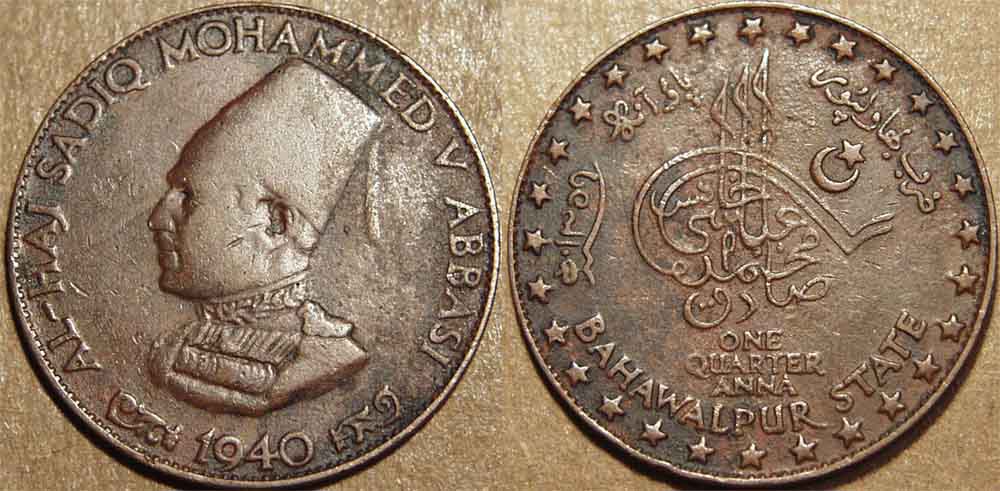
Bahawalpur, the capital city of the Bahawalpur district situated in the southern part of the Punjab province in Pakistan, holds historical significance as it was once a princely state under the rule of the Abbassi Nawabs from 1748 to 1954. During their 200-year reign, the Nawabs contributed to the city’s grandeur by constructing some remarkable landmarks, leaving behind an architectural legacy that still defines the city. As the 11th largest city in Pakistan and the 6th largest in Punjab province, Bahawalpur boasts well-preserved landmarks that serve as a testament to its rich history. The city is particularly attractive for visitors between October and February. While Bahawalpur has its own airport, travelers can also opt to fly into Multan and then drive to Bahawalpur. The city is accessible by air from major cities like Islamabad, Lahore, and Karachi, and by road from Karachi and Lahore as well. Key highlights of Bahawalpur include: Princely History: Bahawalpur served as a princely state under the Abbassi Nawabs for over two centuries, shaping the city’s cultural and historical identity. Architectural Marvels: The Abbassi Nawabs left behind mesmerizing landmarks that stand as a testament to their rule. These architectural gems contribute to the city’s unique charm and are well-preserved to this day. Ideal Visiting Season: The best time to visit Bahawalpur is between October and February, offering favorable weather conditions for exploration and sightseeing. Access: Bahawalpur has its own airport, but travelers can also choose to fly to Multan and then drive to Bahawalpur. The city is well-connected by air and road, with flights from major cities and accessible road routes from Karachi and Lahore. Overall, Bahawalpur is a city that invites visitors to explore its historical treasures, experience its cultural richness, and appreciate the architectural legacy left by the Abbassi Nawabs. Darawar Fort A must-visit attraction, Darawar Fort stands as a colossal citadel situated on the outskirts of the Cholistan Desert in Bahawalpur. Offering an exciting excursion from the city center, the fort is located approximately 95 km away, with a travel time of about 2 hours. The square-shaped fort’s immense size dominates the semi-desert landscape, easily visible from miles away. The fortified structure boasts 5-foot thick and 30-meter round bastioned walls, extending 1500 m in circumference, making it a robust and magnificent stronghold. While its exterior is particularly impressive, the interior may not match the grandeur witnessed from the outside. Abbassi Mosque or the White Marble Mosque The Abbasi Mosque, also known as the White Marble Mosque, is an elegant structure located in front of the Derawar Fort in Bahawalpur. Constructed in 1849 for the personal holy man of Nawab Bahawal Khan, Pir Ghulam Farid, this mosque is a striking representation of architectural beauty. Resembling the Moti Masjid at the Red Fort in Delhi, India, the Abbasi Mosque is entirely crafted from white marble, creating a pearl-like presence in the Cholistan Desert. The mosque features a spacious hall and courtyard, capable of accommodating up to 1000 worshippers simultaneously. Its tall minarets are visible from afar in the Cholistan desert, and despite the passage of time, the local residents have diligently maintained the mosque’s pristine condition. Abbasi Royal Graveyard The Abbasi Royal Graveyard, located in close proximity to the Abbasi Masjid in Derawar, serves as the final resting place for the Abbasi family. This sacred burial ground is under the ownership and control of the surviving family members of the Nawabs. The graveyard encompasses a covered area featuring a large rectangular room that serves as the resting place for 12 Nawabs who once governed the state of Bahawalpur. Additionally, the room contains the graves of Nawabs holding honorary titles after the amalgamation of Bahawalpur with Pakistan. Beyond the main rectangular room, other tombs belong to the immediate family of the Nawabs. These tombs showcase exceptional architectural craftsmanship and intricate artwork, including calligraphy, engravings, patchwork, and patterns. Visitors must obtain prior coordination and permission to explore this historic graveyard. Cholistan desert The Cholistan Desert, also referred to as Rohi, is a vast desert situated in Bahawalpur, Pakistan, covering an expansive area of approximately 26,000 square kilometers. Renowned for its distinctive ecosystem, this desert is a habitat for a diverse array of plants and animals. Beyond its ecological richness, the Cholistan Desert is steeped in historical significance, featuring numerous forts and tombs that trace their roots back to the ancient Indus Valley Civilization. The desert has become a favored destination for adventure tourism, offering activities such as desert safaris and camel treks, allowing visitors to immerse themselves in the unique landscapes and cultural heritage of the Cholistan region. Lal Sohanra National Park Established in 1972, Lal Sohanra National Park is a prominent conservation area among Pakistan’s 14 major national parks and protected regions, located approximately 50 km east of Bahawalpur. Recognized as a UNESCO-declared biosphere reserve, it stands as one of the largest national parks in South Asia. The park spans 127,480 acres, with 20,974 acres dedicated to green land (irrigated plantations), 101,726 acres to dry land (desert), and 4,780 acres to wetland (ponds and lakes). This sanctuary is home to a variety of wildlife, including the rare Chinkara Gazelle and abundant wild boar, while winter brings a multitude of ducks to the lakes. The park is intersected by the dry bed of the Hakra River, featuring the significant wetland of Patisar Lake. Accommodation options include a modest facility provided by the Pakistan Tourism Development Corporation (PTDC), and camping is also available in selected campsites within the park. Sadiq Garh Palace The grandeur and magnificence of Sadiq Garh Palace surpass even the enchanting palaces in Bahawalpur. Set amidst lush green lawns adorned with beautiful plants and flowers, and enclosed by a massive fortification, this sky-high structure features a central dome surrounded by bastions at each corner, showcasing the exquisite architectural taste of the Nawab’s family. The palace radiates an even more graceful aura at night, illuminated by a kaleidoscope of colored lights. The interior is adorned with top-quality furniture and embellishments. Established in 1882 by Nawab

Tourist Attractions in Lahore
City Breaks, Punjab

Lahore Tourist Attractions

Lahore is the second largest city and cultural hub of Pakistan, also known as Pakistan’s cultural capital. It is the provincial capital of Punjab, enormously blessed with architectural and cultural heritage. Tourist attractions in Lahore are spread in abundance and the city also has the honor of holding the largest number of important educational institutions. Founded in the legendary times, Lahore – also known as the city of gardens – has an array of diverse attractions for visitors. The lively city has been a center of architectural excellence for over a thousand years. The Mughal architecture, the Sikh legacy, the colonial Gothic buildings lined up along the Mall road existing since the British Raj, and the palatial mansions and trendy shopping malls in the suburbs make Lahore a city of choice. Shalimar Garden Lahore has several eye-catching gardens and it was therefore called the city of gardens. The Shalimar Garden, a unique collage of nature and architecture, was accomplished in 1641-42 AD under the supervision of Khalilluah Khan, a noble of Shah Jahan’s court. The construction of the garden was influenced by regions like Central Asia, Persia, Kashmir, Punjab, and Dehli Sultanate and reflects the affinity of Shah Jahan for nature and architecture. The Shalimar Garden was incorporated as one of the UNESCO World Heritage Sites of Pakistan in 1981. The 16 hectares (658 meters north to south and 258 meters east to west) rectangle garden by crenelated walls of red sandstone is arranged in three terraces descending from south to north with each terrace given a special name. The garden is located close to Baghbanpura on the GT road 5km northeast of the city centre. The site of the garden belonged to the Arian Mian Family and Shah Jahan rewarded them with the Mian title for their services and contribution to the Mughal Empire. Minar-e-Pakistan The 60-meter-high Minar-e-Pakistan is a national monument built to commemorate the day when the Pakistan resolution was passed on March 23, 1940. The memorial tower is located next to the Badshahi Mosque in Iqbal Park originally known as Minto Park. Minar-e-Pakistan was designed by a Turkish architect, Murat Khan, and the construction work was completed in 8 years from 1960-68. This is the historic site where Nehru and the Indian National Congress declared the independence of the subcontinent from Britain in 1929. Generous funding of Rs. 500,000 was generated by the then governor of West Pakistan, Akhtar Hussain, for the construction. It was opened to the public on October 31, 1968. Chau Burji Chau Burji is a local term for the monument with four minarets. The monument has a historical significance and is located on the Multan road in Lahore. Historically the tower has been an entry point to a Mughal garden associated with Zeb un Nisa, the daughter of Mughal emperor Aurangzeb Alamgir. The garden does not exist anymore but the monument is standing by the Metro Bus Track. It was built in the year 1646 CE with a typical Mughal-style construction. With the passage of time, apathy of authorities, and due to weather conditions the monument lost most of the inscriptions on it yet Ayat-ul-Kursi (Quranic verses) on the upper-most part of the structure and the two couplets written in Persian above the arch could still be legible. Comprehensive conservation of this monument was carried out in 2018 before its fall. Daata Darbar Daata Darbar is the largest Sufi shrine in South Asia. It was built to house the remains of a Muslim mystic and a revered saint Abdul Hassan Al Hujwiri also popularly known as Data Ganj Bakhsh, he is said to have lived on the site in the 11th century. The shrine was built by the Ghaznavi king Sultan Zakiruddin Ibrahim later in the 11th yet subsequent expansions were made since then and Hajvary Mosque was part of it. The shrine is located near the Bhati Gate in Lahore’s Walled City and is visited by more than 30,000 visitors on a daily basis. People of all faiths are welcome to visit the shrine. Lahore Railway Station Lahore Railway Station was the first purpose-built British imperial building, a representative of typical grand British architecture in the subcontinent during the British Raj. It was built in 1857 following the Indian Mutiny and was intentionally designed to function both as a station and as a fort for the safety and accommodation of employees. Its construction was entirely of brick masonry. The architect, William Brunton who called it the “best in the world”, was confident that the building could survive even full-scale howitzer fire. Lahore High Court Known as a place where legal history is made, the Lahore High Court has much to see for tourists. The architectural marvel that the building holds is beyond imagination. Its elegant look owing to the unique architectural design places it among the top-rated tourist attractions of Lahore. General Post Office The General Post Office (GPO) Lahore is a public building located at the end (T turn) of Mall Road near Anarkali. It was designed by eminent architect Sir Ganga Ram and was built around 1887 to celebrate the Golden Jubilee of Queen Victoria. Although not as attractive as other colonial buildings to plan a special visit yet for photographers, particularly those who are into architecture, it is a must-see facility. Its structure is a unique European-style building with the Mughal touch. It has three towers on the front with a central taller one having a domed top and four huge clocks on all four sides. It was renovated in 1970 and declared a heritage site. GPO Lahore handles about 20,000 pieces of mail per day. University of Punjab Informally called “Punjab University”, the University of Punjab is the oldest and largest public research university located in the downtown area of Lahore. The University of Punjab was established on 14 October 1882. It is the fourth major university established by the British Government in the subcontinent. Like other facilities erected during the British Raj, the Punjab University

Key Facts about Pakistan
Blogs

Pakistan

Exploring Pakistan: A Treasure Trove of Diverse Experiences Pakistan stands as an exceptional and blessed nation, graced with some of Asia’s most breathtaking landscapes. Its geography is as varied as its rich cultures, and its people are known for their warm hospitality. In the realm of discovering the roots of modern-day humanity, few places on Earth rival Pakistan. Unraveling the Tapestry of History The land that now comprises Pakistan has been a cradle of ancient civilizations and a melting pot of cultures and dynasties for centuries. From the ancient Neolithic Mehergarh civilization, dating back 9000 years, to the illustrious 5000-year-old bronze age Indus Valley Civilization, the 3000-year-old Buddhist Gandhara Civilization, the opulent Mughal Era of the 16th century, the brief Sikh rule, to over two centuries of British occupation, leading to independence in 1947, Pakistan’s history is a tapestry of unparalleled events, unlike any other sovereign state. A Glimpse of Pakistan’s Geography Officially, the country is known as the Islamic Republic of Pakistan. Most importantly, Pakistan ranks as the 6th most populous nation in South Asia. Altogether, the country houses over 224 million people from diverse cultural and ethnic backgrounds. Encompassing 881,913 square kilometers (340,509 square miles), Pakistan boasts four provinces – Sindh, Baluchistan, Punjab, and Khyber Pakhtunkhwa – and three territories – Islamabad, Kashmir, and Gilgit-Baltistan. The carefully planned capital city, Islamabad, lies at the heart of this diverse nation. Pakistan’s strategic location at the crossroads of Asia divides it into three major geographic regions: the northern highlands, the Indus River plains, and the Balochistan Plateau. Bordered by the Arabian Sea’s 1046-kilometer coastline in the south, India to the east, China to the northeast, Afghanistan to the northwest, and Iran to the southeast, Pakistan’s diverse landscape includes glaciated mountain ranges in the north (Gilgit-Baltistan), fertile alluvial plains, expansive deserts, lush forests, plateaus, jungles, diverse flora and fauna, meandering rivers, and pristine lakes. A Bounty of Tourist Attractions Pakistan is a treasure trove of tourist attractions, each region offering a unique experience. Northern Adventures The northern mountainous regions encompass parts of KPK (Chitral, Swat, and the Kaghan Valley), Azad  Kashmir, and all of Gilgit-Baltistan. Altogether, the region forms the westernmost edge of the magnificent Himalayas. This area is a haven for adventure enthusiasts offering opportunities for trekking and mountaineering. Moreover, climbing, white-water rafting, mountain and desert jeep safaris, and paragliding are other activities adventurers can take up. Gilgit-Baltistan is proud to host the world’s highest mountains and longest glaciers outside the polar regions. The region undoubtedly makes it a magnet for adventurers. This region also marks the convergence of three mighty mountain ranges – the Karakoram, the Hindukush, and the Himalaya – along with the Pamir mountain range. It was once a vital trade route of the ancient Silk Route. Now, it is embodied by the Karakoram Highway, connecting Pakistan and China at Khunjerab Pass. This highway is adorned with over 100,000 petroglyphs and rock carvings, testifying to its rich Buddhist history. The region’s towering mountains, quaint valleys, terraced fields, ancient forts showcasing architectural marvels, and a history spanning centuries beckon travelers. Central Treasures Pakistan’s central regions feature dense forests, vast deserts, and fertile lands steeped in history and culture, boasting unique landmarks. In fact, ancient sites like Moenjo-Daro & Harappa of the Indus Valley Civilization, Taxila & Takht-i-Bahi of the Gandhara Civilization, and architectural gems from the Islamic era, Mughal Empire, Sikh rule, and the British era, found in cities like Lahore, Multan, Bahawalpur, Karachi, and Peshawar, enthrall domestic and international visitors alike. Southern Charms The southern regions, Sindh and Baluchistan, boast archaeological sites, religious landmarks, and architectural heritage. At the same time, its lakes and some of the world’s most stunning golden beaches along the coastal line earned a special place in the world of tourism. The Makran Coastal Highway from Karachi to Gwadar and Jiwani is a world-famous route, dotted with exclusive tourist attractions. Pakistan proudly hosts six UNESCO World Heritage Sites, with several dozen more awaiting recognition. The Rich Tapestry of Pakistani Culture Pakistan’s major cities bear the marks of both history and modernity. Diverse ethnic groups, each with its own cultural background, inhabit different parts of these cities. Moreover, these groups practice various faiths, wear vibrant costumes, speak unique languages, savor rich cuisine, and coexist harmoniously. This diversity, combined with the legendary hospitality of the people, evidently paints a true portrait of Pakistan. Accessing Pakistan Pakistan is accessible by road from China via the Khunjerab border and remains open from April to October end.  Similarly, Pakistan is accessible from Afghanistan via the Khyber Pass in the northwest. Likewise, Pakistan is accessible from Iran via the Taftan border, and from India via the Wahga border. Similarly, Pakistan is well-connected to the world through its international airports in Islamabad, Lahore, Multan, Peshawar, Sialkot, and Karachi. Embracing the Seasons Pakistan’s distinct seasons are complemented by its stunning landscapes. It includes towering mountain ranges, expansive glaciers, crystal-clear lakes, flowing rivers, extensive highways, trekking routes, terraced fields, historical monuments, diverse cuisines, and cultural tapestry, creating an enticing destination that attracts tourists in abundance.

Scroll to Top