Tourist attractions in Gilgit-Baltistan

Ganish Historic Settlement
Gilgit-Baltistan, Monuments

Ganish Historic Settlement

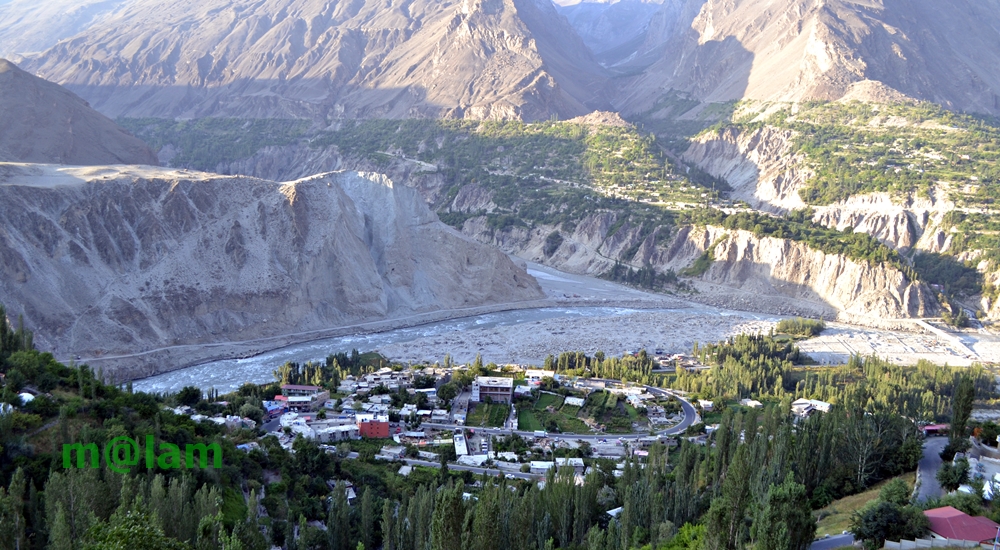
Ganish Historic Settlement: A 1000-Year-Old Living History Nestled in the enchanting Hunza Valley, Ganish Historic Settlement is a rich blend of history, culture, and architecture. This small yet historically significant settlement, located along the iconic Karakoram Highway. It is believed to be the oldest village in Hunza. Ganish is recognized by UNESCO for its cultural heritage conservation. The valley offers a fascinating glimpse into the region’s storied past and vibrant traditions. A Living History on the Ancient Silk Route Ganish Historic Settlement, also known as Ganish Khun, is a 1000-year-old settlement that traces its origins to the ancient Silk Route. Its strategic location made it a critical outpost for travelers and traders journeying through the Northern Areas as early as 180 BCE to 10 CE. The village’s heritage is rooted in its original residents—the Yarikutz, Rupikutz, Kuyokutz, and Mamorokutz families—who constructed four historic mosques and watchtowers during the 16th and 17th centuries. Despite challenges like floods in 1960 and the construction of the Karakoram Highway in the 1970s, the village has retained much of its original layout, including 39 houses dating back to the 15th century. UNESCO-Awarded Conservation Efforts Ganish Village has received two UNESCO awards for Cultural Heritage Conservation in Asia Pacific (2002 and 2009). These accolades recognize the restoration efforts led by the local community with support from the Aga Khan Cultural Services Pakistan (AKCSP) and funding from nations like Norway and Spain. The preservation work not only brought Ganish international recognition but also inspired nearby communities to conserve their cultural heritage, creating a ripple effect across the region. What to See Entrance and Facilities The village’s entrance is marked by a modern Imam Bargah, which also houses a library, a dispensary, and facilities for traditional burial practices. Visitors are welcomed with a formalized entry process, including a Rs.500 fee. A local guide narrates captivating history of the village by leading you through to explore its charming streets and structures. Fortified Layout and Unique Architecture Ganish was initially built as a fortified settlement to guard against invasions. Compact houses with small doors and narrow streets reflect the practical design of the era. Homes often housed livestock near entrances to provide insulation during harsh winters and as an alert system against potential threats. The watchtowers, of which only a few remain, were strategically placed for surveillance. Originally, the back of the village overlooked a river, providing a natural defense. Although natural disasters have altered the landscape, the village’s architectural essence remains intact. Historic Mosques The four historic mosques are among Ganish’s most remarkable features. Built by local rulers to leave a lasting legacy, these mosques are small in size, reflecting the needs of the community at the time. The mosques’ wooden relief work showcases a blend of Buddhist lotus flowers, Hindu swastikas, Chinese cloud motifs, and Islamic geometric patterns, symbolizing the region’s multicultural history. Cultural and Symbolic Significance The name “Ganish” originates from Ghenish – a term in local Burushaski language referring to “gold” or “gold reserve,” highlighting the area’s historical importance. It also translates to “plain” or “plateau,” which aptly describes the settlement’s relatively flat terrain compared to the surrounding mountainous regions. The intricate carvings and motifs on the mosques’ arches underscore the village’s rich cultural interactions. These carvings offer ample opportunities for further research into the symbolism and artistry of this historic site. Why Visit Ganish Historic Settlement? Ganish Historic Settlement is more than a historic site—it’s a living heritage. Its well-preserved architecture, the stories of its people, and the blending of diverse cultural influences make it a must-visit destination for anyone exploring the Hunza Valley. The village stands as a testament to the resilience and creativity of its inhabitants, offering inspiration for cultural preservation and community-led initiatives. Next time you find yourself in the breathtaking Hunza Valley, make sure to add Ganish Historic Settlement to your itinerary. It’s a journey back in time that will leave you with a profound appreciation for the region’s history and heritage. Access to Ganish: From Gilgit, the capital city of Gilgit-Baltistan, Ganish is about 100km (2 hrs drive approximately) along the Karakoram Highway and is one of the key Karakoram Highway attractions. Nearest Attractions: Karimabad Bazaar Baltit Fort Altit Fort Duikar View Point Haldikish Attabad Lake Borith Lake Afsang View Point Ondra Poygah Passu Glacier Hoper Valley

Ganish Historic Settlement Read Post »
, , ,
Ondra Poygah
Gilgit-Baltistan

Ondra Poygah

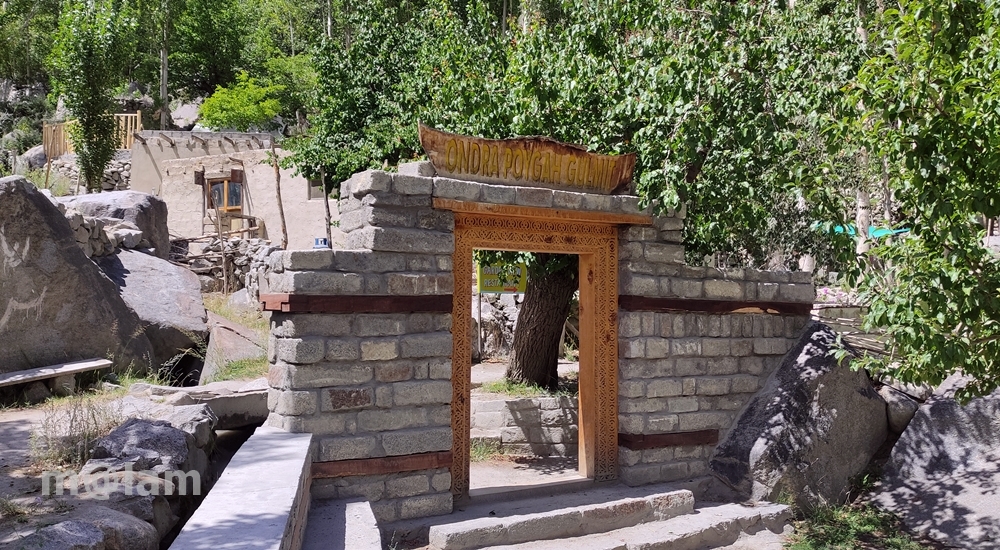
Ondra Poygah: Longest Staircase to a Cultural Marvel Nestled in the breathtaking landscape of Upper Hunza, the Ondra Poygah trail is a tribute to human perseverance, community spirit, and cultural preservation. This remarkable track, created during the winter of 2020/2021, serves as both a historical landmark and a pioneering venture aimed at promoting eco-tourism and adventure tourism in Gilgit-Baltistan. What is Ondra Poygah? The name “Ondra Poygah” combines the historical significance of Ondra Fort and the Wakhi word “Poygah,” meaning staircase. This project, conceived and executed by the dedicated people of Gulmit, transforms the climb to the ancient fort into a trail of cultural and scenic wonder. With 1655 stairs, this extraordinary staircase is the longest and highest in Pakistan, stretching approximately 4 kilometers and gaining an elevation of 1560 meters. The trail begins at the Gulmit Polo Ground and ends at the site of the ancient Ondra Fort, offering a captivating journey through history and nature. A Community-Driven Endeavor Ondra Poygah stands as a shining example of community collaboration. With no external funding or advanced machinery, over 200 volunteers from Gulmit worked tirelessly to construct the trail during the freezing winter months, when temperatures plummeted to -15°C. Men’s Role: Volunteers cut and blasted rock manually, dividing the tasks into manageable sections under the supervision of elders. Teams for management, finance, and marketing ensured seamless execution. Women’s Role: Around 30-40 women provided essential support by delivering fresh, home-cooked meals, tea, and snacks to the workers, braving harsh weather conditions to sustain the community effort. This project was not just about building a staircase; it was about bringing the community together, celebrating their heritage, and creating something remarkable for generations to come. Historical Roots of Ondra Poygah The origins of Ondra Poygah date back centuries. The Ondra Fort, now in ruins, once served as a strategic lookout point for the rulers of Hunza. In ancient times, peaks like Ondra were essential for monitoring enemy movements and organizing defenses. The tradition of “Poygah” became a way to train young men for physical endurance and foster unity within the community. Though the fort no longer stands, the newly constructed trail keeps its memory alive, linking the past with the present. Breathtaking Location and Scenic Views Situated atop a hillock, the Ondra Poygah trail offers 360-degree panoramic views of Gulmit and its surrounding wonders. To the south lies the serene Attabad Lake, while to the north, the trail is framed by the majestic Passu Cones, Borith Lake, and the Batura Range. The east and west reveal the grandeur of the Karakoram Mountain Range and the Hunza River, respectively. From the summit, trekkers can enjoy iconic sights such as the Passu Cones, Sheshper Peak, Gulmit Tower, and the charming Ghulkin Village. Seasonal Splendor One of the most enchanting aspects of the Ondra Poygah trail is its transformation through the seasons: Spring: A burst of pink and white as cherry, apricot, and almond blossoms adorn the valleys. Summer: A lush green landscape that brings life to the surrounding terrain. Autumn: A vibrant palette of orange, yellow, and red, showcasing nature’s artistry. Winter: A serene white blanket of snow, offering a peaceful and magical ambiance. Why Visit Ondra Poygah? Adventure and Eco-Tourism: A thrilling trek combined with a sustainable approach to tourism. Cultural Heritage: A tribute to the rich history of the Upper Hunza region and the resilience of its people. Unparalleled Views: A feast for the eyes with stunning vistas of mountains, lakes, and valleys. Community Spirit: A chance to experience firsthand the unity and hospitality of the Wakhi people. A Legacy of Strength and Unity The Ondra Poygah trail is more than a tourist attraction; it is a living symbol of the resilience, hard work, and creativity of the people of Gulmit. As a blend of history, culture, and natural beauty, this trail is a must-visit destination for travelers seeking adventure and meaningful connections with the heritage of Gilgit-Baltistan. Plan Your Visit Whether you’re an avid trekker, a history enthusiast, or simply someone seeking serenity in nature, the Ondra Poygah trail offers an experience like no other. Explore this hidden gem in the heart of Hunza and witness the unparalleled beauty and spirit of one of Pakistan’s most iconic regions. How to Reach Ondra Poygah Ondra Poygah trail starts from the polo ground in the Gulmit Valley, approximately 130 km from Gilgit and 30 km from Karimabad along the Karakoram Highway. Public transport and private vehicles can be used to reach the site. Nearby Attractions Ondra Poygah is situated in a region renowned for its scenic beauty. Visitors can combine their trip with other nearby attractions: Haldikish Attabad Lake Borith Lake Afsang View Point Hussaini Suspension Bridge Passu Glacier Rainbow Adventure Bridge Batura Glacier Passu Cones Gircha Mosque Khunjerab Pass

Ondra Poygah Read Post »

, , , , ,
Rainbow Adventure Bridge
Gilgit-Baltistan

Rainbow Adventure Bridge

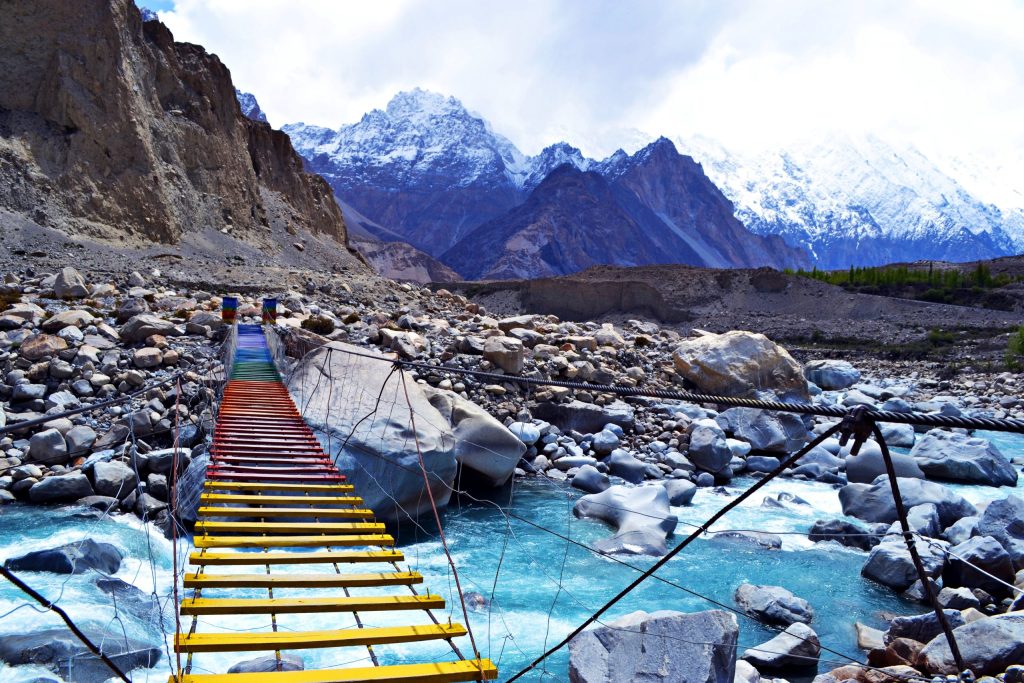
Rainbow Adventure Bridge – A blend of adventure and Scenery Nestled in the breathtaking landscape of Gilgit-Baltistan, Pakistan, the Rainbow Adventure Bridge is an iconic addition to the attractions along the Karakoram Highway. Positioned at the northern end of Upper Passu Valley in Gojal, Hunza, this striking suspension bridge, with its vibrant colors and ingenious design, has become a symbol of adventure tourism in the region. A Visionary Initiative The Rainbow Adventure Bridge is a youth-led initiative aimed at attracting adventurers and cultural enthusiasts to Hunza. Adorned with brilliant hues, this bridge is more than a crossing—it’s an embodiment of creativity, resilience, and local craftsmanship. Supported by durable steel cables and sturdy wooden planks, the bridge ensures a safe yet thrilling passage over the Hunza River, offering a unique experience for travelers. The Thrill of Crossing the Bridge Walking across the bridge is an exhilarating experience. Each step on the gently swaying planks brings a subtle vibration, accompanied by the soothing sounds of suspension cables creaking and the rushing river below. The views are unparalleled: the sparkling Hunza River flows beneath, while the surrounding snow-capped peaks of the Karakoram Range form a dramatic panorama that leaves visitors awestruck. A Photographer’s Paradise For photography enthusiasts, the Rainbow Adventure Bridge is a true inspiration. The striking combination of vibrant colors, natural beauty, and the architectural elegance of the bridge offers countless opportunities to capture mesmerizing shots. Whether it’s a wide-angle view of the bridge against the majestic mountains or a close-up of its intricate details, the location is a dream for visual storytellers. Cultural Immersion A visit to the Rainbow Adventure Bridge is not just about its architectural wonder but also a journey into the heart of Hunza’s rich culture and traditions. The warm hospitality of the locals, their vibrant customs, and the timeless charm of the region make the experience even more meaningful. As you pause on the bridge, take a moment to embrace the serene surroundings. Breathe in the crisp mountain air, and let the beauty of Gojal, Hunza, fill your soul. A Symbol of Resilience The Rainbow Adventure Bridge is more than just a practical crossing; it is a testament to the resilience and resourcefulness of the local community. For generations, the people of Hunza have built and maintained remarkable structures in this challenging terrain. The bridge stands as a tribute to their enduring spirit and determination, showcasing a harmonious blend of practicality and aesthetics. Exploring the Surrounding Wonders Adventure seekers will find the Rainbow Adventure Bridge a gateway to numerous hikes and treks in the area. The trails lead to hidden valleys, ancient glaciers, and awe-inspiring viewpoints, offering endless opportunities to explore the untouched beauty of Hunza and Gojal. Best Time to Visit To fully appreciate the bridge’s vibrant colors and scenic surroundings, plan your visit during spring, summer, or autumn: Spring and Summer: Lush greenery, blooming wildflowers, and clear skies provide the perfect backdrop. Autumn: The foliage turns golden, creating a magical atmosphere that enhances the bridge’s appeal. Responsible Tourism The Rainbow Adventure Bridge holds a special place in the hearts of the local community. Visitors are encouraged to respect its beauty and contribute to its preservation by practicing responsible tourism. Dispose of waste properly, leave no trace behind, and cherish the pristine environment. Ticket: The ticket for crossing the bridge is Rs. 200 Nearby Attractions While visiting the Hussaini Suspension Bridge and zipline, explore other iconic sites in Hunza: Attabad Lake Haldikish Borith Lake Afsang View Point Ondra Poygah Passu Glacier Yak Grill Batura Glacier Hussaini Suspension Bridge and Zipline Passu Cones Gircha Mosque Sost Town Khunjerab Pass

Rainbow Adventure Bridge Read Post »

, , , , , , ,
Hussaini Suspension Bridge
Gilgit-Baltistan

Hussaini Suspension Bridge and Zipline

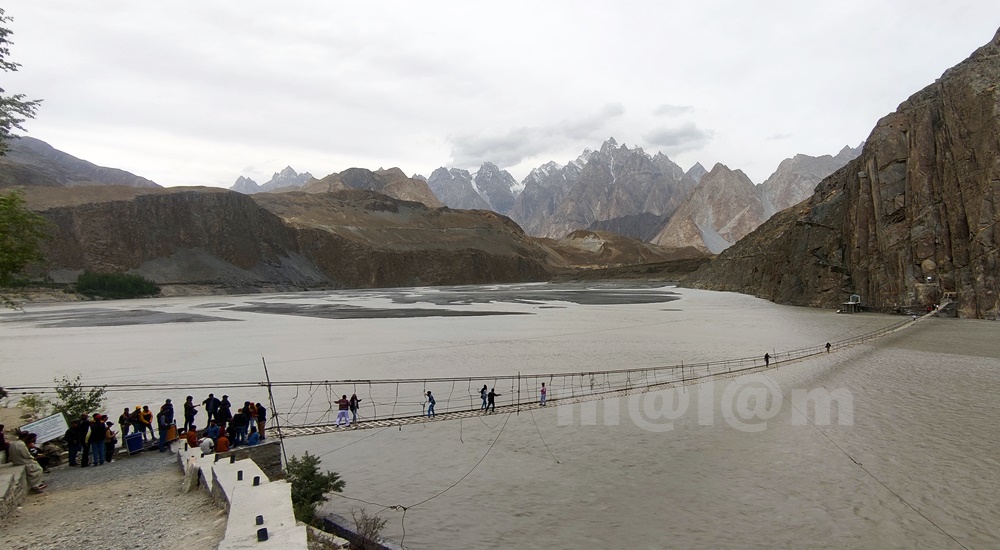
Hussaini Suspension Bridge and Zipline Known as key tourist attractions on the Karakoram Highway, the Hussaini Suspension Bridge and the newly added zipline in the Gojal region of Upper Hunza, Gilgit-Baltistan, Pakistan, offer a blend of thrilling adventure and breathtaking natural beauty. Located near the picturesque village of Hussaini, the bridge connects two rugged faces of the Karakoram Range. Both attractions have become a must-visit for tourists seeking unique experiences in the stunning landscapes of Hunza. A Perfect Blend of Adventure and Scenery Whether you’re crossing the heart-pounding suspension bridge or gliding over the Hunza River on the zipline, the Hussaini Suspension Bridge area offers a one-of-a-kind mix of thrills and natural beauty. Hussaini Suspension Bridge: A Test of Courage Known as the second longest and one of the most adventurous suspension bridges in the world, the Hussaini Suspension Bridge is a 194-meter-long structure spanning the Hunza River. The swaying wooden planks and wide gaps between them make crossing the bridge a heart-pounding yet unforgettable experience. The Hussaini Suspension Bridge attracts thousands of visitors on a daily basis during peak tourist season. Historic Background Initially, a bridge was constructed in the Shishkat Valley during British rule. However, the bridge was moved to Hussaini Village in 1968 on the orders of Mir Muhammad Jamal Khan, the then Mir of Hunza, to connect Hussaini with Zarabad on the river’s opposite side. Breathtaking Views Crossing the bridge rewards adventurers with unparalleled views of the turquoise Hunza River below and the rugged Passu Cones (Cathedral Ridge). The surrounding peaks of the Karakoram Range create a stunning backdrop, making it a photographer’s paradise. Cultural Significance The bridge is an essential link for locals, connecting remote villages like Hussaini and Zarabad. It showcases the spirit and resourcefulness of the residents living in this challenging mountainous terrain. Zipline Adventure: A New Thrill The addition of the zip line at the Hussaini Suspension Bridge offers visitors an exciting and adventurous experience. This zipline adventure provides an exhilarating journey, allowing people to soar through the air while enjoying the breathtaking views of the mighty Karakoram Mountains of the upper Hunza Valley. The combination of the challenging bridge crossing and the thrilling zip line undoubtedly makes the Hussaini Suspension Bridge a popular destination for tourists looking for excitement and natural beauty. Exhilarating Ride The newly installed zipline near the Hussaini Suspension Bridge offers a modern adventure for thrill-seekers. Spanning over the Hunza River, it provides an exciting and energizing ride with unparalleled aerial views of the valley. Panoramic Views Gliding across the river on the zipline offers a bird’s-eye view of the turquoise waters, the bridge, and the majestic peaks. It’s an experience that combines adventure with amazing natural beauty. The breathtaking views of the surrounding landscape make it a perfect spot for photography enthusiasts. Family-Friendly Fun The zipline is designed to be safe and enjoyable for all ages, making it an excellent addition for families and groups visiting the area. Tips for Visiting: For the Suspension Bridge: Wear sturdy footwear for better traction on the wooden planks. Hold onto the side ropes for stability. Avoid crossing during strong winds or bad weather. For the Zipline: Wear comfortable clothing and secure all loose items before the ride. Follow the safety guidelines provided by the operators. Best Time to Visit The best seasons to visit are spring (April-May) and autumn (September-October) when the weather is pleasant and views are spectacular. Summers (June-August) attract domestic tourists, while international visitors prefer the milder temperatures of spring and autumn. Winters are harsh, with freezing temperatures and strong winds, making travel challenging. Access Hussaini is approximately 47 km from Karimabad Hunza and 135 km from Gilgit, the capital of Gilgit-Baltistan. The bridge and Zipline are located with an easy access from the Karakoram Highway. There is a designated point on the Karakoram Highway to park vehicles and walk down to the bridge at the riverside. The bridge can be accessed by foot on a downhill walking track in the valley. Ticket Prices Hussaini Suspension Bridge: PKR 200 Zipline: PKR 2000 Nearby Attractions While visiting the Hussaini Suspension Bridge and zipline, explore other iconic sites in Hunza: Borith Lake Afsang View Point Ondra Poygah Attabad Lake Haldikish Passu Glacier Yak Grill Batura Glacier Rainbow Bridge Sost Town Khunjerab Pass

Hussaini Suspension Bridge and Zipline Read Post »

, , , ,
Borith Lake
Gilgit-Baltistan, Lakes

Borith Lake

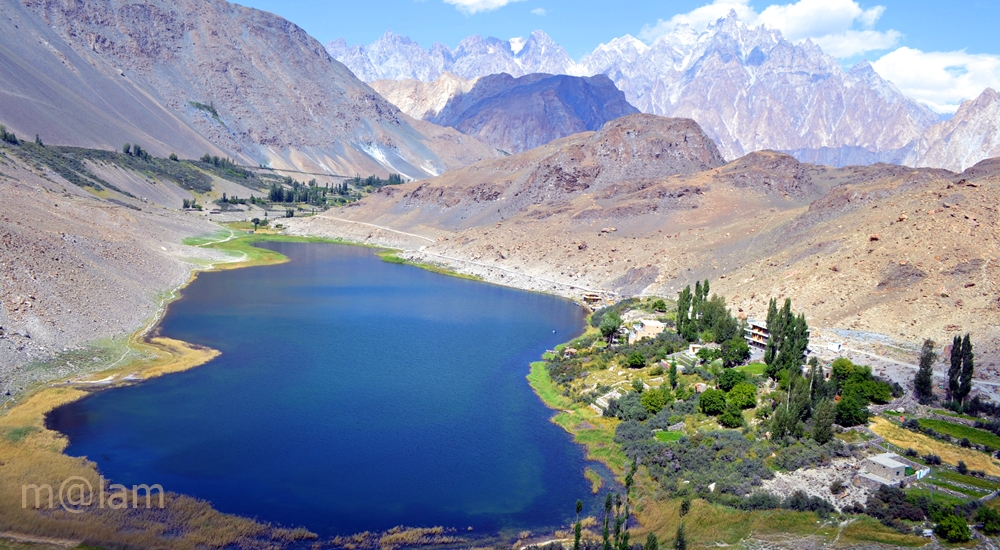
Borith Lake – A Captivating Tourist Attraction Nestled amidst the rugged beauty of the Karakoram Range, Borith Lake is a hidden gem in the upper Hunza Valley, Gilgit-Baltistan, Pakistan. The lake offers breathtaking scenery, peaceful surroundings, and serves as a gateway to adventure. Located at an easy access from the Karakoram Highway in Hussaini Village, Borith Lake is an increasingly popular destination for nature lovers, trekkers, and photographers. Borith Lake lies at an elevation of approximately 2,600 meters (8,530 feet) above sea level. The lake is situated about 2 kilometers north of the village of Hussaini, which itself is known for its iconic Hussaini Suspension Bridge. The turquoise waters of Borith Lake are surrounded by rolling hills, snow-capped peaks, and sprawling pastures, making it a perfect retreat for anyone seeking tranquility. History and Formation  The lake is a glacial-fed body of water, formed as a result of runoff from the mighty glaciers of the Karakoram Range. Its waters are stock up primarily by the Gulmit Glacier, which is a part of the vast Hunza River system. The lake holds historical significance for the Wakhi community, who have inhabited the region for centuries and consider it a spiritual and cultural hub. Salient Features  Pristine Natural Beauty Borith Lake is renowned for its crystal-clear waters that reflect the surrounding snow-laden peaks, creating an otherworldly panorama. The seasonal colors of the landscape—vivid greens in spring and summer, golden hues in autumn, and snow-blanketed terrains in winter—add to its year-round appeal. Birdwatcher’s Paradise For ornithologists and bird enthusiasts, Borith Lake is a prime spot during spring and autumn migrations. It serves as a temporary haven for flocks of ducks, geese, and other waterfowl as they travel between Siberia and the Indian subcontinent. Trekking and Hiking The lake is a starting point for several trekking routes including Afsang View Point, trek to the Passu Glacier, and Patundas Trek. The moderate-level hike to the Afsang View Point and Passu Glacier offer stunning views of glaciers, moraines, and the surrounding peaks. While the Patundas Trek is a well-known trek requires to cross the Passu Glacier and reach the end of Passu Valley. It provides magnificent views of mighty mountains and of Batura range and Glacier. Another popular trek is to the Gulmit Glacier, which offers a closer look at the fascinating geological formations of the region. Boating in the Lake One of the salient features of the calm lake is boating in its calm waters while enjoying the scenery of surrounding mountains. Camping and Stargazing Camping at Borith Lake is an unforgettable experience. The lack of light pollution in the area makes it one of the best spots for stargazing in Pakistan. On clear nights, the sky comes alive with countless stars, creating a magical ambiance for overnight campers. Photography For photographers, Borith Lake offers an endless array of subjects, from its tranquil waters to the dramatic backdrop of the Passu Cones, one of the most photographed peaks in the Hunza Valley. Accommodations and Facilities While Borith Lake is a relatively remote destination, there are several options for accommodation nearby. Borith Lake Resort, situated on the banks of the lake, provides basic lodging with incredible views. For those seeking a more authentic experience, nearby villages like Gulmit offer homestays and guesthouses where visitors can immerse themselves in the local Wakhi culture. Local Cuisine Don’t miss the chance to savor traditional Wakhi and Hunza organic dishes like chapshuro (meat-filled bread) and daudo (noodle soup) at the local restaurants. Many local eateries use organic ingredients sourced from their own farms, ensuring a fresh and delightful dining experience. Best Time to Visit Borith Lake The ideal time to visit Borith Lake is between April and October, when the weather is pleasant and the trekking routes are accessible. During spring and summer, the lush greenery and blooming wildflowers add to the lake’s charm. Autumn offers golden landscapes, while winter turns the area into a snow-laden wonderland, perfect for those seeking solitude. How to Get to Borith Lake Reaching Borith Lake requires a mix of travel by road and hiking. From Gilgit, the central hub of northern Pakistan, visitors can embark on a 125-kilometer journey to Gulmit. From there, a 4×4 jeep or a short trek brings you to this serene lake. The final stretch, a dirt trail, is best suited for those with a love for adventure. Cultural Significance The lake is not just a tourist attraction; it is deeply intertwined with the lives of the local Wakhi people. Festivals and rituals often take place near its shores, offering visitors a chance to witness and participate in traditional customs that have been preserved for generations. Environmental Concerns and Sustainability Like many natural treasures, the  Lake faces environmental challenges due to climate change and increased tourism. Visitors are encouraged to practice eco-friendly tourism, such as carrying reusable items and minimizing waste. Preserving the pristine environment of this lake is crucial for the local ecosystem and future generations. Why You Should Visit Borith Lake Whether you’re an adventurer, a nature lover, or someone seeking peace and serenity, Borith Lake has something to offer. Its mesmerizing landscapes, cultural richness, and opportunities for exploration make it a must-visit destination for anyone traveling to northern Pakistan. Nearby Attractions While visiting Borith Lake, explore other iconic sites in Hunza: Afsang View Point Ondra Poygah Attabad Lake Haldikish Hussaini Suspension Bridge and Zipline Rainbow Adventure Bridge Passu Glacier Yak Grill Passu Cones Batura Glacier Sost Town Khunjerab Pass

Borith Lake Read Post »

, , , , , , , , ,
Gappa Valley
City Breaks, Gilgit-Baltistan, Tourists Destinations in Pakistan

Gappa Valley

Exploring the Enchanting Charms of Gappa Valley The Gappa Valley is a breathtaking meadow and an emerging tourist attraction alluring visitors from within and outside Pakistan. If you’re in search of an enchanting escape, then the Gappa is your choice. Nestled in the heart of the Nagar Valley in Gilgit-Baltistan, this hidden gem is quickly rising to prominence as a must-visit tourist destination. With its gushing glacial waters, terraced fields, expansive meadows, lush green hills, and majestic snow-covered mountain peaks in the background, this enchanting valley promises an unparalleled experience. Embracing Nature’s Beauty in Gappa Valley Gappa is a haven for nature enthusiasts, boasting pristine pine jungles, bubbling fountains, vast grasslands, and breathtaking vistas of Rakaposhi. The journey through the majestic Chalt Bala (Upper) and its pastures is an experience to memorize for a lifetime. It comes as no surprise that this valley has become a magnet for tourists seeking solace in the embrace of nature. Unveiling the Treasures of Nagar Valley Nagar Valley, home to the Gappa Valley, is a treasure trove of towering mountain peaks, crystal-clear lakes, and ancient glaciers. This region, located north of Gilgit city along the Karakoram Highway, remains a relatively undiscovered gem. The Chalt Valley marks the beginning of Nagar Valley, and Gappa is the first adventure that beckons. Gappa Valley: A Playground for All Seasons Gappa Valley’s allure knows no bounds, attracting visitors year-round. During the summer months, both local and international tourists flock to this haven to relish its serene ambiance and camping opportunities. The ideal time to visit is between June and September for the ultimate summer experience, while winter enthusiasts should plan a trip between December and February. Keep in mind that the road leading to the valley remains unpaved beyond the Chalt intersection on the Karakoram Highway, so opting for a sturdy Jeep is advisable. Discovering Hidden Treasures in Gappa Valley Gappa isn’t just a sanctuary for nature lovers; it’s a paradise for trekkers and those seeking peace alike. The region’s natural forests, pristine fountains, lush grasslands, and delectable local cuisine provide a holistic experience. Moreover, the warm and hospitable locals ensure that your visit is truly unforgettable. However, the crowning jewel of the valley is the mesmerizing view of Rakaposhi Peak, a sight that will leave an indelible mark on your memory. Outdoor Adventures Whether you’re an individual traveler or part of a family, there are plenty of spots to prepare and enjoy your own meals. Picture yourself cooking amidst the shade of towering pine trees with glacier water flowing nearby. The local shepherds extend their hospitality by offering delicious buttermilk (Lassi) and traditional flour Crepes (Giyaling). However, do remember to carry all your cooking supplies from the market. Adventure Awaits in Gappa Valley For adventure seekers, Gappa Valley offers a plethora of hiking and trekking activities. Exploring the vast expanse of the valley by hiking through its surrounding pastures and hills is an exhilarating experience. The trekking trail from Gappa Valley to Naltar Valley is a compelling reason in itself to plan a visit. Finding Your Way to Gappa Valley Gappa is accessible by 4WD. The journey to Gappa commences with a scenic drive through Chalt Bala, branching off from the main Karakoram Highway. While it was previously accessible from the District Nagar Check Post at KKH towards Chalt village, make sure to check current access points and trail conditions for an effective journey. To be precise, the road branches out from the Police check-post near the Collision Point of Continental Plates. Drive to the Chalt Valley and proceed to Gappa. While the drive is an adventure in itself, lasting approximately one and a half hours, it’s unquestionably worth the effort. As you approach Gappa Valley, the landscape transforms, welcoming you with open arms. The Gappa Valley is a paradise waiting to be discovered. Whether you’re an avid trekker, a nature enthusiast, or simply someone seeking serenity, Gappa offers an array of experiences that will undoubtedly leave you in awe. Plan your journey and unlock the enchanting charms of Gappa today.

Gappa Valley Read Post »

, , , , , , , , , ,
Marsur Rock
City Breaks, Gilgit-Baltistan, Others, Tourists Destinations in Pakistan

Marsur Rock

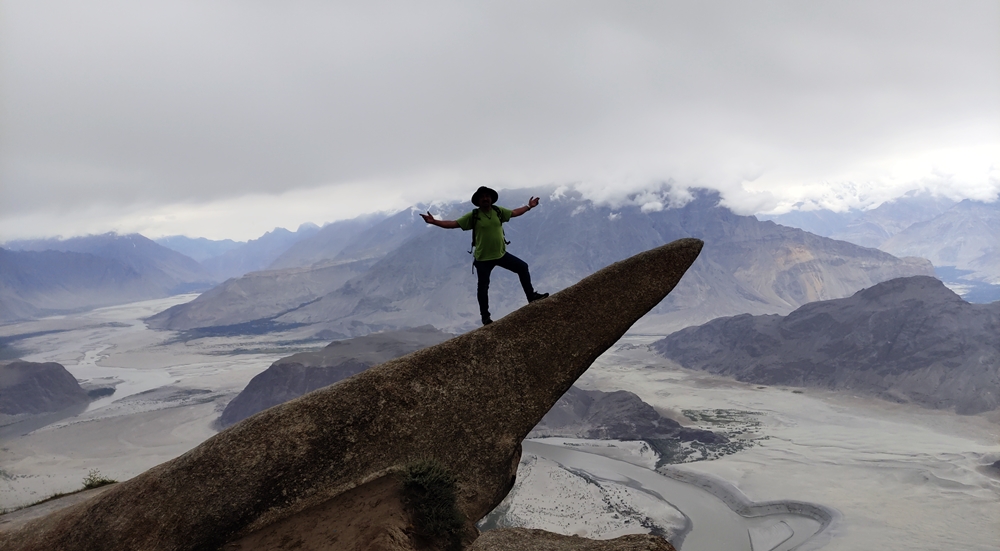
Marsur Rock: The Trolltunga of Baltistan If you’re craving awe-inspiring sceneries of Skardu town and its picturesque surroundings, the hike to the Marsur Rock is what you are exactly looking for. All you need is energy and determination to climb a steep moraine that takes at least 3 hours to hit the rock. It is an amazing hike providing fascinating views of the entire Skardu and surrounding attractions including the Hussainabad Valley and Broq in the immediate backdrop, Sarfaranga Desert, Kharpocho Fort, Nansoq Valley, the meandering Indus River, the convergence of Indus and Shigar rivers, and the Shigar Valley in the background. Marsur Rock is accessible by an adventurous drive from Skardu to the Hussainabad Broq located on a fair altitude followed by an uphill hike providing magnificent views. An Emerging Tourist Attraction Situated on the verge of mountains of Hussainabad, Shigar, Baltistan, Marsur Rock (also known as Hussainabad Rock) stands as a remarkable geological wonder in this region. The famous rock is celebrated for its distinctive geological features. At an elevation of 3,757 meters, Marsur Rock is a towering rock spire perched majestically on a mountain ridge high above the Hussainabad Valley. It bears a striking resemblance to Norway’s famous Trolltunga. What sets it apart is that out of its 38-foot total length, a whopping 25 feet extends dramatically into thin air, offering daring adventurers the opportunity to savor a mesmerizing bird-eye-view of the valleys below and capture daring photographs. Remarkably, Marsur Rock remained hidden from the world until 2018 until it was noticed by locals. A captivating picture of this rock shared on social media suddenly thrust this hidden gem into the tourist limelight. What makes this rock so exceptional is its multi-faceted appeal. It is, without a doubt, the finest bird’s-eye viewpoint in Skardu, offering unrivaled scenery in the entire town. The trail is adventurous, can be conquered by individuals of all ages yet requires vigor and resolve. It’s a perfect day activity whether you’re in Skardu or exploring the enchanting Shigar Valley. How to Reach Marsur Rock Accessing Marsur Rock involves an exhilarating jeep ride to Hussainabad Village and then Broq followed by an invigorating hike. Drive from any part of Baltistan to the southeastern part of Hussainabad Valley. Hussainabad itself is conveniently situated on the Kargil-Skardu Road, merely 24 kilometers from Skardu town, with a journey time of approximately 35 minutes. Take the side road that commences near Karakoram International University Campus in Hussainabad, branching off from the main Kargil-Skardu Road. The jeep track meanders through the valley, passing by the enchanting Hussainabad Waterfall, and ascends along a zigzagging uphill path leading to the summer pasture. From this point onward, a scenic hike leads to the captivating Marsur Rock. Depending on your pace, the hike typically takes around 3 hours. Remarkably, you don’t require a guide to navigate to this remarkable spot. Important Tips for Your Visit Here are some key considerations for planning your journey to Marsur Rock: Mobile signals are not available in the vicinity of Marsur Rock, so plan accordingly. You are traversing a culturally sensitive area, so wear appropriate clothing that respects local customs. Preserve the pristine beauty of the area by avoiding littering and demonstrating responsible travel behavior. Be sure to carry essential supplies, including water, some food, an umbrella or raincoat, a cap or hat, and a camera to capture the breathtaking scenery. Exercise caution, especially when taking photographs, particularly during inclement weather conditions. Explore Nearby Attractions While Marsur Rock itself is a shining gem, there is a treasure trove of attractions waiting to be explored in the immediate vicinity and throughout the remote valleys of Baltistan. Don’t miss the opportunity to immerse yourself in the natural wonders of Hussainabad Valley, Baltistan, Pakistan. Some other captivating attractions in the vicinity include: Skardu District Attractions Nansoq Organic Village Kharpocho Fort Katpana Desert & Lake Satpara Lake Lower Kachura Lake Upper Kachura Lake Deosai Plains Chunda Valley Soq Valley Basho Valley Shigar District Attractions Shigar Fort Palace Amburiq Mosque Hashupi Garden Shigar Riverside Sarfaranga Desert Blind Lake Khaplu District Attractions Khaplu Valley Khaplu Fort Palace Chaqchan Mosque Blind Lake Keris Thallay Valley Machulu Village Hushey Valley Kharmang District Attractions Manthoka Waterfall Khamosh Waterfall

Marsur Rock Read Post »

, , , , , , , , , ,
Biddulph House & Library Gilgit
Others

Biddulph House & Library

Exploring the Rich Heritage of Gilgit: The Fascinating Biddulph House & Library Gilgit, a mesmerizing region in Pakistan’s Gilgit-Baltistan, boasts a historical landmark that narrates a captivating tale of cultural exchange and architectural marvel. Meet the renowned Biddulph House & Library, named after the esteemed British officer, Colonel Sir Neville Biddulph, who served in this very region during the late 19th century. Unveiling Biddulph House: A Fusion of British and Local Design Biddulph House, a true architectural gem, showcases a captivating blend of British and local design influences. Constructed in the late 19th century, this splendid abode served as the residence of Colonel Biddulph during his tenure in the region. The house’s distinctive Victorian-style architecture leaves visitors in awe, featuring intricate woodwork, spacious rooms, and a lush garden enveloping the property. The Enchanting Biddulph Library: A Treasure Trove of Knowledge Adjacent to the grand Biddulph House stands the equally impressive Biddulph Library, a beacon of knowledge and history. Also established by Colonel Biddulph, the library houses an impressive collection of books, manuscripts, and historical documents. The breadth of subjects covered is vast, encompassing local history, culture, literature, and more. As a result, the Biddulph Library serves as a key spot for researchers, scholars, and enthusiasts eager to explore the rich heritage of Gilgit-Baltistan. From the Past to the Present: An Evolving Cultural Hub Over the years, the Biddulph House & Library has transformed into a cultural hub of immense importance. Initially, the library underwent a transition and became the Municipal Library in the 1970s. Recently, it underwent a remarkable renovation, courtesy of the GB Government and the Aga Khan Trust for Culture Pakistan. Today, it proudly stands as the Exhibition and Research Center, offering a delightful experience to all its visitors. A Glimpse into the Colonial-era Architecture The Exhibition and Research Center invites guests to take a step back in time, offering glimpses of colonial-era architecture. Through an extensive collection of photographs, visitors can immerse themselves in the region’s rich history. The images capture historical buildings, places, and celebrated personalities from various fields. The center serves as a captivating time machine, attracting both tourists and locals alike, providing a serene and intellectually stimulating environment. A Testament to Cultural Exchange and Historical Significance Today, the Biddulph House & Library stands tall, symbolizing the region’s historical significance and the remarkable cultural exchange between the British and the local communities. Its grand presence serves as a poignant reminder of the past while encouraging an exploration of the unique heritage of Gilgit and its surrounding areas. For history enthusiasts, culture aficionados, and architecture admirers, the Biddulph House & Library is an absolute must-visit destination. Immerse yourself in the captivating blend of British and local design, delve into the treasure trove of knowledge at the Biddulph Library, and relish the sights of colonial-era architecture at the Exhibition and Research Center. The experience promises to be truly enriching and memorable, leaving you with a profound appreciation for the heritage of Gilgit and its enduring cultural legacy.

Biddulph House & Library Read Post »

, , ,
British-Cemetery-Gilgit
City Breaks, Gilgit-Baltistan, Tombs

British Cemetery Gilgit

British Cemetery in Gilgit: A Testament to Colonial Legacy Nestled in the breathtaking landscapes of Gilgit, the capital of Gilgit-Baltistan, the British Cemetery, also known as G.W. Hayward Cemetery, stands as a poignant reminder of the region’s colonial past. This serene burial ground not only reflects the legacy of the British Raj’s presence in the Gilgit Agency during the 19th and 20th centuries but also offers visitors a glimpse into the historical and cultural tapestry of the era. Commemorating George W. Hayward The British Cemetery was initially named “Hayward’s Garden” in honor of George W. Hayward, a distinguished British explorer. On July 18, 1870, Hayward became the cemetery’s first internee after being tragically assassinated near Darkot Pass in Ghizer. The Royal Geographical Society of London established his burial site, marked with an inscription commemorating his gallantry and achievements. Hayward’s legacy as an intrepid traveler exploring the Pamir grasslands is immortalized here. Architectural Highlights Encircled by a robust stone wall and featuring ornate wrought iron gates, the British Cemetery Gilgit showcases the architectural finesse of the Victorian era. The grave markers, crafted predominantly from stone, are adorned with delicate engravings and intricate designs, making them artistic marvels in their own right. A Historical Landmark Along the Silk Road Situated along the historic Silk Road, Gilgit was a pivotal hub for trade and administration during the British colonial era. The cemetery was established as a final resting place for British officials, soldiers, travelers, and locals who collaborated with the British in various capacities. Each grave tells a story of courage, exploration, and the intertwined destinies of British and local communities. Notable Figures Buried in the Cemetery The cemetery is home to at least 18 graves of notable individuals who played significant roles during the British era, including: Captain G.W. Hayward: The cemetery’s first occupant, renowned for his exploration of Central Asia. Major William Brown: A prominent figure in the development of the Gilgit Agency. Arthur Francis Bruce: The political agent of Gilgit from 1906 to 1908. Henry Gordon Bell: Political agent of Gilgit, interred on July 25, 1912. Harold S. Eldred: Of the Sikh Pioneers Kashmir Infantry, who tragically drowned in the Indus River in 1929. Additionally, the cemetery contains the graves of travelers and mountaineers, including: Members of the 1959 Batura Muztagh Expedition: Dr. Keith Warburton, Harry G. Stephenson, Richard S. Knight, Martin Guennel, and Albert Hirschbichler. Major Jimmy Mills: Who perished during the Pakistan-British Army Karakoram Expedition. Preserving History and Promoting Tourism The British Cemetery in Gilgit is a treasure trove for history enthusiasts and researchers eager to explore the colonial legacy of the region. Its unique architectural style, coupled with the significant individuals interred within its grounds, makes it a compelling destination for cultural tourism. Efforts to conserve and restore the cemetery have been spearheaded by local authorities and heritage organizations. Restoration work focuses on maintaining the structural integrity of grave markers, repairing damaged monuments, and ensuring the cemetery remains a tranquil space for reflection. Visitor Information Open to the public, the British Cemetery offers visitors a chance to delve into the past while paying their respects to those laid to rest. While guided tours are not officially available, local experts often provide valuable historical insights upon request. Visitors are welcome to take photographs but are reminded to respect the solemnity of the site. A Journey Through Time Visiting the British Cemetery in Gilgit is more than a historical excursion; it is an opportunity to honor the individuals who shaped the region’s history and appreciate the cultural exchange between the British and local communities. As restoration efforts continue, this historic site stands as a cherished monument, attracting travelers and history aficionados from around the globe. Nearby Attractions: Konodas Suspension Bridge Biddulph House & Library Karga Buddha Hanzel Stupa Agortham Boulder Uprising Memorial Gilgit Konodas Rock Carvings Danyore Suspension Bridge Danyore Rock Inscription Chinese Graveyard Danyore The Victory Monument of Taj Mughal

British Cemetery Gilgit Read Post »

, , , , , , , , , ,
Danyore Rock inscriptions
Gilgit-Baltistan

Danyore Rock Inscriptions

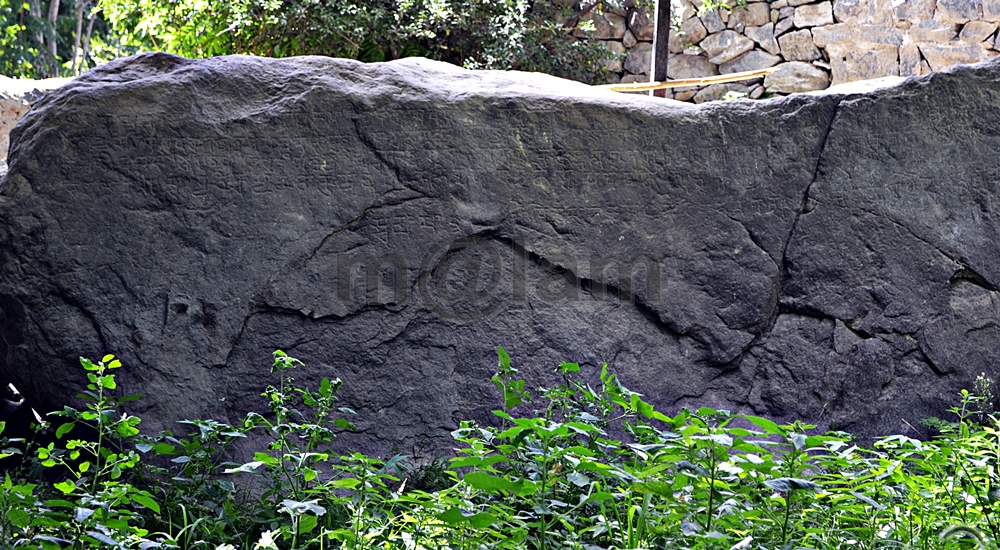
Danyore Rock Inscriptions: A Journey through Time The boulder bearing the Danyore Rock Inscriptions nestles amidst the breathtaking landscapes of Danyore. It is just a stone’s throw away from Gilgit city in Gilgit-Baltistan, Pakistan. These ancient engravings provide a captivating glimpse into the 7th and 8th centuries. However, despite its historical significance, this hidden gem remains shrouded in obscurity. It was known primarily to a select few involved in the fields of archaeology and tourism. Danyore: Where History Meets Natural Beauty Danyore is situated along the iconic Karakoram Highway leading to Hunza, south of Gilgit. It boasts a scenic setting nestled between the Gilgit River and the Hunza River. While the journey from Gilgit to Danyore is a mere 10-minute drive, locating the exact site of the Danyore Rock Inscriptions can prove to be a challenge. Additionally, the signage on the KKH guiding visitors has vanished. Moreover, the boulder itself is tucked away on a narrow street within the premises of a private residence. Surprisingly, the current occupants of the house are unaware of the historical significance concealed within their walls. The Enigmatic Inscriptions This colossal rock measures an impressive 13 x 7 feet. It proudly bears the names of Tibetan monarchs who once held sway over Gilgit during the 7th and 8th centuries. These names are meticulously inscribed in a five-line Sanskrit script, utilizing the late Brahmi script. Dr. Ahmed Hasan Dani, a renowned Pakistani archaeologist, posits that Prince Kumaramatya, a scion of the lineage mentioned in the Hatun inscription of the Ghizer Valley, likely commissioned these inscriptions. The inscriptions bestow royal titles upon Jayamangala Vikramaditya Nandi of the Vikramaditya family, crowning him as Patola Shahi Shahanushahi and Parama-Bhattaraka. Unraveling the Purpose Dr. Dani’s research suggests that the Danyore Rock Inscriptions may have served as a commemoration of a local ruler’s triumph. It may possibly signify the defeat of a Tibetan incursion in the upper Indus Valley. It is also documented that the Kingdom of Great and Little Bolor came under Tibetan suzerainty around A.D. 725.  Unfortunately, the ravages of time have taken a toll on the rock, causing the inscriptions to fade significantly. Nevertheless, it remains a poignant testament to the historical prominence of Sanskrit in the region and a priceless artifact that demands preservation. A Portal to Ancient Gilgit-Baltistan The Danyore Rock Inscriptions open a mesmerizing gateway into the ancient history and cultural heritage of Gilgit-Baltistan. As we stand in awe of these ancient carvings, it becomes evident that this land was once a vibrant center of civilization. It marks the influence of Tibetan rulers and the prevalence of Sanskrit as a dominant language. Basically, safeguarding these inscriptions and promoting awareness of their significance are vital steps in preserving the region’s historical legacy for generations to come. In the tranquility of Danyore, the Danyore Rock Inscriptions silently bear witness to a bygone era. Concealed within the heart of this town, these age-old engravings transport us through time, illuminating the rich history and cultural tapestry of Gilgit-Baltistan. Let us acknowledge the paramount importance of these inscriptions and unite in their conservation, ensuring that the legacy of our forebears endures for countless years ahead. FAQs (Frequently Asked Questions)What are the Danyore Rock Inscriptions? The Danyore Rock Inscriptions are ancient carvings on a large boulder located in Danyore, Gilgit-Baltistan, Pakistan. These inscriptions date back to the 7th and 8th centuries A.D. and bear the names of Tibetan kings who ruled Gilgit during that era. Where exactly are the Danyore Rock Inscriptions located? The Danyore Rock Inscriptions are situated on the premises of a private house in Danyore, across Gilgit City. The town of Danyore is easily accessible from Gilgit, and the rock can be found off the main Karakoram Highway, leading through a narrow street to the private house. What language are the inscriptions written in? The inscriptions on the rock are written in Sanskrit, using the late Brahmi script. Moreover, the five-line inscription reveals the names of Tibetan rulers and confers royal titles upon them. Why are the Danyore Rock Inscriptions significant? These inscriptions provide valuable insights into the ancient history of the region, particularly the rule of Tibetan kings in Gilgit during the 7th and 8th centuries. They offer evidence of Sanskrit’s presence in the area and commemorate the achievements or conquests of the rulers. What efforts are being made to preserve the Danyore Rock Inscriptions? Due to the limited knowledge of the inscriptions’ significance, preservation efforts have been minimal. However, raising awareness about their historical importance is a need of the time. It is possible through collaboration with local authorities and heritage organizations to ensure the conservation of this valuable archaeological site. Remember, the Danyore Rock Inscriptions are a fragile piece of history, and it is our responsibility to protect and cherish them for future generations to appreciate.

Danyore Rock Inscriptions Read Post »

, , , , , ,
Scroll to Top