Gilgit-Baltistan

Konodas Suspension Bridge
City Breaks, Gilgit-Baltistan, Monuments

Konodas Suspension Bridge

Konodas Suspension Bridge The Konodas Suspension Bridge is a must-visit attraction in the picturesque region of Gilgit-Baltistan, Pakistan. This historic structure connects the Old Gari Bagh Bazaar in Gilgit with the Konodas area, serving as a vital link for local communities while showcasing the rich heritage of the colonial era. A Glimpse into History Built during the rule of the Maharaja of Kashmir, before the region’s accession to Pakistan, the Konodas Suspension Bridge stands as a testament to the engineering prowess of its time. Constructed over a span of 10 years, from 1895 to 1905, this bridge has surpassed a century in age. Once the only connection between the then Gilgit Agency and Central Asia; the bridge played a crucial role in trade and communication in the region. Resilient Design The flawless design of the Konodas Suspension Bridge has enabled it to withstand numerous natural calamities over the years. Unlike other structures in Gilgit-Baltistan that have succumbed to floods and harsh weather conditions, this bridge remains intact, symbolizing durability and innovation. Scenic Splendor Nestled in the breathtaking landscape of Gilgit-Baltistan, the Konodas Suspension Bridge offers more than just historical significance. The surrounding scenery, characterized by the turquoise waters of the Gilgit River and the dramatic backdrop of rugged mountains, makes it a paradise for photographers and nature lovers. Visitors can enjoy stunning panoramic views while crossing the bridge, making it a popular spot for sightseeing and photography. Key Highlights Functional Purpose: The Konodas Suspension Bridge continues to serve as a vital route for pedestrians and light vehicles, connecting the Konodas area with other parts of Gilgit. Accessibility: The bridge’s proximity to Gilgit city center makes it easily accessible for tourists and locals alike. A short journey from the town brings visitors to this iconic landmark. Adventurous Experience: Walking across the swaying suspension bridge is an exhilarating experience, enhanced by the sound of rushing river waters below. Photographic Appeal: The natural beauty surrounding the bridge creates an ideal setting for capturing memorable photographs. Why Visit the Konodas Suspension Bridge? Blending historical significance with scenic beauty, the Konodas Suspension Bridge is a shining example of engineering adaptability in the mountainous terrain of northern Pakistan. Whether you’re a history enthusiast, a photography lover, or an adventurer, this bridge offers something for everyone. Plan your visit to the Konodas Suspension Bridge and immerse yourself in the timeless charm and breathtaking views of this remarkable landmark. It’s an experience that will leave you in awe of both nature’s grandeur and human ingenuity. Nearby Attractions: British Cemetery Gilgit Biddulph House & Library Karga Buddha Hanzel Stupa Agortham Boulder Uprising Memorial Gilgit Konodas Rock Carvings Danyore Suspension Bridge Danyore Rock Inscription Chinese Graveyard Danyore The Victory Monument of Taj Mughal

Ganish Historic Settlement
Gilgit-Baltistan, Monuments

Ganish Historic Settlement

Ganish Historic Settlement: A 1000-Year-Old Living History Nestled in the enchanting Hunza Valley, Ganish Historic Settlement is a rich blend of history, culture, and architecture. This small yet historically significant settlement, located along the iconic Karakoram Highway. It is believed to be the oldest village in Hunza. Ganish is recognized by UNESCO for its cultural heritage conservation. The valley offers a fascinating glimpse into the region’s storied past and vibrant traditions. A Living History on the Ancient Silk Route Ganish Historic Settlement, also known as Ganish Khun, is a 1000-year-old settlement that traces its origins to the ancient Silk Route. Its strategic location made it a critical outpost for travelers and traders journeying through the Northern Areas as early as 180 BCE to 10 CE. The village’s heritage is rooted in its original residents—the Yarikutz, Rupikutz, Kuyokutz, and Mamorokutz families—who constructed four historic mosques and watchtowers during the 16th and 17th centuries. Despite challenges like floods in 1960 and the construction of the Karakoram Highway in the 1970s, the village has retained much of its original layout, including 39 houses dating back to the 15th century. UNESCO-Awarded Conservation Efforts Ganish Village has received two UNESCO awards for Cultural Heritage Conservation in Asia Pacific (2002 and 2009). These accolades recognize the restoration efforts led by the local community with support from the Aga Khan Cultural Services Pakistan (AKCSP) and funding from nations like Norway and Spain. The preservation work not only brought Ganish international recognition but also inspired nearby communities to conserve their cultural heritage, creating a ripple effect across the region. What to See Entrance and Facilities The village’s entrance is marked by a modern Imam Bargah, which also houses a library, a dispensary, and facilities for traditional burial practices. Visitors are welcomed with a formalized entry process, including a Rs.500 fee. A local guide narrates captivating history of the village by leading you through to explore its charming streets and structures. Fortified Layout and Unique Architecture Ganish was initially built as a fortified settlement to guard against invasions. Compact houses with small doors and narrow streets reflect the practical design of the era. Homes often housed livestock near entrances to provide insulation during harsh winters and as an alert system against potential threats. The watchtowers, of which only a few remain, were strategically placed for surveillance. Originally, the back of the village overlooked a river, providing a natural defense. Although natural disasters have altered the landscape, the village’s architectural essence remains intact. Historic Mosques The four historic mosques are among Ganish’s most remarkable features. Built by local rulers to leave a lasting legacy, these mosques are small in size, reflecting the needs of the community at the time. The mosques’ wooden relief work showcases a blend of Buddhist lotus flowers, Hindu swastikas, Chinese cloud motifs, and Islamic geometric patterns, symbolizing the region’s multicultural history. Cultural and Symbolic Significance The name “Ganish” originates from Ghenish – a term in local Burushaski language referring to “gold” or “gold reserve,” highlighting the area’s historical importance. It also translates to “plain” or “plateau,” which aptly describes the settlement’s relatively flat terrain compared to the surrounding mountainous regions. The intricate carvings and motifs on the mosques’ arches underscore the village’s rich cultural interactions. These carvings offer ample opportunities for further research into the symbolism and artistry of this historic site. Why Visit Ganish Historic Settlement? Ganish Historic Settlement is more than a historic site—it’s a living heritage. Its well-preserved architecture, the stories of its people, and the blending of diverse cultural influences make it a must-visit destination for anyone exploring the Hunza Valley. The village stands as a testament to the resilience and creativity of its inhabitants, offering inspiration for cultural preservation and community-led initiatives. Next time you find yourself in the breathtaking Hunza Valley, make sure to add Ganish Historic Settlement to your itinerary. It’s a journey back in time that will leave you with a profound appreciation for the region’s history and heritage. Access to Ganish: From Gilgit, the capital city of Gilgit-Baltistan, Ganish is about 100km (2 hrs drive approximately) along the Karakoram Highway and is one of the key Karakoram Highway attractions. Nearest Attractions: Karimabad Bazaar Baltit Fort Altit Fort Duikar View Point Haldikish Attabad Lake Borith Lake Afsang View Point Ondra Poygah Passu Glacier Hoper Valley

Ondra Poygah
Gilgit-Baltistan

Ondra Poygah

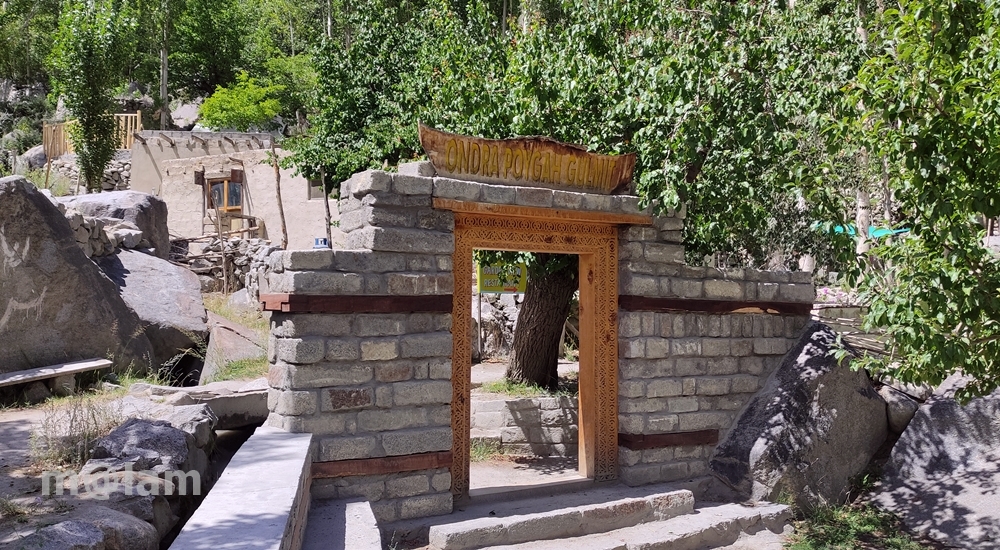
Ondra Poygah: Longest Staircase to a Cultural Marvel Nestled in the breathtaking landscape of Upper Hunza, the Ondra Poygah trail is a tribute to human perseverance, community spirit, and cultural preservation. This remarkable track, created during the winter of 2020/2021, serves as both a historical landmark and a pioneering venture aimed at promoting eco-tourism and adventure tourism in Gilgit-Baltistan. What is Ondra Poygah? The name “Ondra Poygah” combines the historical significance of Ondra Fort and the Wakhi word “Poygah,” meaning staircase. This project, conceived and executed by the dedicated people of Gulmit, transforms the climb to the ancient fort into a trail of cultural and scenic wonder. With 1655 stairs, this extraordinary staircase is the longest and highest in Pakistan, stretching approximately 4 kilometers and gaining an elevation of 1560 meters. The trail begins at the Gulmit Polo Ground and ends at the site of the ancient Ondra Fort, offering a captivating journey through history and nature. A Community-Driven Endeavor Ondra Poygah stands as a shining example of community collaboration. With no external funding or advanced machinery, over 200 volunteers from Gulmit worked tirelessly to construct the trail during the freezing winter months, when temperatures plummeted to -15°C. Men’s Role: Volunteers cut and blasted rock manually, dividing the tasks into manageable sections under the supervision of elders. Teams for management, finance, and marketing ensured seamless execution. Women’s Role: Around 30-40 women provided essential support by delivering fresh, home-cooked meals, tea, and snacks to the workers, braving harsh weather conditions to sustain the community effort. This project was not just about building a staircase; it was about bringing the community together, celebrating their heritage, and creating something remarkable for generations to come. Historical Roots of Ondra Poygah The origins of Ondra Poygah date back centuries. The Ondra Fort, now in ruins, once served as a strategic lookout point for the rulers of Hunza. In ancient times, peaks like Ondra were essential for monitoring enemy movements and organizing defenses. The tradition of “Poygah” became a way to train young men for physical endurance and foster unity within the community. Though the fort no longer stands, the newly constructed trail keeps its memory alive, linking the past with the present. Breathtaking Location and Scenic Views Situated atop a hillock, the Ondra Poygah trail offers 360-degree panoramic views of Gulmit and its surrounding wonders. To the south lies the serene Attabad Lake, while to the north, the trail is framed by the majestic Passu Cones, Borith Lake, and the Batura Range. The east and west reveal the grandeur of the Karakoram Mountain Range and the Hunza River, respectively. From the summit, trekkers can enjoy iconic sights such as the Passu Cones, Sheshper Peak, Gulmit Tower, and the charming Ghulkin Village. Seasonal Splendor One of the most enchanting aspects of the Ondra Poygah trail is its transformation through the seasons: Spring: A burst of pink and white as cherry, apricot, and almond blossoms adorn the valleys. Summer: A lush green landscape that brings life to the surrounding terrain. Autumn: A vibrant palette of orange, yellow, and red, showcasing nature’s artistry. Winter: A serene white blanket of snow, offering a peaceful and magical ambiance. Why Visit Ondra Poygah? Adventure and Eco-Tourism: A thrilling trek combined with a sustainable approach to tourism. Cultural Heritage: A tribute to the rich history of the Upper Hunza region and the resilience of its people. Unparalleled Views: A feast for the eyes with stunning vistas of mountains, lakes, and valleys. Community Spirit: A chance to experience firsthand the unity and hospitality of the Wakhi people. A Legacy of Strength and Unity The Ondra Poygah trail is more than a tourist attraction; it is a living symbol of the resilience, hard work, and creativity of the people of Gulmit. As a blend of history, culture, and natural beauty, this trail is a must-visit destination for travelers seeking adventure and meaningful connections with the heritage of Gilgit-Baltistan. Plan Your Visit Whether you’re an avid trekker, a history enthusiast, or simply someone seeking serenity in nature, the Ondra Poygah trail offers an experience like no other. Explore this hidden gem in the heart of Hunza and witness the unparalleled beauty and spirit of one of Pakistan’s most iconic regions. How to Reach Ondra Poygah Ondra Poygah trail starts from the polo ground in the Gulmit Valley, approximately 130 km from Gilgit and 30 km from Karimabad along the Karakoram Highway. Public transport and private vehicles can be used to reach the site. Nearby Attractions Ondra Poygah is situated in a region renowned for its scenic beauty. Visitors can combine their trip with other nearby attractions: Haldikish Attabad Lake Borith Lake Afsang View Point Hussaini Suspension Bridge Passu Glacier Rainbow Adventure Bridge Batura Glacier Passu Cones Gircha Mosque Khunjerab Pass

Gircha Mosque Hunza
Gilgit-Baltistan, Islamic Heritage, Mosques

Gircha Mosque

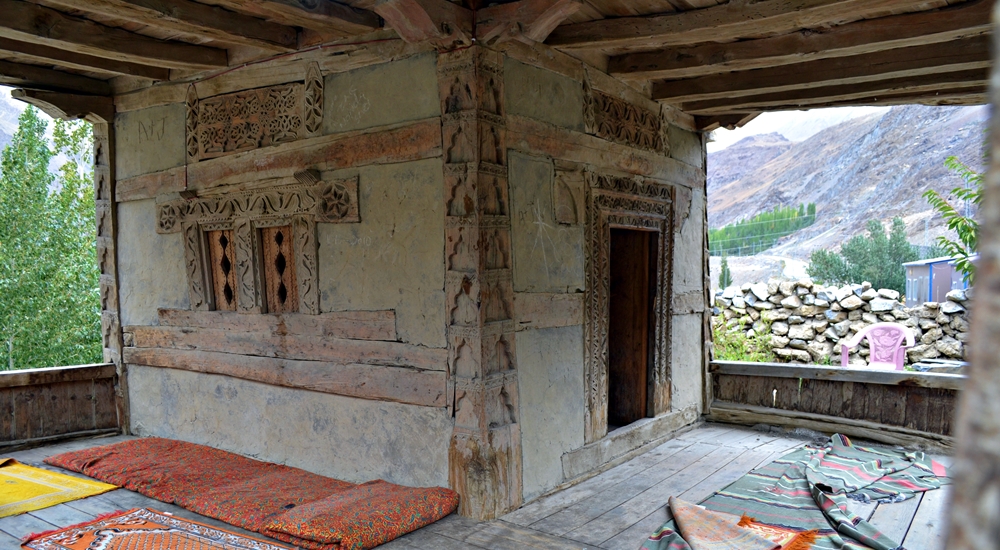
Gircha Mosque, Gojal: A Historic Marvel  The Gircha Mosque, located in the picturesque Gojal Valley of Hunza, is a testament to the region’s rich cultural and spiritual heritage. Nestled amidst the stunning landscapes of Gilgit-Baltistan, this historic mosque is not just a place of worship but also a symbol of centuries-old traditions and architectural ingenuity. A Brief History The remarkable mosque is believed to be one of the oldest mosques in the Gojal region, dating back several centuries. It was built during the early days of Islam’s spread into the mountainous areas of northern Pakistan. The mosque holds cultural and religious significance for the local Ismaili Muslim community, who have preserved it as a cherished relic of their spiritual history. Architectural Marvel What makes the mosque unique is its traditional Pamiri-style architecture, which reflects the influence of Central Asian design elements. The structure is crafted primarily from local materials, including wood and stone, blending seamlessly with its natural surroundings. Key architectural features: Carved Wooden Beams: Intricate floral and geometric patterns decorate the wooden beams, showcasing the craftsmanship of local artisans. Mud-Plastered Walls: The walls, made of mud and stone, provide insulation against the harsh mountain climate. Prayer Hall: The prayer hall is simple yet serene, designed to create a spiritual ambiance for worshippers. Rooftop Views: The flat rooftop offers breathtaking views of the surrounding valley and the towering Karakoram peaks. Cultural Significance The mosque is more than just a place for prayer; it serves as a cultural hub for the local community. Over the centuries, it has hosted religious gatherings, educational discussions, and communal celebrations. The Gircha Mosque symbolizes unity and resilience, preserving the spiritual and cultural identity of the people of Gojal. How to Reach The Mosque The mosque is located in Gircha Village, a small settlement in Gojal Valley, approximately 180 km from Gilgit, 80 km from Karimabad, and around 45 km from Passu along the Karakoram Highway. Public transport and private vehicles can be used to reach the site. Why To Visit  The mosque offers a glimpse into the harmonious blend of natural beauty, cultural richness, and spiritual devotion that defines northern Pakistan. Whether you are a history enthusiast, a spiritual seeker, or an adventurer, a visit to this hidden gem is sure to leave you inspired. Nearby Attractions The mosque is situated in a region renowned for its natural beauty. Visitors can combine their trip with other nearby attractions: Haldikish Attabad Lake Ondra Poygah Borith Lake Afsang View Point Hussaini Suspension Bridge Passu Glacier Batura Glacier Passu Cones Khunjerab Pass

Rainbow Adventure Bridge
Gilgit-Baltistan

Rainbow Adventure Bridge

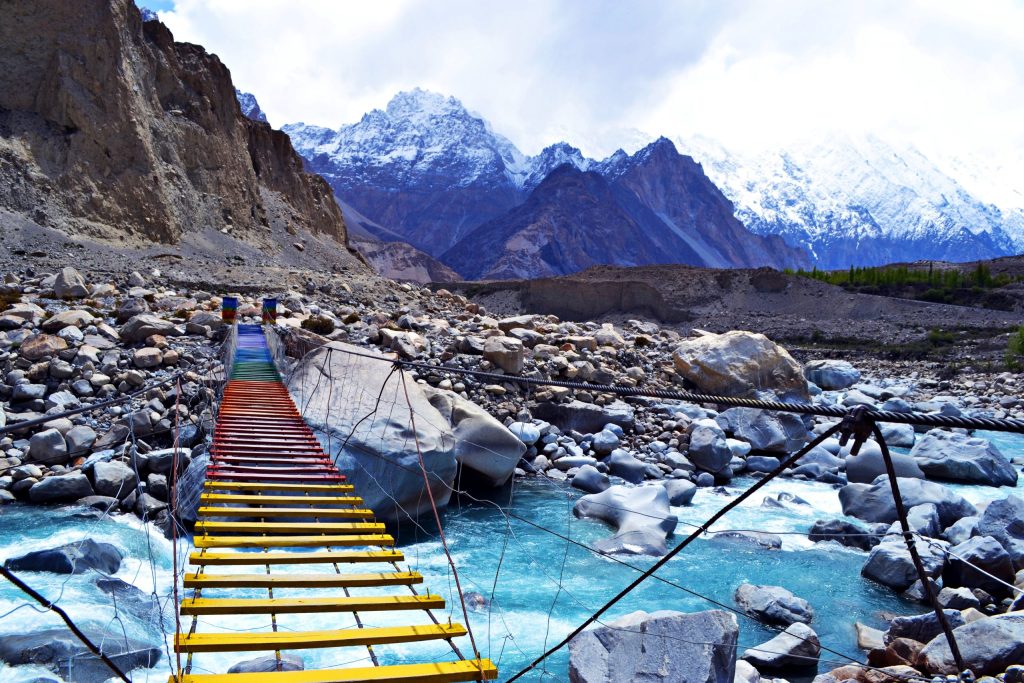
Rainbow Adventure Bridge – A blend of adventure and Scenery Nestled in the breathtaking landscape of Gilgit-Baltistan, Pakistan, the Rainbow Adventure Bridge is an iconic addition to the attractions along the Karakoram Highway. Positioned at the northern end of Upper Passu Valley in Gojal, Hunza, this striking suspension bridge, with its vibrant colors and ingenious design, has become a symbol of adventure tourism in the region. A Visionary Initiative The Rainbow Adventure Bridge is a youth-led initiative aimed at attracting adventurers and cultural enthusiasts to Hunza. Adorned with brilliant hues, this bridge is more than a crossing—it’s an embodiment of creativity, resilience, and local craftsmanship. Supported by durable steel cables and sturdy wooden planks, the bridge ensures a safe yet thrilling passage over the Hunza River, offering a unique experience for travelers. The Thrill of Crossing the Bridge Walking across the bridge is an exhilarating experience. Each step on the gently swaying planks brings a subtle vibration, accompanied by the soothing sounds of suspension cables creaking and the rushing river below. The views are unparalleled: the sparkling Hunza River flows beneath, while the surrounding snow-capped peaks of the Karakoram Range form a dramatic panorama that leaves visitors awestruck. A Photographer’s Paradise For photography enthusiasts, the Rainbow Adventure Bridge is a true inspiration. The striking combination of vibrant colors, natural beauty, and the architectural elegance of the bridge offers countless opportunities to capture mesmerizing shots. Whether it’s a wide-angle view of the bridge against the majestic mountains or a close-up of its intricate details, the location is a dream for visual storytellers. Cultural Immersion A visit to the Rainbow Adventure Bridge is not just about its architectural wonder but also a journey into the heart of Hunza’s rich culture and traditions. The warm hospitality of the locals, their vibrant customs, and the timeless charm of the region make the experience even more meaningful. As you pause on the bridge, take a moment to embrace the serene surroundings. Breathe in the crisp mountain air, and let the beauty of Gojal, Hunza, fill your soul. A Symbol of Resilience The Rainbow Adventure Bridge is more than just a practical crossing; it is a testament to the resilience and resourcefulness of the local community. For generations, the people of Hunza have built and maintained remarkable structures in this challenging terrain. The bridge stands as a tribute to their enduring spirit and determination, showcasing a harmonious blend of practicality and aesthetics. Exploring the Surrounding Wonders Adventure seekers will find the Rainbow Adventure Bridge a gateway to numerous hikes and treks in the area. The trails lead to hidden valleys, ancient glaciers, and awe-inspiring viewpoints, offering endless opportunities to explore the untouched beauty of Hunza and Gojal. Best Time to Visit To fully appreciate the bridge’s vibrant colors and scenic surroundings, plan your visit during spring, summer, or autumn: Spring and Summer: Lush greenery, blooming wildflowers, and clear skies provide the perfect backdrop. Autumn: The foliage turns golden, creating a magical atmosphere that enhances the bridge’s appeal. Responsible Tourism The Rainbow Adventure Bridge holds a special place in the hearts of the local community. Visitors are encouraged to respect its beauty and contribute to its preservation by practicing responsible tourism. Dispose of waste properly, leave no trace behind, and cherish the pristine environment. Ticket: The ticket for crossing the bridge is Rs. 200 Nearby Attractions While visiting the Hussaini Suspension Bridge and zipline, explore other iconic sites in Hunza: Attabad Lake Haldikish Borith Lake Afsang View Point Ondra Poygah Passu Glacier Yak Grill Batura Glacier Hussaini Suspension Bridge and Zipline Passu Cones Gircha Mosque Sost Town Khunjerab Pass

Hussaini Suspension Bridge
Gilgit-Baltistan

Hussaini Suspension Bridge and Zipline

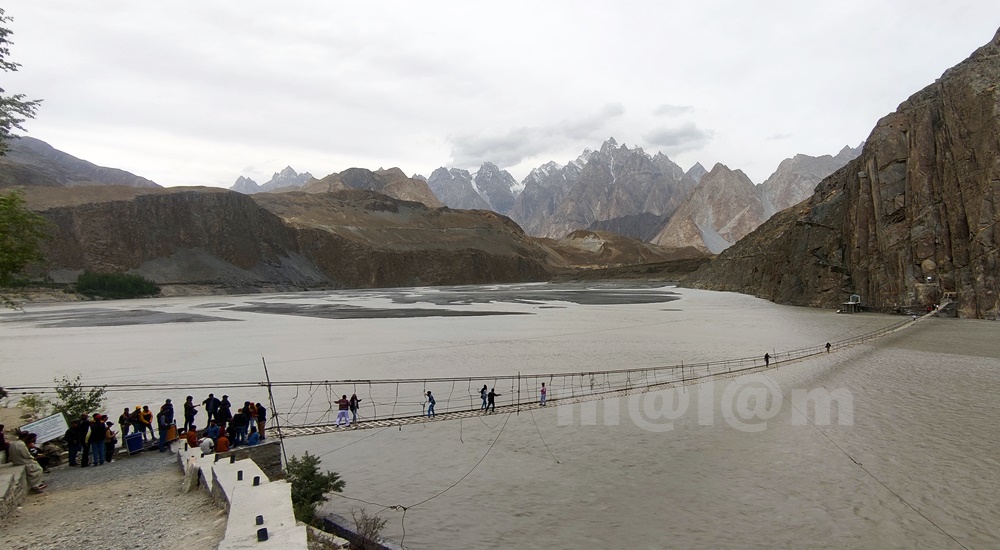
Hussaini Suspension Bridge and Zipline Known as key tourist attractions on the Karakoram Highway, the Hussaini Suspension Bridge and the newly added zipline in the Gojal region of Upper Hunza, Gilgit-Baltistan, Pakistan, offer a blend of thrilling adventure and breathtaking natural beauty. Located near the picturesque village of Hussaini, the bridge connects two rugged faces of the Karakoram Range. Both attractions have become a must-visit for tourists seeking unique experiences in the stunning landscapes of Hunza. A Perfect Blend of Adventure and Scenery Whether you’re crossing the heart-pounding suspension bridge or gliding over the Hunza River on the zipline, the Hussaini Suspension Bridge area offers a one-of-a-kind mix of thrills and natural beauty. Hussaini Suspension Bridge: A Test of Courage Known as the second longest and one of the most adventurous suspension bridges in the world, the Hussaini Suspension Bridge is a 194-meter-long structure spanning the Hunza River. The swaying wooden planks and wide gaps between them make crossing the bridge a heart-pounding yet unforgettable experience. The Hussaini Suspension Bridge attracts thousands of visitors on a daily basis during peak tourist season. Historic Background Initially, a bridge was constructed in the Shishkat Valley during British rule. However, the bridge was moved to Hussaini Village in 1968 on the orders of Mir Muhammad Jamal Khan, the then Mir of Hunza, to connect Hussaini with Zarabad on the river’s opposite side. Breathtaking Views Crossing the bridge rewards adventurers with unparalleled views of the turquoise Hunza River below and the rugged Passu Cones (Cathedral Ridge). The surrounding peaks of the Karakoram Range create a stunning backdrop, making it a photographer’s paradise. Cultural Significance The bridge is an essential link for locals, connecting remote villages like Hussaini and Zarabad. It showcases the spirit and resourcefulness of the residents living in this challenging mountainous terrain. Zipline Adventure: A New Thrill The addition of the zip line at the Hussaini Suspension Bridge offers visitors an exciting and adventurous experience. This zipline adventure provides an exhilarating journey, allowing people to soar through the air while enjoying the breathtaking views of the mighty Karakoram Mountains of the upper Hunza Valley. The combination of the challenging bridge crossing and the thrilling zip line undoubtedly makes the Hussaini Suspension Bridge a popular destination for tourists looking for excitement and natural beauty. Exhilarating Ride The newly installed zipline near the Hussaini Suspension Bridge offers a modern adventure for thrill-seekers. Spanning over the Hunza River, it provides an exciting and energizing ride with unparalleled aerial views of the valley. Panoramic Views Gliding across the river on the zipline offers a bird’s-eye view of the turquoise waters, the bridge, and the majestic peaks. It’s an experience that combines adventure with amazing natural beauty. The breathtaking views of the surrounding landscape make it a perfect spot for photography enthusiasts. Family-Friendly Fun The zipline is designed to be safe and enjoyable for all ages, making it an excellent addition for families and groups visiting the area. Tips for Visiting: For the Suspension Bridge: Wear sturdy footwear for better traction on the wooden planks. Hold onto the side ropes for stability. Avoid crossing during strong winds or bad weather. For the Zipline: Wear comfortable clothing and secure all loose items before the ride. Follow the safety guidelines provided by the operators. Best Time to Visit The best seasons to visit are spring (April-May) and autumn (September-October) when the weather is pleasant and views are spectacular. Summers (June-August) attract domestic tourists, while international visitors prefer the milder temperatures of spring and autumn. Winters are harsh, with freezing temperatures and strong winds, making travel challenging. Access Hussaini is approximately 47 km from Karimabad Hunza and 135 km from Gilgit, the capital of Gilgit-Baltistan. The bridge and Zipline are located with an easy access from the Karakoram Highway. There is a designated point on the Karakoram Highway to park vehicles and walk down to the bridge at the riverside. The bridge can be accessed by foot on a downhill walking track in the valley. Ticket Prices Hussaini Suspension Bridge: PKR 200 Zipline: PKR 2000 Nearby Attractions While visiting the Hussaini Suspension Bridge and zipline, explore other iconic sites in Hunza: Borith Lake Afsang View Point Ondra Poygah Attabad Lake Haldikish Passu Glacier Yak Grill Batura Glacier Rainbow Bridge Sost Town Khunjerab Pass

Borith Lake
Gilgit-Baltistan, Lakes

Borith Lake

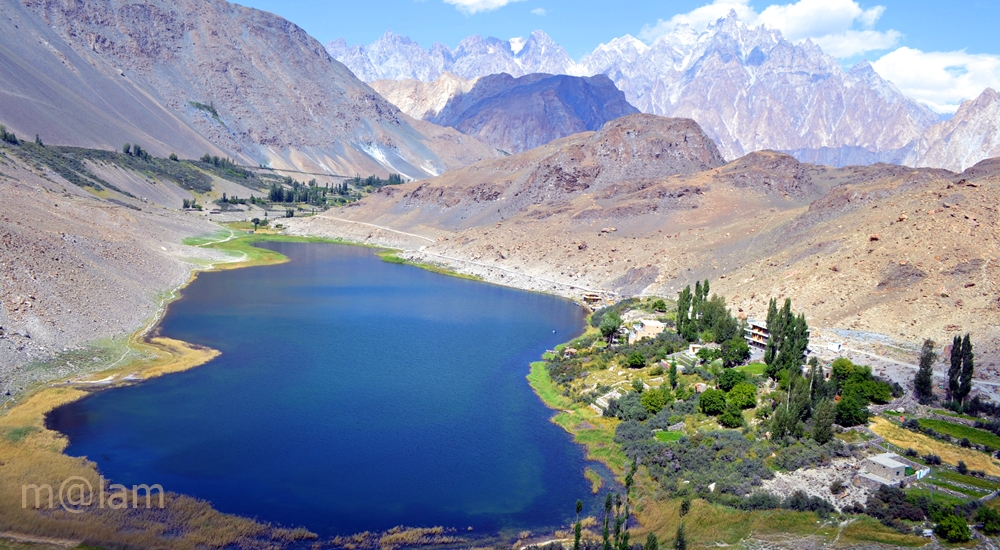
Borith Lake – A Captivating Tourist Attraction Nestled amidst the rugged beauty of the Karakoram Range, Borith Lake is a hidden gem in the upper Hunza Valley, Gilgit-Baltistan, Pakistan. The lake offers breathtaking scenery, peaceful surroundings, and serves as a gateway to adventure. Located at an easy access from the Karakoram Highway in Hussaini Village, Borith Lake is an increasingly popular destination for nature lovers, trekkers, and photographers. Borith Lake lies at an elevation of approximately 2,600 meters (8,530 feet) above sea level. The lake is situated about 2 kilometers north of the village of Hussaini, which itself is known for its iconic Hussaini Suspension Bridge. The turquoise waters of Borith Lake are surrounded by rolling hills, snow-capped peaks, and sprawling pastures, making it a perfect retreat for anyone seeking tranquility. History and Formation  The lake is a glacial-fed body of water, formed as a result of runoff from the mighty glaciers of the Karakoram Range. Its waters are stock up primarily by the Gulmit Glacier, which is a part of the vast Hunza River system. The lake holds historical significance for the Wakhi community, who have inhabited the region for centuries and consider it a spiritual and cultural hub. Salient Features  Pristine Natural Beauty Borith Lake is renowned for its crystal-clear waters that reflect the surrounding snow-laden peaks, creating an otherworldly panorama. The seasonal colors of the landscape—vivid greens in spring and summer, golden hues in autumn, and snow-blanketed terrains in winter—add to its year-round appeal. Birdwatcher’s Paradise For ornithologists and bird enthusiasts, Borith Lake is a prime spot during spring and autumn migrations. It serves as a temporary haven for flocks of ducks, geese, and other waterfowl as they travel between Siberia and the Indian subcontinent. Trekking and Hiking The lake is a starting point for several trekking routes including Afsang View Point, trek to the Passu Glacier, and Patundas Trek. The moderate-level hike to the Afsang View Point and Passu Glacier offer stunning views of glaciers, moraines, and the surrounding peaks. While the Patundas Trek is a well-known trek requires to cross the Passu Glacier and reach the end of Passu Valley. It provides magnificent views of mighty mountains and of Batura range and Glacier. Another popular trek is to the Gulmit Glacier, which offers a closer look at the fascinating geological formations of the region. Boating in the Lake One of the salient features of the calm lake is boating in its calm waters while enjoying the scenery of surrounding mountains. Camping and Stargazing Camping at Borith Lake is an unforgettable experience. The lack of light pollution in the area makes it one of the best spots for stargazing in Pakistan. On clear nights, the sky comes alive with countless stars, creating a magical ambiance for overnight campers. Photography For photographers, Borith Lake offers an endless array of subjects, from its tranquil waters to the dramatic backdrop of the Passu Cones, one of the most photographed peaks in the Hunza Valley. Accommodations and Facilities While Borith Lake is a relatively remote destination, there are several options for accommodation nearby. Borith Lake Resort, situated on the banks of the lake, provides basic lodging with incredible views. For those seeking a more authentic experience, nearby villages like Gulmit offer homestays and guesthouses where visitors can immerse themselves in the local Wakhi culture. Local Cuisine Don’t miss the chance to savor traditional Wakhi and Hunza organic dishes like chapshuro (meat-filled bread) and daudo (noodle soup) at the local restaurants. Many local eateries use organic ingredients sourced from their own farms, ensuring a fresh and delightful dining experience. Best Time to Visit Borith Lake The ideal time to visit Borith Lake is between April and October, when the weather is pleasant and the trekking routes are accessible. During spring and summer, the lush greenery and blooming wildflowers add to the lake’s charm. Autumn offers golden landscapes, while winter turns the area into a snow-laden wonderland, perfect for those seeking solitude. How to Get to Borith Lake Reaching Borith Lake requires a mix of travel by road and hiking. From Gilgit, the central hub of northern Pakistan, visitors can embark on a 125-kilometer journey to Gulmit. From there, a 4×4 jeep or a short trek brings you to this serene lake. The final stretch, a dirt trail, is best suited for those with a love for adventure. Cultural Significance The lake is not just a tourist attraction; it is deeply intertwined with the lives of the local Wakhi people. Festivals and rituals often take place near its shores, offering visitors a chance to witness and participate in traditional customs that have been preserved for generations. Environmental Concerns and Sustainability Like many natural treasures, the  Lake faces environmental challenges due to climate change and increased tourism. Visitors are encouraged to practice eco-friendly tourism, such as carrying reusable items and minimizing waste. Preserving the pristine environment of this lake is crucial for the local ecosystem and future generations. Why You Should Visit Borith Lake Whether you’re an adventurer, a nature lover, or someone seeking peace and serenity, Borith Lake has something to offer. Its mesmerizing landscapes, cultural richness, and opportunities for exploration make it a must-visit destination for anyone traveling to northern Pakistan. Nearby Attractions While visiting Borith Lake, explore other iconic sites in Hunza: Afsang View Point Ondra Poygah Attabad Lake Haldikish Hussaini Suspension Bridge and Zipline Rainbow Adventure Bridge Passu Glacier Yak Grill Passu Cones Batura Glacier Sost Town Khunjerab Pass

Chunda Valley
City Breaks, Gilgit-Baltistan

Chunda Valley

 Chunda Valley – A Hidden Gem in Skardu Chunda Valley in Skardu, Gilgit-Baltistan, is a hidden gem, nestled amidst the majestic Karakoram Range. Sitting in the lap of snow-crowned mountains, relatively untouched by mainstream tourists, it is one of the most favorite tourist spots in Gilgit-Baltistan captivating visitors with its breathtaking beauty. The valley not only boasts a spectacular landscape – snow-crowned mountains, lush green meadows with crystal clear streams, and traditional houses adorned with orchards – but also offers impressive scenery of Skardu town itself. Located 3000m above sea level, Chunda is accessible only at a short distance of about one hour’s adventurous drive from Skardu downtown. A Vibrant Tourist Attraction Famous among both domestic and international tourists, Chunda Valley is now a vital part of the tour plan for general tourists and tour operators as a short excursion from the town of Skardu. The valley is famous for its picturesque landscapes greeting visitors with a stunning combination of towering mountains surrounded by a lush green landscape of carpeted fields. Chunda offers multiple viewpoints where one can witness the grandeur of the Karakoram Mountains. Photographers will find countless opportunities to capture the awe-inspiring scenery, both of the Chunda Valley and also the town of Skardu and the wide stretch of Indus guarded by mountains. These meadows provide an excellent spot for picnics, relaxation, and photography. Seasonal Beauty Known for its unique beauty, Chunda Valley showcases diverse colors of nature in the four distinct seasons. In the blossom season, starting late February or early March and continuing till the end of April in Gilgit-Baltistan, it is blanketed with blooming flowers presenting a heavenly charm. The valley is a great retreat during summers, from May till September, and provides magnificent views of the entire stretch of Skardu from the viewpoint. Autumn, mid-October till mid-November, presents a brief season but extremely colorful and the valley allures nature enthusiasts and photographers to appreciate its myriads of colors. The autumn season is particularly remarkable, with the valley covered in vibrant shades of orange, yellow, and red. This period is ideal for photography, offering an enchanting setting for capturing the beauty of the valley. Winters blanket the valley in white and that’s again a unique time to visit. Local Hospitality The residents of Chunda Valley are known for their warm hospitality and simple, yet rich, way of life. Visitors to Chunda Valley therefore have the chance to immerse themselves in the local culture. The valley is home to a small, traditional community that preserves its cultural heritage and customs. Travelers can interact with the locals, learn about their way of life, and even enjoy traditional Balti food. Hospitality is a central part of the culture, and guests are often welcomed with open arms. Their cultural practices and traditions have been preserved for generations, offering visitors a glimpse into the authenticity of Skardu’s heritage. Engage with locals, participate in traditional festivities, and savor the local cuisine for an immersive experience. Activities to Enjoy in Chunda Valley Day Hikes Chunda Valley is a paradise for adventure enthusiasts. There are several hiking routes for all skill levels, ranging from easy walks to challenging hikes that take visitors to higher altitudes. Some popular trails lead to surrounding peaks and viewpoints, offering breathtaking views of the valley below. Camping under the Stars Camping in Chunda Valley is a truly magical experience. With clear skies and minimal light pollution, the valley provides excellent conditions for stargazing. Many travelers enjoy camping by the riverside or in the open meadows, where they can relax, enjoy a bonfire, and watch the stars at night. Camping is only possible in the environs of the valley providing a scenic view, and not within the valley. Photography and Nature Walks For photographers, Chunda Valley is a treasure trove of natural beauty. The stunning landscapes, lush greenery, and vibrant colors make it an ideal location for both landscape and portrait photography. Nature walks through the valley are equally rewarding, allowing visitors to explore the diverse flora and fauna of the region. Bird Watching and Wildlife Spotting Chunda Valley is home to a variety of bird species and wildlife, making it a paradise for birdwatchers and wildlife enthusiasts. Common sightings include golden eagles, Himalayan snowcocks, and a variety of small mammals. Wildlife photographers will find plenty of subjects to capture in this serene environment. Accommodation Options While Chunda Valley has limited accommodation options, visitors can stay in nearby Skardu, which offers a range of hotels, guesthouses, and lodges. In the valley, there are a few local guesthouses and camping sites. For a more immersive experience, many travelers prefer camping in the valley itself, surrounded by nature. Guesthouses: There are a few small guesthouses within the valley run by locals. These accommodations provide basic facilities but offer a warm and authentic experience. Camping: Camping is a popular choice among visitors to Chunda Valley. The valley has several safe and scenic spots ideal for setting up tents. Travelers are encouraged to bring their own camping gear or rent equipment from Skardu. Hotels in Skardu: For those seeking more comfortable accommodations, Skardu City offers a range of hotels from budget options to mid-range hotels. Visitors can base themselves in Skardu and take day trips to Chunda Valley. Important Travel Tips for Chunda Valley The weather in Chunda Valley can be unpredictable. Visitors should check the weather forecast and pack accordingly. During the colder months, warm clothing is essential as temperatures can drop significantly at night. Certain areas in Gilgit-Baltistan may require travel permits for foreign visitors. It is recommended to check local regulations before traveling. Chunda Valley is home to a close-knit community with deep cultural roots. Visitors are encouraged to respect local customs, dress modestly, and ask permission before taking photographs of people. Due to the high altitude, it is important to stay hydrated and acclimatize properly. It is also recommended to carry essentials like sunscreen, insect repellent, and a basic first-aid kit.

Excursions from Skardu
City Breaks, Gilgit-Baltistan, Tourists Destinations in Pakistan

Excursions from Skardu

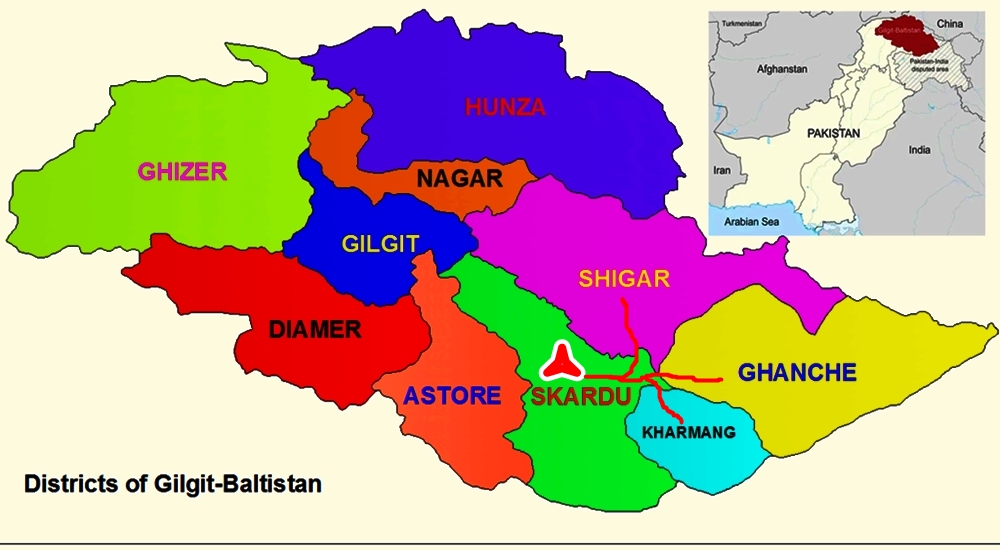
Excursions from Skardu – Explore the Mesmerizing Beauty Skardu, located in Gilgit-Baltistan, Pakistan, is a gateway to some of the world’s highest mountains and longest glaciers. As the capital of the Baltistan Division, one of the three divisions (Gilgit, Diamer, and Baltistan) of Gilgit-Baltistan, Skardu is one of the four key districts (Skardu, Shigar, Ghanche, and Kharmang) in the Baltistan Division. Each district is renowned for its unique manmade and natural attractions that draw tourists. Skardu serves as an excellent base for exploring the area’s key attractions. Recommended day excursions from Skardu include: Day Excursion to Shigar Valley Shigar Valley, situated in the Shigar District of Gilgit-Baltistan, is renowned for its stunning landscapes and tranquil ambiance. Surrounded by towering mountains, cascading waterfalls, and crystal-clear rivers, the valley is a paradise for nature enthusiasts. It offers a perfect escape from bustling city life, allowing visitors to immerse themselves in the wonders of the great outdoors. As a former princely state and one of the four districts of the Baltistan Division, Shigar is the nearest and most conveniently accessible destination. Located just 45 km away and reachable within an hour, Shigar boasts a range of exclusive tourist attractions, from historical sites to natural sceneries, including: Sarfaranga Desert The Cold Desert, located in Sarfaranga village in Skardu, Gilgit-Baltistan, is the world’s highest desert, standing at an altitude of nearly 7,500 feet. Known as the Sarfaranga Desert or Skardu Cold Desert, it is one of the two most famous icy deserts in the region. Situated close to Skardu, it is accessible with a 30-minute drive. Nestled in the Shigar Valley along the Indus River and surrounded by mountains, it serves as an excellent capstone experience for a trip to the Shigar area. The Sarfaranga Cold Desert is a hub of touristic activities, offering desert jeep safaris, motor gliding, biking, horse riding, and more. Blind Lake Blind LakeBlind Lake, also known as Xarba Tso in the local Balti language, is an enchanting freshwater lake nestled near the Shigar Valley in the heart of the Gilgit-Baltistan region of Pakistan. Unlike most lakes, Blind Lake does not rely on any external water supply or discharge source. Its serene waters remain still and unmoving, earning it the intriguing name “Blind Lake.” This mesmerizing lake offers panoramic views of its surroundings, particularly the riverside and the majestic mountains that serve as its backdrop. The trail leading to Blind Lake is a unique journey through lush greenery, arid deserts, and rugged rocky hills. Visitors can enjoy key activities like boating, camping, and musical events. There are a few tuck shops providing basic necessary items for tourists, and entry to the lakeside is subject to a fee. Shigar Serena Fort Palace The Shigar Fort in Skardu Valley is a remarkable architectural structure surrounded by Shigar’s vast plains. Renowned for its historical significance, Shigar Fort is the most visited location in Skardu. Constructed roughly 400 years ago, the entire structure is composed of stones with sturdy foundations. Formerly known as the Palace of Rock, the fort has been transformed into a guesthouse featuring 20 rooms and a large hall displaying treasures of the Baltit culture. Amburiq Mosque The Amburiq Mosque is one of the oldest mosques in Baltistan and is a renowned landmark in the region. Built by Sayed Ali Hamdani, it holds great historical significance. According to local traditions, Sayed Ali Hamdani visited Shigar to spread the faith and established the Amburiq Mosque, making it the first mosque in the Shigar Valley. A small museum inside the mosque raises awareness about its historical importance and encourages the local community to adopt a conservationist approach towards culturally significant structures. The mosque underwent restoration between 1998 and 2000. In 2005, UNESCO awarded the mosque the Asia-Pacific Heritage Award. Khanqah-e-Mualla With the dawn of Islam in the Baltistan region in 1352 through Amir Kabir Syed Ali Hamadani, the construction of small mosques became common. One of the most monumental pieces from that era is Khanqah-e-Mualla, a valuable gift to the Shigar Valley. The credit for its establishment goes to Shah Nasir Tusi, who came from Tus, Iran, with his three daughters through the Siachen Glacier in 1591. Shah Nasir laid the foundation of the Khanqah in 1602. According to local folklore, he disappeared near the mountains of the Braldu Valley on his way to K2. The construction, materials, and design of the Khanqah have remained unchanged for more than four hundred years. Although it has undergone repairs multiple times, the materials and construction methods have always stayed the same. Hashupi Garden Hashupi Bagh, also known as Hashupi Garden, is the Apple and Cherry Garden nestled in the picturesque Shigar Valley. This magnificent garden is located amidst the majestic Karakoram Mountains in Gilgit-Baltistan, Pakistan. Hashupi Bagh is a haven for nature lovers and adventure seekers alike. Apart from its apple orchards, the garden features stunning cherry blossoms that bloom during the spring season, transforming the landscape into a spectacle of delicate pink and white flowers. The cherry blossoms create a magical ambiance, drawing photographers, nature enthusiasts, and romantics. Visitors can wander through the garden, marveling at the ethereal beauty of the blossoms and capturing unforgettable moments. In autumn, Hashupi Bagh bursts with vibrant colors as the apples and cherries ripen, ready to be harvested. Chuturon Hot Springs Chotron Hot Springs is a natural hot spring located in the Shigar district of Gilgit-Baltistan, Pakistan. Situated at an elevation of around 2,400 meters (7,874 feet) above sea level, it is surrounded by beautiful mountains and forests. The water in the hot spring is naturally heated by geothermal activity and is believed to have medicinal properties due to its high mineral content. The mineral water of these springs contains elements like sodium, potassium, calcium, magnesium, chlorides, fluorides, sulfates, phosphates, and bicarbonates, which may be responsible for curing various diseases. However, the water from the thermal springs of Chotron is unsuitable for drinking due to its high fluoride content and the presence of small amounts of total coliforms,

Skardu Tourist Attractions
City Breaks, Gilgit-Baltistan, Tourists Destinations in Pakistan

Skardu Tourist Attractions

Skardu – A destination beyond imagination Serving as one of the four districts of the Baltistan Division of Gilgit-Baltistan’s three divisions, Skardu is the capital city of Skardu District. Skardu is the primary gateway to the eight-thousanders of Pakistan including K2, Broad Peak, and Gasherbrum Peaks, and is also the threshold to several famous glaciers including the well-known Baltoro Glacier. Nestled at 2500m (8,202 feet) above sea level, along the bank of the Indus River, Skardu presents a harmonious blend of modern amenities and traditional appeal. The valley spans approximately 10 km in width and 40 km in length. Skardu is situated at the convergence of the Shigar River and Indus River. Renowned for its stunning landscapes, towering mountains, and distinctive cultural legacy, the region captivates visitors with its enchanting charm. Encompassed by the Karakoram Range, Skardu affords breathtaking vistas, tranquil lakes, and opportunities for trekking and mountaineering. It boasts extensive tourist attractions catering to nature enthusiasts, adventure seekers, and those intrigued by local customs. Below are some of Skardu Tourist Attractions: Kharpocho Fort  Known as Skardu Fort, the Kharpocho Fort is a significant historical landmark situated atop a rocky hill, towering 40 meters above the main town. Offering sweeping views of the surrounding landscapes, reaching the fort entails a rewarding 30-minute hike. Overlooking the confluence of the Indus and Shigar Rivers, the fort boasts a secret tunnel providing an escape route during emergencies, linking it to the city. Referred to as the “king of forts” in the local Balti language, it served as a military stronghold during various conflicts. Constructed in the late 16th century by King Ali Sher Khan Anchan, the fort features a traditional architectural style, encompassing numerous cozy rooms within its expansive boundary walls. Its intricate woodwork, majestic stonework, and skilled craftsmanship make it a captivating site to explore. Despite suffering damage during the 1948 war in Gilgit-Baltistan, the grandeur of the fort continues to allure thousands of tourists year-round. Nansoq Organic Village Nestled just beyond the famed Kharpocho Fort, The Nansoq Valley represents the inaugural organic village accessible by foot. Commencing from the nearby neighborhood adjacent to Kharpocho Fort, the trek to this picturesque village spans approximately 3 kilometers. It offers a scenic route along the Indus River with breathtaking valley views. The journey typically takes an hour via a gradually ascending path, punctuated by several wooden bridges. Approximately 75 residents, distributed among 17 or 18 families, inhabit Nansoq, embracing the traditional Balti lifestyle characterized by labor-intensive practices and a reliance on organic food. They reside in vintage-style dwellings and predominantly engage in agriculture and farming, utilizing ancient utensils. The village serves as a prime example of cultural preservation and the pursuit of a modest lifestyle. Notably, Nansoq has welcomed distinguished visitors such as Prince Charles, Prince of Wales, and the Duchess of Cornwall, underscoring its significance as a unique cultural enclave. Italian K2 Museum    The K2 Museum is a distinctive pyramid-style tent museum situated in the garden of the PTDC Motel in Skardu. It is just a 5-10 minute stroll from the city center. Sponsored by the Italian government and established in 2004, the museum commemorates the first successful summit of the treacherous K2 Mountain by an Italian expedition in 1954, led by Arditio Dezio. Dedicated to the Pakistani people and mountaineers worldwide, the museum houses a vast collection of historical data, maps, documentaries, and geographical and cultural insights about K2 Mountain and earlier expeditions to remote Baltistan, led by De Filippi. Additionally, it showcases local customs and traditional attire. The PTDC Motel itself serves as a testament to the rich climbing and hiking history in the mighty mountains of Skardu. With its wealth of exhibits and immersive experiences, the K2 Museum stands out as a remarkable tourist attraction for visitors. Manthal Buddha Rock The Manthal Buddha Rock, a sizable granite formation adorned with Buddha carvings dating back to the 8th century, resides 3 kilometers from Sadpara Road in Manthal Village, Skardu. This iconic rock boasts a prominent central carving of Buddha, flanked by two standing Metreyias (future Buddhas) and encircled by twenty small Bodhisattvas (disciples). Before Buddhism’s advent in the 4th century, Baltistan was steeped in Shamanism. Monks from northern India arrived and erected monasteries during the reign of the Palolashahi kingdom. Despite the Tibetan conquest in the 8th century, Buddhism thrived, marking the Upper Indus Valley’s “Golden Era of Buddhism” from the 8th to the 10th centuries. However, the arrival of Ali Hamadani and his followers from Iran in the 14th century transformed the region’s landscape. Buddhism waned, and places of worship fell into disrepair as Islam gained traction. By the 15th century, the region had transitioned into a predominantly Muslim state. Satpara Lake Located near Skardu, Satpara Lake is a serene and picturesque destination enveloped by towering mountains. It offers an ideal setting for boating and soaking in the natural splendor. Positioned at an impressive altitude of 2,721 meters (8,927 feet) above sea level, Satpara Lake stands out prominently amidst the rugged terrain of Skardu Valley. Fed by the Satpara stream, originating from the melting ice of Deosai Plains, the lake boasts a picturesque island that provides a tranquil retreat. With its turquoise waters set against the backdrop of lofty peaks, Satpara Lake attracts tourists from around the globe. Accessible via a 20-minute jeep ride from Skardu, it remains a popular destination for nature lovers seeking solace and scenic beauty. Katpana Desert The Katpana Desert, also known as the Cold Desert or Biama Nakpo, is a high-altitude desert near Skardu town in Gilgit-Baltistan, Pakistan. Positioned at 2,226 meters (7,303 ft) above sea level, it ranks among the world’s highest deserts. Located between Skardu airport and the town, it features vast dunes that occasionally receive a dusting of snow in winter. The desert extends from the Indus River south of Skardu to New Ranga Village in the north, with the section near Skardu town being the most famous and visited. The best time to visit is between June and September

Scroll to Top