
Attractions in Gilgit-Baltistan

excursions from Gilgit
City Breaks, Gilgit-Baltistan

Excursions from Gilgit

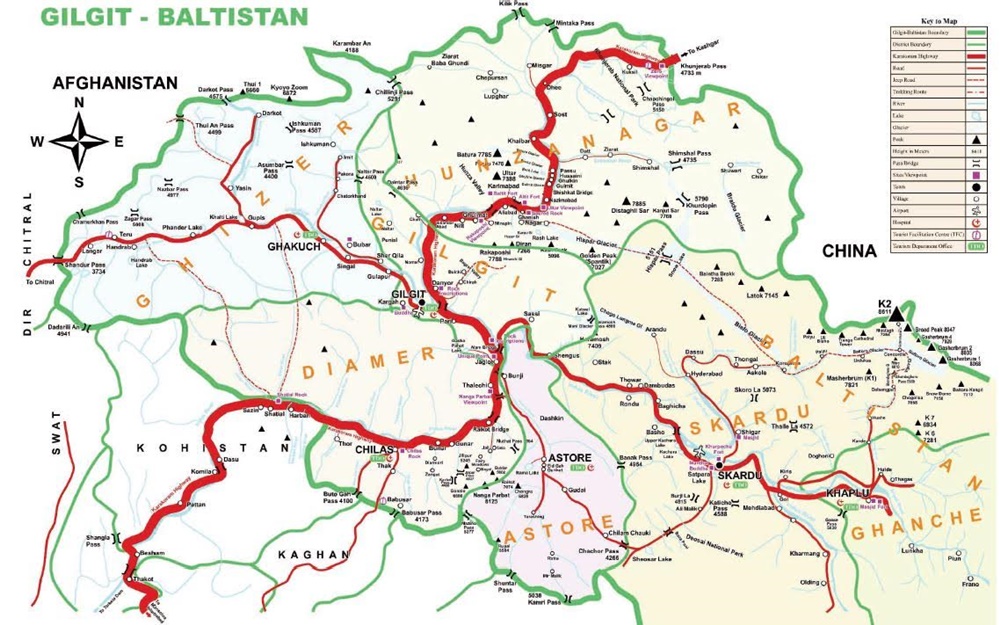
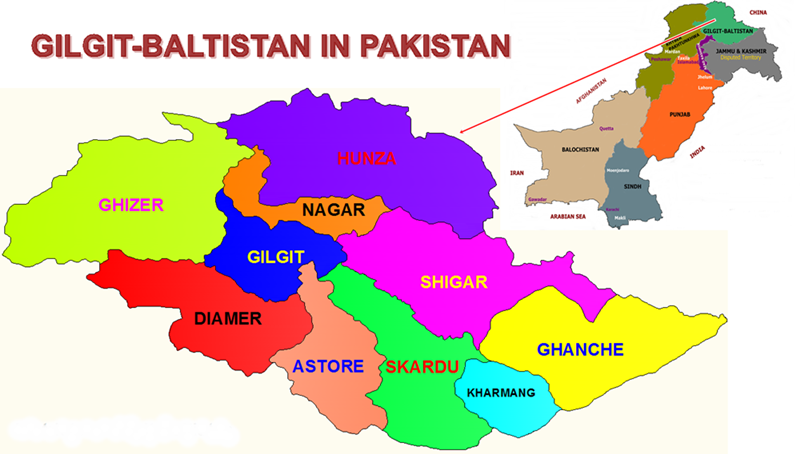
Exciting Escapes from Gilgit: Exploring Majestic Mountain Valleys Excursions from Gilgit encompass all the prime attractions located in the vicinity of Gilgit. Strategically nestled amidst awe-inspiring landscapes, Gilgit opens doors to a host of thrilling journeys into the neighboring valleys and mountainous territories. Each of these destinations unveils a harmonious fusion of natural grandeur, cultural legacy, and adventurous prospects, casting a spellbinding allure for globetrotters and adventurers alike. Adding to the region’s allure is its linguistic diversity, with over ten languages spoken in Gilgit and its neighboring valleys. Gilgit being the melting pot houses people of all colors and creeds. Gilgit City, perched at the confluence of the Gilgit and Hunza Rivers, proudly claims its title as the capital of Gilgit-Baltistan. Rich in historic and manmade landmarks, the Gilgit tourist attractions range from ancient Buddhist heritage to modern edifices making it a preferred choice for travelers. The territory of Gilgit-Baltistan is bordered by China to the east, the Wakhan corridor to the north, Chitral to the west, and Kashmir to the south. This mountainous territory encompasses three divisions – Gilgit, Baltistan, and Diamer. These divisions, in turn, are split into ten districts: Gilgit, Ghizer, Hunza, and Nagar form the Gilgit division; Skardu, Ghanche, Shigar, and Kharmang collectively make Baltistan division while Diamer and Astor constitute the Diamer division. Each of these ten districts boasts a distinctive charm, presenting a picture drawn with natural beauty, cultural diversity, and human endeavor. Gilgit city has direct access to all the attractions in these districts. Below, we explore the thrilling options for Excursions from Gilgit. Day Excursion to Naltar Valley – A blissful Escape The Naltar Valley, an enchanting pine-carpeted expanse, sits majestically located at an elevation of 15,000 ft. At 47 km away from Gilgit, Naltar Valley undoubtedly makes a perfect summer retreat. It serves as an internationally acclaimed ski resort and a launching point for two enthralling treks. Naltar beckons adventurers with the Naltar Pakora Trek, winding through a 4,600-meter pass to the Ishkoman Valley. Likewise, Naltar also serves as a base for the 4,636-meter Daintar Pass, leading to the Karakoram Highway via Chalt Valley. Upper Naltar hosts three picturesque lakes: Bashkiri Lake – I or Chimo Bari (Fish Lake), Bashkiri Lake – II or Chakar Bari (Multi-Ends Lake), and Bashkiri Lake – III or Bodolok Bari (Turbid Lake). Nestled close to each other at the end of the gorge, these three lakes craft an ideal picnic spot. Naltar Valley is currently accessible only by a 4WD, although a metal road from Gilgit is under construction. Day Excursion to Phunder Valley – Explore the Hindukush charms Phander Valley, nestled along the main Gilgit-Chitral road within the Gupis Valley of the Ghizer district in Gilgit-Baltistan, Pakistan, unfurls its breathtaking beauty before your eyes. With turquoise waters cradling pristine lakes and trout aplenty, this valley is a jewel awaiting discovery. Presently, a full day’s journey of 170 km or 4.5 hours from Gilgit takes you to Phunder. But take note, road reconstruction is underway, promising a shorter distance and more time to immerse in the valley’s wonders. In Phander Valley, attractions abound, from the vibrant Gahkuch Bazar to the stately Gupis Fort, the tranquil Khalti Lake, the enchanting Phunder Lake, and the mesmerizing Gulaqmoli. Moreover, the valley opens gates to explore the captivating realms of the Shandur Pass. You may also be interested in: Excursions from Islamabad Day Excursion to Yasin Valley – Unveiling the Enigma Yasin Valley, often referred to as Baba-i-Yasin or Worshigum, remains a hidden gem on the tourist map. Situated approximately 130 km northwest of Gilgit amidst the Hindukush Mountains, this valley extends from Thawoos to the final hamlet of Darkut Valley, meandering through the valleys of Sandhi and Barkulti to the Darkut hot springs, nestled close to the Afghanistan border. The Darkut hot springs, adjacent to the Darkut Pass leading to the Wakhan Corridor, entice trekkers with one of the most celebrated alpine routes. The trek from Yarkhun Valley over Zagar & Nazbar to Yasin Valley also unveils another picturesque route connecting Chitral and Yasin. The prime time to relish Yasin Valley’s beauty is between April and October when nature paints the landscape with blooming blossoms and a kaleidoscope of summer and autumn hues. The valley also offers a plethora of seasonal fruits in summer and excellent fishing opportunities. Junction Point of Three Mountain Ranges – Where the Mighty Mountains Converge The junction point of the three mountain ranges stands as an extraordinary spectacle near Jaglot on the Karakoram Highway, about 40 km southeast of Gilgit, Pakistan. This unique convergence is where the world’s three renowned mountain ranges – the Karakoram, the Himalaya, and the Hindukush – intersect, creating the knot known as the “Junction Point of the world’s three mountain ranges.” Additionally, this exclusive spot serves as the confluence of the Gilgit and Indus Rivers, with the Skardu Road branching out from the KKH nearby. Other historic sites worth exploring include Partab Pul, Bhoop Singh Pari, and Nanga Parbat View Point. Partab Pul, an ancient bridge spanning the Indus River, once served as the primary link between Gilgit and Bunji, Astore, and Kashmir before the advent of the Karakoram Highway. Bhoop Singh Pari stands as a historical landmark along the main Karakoram Highway (KKH), where Raja Gohar Aman of Yasin vanquished a Sikh invader named Bhoop Singh in 1852, securing Gilgit’s liberation. Further south on the Karakoram Highway, the Nanga Parbat View Point treats you to awe-inspiring vistas of Nanga Parbat (8126m), Pakistan’s second-tallest mountain and the world’s ninth tallest. Day Excursion to Bagrot Valley: Best in all Seasons Situated approximately 38 km northeast of Gilgit, the Bagrot Valley stretches along the Gilgit River across the Karakoram Highway. Nestled south of the Karakoram Range, the Bagrot Valley ranks as one of the perfect half-day excursions from Gilgit. This concealed paradise is renowned for its picturesque beauty, verdant meadows, fertile fields, towering peaks, and sprawling glaciers. The local Shina-speaking populace takes pride in preserving a distinctive cultural heritage. Bagrot
Excursions from Skardu
Gilgit-Baltistan

Gilgit-Baltistan

Gilgit-Baltistan: Nature’s Paradise and Cultural Diversity Gilgit-Baltistan, nestled in the northernmost reaches of the world, boasts some of the planet’s loftiest peaks and most extensive glaciers outside the Polar Regions. In addition to its awe-inspiring natural beauty and impressive man-made landmarks, this region is home to over 1.7 million people making a rich tapestry of ethnic groups, each proudly preserving its own culture and language. It has earned worldwide recognition as a top tourist destination and was historically referred to as the Northern Areas of Pakistan. Geographical Wonders Gilgit-Baltistan spans an impressive 72,971 square kilometers (28,174 square miles) and is bordered by China’s Xinjiang province to the east and northeast, Afghanistan’s Wakhan Corridor to the north, Pakistan’s Khyber Pakhtunkhwa province to the west, and the Indian-administered state of Jammu & Kashmir to the south. Geologically, this region is marked by instability, as it serves as the convergence point of the Indian and Eurasian tectonic plates. The Indian plate’s northward movement at an average rate of 7mm per year has given rise to the majestic Nanga Parbat. Divisions & Districts Gilgit-Baltistan consists of three primary divisions: Gilgit, Baltistan, and Diamer. These divisions further house ten distinct districts. Gilgit division comprises Gilgit, Hunza, Nagar, and Ghizer; the Diamer division encompasses Diamer and Astor districts; and the Baltistan division incorporates Skardu, Shigar, Kharmang, and Ghanche districts. A Glimpse into History Throughout history, Gilgit-Baltistan has functioned as a pivotal intersection for ancient trade routes, fostering a blend of diverse ancient civilizations. The region has sustained its significance as a prominent Buddhist center of learning for numerous centuries. The Silk Route, a segment of the extensive network of ancient Silk Routes, has transformed into the modern-day Karakoram Highway (KKH). The highway boasts over 50,000 petroglyphs and inscriptions situated between Hunza and Shatial. Left behind by a variety of travelers, including invaders, traders, and pilgrims traversing the upper Indus, these carvings tell the tale of the region’s rich history. Among the earliest known carvings, dating back to 5000-1000 BCE, are depictions of triangular men, hunting scenes, and single animals, typically larger than the depicted hunters. Gilgit-Baltistan maintained its independence until the 19th century when British colonization occurred. The region was fragmented into numerous mountain principalities during this period. Under colonial rule, it fell under the dual control of the British Indian Government and the state of Jammu & Kashmir. Following the partition of the Indian subcontinent and the establishment of Pakistan, a local uprising overthrew Kashmir’s rule, declaring independence. Since then, the area has been administered by Pakistan, operating directly under the federal government. Rich Culture & Heritage People The inhabitants of Gilgit-Baltistan are widely recognized for their friendliness, hospitality, and resilience. They share a profound connection to their homeland, fostering a robust sense of community over the years. Given the geographical remoteness and challenging topography of the region, the locals have adapted to the rugged mountainous environment, acquiring distinctive skills such as mountaineering and trekking. Hailing from diverse ethnic backgrounds, the people of Gilgit-Baltistan belong to major ethnic groups like the Baltis, Shins, Yashkuns, Dards, Burushos, and others. Each group possesses its own set of customs, traditions, and languages, contributing to the rich cultural tapestry of the region. Clothing The residents of Gilgit-Baltistan showcase a distinctive traditional attire that mirrors their cultural legacy and adapts to the challenging climate of the region. In professional settings, educational institutions, and business-related engagements, individuals opt for modern and fashionable clothing. Nevertheless, a significant number of men choose to don the traditional Pakistani attire, Shalwar Qameez, often accompanied by a woolen waistcoat and cap in colder weather, while the winter months may see the use of a Choga, a long woolen robe embellished with embroidery. Among females, especially the younger generation, there is a preference for trendy and stylish dresses, whereas more conservative women still find comfort in the traditional combination of shalwar kameez and dupatta. During ceremonial occasions, both men and women tend to gravitate towards traditional attire. Religious Affiliation The inhabitants of Gilgit-Baltistan adhere to diverse religious beliefs, showcasing the variety present in the region. While the majority of the population practices Islam, a significant portion follows the Shia sect. In addition to Sunni Muslims, there are also Ismaili Muslims and Noorbakhshi Muslims in Gilgit-Baltistan. Furthermore, small communities of Christians and followers of the Sikh faith contribute to the religious tapestry of the region. The religious composition of Gilgit-Baltistan is characterized by its diversity, as people of different faiths coexist and play a role in shaping the cultural landscape of the area. Arts & Crafts The traditional arts and crafts of Gilgit-Baltistan are a testament to the creativity, expertise, and cultural identity of the local communities. Widely recognized for their craftsmanship, the region is particularly celebrated for the production of exquisite hand-woven carpets, skillfully made using traditional techniques passed down through generations. Artisans in Gilgit-Baltistan showcase their proficiency in woodwork, producing intricate carvings on various wooden items. Traditional wooden furniture, decorative panels, doors, and utensils feature delicate designs that highlight local motifs, flora, and fauna. Additionally, basketry stands out as a traditional craft in Gilgit-Baltistan, where adept artisans weave baskets and containers using locally available materials like willow. These baskets serve various purposes, including storage, transportation, and aesthetic decoration. Given the cold climate, woolen textiles hold significant importance in the region’s arts and crafts. Handcrafted woolen shawls, blankets, and caps feature intricate patterns and designs, often incorporating vibrant colors. Enriching Culture The society of Gilgit-Baltistan is diverse in terms of language, religion, and ethnicity. The culture of Gilgit-Baltistan is heavily influenced by its geographical location, nestled amidst the majestic mountains of the Karakoram and Himalayan ranges. The region’s isolation and rugged terrain have helped preserve its distinct cultural practices and way of life. Gilgit-Baltistan is home to various ethnic groups, including the Shina-speaking Indo Aryans /Dardic people (Yashkun, Shin, Dom, Kamin), the Brusho of Hunza and Nagar, the Tibetans of Baltistan (Skardu, Ghanche, Shigar, and Kharmang), and Wakhi people along the Pamirs (living in Upper Hunza

Victory monument of Taj Mughal
Gilgit-Baltistan, Monuments

Victory Monument of Taj Mughal

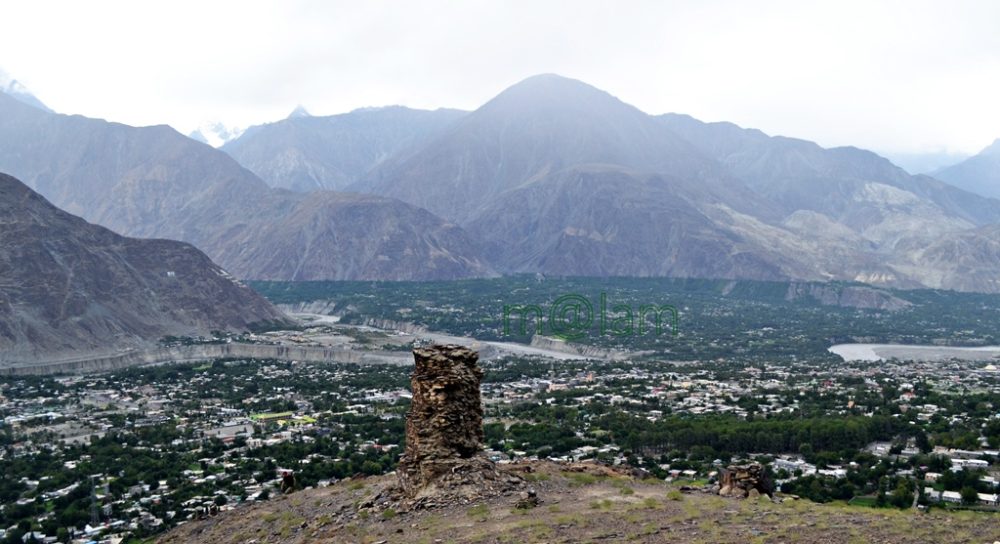
Exploring the Majestic Victory Monument of Taj Mughal Unveiling the Remarkable Tale of the 700-Year-Old Commemorative Tower in Gilgit, Pakistan Nestled gracefully upon the southern mountains of Gilgit town, Gilgit-Baltistan, Pakistan, stands the splendid Victory Monument of the Taj Mughal. Undoubtedly, the monument is a testament to history, triumph, and timeless beauty. With a history spanning over 700 years, this commemorative tower bears witness to the legacy of Taj-ud-Din Mughal. Taj-ud-Din was an Ismaili ruler from Badakhshan who graced Gilgit-Baltistan with his presence during the 13th century AD. Erected by his devoted soldiers, this monument stands tall at 21 feet and 10 inches, with a circumference of 14 feet and 4 inches, perpetuating the memory of his glorious victory. Journey to the Past: Unveiling the Monument’s Origin The Victory Monument of the Taj Mughal finds its sacred abode against the stunning backdrop of the southern mountains of Gilgit city. The Monument majestically sits about 1000 feet above Gilgit town. This awe-inspiring edifice not only oversees the enchanting villages of Gilgit and Danyore but also narrates a saga of victory and courage that continues to captivate the hearts of those who tread its path. Unveiling the Pathways: A Scenic Staircase Adventure Gone are the days of arduous treks and intricate routes. In order to promote history and tourism, access to the monument has been made easy. From the city center or the bus station, one can drive towards Serena Hotel in Jutial and follow the signboards leading to the hiking point. The monument is now reachable via a splendid flight of stairs, gracefully winding its way through rocky trails. These trails, adorned with the raw beauty of nature, create an immersive experience that heightens the anticipation of the forthcoming spectacle. As each step is taken, a sense of excitement and wonder builds, propelling us toward our destination. Cycle Track Marvel: A Gateway from Barmas to Jutial Adding to the allure of this journey is the newly constructed water channel Cycle Track, connecting Barmas to Jutial, Gilgit. One can do the monument from Barmas, the southern end of Gilgit, as well while enjoying the majestic views of Gilgit and surrounding valleys along the cycling trail. This ingeniously designed pathway presents an alternative route, one that promises a unique blend of adventure and tranquility. Unveiling the Monument’s Grandeur Architectural Resplendence: A Glimpse into the Monument’s Construction Erected upon the ridge of the Rocky Mountains, the Victory Monument stands as an embodiment of architectural finesse. Crafted meticulously with local stone and clay, this circular tower resonates with the echoes of a bygone era. Yet, the passage of time has not been without its effects, as the monument’s structural integrity slowly wanes, hinting at the ephemeral nature of existence. Temporary support has been tendered to its base, while the southern façade bears the marks of weathering, urging for a much-needed restoration. A Panoramic Tale: The Enchanting Vistas from the Monument’s Peak Gazing from the heights of the Victory Monument, one is rewarded with an awe-inspiring panorama that unfurls before the eyes. Gilgit town, stretching from Bagrot in the east to Baseen in the west, is caressed by the winding embrace of the Gilgit River. The tower, known as “Shikaari” in the local Shina language, offers an unobstructed view of the surrounding valleys, cradled by vigilant mountain sentinels. Embracing the Experience: Best Time & Route to Embark Packing Essentials: The Checklist for a Memorable Voyage The monument can be accessed at any time of the year. During peak summers, only early morning or late afternoon time is suggested to avoid heat. Preparation is the key to a fulfilling visit to the Victory Monument. As you tread upon the barren mountain terrain, remember to arm yourself with a water bottle, ensuring hydration amidst the arid landscape. Similarly, the scorching sun necessitates the application of sunburn cream, while sturdy shoes guarantee secure footing. Complete your ensemble with sunglasses, and a hat/cap, and equip yourself with a camera or cell phone to capture the moments that unfold. Embarking Beyond: Exploring Gilgit’s Treasures Beyond the resplendent Victory Monument, Gilgit extends an invitation to delve into its treasury of attractions. Venture into the embrace of ancient history as you encounter the 7th-century Karga Buddha, a silent sentinel of bygone times. In addition, Biddulph House, Hal Ga Naal, Hanzal Stupa, Gilgit Suspension Bridge, Chinar Bagh, Buddhist Rock Carvings, and the hiking track near KIU await your exploration. Each movement narrates a unique chapter in the tale of Gilgit’s legacy. Charting Your Course: Navigating to Gilgit Accessing Gilgit is a journey that intertwines with the thrill of the destination. Flights operate daily from Islamabad, weather permitting, offering a gateway to this realm of wonder. Likewise, roadways pave the way from Islamabad along the (Karakoram Highway) KKH and from Chitral via the Gilgit-Chitral road. While those journeying from Kashgar in China tread the path along the KKH—the months from May to mid-October emerge as the optimal time to embark on this odyssey. Capturing Memories: The Must-Have Essentials A pilgrimage to Gilgit demands thoughtful preparation. Ensure a water bottle accompanies you, quenching your thirst amid the landscapes. The embrace of the sun necessitates the shield of sunburn cream, while sturdy footwear guarantees steadfast steps. Moreover, bedecked with sunglasses and a hat, seize the moment with a camera or cell phone, encapsulating memories that endure. The Victory Monument of Taj Mughal stands as a living testament to a bygone era. It proudly stands as a beacon of triumph that graces the mountains of Gilgit. As you traverse the path to this historical marvel, let the vistas of Gilgit and the tales.

Scroll to Top