KPK province of Pakistan

Chitral
Khyber Pakhtunkhwa, Tourists Destinations in Pakistan

Chitral

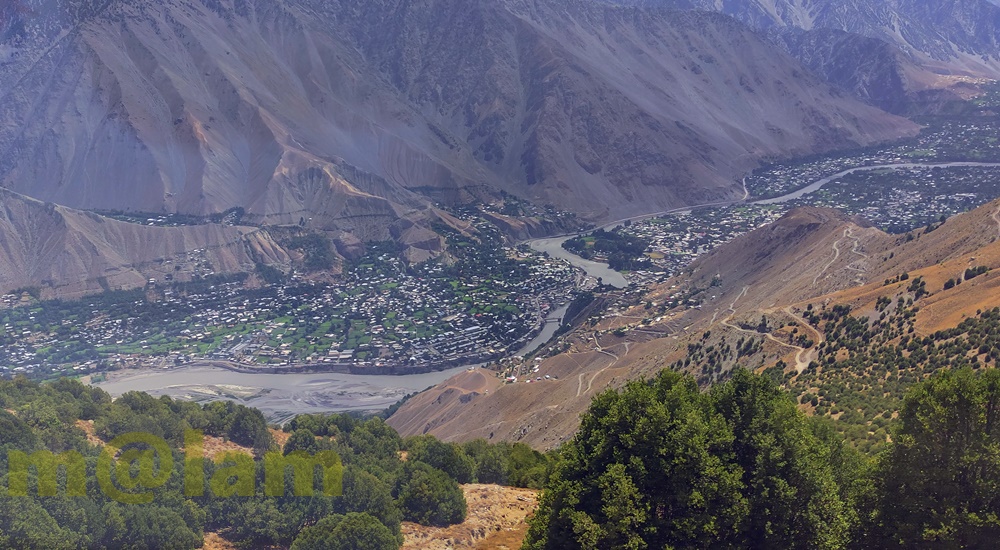
Chitral is one of the spectacular, culturally rich, and prominent tourist destinations in the northern KPK province of Pakistan. The region is home to the mighty Hindukush Mountains and scenic valleys. The entire Chitral is blessed with breathtaking natural beauty. Each of its valleys has its unique attributes that distinguish it from the others.  Its lush green valleys, high-altitude mountains, and scenic glaciers along with the rich culture of the region attract tourists from across the country and the globe every year. Chitral was historically an independent princely state before independence. However, it was the first state to declare accession to Pakistan as a district of Malakand Division in 1970. Geography Chitral town runs along the banks of the Chitral River. The entire Chitral district covers an area of 14,850 km². Out of its total landmass, 4% is forest, 3% cultivated area, and 2% cultivable land while the rest is mountains and barren. Chitral is bordered to the east by Gilgit-Baltistan, southeast with Swat, north and north-east by China and the Wakhan corridor of Afghanistan, west borders Nuristan and Kunar provinces of Afghanistan, and Upper Dir district of Khyber Pakhtunkhwa (KPK) province is situated to the south. Furthermore, Chitral town is the administrative center of the Chital district, which is controlled by the Khyber Pakhtunkhwa government. Districts Chitral itself is a district of KPK province housing a population of 447,362 and is further divided into two districts – lower and upper Chitral by the government of KPK. Chitral is located among the Hindukush Mountains in the northwest of Pakistan. Lower Chitral covers the region from Lowari to Barenis and Gabor on the Garam Chashma side while Upper Chitral starts from Barenis village onwards. History Centrally positioned on the crossroads to Central Asia, Chitral boasts a rich and captivating history. Its strategic location made it a coveted target for invaders, drawing attention before other areas in the region. The documented history of Chitral traces back to the early 8th century AD when Tibetans invaded the Yasin Valley, marking the beginning of a series of invasions. Subsequently, in 900 AD, both the Chinese and Buddhists became part of Chitral’s historical narrative. Later, the Kalash also ruled Chitral for decades. In the 14th century, Chitral became a unified independent under the rule of Shah Nasir Rais while in 1570, the Rais dynasty was replaced by the Katoor dynasty. Likewise, the famous mehtar of Chitral Aman-ul-Mulk ruled from 1857 to 1892. In 1895, the siege of Chitral Fort took place and lasted a month, after which Chitral became an independent state under British rule. Finally, in 1969 it was merged into Pakistan. Today, Chitral hosts ancient Chitrali Tribes as well as nomads who were invited by the mehtars to settle in the state. Chitral is additionally the residence of the ancient pagan tribe, the Kalash, who currently reside exclusively in the three valleys of Bamburat, Rambur, and Birir. Cultural Heritage Chitral’s cultural heritage encompasses a rich tapestry of arts and crafts, traditional clothing, diverse cuisines, local games, music, dance, folksongs, and iconic landmarks. People The Chitrali people call the land of Chitral “Kho” or “Khow” who account for 92% of the population and their language is Khowar. Other tribes include the 3000 Pagan Kalash people living in Bamburet, Rambur, and Birir; the Shubgali tribe living in Gabor, Langoor Butt, and Bamburet and are believed to have come from Nooristan (Afghanistan). The tradition of hospitality is evident across northern Pakistan, but few places match the generous warmth found in Chitral. Clothing Chitral boasts a long and illustrious history that has profoundly shaped its culture. Men in the society typically don Shalwar and Kameez, complemented by the traditional Pakol headwear. Women, on the other hand, wear Khet Partog, traditionally covering their faces with a scarf and adorning their heads with a Dupatta. The Pakol is alternatively referred to as the Chitrali Topi. The region also hosts various festivals featuring Chitrali traditional music, folk tales, and captivating traditional dances performed by both male and female members. Religious affiliation Mainland Chitral and its valleys are home to the Muslim population. However, the majority of the people in Chitral’s Kalash Valley are polytheists who believe in numerous gods. They worship numerous gods and hold a variety of religious festivals. Arts & Craft Chitralis also have a strong taste for music and Chitrali sitar, a string instrument, can often be heard at many places and family gatherings. Chitral’s artisans manufacture a wide range of elegant and delicately crafted jewelry, woodwork and embroidery, woven and knitted textiles. The woolen fabric from Chitral, known locally as “Shu,” and walnut wood furniture are highly sought-after items in handicraft markets across the country. The traditional clothes, including those of the Kalash people, are made from wool and silk and decorated with beads and shells. Traditional caps (Khapol) and gowns (Chugha) are popular while the typical Chitrali shoes (Khon) resemble long-riding boots. Traditional Chitrali buildings are embellished with wood carvings and have been designed keeping in view the climatic and local environmental conditions of the area. Culture Chitral’s culture carries traces of Greek, Iranian, Tatar, and Turkish influences, attributed to its unique location and historical connections with Central Asia and Europe. Chitral’s own culture, which has evolved over millennia and includes more than a dozen ethnic groups communicating as many languages as there are cultures, is strongly tied to those of Central Asia rather than South Asia. Chitral and Kalash people are also known for their incredibly unusual clothing and dances, as well as their love for music (Especially the tribes of Kalash). During festivals, drums are played, and the women dance in a circle while some elderly folks sit on the sidelines and sing old melodies. Languages The predominant language spoken by the locals is Chitrali. Khowar is the most widely spoken language in the region, with 98% of the population speaking it, while Kalash people speak Kalasha. Urdu, the national language, is also spoken and understood by the locals while Pashtu is
Khyber Pakhtunkhwa Province of Pakistan
Khyber Pakhtunkhwa

Khyber Pakhtunkhwa Province

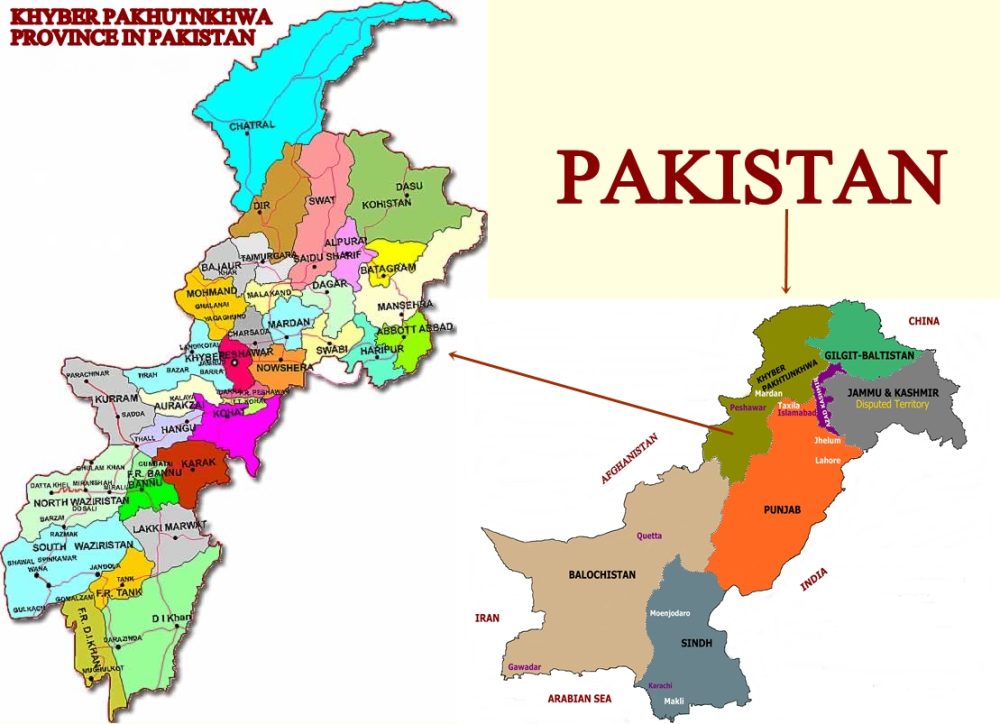
Khyber Pakhtunkhwa Province of Pakistan The Khyber Pakhtunkhwa Province is the smallest of the four administrative provinces of Pakistan. It is located in the northwest of the country housing some 35.53 million (2017 census) people in a 101,741 km² landmass. The province is the third largest by population and economic contribution. It was formerly called the North West Frontier Province (NWFP). Later in 2010, it was renamed Khyber Pakhtunkhwa Province (abbreviated as KPK). Peshawar is the provincial capital and the largest city. Geography Geographically, Afghanistan makes up the 1100 km long northwestern border of the Khyber Pakhtunkhwa Province, Gilgit-Baltistan is located to the northeast; the Federal Capital of Islamabad, Azad Kashmir, Punjab covers the southeastern section, and the northern tip of Balochistan makes up the southern border of the province. Major Cities The province of Khyber Pakhtunkhwa has 35 districts and 46 cities. Peshawar is the provincial capital and the largest city in the province. Major cities and towns of Khyber Pakhtunkhwa are Abbottabad, Bannu, Barikot, Charsada, Chitral, Haripur, Mardan, Mingora, Mansehra, Nowshera, Peshawar, and Saidu Sharif. A Journey Through History The region making today’s Khyber Pakhtunkhwa Province has for centuries been a doorway to the subcontinent. Its unique landscape and strategic location made it home to the grand civilizations of history. The region making Khyber Pakhtunkhwa has historically remained a stronghold of Buddhism. It was characterized by successive invasions under various empires because of its proximity to the Khyber Pass. Persians, Greeks, Mauryans, Kushans, Shahis, Ghaznavids, Mughals, Afghanistan, Sikhs, and the British Empire have all left strong imprints at various points in history. Today, the ruins of the ancient kingdom of Gandhara, including its capital Pushkalavati near modern-day Charsada, spread in major areas of the province making it one of the most alluring regions of the world. Takht-e-Bahi, one of the six UNESCO World Heritage Sites in Pakistan, is located in the province of KPK. The entire region is abundant in tourist attractions that have a universal significance. Culture and Heritage People The region is home to 11.9% of Pakistan’s total population of the country. The majority of the inhabitants are Pakhtuns or Pashtuns followed by Hazarewal, Chitrali, Kalash, and Gujjars. Pashtun or the Pathans being the majority in number (more than 75%) are the dominant groups in the province. They are very well known for their bravery, loyalty, and gallantry. Most of the disputes are settled in the Jirgah system headed by the tribal elders of the society. Major tribes included Yusufzai, Bangesh, Khattak, Marwat, Afridi, Orakzai, Mohmand, Mahsud, Wazir, Bannuchi, Bhittani, Daavi, Qazi Khel, Gandapur, and Ghargasht. The non-Pashtun tribes living in the province are Jhut, Mughal, Turks, Rajputs, and Abbasi Syeds. According to Thomas H. Jhonson and M. Chris Mason in “No Sign Until the Burst of Fire”, “Pashtun believes that their social code produces men, who are superior to those under the Western model, and they have no desire to have a new social system imposed on them by outsiders”.  Clothing The traditional dress of Pashtun men usually comes in Shalwar Qameez (Partoog-Korteh in Pashtu) with a Turban. The Turban with an upright flap is considered a symbol of honor. However, the Turban is usually worn by old men. The new generation either wears a topi or kufi which is also unique to the Pashtuns. Besides Khyber Pakhtunkhwa and Quetta, Pashtuns in Afghanistan have almost the same dress code. Since they have a strong tribal-based society, the tribe leaders usually wear a Karakul hat. Peshawari Chappal is the traditional footwear not only famous in Khyber Pakhtunkhwa but across the country. Women in urban areas are dressed as per existing trends. However, in rural areas of Khyber Pakhtunkhwa, women wear Burqa to cover the entire body. Religious Beliefs The majority of the residents of the Khyber-Pakhtunkhwa are followers of Islam. However, the tribes of Kalash in southern Chitral still have been able to retain their ancient Greco-Animist religion. Moreover, there are very small numbers of adherents of the Roman Catholicism sect of Christianity, Hinduism, and the Sikhism Arts & Craft Major arts and crafts of the province included woodwork, Chappal making, stone jewelry, vessels of brass and copper, hand-woven woolen fabrics, leatherwork, hand-knotted rugs, carpets, and caps made of wool, etc. Culture Pashtu culture is based on Pashtunwali. It is an ancient way of life characterized by the use of pure Pashtu language and wearing traditional dress. Besides the dress code, Pashtu poetry, folk music, and traditional dances are a great part of the rich culture of the Pashtuns. People still live in the joint family system and the arranged marriage system is part of the culture. Historically, the Pashtu culture traces its roots back to the time of Alexander the Great. However, over the centuries, the Pashtun culture has to some extent been influenced by the people of south and western Asia. The Hindko culture has many resemblances with the Pashtu culture, however, the Chitrali and the Kalash tribes have entirely different patterns. The Kalash people have their own architecture, rituals, folktales, and musical instruments.  The Chitrali people have their own distinct set of cultural values resemblance to those of Gilgit-Baltistan. Languages Pashtu is the provincial language of Khyber Pakhtunkhwa spoken by the majority (more than 75%) of the total population as the first language. Hindko, Saraiki, Khowar, Kohistani, Kalasha, and Gojri are the secondary languages spoken by different ethnic groups in the regions they are residing in. Urdu, the national language, is a medium of communication in educational institutions and is spoken for official communication while English is used for official correspondence and is also taught in academic institutions. Arabic is used for religious purposes and education. The provincial government, in 2011, approved the introduction of Pashto, Hindko, Saraiki, Khowar, and Kohistanis as compulsory subjects for the schools in the areas where they are spoken. Food The cuisines of Khyber Pakhtunkhwa are famous across Pakistan as Chinese food is famous around the world. These devoted and hardworking individuals value the importance of good

Scroll to Top