
Monuments

Makli Necropolis
City Breaks, Heritage Sites in Pakistan, Monuments, Sindh, Tombs, World Heritage Sites

Makli Necropolis

Unveiling the Enigma: Makli Necropolis – A Treasure Trove of History and Artistry Nestled in a diamond-shaped expanse, the grandeur of the Makli Necropolis in Thatta is unparalleled. It boasts of its status as one of the largest graveyards globally covering a sprawling 10 square kilometers. Altogether, the Makli Necropolis houses an astonishing half-million monuments. The graveyard stands as the final resting place for an eclectic mix of individuals, from regal monarchs and erudite scholars to valiant warriors, philosophers, governors, and revered saints. In recognition of its historical significance, Makli Necropolis, therefore, earned its place among the UNESCO World Heritage Sites of Pakistan in 1981. A Journey Through Time: Unraveling the History of Makli Necropolis Delving into the annals of history, Makli Necropolis emerges as the eternal abode for over 125,000 saints. Throughout the ages, this city has undeniably been a beacon of knowledge housing around 400 educational institutions. Here students from the Muslim world and Asia came to hone their skills. Students generally engaged in a diverse array of subjects encompassing religion, politics, and philosophy.  Yet, the enigmatic origins of Makli remain shrouded in mystery. It is widely believed that the cemetery evolved around the shrine of the 14th-century Sufi Hamad Jamali. As for the etymology of “Makli,” two intriguing notions persist. Locals suggest that it signifies “Mecca-like,” while another legend ties it to the pious woman known as “Mai Makli.” Legend has it that her fervent prayers thwarted Sultan Firuz Shah Tughlaq’s conquest of Thatta until her passing. She now rests in Makli near the tomb of Jam Nizamuddin. Thatta enjoyed a glorious stint as the capital of Sindh from the 14th to the 18th centuries. Initially, it was ruled by three successive dynasties – Samma, Argun, and Tarkhan. However, it later came under the dominion of the Mughal emperors of Delhi from 1592 to 1739 before being ceded to Shah Nadir of Iran, marking the beginning of a period marked by decline and neglect. The Architectural Marvels of Makli Necropolis The monuments of Makli Necropolis are a testament to the social and political history of Sindh from the 14th to the 18th centuries. Crafted with exquisite architectural finesse, these tombs and graves epitomize the artistic prowess of their time. The tombs were built by utilizing an array of materials such as sand bricks, stone, and marble. Some of these monuments are opulently adorned with glazed tiles, boasting intricate designs, arched domes, and towers adorned with exquisite Islamic calligraphy and devotional carvings inspired by diverse religious and iconographic traditions. Remarkably, many of these iconic monuments have withstood the test of time, enduring centuries of exposure to the elements. However, preserving this rich heritage for future generations necessitates substantial restoration efforts. Makli Necropolis: A Journey Through Location and Access Situated adjacent to the tip of the Indus River delta, Makli Necropolis lies on the outskirts of Thatta.  It was an ancient bastion of Islamic civilization nestled at the edge of the 6.5-kilometer-long plateau of Makli. This historic site is located approximately 89 kilometers east of Karachi in the Sindh province of southern Pakistan. Makli offers an ideal day trip from the bustling metropolis of Karachi. Navigating the vast expanse of the graveyard is made convenient through its wide streets, ensuring access to all the awe-inspiring monuments. Makli Necropolis undoubtedly stands as a testament to the rich tapestry of history, culture, and artistry. The graveyard has woven itself into the very fabric of this remarkable site. It beckons not only to history enthusiasts but also to travelers, both domestic and international, and devout pilgrims alike, offering a glimpse into an enigmatic past that continues to captivate our imaginations.

Hiran Minar
Monuments, Punjab

Hiran Minar

Unveiling the Splendor of Hiran Minar: A Testament to Jahangir’s Love for Wildlife In the heart of Sheikhupura – a city brimming with history, stands the magnificent Hiran Minar. It’s a towering masterpiece that soars 30 meters into the sky. Its origins trace back to the year 1606 when it was commissioned to honor the memory of Mansraj, a cherished pet deer of the illustrious 4th Mughal emperor, Jahangir, also known as Prince Saleem. During Jahangir’s reign from 1605 to 1627, Sheikhupura held the prestigious status of a royal hunting ground. In fact, the Mughal rulers had an ardent passion for the art of hunting. Remarkably, Hiran Minar still stands today in splendid condition, continuing to captivate the hearts of tourists from around the world. The Birthplace of Hiran Minar Formerly known as Jahangirabad, Sheikhupura derived its name from “Sheikhu,” the affectionate nickname of Emperor Jahangir himself. Positioned approximately 40 kilometers northwest of the provincial capital, Lahore, Pakistan, modern-day Sheikhupura boasts a rich historical legacy. Hiran Minar, nestled about 9 kilometers west of Sheikhupura, graces the cityscape with its majestic presence. Unraveling the Hiran Minar Complex Hiran Minar encompasses not only the monumental tower but also an eastward-facing octagonal two-story structure crowned with an open pavilion. The very structure is known as Daulat Khana or Bara-Dari (of twelve doors). This structure sits at the very heart of a rectangular water tank. Notably, both Daulat Khana and the tank were additions made in 1607 and 1620, respectively. It’s worth mentioning that the term “Baradari” might be somewhat misleading, as it typically refers to a structure with twelve openings. Whereas, Daulat Khana is an octagonal building that features only one entrance on each side. Daulat Khana served as a cherished royal retreat for the emperor, accessible via a bridge extending westward from the tower. The ground floor of Daulat Khana grants entry from the four main directions, leading to smaller square rooms, which in turn, provide access to the king’s chamber. This central chamber, surrounded by eight subordinate rooms, forms the heart of Daulat Khana. Among these eight rooms, four are square and of smaller dimensions, while the remaining four are octagonal, boasting a more spacious layout. Every room offers pathways to the central king’s chamber as well as connections with one another. The Enigmatic Water Tank The water tank encircling Daulat Khana features charming pavilions adorned with pyramidal roofs and entrances on all four sides. Notably, each side of the tank is equipped with shallow brick ramps. The ramps provide easy access to the resident wildlife of the hunting park, allowing them to quench their thirst. The water level within the tank was meticulously maintained through a network of channels and catchment basins. A Monument Born from Love The tale that led Emperor Jahangir to order the construction of the tower and a grave for his beloved deer is both poignant and remarkable. Tragically, the emperor accidentally put to death Mansraj while attempting to hunt another deer in the very area where Hiran Minar now stands. Overwhelmed by grief, Jahangir made the heartfelt decision to inter Mansraj at the very spot where he had met his untimely end. In memory of his cherished pet, the emperor commanded the construction of Hiran Minar. Subsequently, the once-royal hunting ground was transformed into a protected sanctuary, and the practice of hunting was strictly prohibited. This extraordinary tale stands as a rare testament to the profound bond between man and wildlife. It’s a symbol of reverence for animals in an era when such sentiments were virtually unknown elsewhere in the world. Hiran Minar not only graces the landscape of Sheikhupura but also stands as a testament to Jahangir’s enduring love for his favorite deer, Mansraj, and his commitment to preserving the natural world. Intriguing, historically significant, and a true marvel of architecture, Hiran Minar remains an enchanting destination for travelers seeking a glimpse into the past and a profound connection to the natural world.

Islamabad Tourist Attractions
Islamabad, Monuments

Pakistan Monument Islamabad

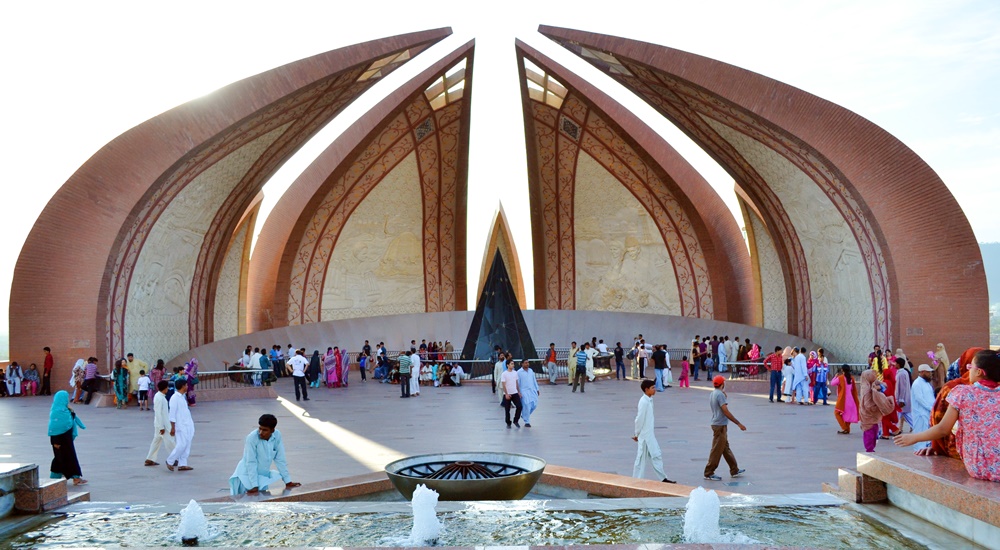
Pakistan Monument – A National Symbol  The Pakistan Monument is not only a national icon but also a testament to Pakistan’s rich cultural heritage and unity. Perched atop the Western Shakarparian Hills in Islamabad, this architectural marvel offers breathtaking views of the Islamabad-Rawalpindi metropolitan area. Built to symbolize the unity of the Pakistani people, the monument is an essential stop for tourists and locals alike who wish to explore the story of Pakistan’s history, diversity, and identity. Historical Background The idea for the Pakistan Monument was proposed by former President Pervez Musharraf in 2002, reflecting his vision to create a symbol of national unity in the capital. The Ministry of Culture and the Pakistan Council of Architects and Town Planners collaborated to select the design for this landmark, organizing a national competition. Out of 21 entries, Arif Masoud’s concept was selected for its deep symbolic representation of Pakistan’s resilience and unity. After laying the foundation stone in 2004, the monument was completed in 2006 and officially inaugurated on Pakistan Day, March 23, 2007. Today, it stands as a powerful representation of national pride, resilience, and solidarity. Architectural Significance and Symbolism Spanning 2.8 hectares (6.9 acres), the Pakistan Monument was designed to represent a blooming flower. Its unique petal structure is crafted from granite and marble, blending traditional Mughal architectural elements with modern aesthetics. Four large petals represent Pakistan’s four provinces—Punjab, Sindh, Khyber Pakhtunkhwa, and Balochistan—while three smaller petals depict the territories of Gilgit-Baltistan, Azad Jammu & Kashmir, and the former Federally Administered Tribal Areas (FATA). Together, these petals create a harmonious shape symbolizing Pakistan’s unity amidst diversity. From above, the monument resembles a star surrounded by a crescent, mirroring the crescent and star on Pakistan’s national flag. This clever aerial view further emphasizes the country’s national identity and pride. A five-pointed star occupies the center of the platform, encircled by a water body and a metallic crescent inscribed with the sayings of Pakistan’s founding father, Muhammad Ali Jinnah, and the poetry of Allama Muhammad Iqbal. Detailed Mural Artwork The inner walls of each petal are adorned with intricate artwork, depicting landmarks and historical scenes from across Pakistan. These murals tell the story of Pakistan’s heritage, culture, and struggles for independence. Each petal’s artwork reflects different aspects of Pakistan: First Petal: This features images of the Faisal Mosque in Islamabad, the Shah Jahan Mosque in Thatta, the ancient Makli Necropolis, and the Gwadar port, symbolizing religious harmony and modern development. Second Petal: Depicts portraits of Muhammad Ali Jinnah, Fatima Jinnah, and scenes of a crowd cheering during one of Jinnah’s appearances, highlighting Pakistan’s early leaders and the national struggle for independence. Third Petal: Includes representations of Allama Iqbal, the Mahabat Khan Mosque, Lahore Fort, and elements from the Indus Valley Civilization, reflecting Pakistan’s cultural depth and intellectual heritage. Fourth Petal: Showcases the famous Sheesh Mahal (Palace of Mirrors), the Uch Sharif Tomb, Islamia College Peshawar, the Ziarat Residency, and the Khyber Pass, celebrating the resilience of Pakistan’s diverse regions and their historical significance. The careful craftsmanship of these murals, led by artists Kausar Jahan and Zarar Haider Babri, took approximately 119,000 hours of dedicated effort, creating an impressive tribute to the cultural wealth of Pakistan. Special Features of the Monument Beyond the main petals, the Pakistan Monument includes several distinctive features that enrich its significance: Four Pillars Bearing Quaid’s Motto: The monument grounds are graced by four tall pillars inscribed with Muhammad Ali Jinnah’s guiding motto: “Unity, Faith, Discipline.” These words, in both English and Urdu, serve as a reminder of the values that Pakistan strives to uphold. Terrace and Marble Piazza: Adjacent to the monument, a marble terrace provides visitors with a stunning, panoramic view of Islamabad and the Margalla Hills. The terrace is an ideal spot for visitors to soak in the scenic beauty of Pakistan’s capital and appreciate the monument’s architectural grandeur. Foundation Wall with Handprints: A nearby wall holds the handprints of the architects, engineers, designers, and laborers who contributed to the monument’s creation, serving as a tribute to the dedication and hard work that went into building this national landmark. At the entrance, visitors can find a stone carving of chief architect Arif Masoud. Museum and Gallery: The Pakistan Monument Complex includes a museum at the forefront of the site, which houses post-independence memorabilia and artifacts. This museum offers an immersive experience for visitors, highlighting significant events, leaders, and cultural artifacts that shaped Pakistan’s journey from independence to modern-day achievements. Visitor Experience and Surroundings The Pakistan Monument attracts thousands of visitors daily who come to admire its majestic architecture, delve into its historical and cultural exhibits, and enjoy the lush landscape that surrounds it. Meticulously maintained gardens and evergreen trees frame the monument, enhancing its beauty and providing a serene ambiance that complements the historical significance of the site. The location atop Shakarparian Hills provides a striking view over Islamabad and Rawalpindi, offering visitors a sense of connection to the city below while standing on a landmark that represents the entire nation. The terrace area allows visitors to observe not only the cityscape but also the beautiful green hills of the Margalla range, creating a memorable experience for those seeking a peaceful yet inspiring atmosphere. An Icon of National Pride The Pakistan Monument is more than just a tourist destination; it is a living tribute to the resilience, unity, and dedication of the Pakistani people. Its towering petals and symbolic design encapsulate the struggles, victories, and aspirations of the nation, reminding visitors of Pakistan’s diverse yet unified identity. For visitors, whether local or international, a trip to the Pakistan Monument offers an opportunity to connect with the country’s cultural heritage, appreciate its natural beauty, and feel the pride of a nation. This site has become a must-visit location in Islamabad for tourists, history enthusiasts, students, and families alike. It’s an ideal place to reflect on Pakistan’s past and its journey toward a promising future. Why Visit the Pakistan Monument? The Pakistan Monument is a true

Scroll to Top