
Architecture in Pakistan

Mahabat Khan Mosque, Peshawar
Islamic Heritage, Khyber Pakhtunkhwa, Mosques

Mahabat Khan Mosque

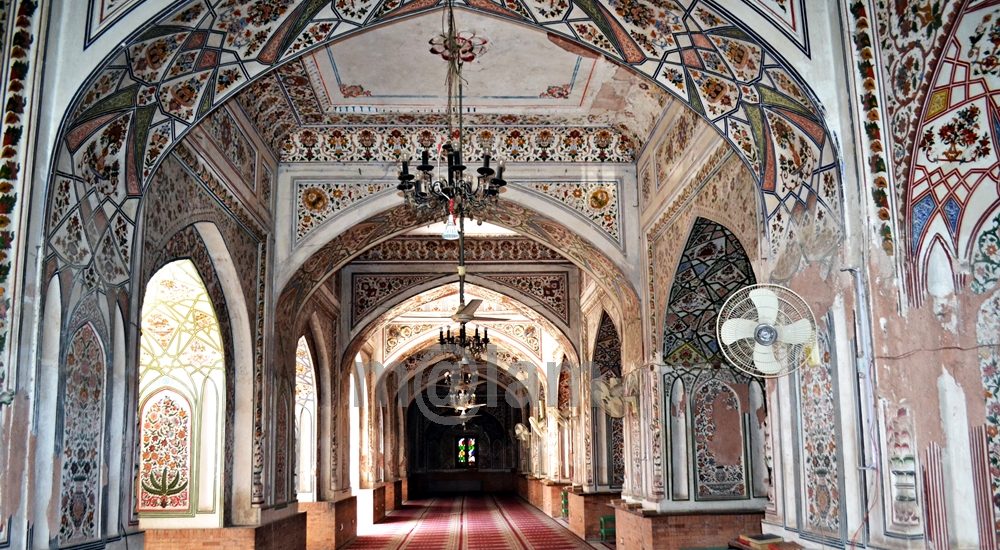
Mahabat Khan Mosque, Peshawar The Mahabat Khan Mosque (Mohabbat Khan Masjid) is located to the west of Chowk Yadgar in Peshawar, Khyber Pakhtoonkhwa, Pakistan. It was constructed in the 17th century during the Mughal era, specifically in 1630. As the largest mosque in Peshawar, it is nestled within the historic boundaries of the city, commonly referred to as the “Ander Shehr” (Inner city). This majestic structure pays homage to Nawab Mahabat Khan, a prominent Mughal governor of Peshawar who served twice under the Mughal Emperors Shah Jehan and Aurangzeb. His lineage traces back to Nawab Dadan Khan, a former governor of Lahore. The mosque’s stunning white marble façade is celebrated as one of Peshawar’s most iconic landmarks. Mahabat Khan Mosque today is a hub for prayers and social gatherings as well as serves as a tourist attraction. Peshawar City Peshawar, nestled in a valley near the eastern terminus of the storied Khyber Pass and adjacent to the Afghanistan border, boasts a rich history that stretches back to at least 539 BCE. This makes it not only Pakistan’s oldest city but also one of the most ancient in all of South Asia. In antiquity, Peshawar served as the capital of the illustrious Kushan Empire, a realm renowned for its prosperity and cultural efflorescence. It was during this period that the city reached the zenith of its splendor, boasting magnificent architectural marvels, bustling markets, and a vibrant multicultural milieu. One such testament to the grandeur of ancient Peshawar is the Kanishka Stupa, a monumental edifice that is believed to have rivaled the tallest structures of its time. Throughout the centuries, Peshawar has played a pivotal role in shaping the cultural, political, and economic landscape of the region. History of Mahabat Khan Mosque The Mahabat Khan Mosque was constructed between 1660 and 1670 during the Mughal period. It is positioned atop the highest point in the old city. Interestingly, during the Sikh era, the minarets of the mosque were utilized for hanging prisoners. It was a grim practice where five individuals were hanged daily from these minarets, serving as makeshift gallows. Additionally, in the aftermath of the Soviet invasion of Afghanistan, the mosque became a gathering place for refugee tribal elders. Their aim was to foster unity among Afghans in resistance against the Soviet forces. Legacy and Heritage of the Mosque Nawab Mahabat Khan’s legacy echoes through the corridors of this majestic mosque. As a distinguished Mughal governor, his influence extended far and wide, shaping the cultural landscape of Peshawar. The mosque stands as a tribute to his illustrious lineage, commemorating his contributions to the city’s splendor. Architecture and Design of the Mosque  Layout The Mahabat Khan Mosque undoubtedly stands out as a hidden treasure in Peshawar. It is nestled among various other heritage landmarks of the city. This architectural masterpiece radiates both beauty and historical importance. Covering an impressive area of 30,155 square feet, the mosque features a magnificent prayer hall rectangular in shape occupying the western side. In the expansive courtyard, a tranquil blue-tiled ablution pool sits at the center, surrounded by a row of rooms along the perimeter walls. Rooftop The hall is adorned with three graceful fluted domes. The roofline of the mosque ascends gradually from the outer edges towards the center, accentuated by a series of four small incremental height increases and embellished with numerous merlons. The top of the mosque’s white marble façade is adorned with cavettos or concave moldings. Additionally, atop the main entrance stand six intricately designed miniature minarets, flanked by two towering minarets. Exterior Five arched entrances lead into the main prayer hall of the mosque. The central arch, tallest among them, displays cusped arches typical of Mughal architecture. Flanking this central arch are two slightly shorter arches designed in the Persian and Central Asian styles, while smaller arches, adorned in a similar fashion, accompany each side. Above the tip of each arch, a row of seven small arched portals is observed. The three central arched portals are adorned with muqarnas, while the outermost arches feature Ghalib kari, a decorative network of ribs made of stucco and plaster. Additionally, the upper curves of the archways are embellished with vegetal motifs, showcasing a variety of colors unlike the predominantly green motifs seen at the Badshahi Mosque. Meanwhile, outside, the exquisite craftsmanship of white marble is on display. Interior The prayer hall’s interior is sheltered by three low, fluted domes, adorned with lavish and colorful paintings. Within the mosque, captivating floral and geometric designs adorn the ceiling, enhanced by graceful red frescoes. Elaborate Islamic calligraphy in a baroque style embellishes the walls of the prayer hall, while a beautiful carpet covers the floor. The calligraphy, executed in the Arabic alphabet, adds to the artistic allure of the space. Traditional chandeliers hang from the ceilings, casting a warm glow throughout. Both the interior and exterior are adorned with panels featuring intricate floral motifs and excerpts from the Quran, further enhancing the mosque’s aesthetic appeal and spiritual ambiance. Cultural Significance Throughout its storied history, the Mahabat Khan Mosque has served as more than just a place of worship. It has been a symbol of resilience and unity, welcoming refugees and fostering a sense of community during tumultuous times. Today, it continues to stand as a beacon of hope and harmony for all who seek solace within its hallowed halls. A Premier Tourist Attraction This mosque stands as undoubtedly one of Peshawar’s most renowned tourist landmarks. It is a must-visit for travelers, particularly foreign visitors exploring Peshawar. Surrounded by other prominent tourist sites, the mosque draws a significant number of visitors. At any given time, approximately 14 thousand individuals can pray within the mosque’s iconic premises and its adjoining courtyard. Access to the Mosque To reach this mosque, head to the Old Bazaar in Peshawar’s historic old city, where locals will happily guide you. From there, take Kachahry Road to Chowk Yadgar, park your vehicle, and proceed west into the Bazaar. The mosque awaits you at the street’s highest

Key Facts about Pakistan
Tourism Blogs

Key Facts About Pakistan

Exploring Pakistan: Unveiling Fascinating Facts and Features Pakistan, often referred to as the “Land of the Pure,” holds a unique place in South Asia’s heart. Established on the global stage on August 14, 1947, following the subcontinent’s partition, it has grown to become the 36th largest country, spanning 796,095 square kilometers (307,374 square miles), and the 6th most populous, with over 224 million residents representing diverse cultural and geographic backgrounds. The remarkable values of honor, pride, and a rich tapestry of cultural influences mark this nation. Indeed, Pakistan remains a hidden gem among tourist destinations worldwide, offering a multitude of experiences that are relatively unknown to many. Below are the lesser-known but fascinating key facts about Pakistan. Agriculture: Nurturing the Land 1. Canal-Based Irrigation: Pakistan boasts the world’s largest canal-based irrigation system – certainly a testament to its commitment to agriculture. 2. Changa Manga Forest: This vast, manmade forest spanning 12,423 acres was originally planted by British foresters in 1866, altogether making it a historical and ecological treasure. 3. Agricultural Land: Approximately 25% of Pakistan’s land is dedicated to agricultural cultivation, surpassing even the vast expanses of Russia. It’s the country’s commitment to agriculture that supports its livelihood, with 72% of the population engaged in farming. Archaeology: Unearthing the Past 4. Rich Archaeological Sites: Pakistan is home to numerous significant archaeological sites. The key sites include Mehr Garh, Moenjo Daro, Harappa, Taxila, and many more. Undoubtedly, these sites offer a glimpse into the region’s rich history and cultural heritage. Architecture: A Blend of Tradition and Innovation 5. Shah Faisal Mosque: The striking Shah Faisal Mosque, designed in the shape of an Arabian Bedouin tent, can accommodate over 100,000 worshippers. Due to its size, the mosque held the title of the world’s largest mosque from 1986 to 1993. 6. Shah Jahan Mosque: Located in Thatta, this unique mosque stands with no minarets. Surprisingly, its design ensures that the preacher’s voice reaches all corners without amplification. This feat indeed showcases architectural ingenuity. 7. Masjid e Tooba: The Gol Masjid in Karachi stands with a pillar-less design and towering dome. Undoubtedly, it has stood as an architectural marvel since its construction in 1969. Armed Forces: Strength and Valor 8. Military Prowess: Pakistan’s military ranks as the thirteenth most powerful globally and the seventh largest in terms of active military personnel. It also maintains the largest UN peacekeeping force among Muslim nations. 9. Air Force Excellence: Pakistan is renowned for its highly skilled air force pilots. Particularly, Air Commodore MM Alam achieved remarkable success during the Indo-Pakistani War of 1965, downing nine Indian aircraft in less than a minute. 10. Elite Intelligence: Pakistan’s intelligence corps is among the world’s best for its efficiency and effectiveness. 11. JF-17 Thunder: Pakistan takes pride in being a manufacturer and exporter of the world-class JF-17 Thunder fighter jet. Arts & Craft: Creative Expressions 12. Truck Art: Pakistan is famous for its vibrant truck art. It enormously features intricate floral patterns and poetic calligraphy in vivid colors. 13. Jewelry Production: The country is the largest producer of jewelry, with Pakistani artists crafting gold and silver pieces cherished globally. 14. Hollywood Connections: Sylvester Stallone’s movie “Rambo III” was filmed in Pakistan, obviously showcasing its diverse landscapes. 15. Handmade Carpets: Pakistani handmade carpets and rugs are renowned worldwide for their exquisite craftsmanship. Communication: A Mosaic of Languages 16. Multilingual Nation: Pakistan’s national language is Urdu, however, English serves as the official language. The country boasts over 60 different languages spoken across its regions. 17. Dominant Punjabi: Punjabi is the most widely spoken language, embraced by approximately 48% of the population. 18. Broadband Infrastructure: Pakistan boasts one of the world’s largest broadband internet systems, facilitating connectivity across the nation. Culture: A Rich Heritage 19. Ancient Civilization: Pakistan is the proud host of one of history’s oldest civilizations. Dating back to 6000 B.C., the Mehrgarh civilization, paved the way for the Indus Valley Civilization. 20. Shalwar Kameez: The traditional attire of shalwar kameez is beloved by approximately 70% of Pakistanis, reflecting their cultural identity. Economy: A Growing Power 21. Currency: The Pakistani Rupee (PKR) serves as the official currency, with various denominations from 1 to 5000 in coins and paper money. 22. Economic Potential: Pakistan has been recognized by the UN as one of the 11 countries with the potential to become the top global economy shortly. 23. Leather Exports: Pakistani leather exports are highly regarded for their quality, enjoying popularity worldwide. 24. GDP and Exports: Pakistan’s GDP reached $305 billion in 2018, with a nominal GDP per capita of $5,100. The nation is a significant producer and exporter of surgical instruments, cotton, and other goods. Education, Science & Technology: Striving for Excellence 25. Nuclear Power: Pakistan became the world’s first Islamic country to attain nuclear power in 1998. 26. Scientific Prowess: The country boasts the world’s seventh-largest community of scientists and engineers, contributing to advancements in various fields. 27. Missile Technology: Pakistan’s missile technology ranks among the best globally. 28. Young Achievers: The world’s youngest Microsoft Expert, Arfa Karim, and the youngest civil judge, Muhammad Ilyas, hail from Pakistan. 29. Nobel Laureates: Pakistan proudly celebrates two Nobel Prize winners: Dr. Abdus Salam for Physics in 1979 and later Malala Yousafzai for Peace in 2014. 30. Higher Education: The nation’s 188 higher education institutions produce a substantial number of university and computer science graduates annually, contributing to global knowledge. Energy: Powering Progress 31. Energy Sources: Over 68% of Pakistan’s energy is generated from fossil fuels, sustaining its development. Food & Drinks: A Culinary Journey 32. Culinary Delights: Pakistan offers a rich diversity of meals, with breakfast featuring milk tea, bread/paratha, eggs, and butter. Lunch and dinner include a variety of flavorful dishes. 33. National Drink: Sugarcane juice, known as “roh,” holds the distinction of being Pakistan’s national drink. 34. Halal Meat: Halal red meat is readily available in Pakistan, adhering to Islamic dietary guidelines. Flora & Fauna: Natural Treasures 35. National Symbols: The Markhor is the national animal, Chukar partridge is the

Scroll to Top