
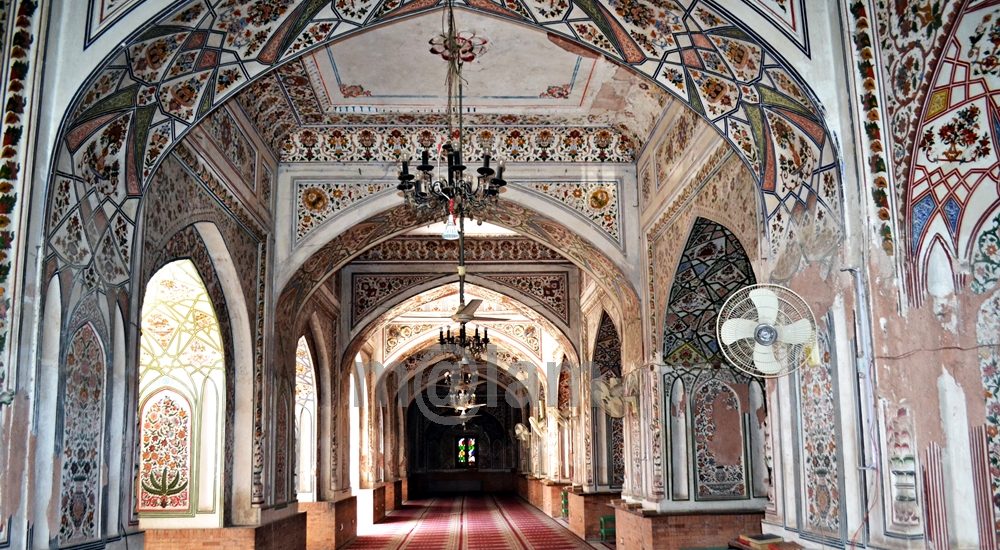
Mahabat Khan Mosque
Mahabat Khan Mosque, Peshawar The Mahabat Khan Mosque (Mohabbat Khan Masjid) is located to the west of Chowk Yadgar in Peshawar, Khyber Pakhtoonkhwa, Pakistan. It was constructed in the 17th century during the Mughal era, specifically in 1630. As the largest mosque in Peshawar, it is nestled within the historic boundaries of the city, commonly referred to as the “Ander Shehr” (Inner city). This majestic structure pays homage to Nawab Mahabat Khan, a prominent Mughal governor of Peshawar who served twice under the Mughal Emperors Shah Jehan and Aurangzeb. His lineage traces back to Nawab Dadan Khan, a former governor of Lahore. The mosque’s stunning white marble façade is celebrated as one of Peshawar’s most iconic landmarks. Mahabat Khan Mosque today is a hub for prayers and social gatherings as well as serves as a tourist attraction. Peshawar City Peshawar, nestled in a valley near the eastern terminus of the storied Khyber Pass and adjacent to the Afghanistan border, boasts a rich history that stretches back to at least 539 BCE. This makes it not only Pakistan’s oldest city but also one of the most ancient in all of South Asia. In antiquity, Peshawar served as the capital of the illustrious Kushan Empire, a realm renowned for its prosperity and cultural efflorescence. It was during this period that the city reached the zenith of its splendor, boasting magnificent architectural marvels, bustling markets, and a vibrant multicultural milieu. One such testament to the grandeur of ancient Peshawar is the Kanishka Stupa, a monumental edifice that is believed to have rivaled the tallest structures of its time. Throughout the centuries, Peshawar has played a pivotal role in shaping the cultural, political, and economic landscape of the region. History of Mahabat Khan Mosque The Mahabat Khan Mosque was constructed between 1660 and 1670 during the Mughal period. It is positioned atop the highest point in the old city. Interestingly, during the Sikh era, the minarets of the mosque were utilized for hanging prisoners. It was a grim practice where five individuals were hanged daily from these minarets, serving as makeshift gallows. Additionally, in the aftermath of the Soviet invasion of Afghanistan, the mosque became a gathering place for refugee tribal elders. Their aim was to foster unity among Afghans in resistance against the Soviet forces. Legacy and Heritage of the Mosque Nawab Mahabat Khan’s legacy echoes through the corridors of this majestic mosque. As a distinguished Mughal governor, his influence extended far and wide, shaping the cultural landscape of Peshawar. The mosque stands as a tribute to his illustrious lineage, commemorating his contributions to the city’s splendor. Architecture and Design of the Mosque Layout The Mahabat Khan Mosque undoubtedly stands out as a hidden treasure in Peshawar. It is nestled among various other heritage landmarks of the city. This architectural masterpiece radiates both beauty and historical importance. Covering an impressive area of 30,155 square feet, the mosque features a magnificent prayer hall rectangular in shape occupying the western side. In the expansive courtyard, a tranquil blue-tiled ablution pool sits at the center, surrounded by a row of rooms along the perimeter walls. Rooftop The hall is adorned with three graceful fluted domes. The roofline of the mosque ascends gradually from the outer edges towards the center, accentuated by a series of four small incremental height increases and embellished with numerous merlons. The top of the mosque’s white marble façade is adorned with cavettos or concave moldings. Additionally, atop the main entrance stand six intricately designed miniature minarets, flanked by two towering minarets. Exterior Five arched entrances lead into the main prayer hall of the mosque. The central arch, tallest among them, displays cusped arches typical of Mughal architecture. Flanking this central arch are two slightly shorter arches designed in the Persian and Central Asian styles, while smaller arches, adorned in a similar fashion, accompany each side. Above the tip of each arch, a row of seven small arched portals is observed. The three central arched portals are adorned with muqarnas, while the outermost arches feature Ghalib kari, a decorative network of ribs made of stucco and plaster. Additionally, the upper curves of the archways are embellished with vegetal motifs, showcasing a variety of colors unlike the predominantly green motifs seen at the Badshahi Mosque. Meanwhile, outside, the exquisite craftsmanship of white marble is on display. Interior The prayer hall’s interior is sheltered by three low, fluted domes, adorned with lavish and colorful paintings. Within the mosque, captivating floral and geometric designs adorn the ceiling, enhanced by graceful red frescoes. Elaborate Islamic calligraphy in a baroque style embellishes the walls of the prayer hall, while a beautiful carpet covers the floor. The calligraphy, executed in the Arabic alphabet, adds to the artistic allure of the space. Traditional chandeliers hang from the ceilings, casting a warm glow throughout. Both the interior and exterior are adorned with panels featuring intricate floral motifs and excerpts from the Quran, further enhancing the mosque’s aesthetic appeal and spiritual ambiance. Cultural Significance Throughout its storied history, the Mahabat Khan Mosque has served as more than just a place of worship. It has been a symbol of resilience and unity, welcoming refugees and fostering a sense of community during tumultuous times. Today, it continues to stand as a beacon of hope and harmony for all who seek solace within its hallowed halls. A Premier Tourist Attraction This mosque stands as undoubtedly one of Peshawar’s most renowned tourist landmarks. It is a must-visit for travelers, particularly foreign visitors exploring Peshawar. Surrounded by other prominent tourist sites, the mosque draws a significant number of visitors. At any given time, approximately 14 thousand individuals can pray within the mosque’s iconic premises and its adjoining courtyard. Access to the Mosque To reach this mosque, head to the Old Bazaar in Peshawar’s historic old city, where locals will happily guide you. From there, take Kachahry Road to Chowk Yadgar, park your vehicle, and proceed west into the Bazaar. The mosque awaits you at the street’s highest
Mahabat Khan Mosque Read Post »
